Weak Wall Insulation? How Closed-Cell Spray Foam Adds Strength in Crofton, MD
Weak wall insulation does more than waste energy. It leaves your home vulnerable to structural stress, moisture problems, and comfort…


When homeowners and builders invest in insulation, they want to know one thing above all else: how long will it actually last? It’s a fair question. Insulation isn’t something you can easily see or check on, and replacing it means tearing into walls, ceilings, or crawl spaces. That’s why closed-cell spray foam insulation has become such a compelling option for those thinking long-term. Unlike traditional fiberglass batts that can sag, settle, or absorb moisture over time, closed-cell spray foam creates a rigid, permanent barrier that adheres directly to building surfaces.
But what does “long-term” really mean? You’ll hear numbers thrown around like 20 years, 30 years, even the lifetime of the building. The truth is more nuanced than a single figure. Closed-cell spray foam’s actual lifespan depends on installation quality, environmental conditions, building design, and how well the whole system works together. Understanding these factors isn’t just academic; it’s the difference between an insulation investment that performs for decades versus one that fails prematurely and costs far more to fix.
This guide covers everything you need to know about closed-cell spray foam longevity and durability. You’ll learn the science behind why this material lasts so long, the specific factors that can extend or shorten its lifespan, how to spot potential problems early, and what you can do to maximize your investment. Whether you’re planning a new construction project, considering an upgrade to your current insulation, or dealing with concerns about existing spray foam, you’ll find practical answers here.
Peninsula Insulation, LLC has worked with closed-cell spray foam across countless residential and commercial projects, and we’ve seen firsthand what makes the difference between insulation that performs flawlessly for 30+ years and installations that run into trouble. The insights in this guide come from that hands-on experience, combined with building science principles and industry research.
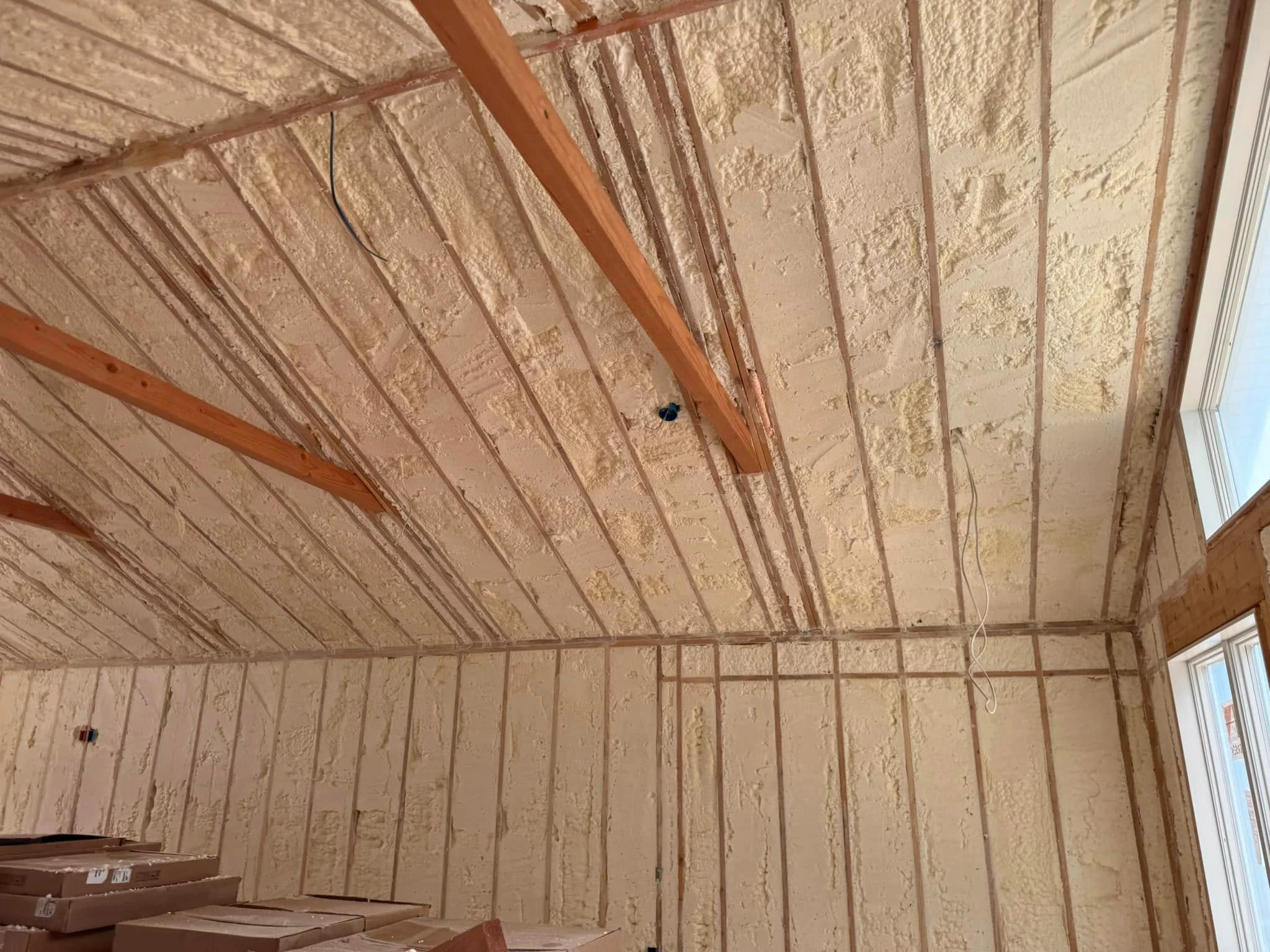
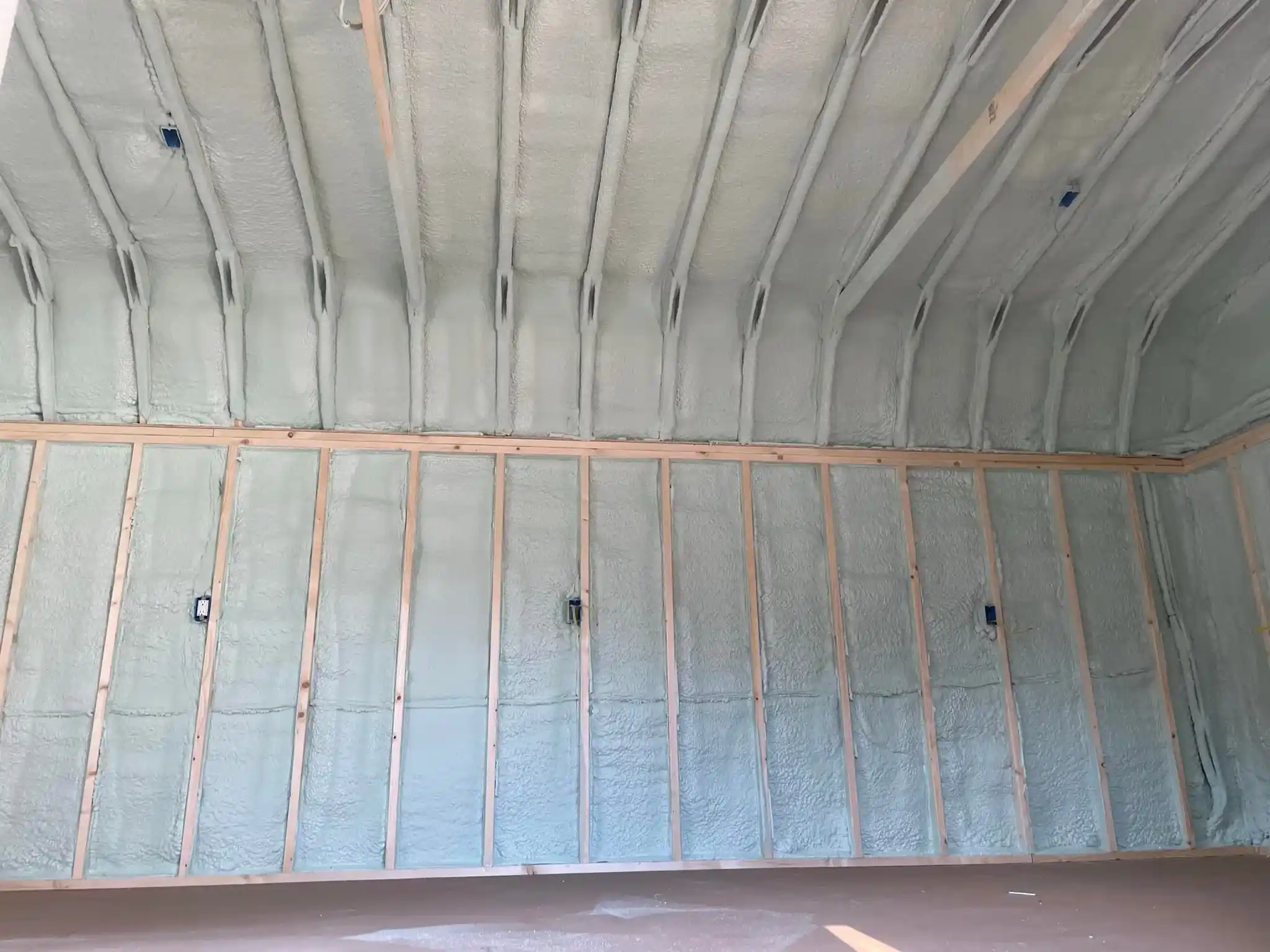
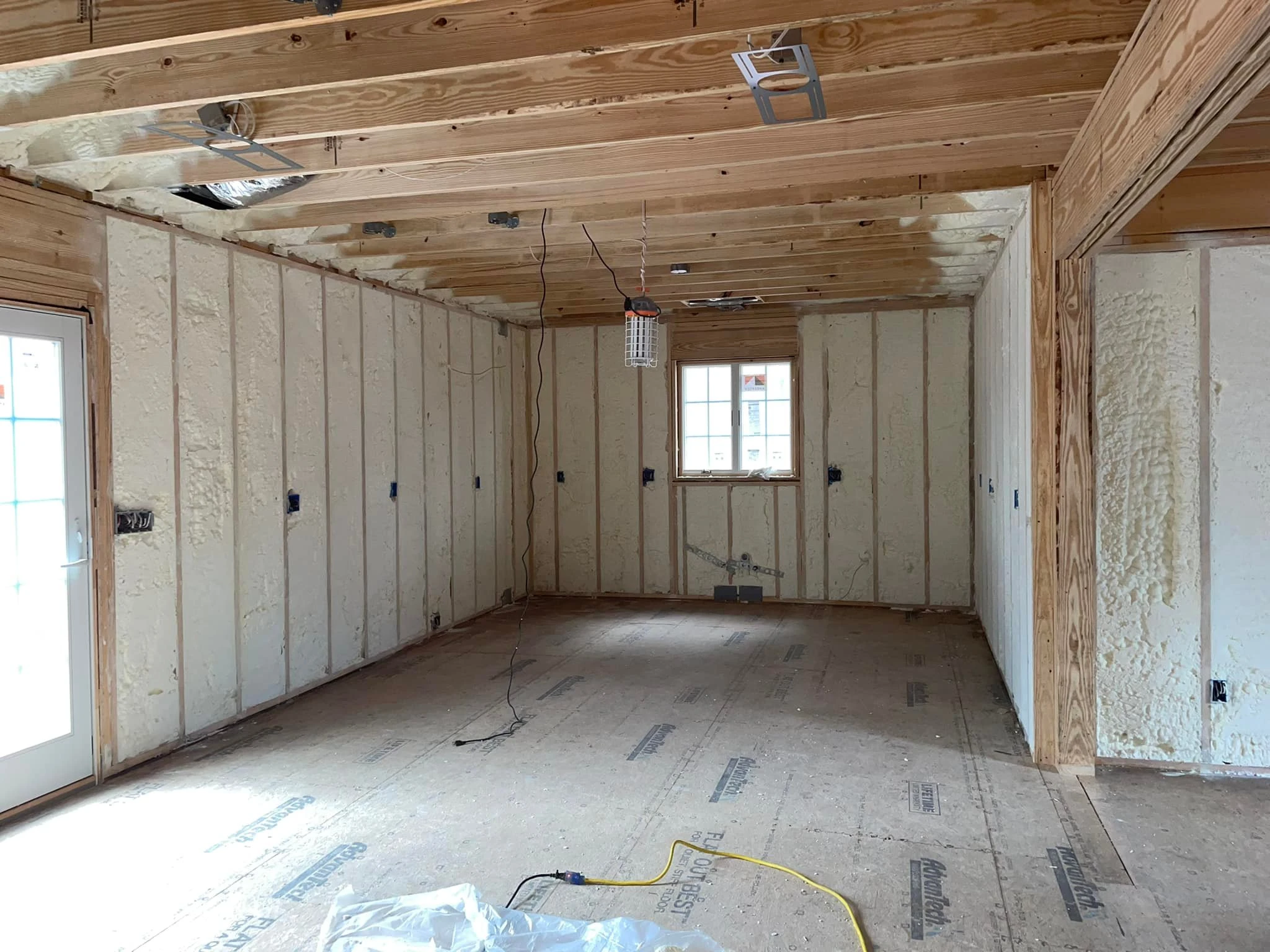
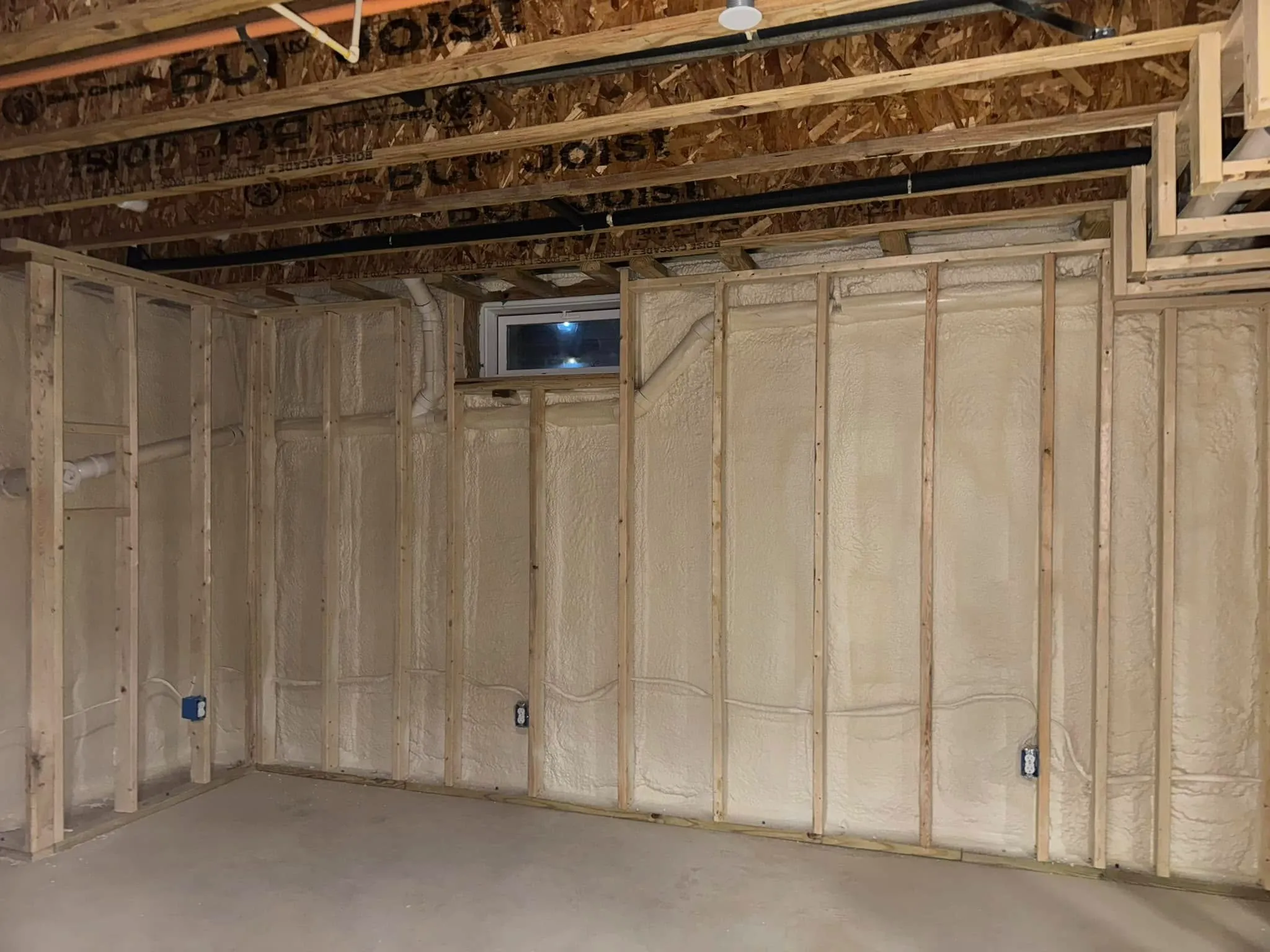
Before diving into longevity, it helps to understand exactly what closed-cell spray foam is and why its physical properties matter for durability. Closed-cell spray polyurethane foam (ccSPF) is a two-component insulation material created when two liquid chemical streams, an isocyanate (A-side) and a resin blend (B-side), mix at the spray gun tip and react almost instantly. This reaction causes the material to expand 30-50 times its liquid volume and harden into a rigid plastic foam.
The term “closed-cell” refers to the internal structure of the cured foam. Within the material, tiny gas-filled bubbles are completely enclosed by solid cell walls. These cells remain sealed off from each other, which gives the foam its distinctive properties. The blowing agents trapped inside these cells (typically hydrofluorocarbons or newer eco-friendly alternatives) stay put for years, providing excellent thermal resistance with R-values typically around R-6 to R-7 per inch.
Compare this to open-cell spray foam, where the internal bubbles are interconnected. Water vapor can move through open-cell foam more easily, and the material remains soft and flexible. Open-cell has its applications, but for maximum durability and longevity, closed-cell’s rigid, moisture-resistant structure makes it the superior choice for demanding environments.
The density of closed-cell foam matters too. Most building applications use foam in the 2-pound density range, meaning two pounds per cubic foot. This density creates enough structural strength to add racking strength to walls while remaining economical for typical insulation depths. Higher-density formulations exist for roofing and specialty applications, often providing even greater durability at a higher cost.
Here’s where expectations meet reality. Under ideal conditions, closed-cell spray foam can maintain its thermal performance and structural integrity for 30 to 50 years, essentially the lifetime of most buildings. The U.S. Department of Energy has documented spray foam installations from the 1970s and 1980s still performing within acceptable parameters decades later.
But that “under ideal conditions” qualifier matters enormously. Laboratory aging tests give us the theoretical maximum. Real-world installations face temperature extremes, moisture events, building movement, UV exposure (before covering), and other stresses that can affect longevity. A study from Oak Ridge National Laboratory found that properly installed closed-cell spray foam typically retains over 90% of its original R-value after 20-25 years in most climate zones.
The thermal drift factor accounts for some natural aging. When spray foam is first installed, the blowing agents inside the cells provide peak thermal resistance. Over the first few years, some of these blowing agents gradually diffuse out and are replaced by atmospheric gases (primarily nitrogen and oxygen) that have slightly lower insulating value. This process is well understood and predictable. Manufacturers account for it in their aged R-value ratings, typically measured after 180 days or 5 years of aging. The material then stabilizes and maintains that aged performance for the remainder of its service life.
Expert Tip: Always ask for the aged R-value when evaluating spray foam quotes, not the initial R-value. This gives you a more realistic picture of long-term thermal performance.
Several organizations guide spray foam durability. The Spray Polyurethane Foam Alliance has conducted extensive testing on foam samples removed from buildings after 20, 30, and even 40+ years. Their research consistently shows that foam installed correctly, protected from UV degradation, and kept dry, performs remarkably well over time.
ASTM International provides test methods for evaluating foam properties, including compressive strength, water absorption, dimensional stability, and thermal conductivity. Quality spray foam products are tested and certified to meet these standards, which helps ensure they’ll perform as expected. When evaluating spray foam options, looking for products with third-party certifications from organizations like UL, Intertek, or the NAHB Research Center provides additional assurance.
Understanding why closed-cell foam lasts so long requires looking at what happens at the molecular level. When the two chemical components mix and react, they form a cross-linked polymer structure. These cross-links are essentially chemical bonds connecting long polymer chains in multiple directions, creating a three-dimensional network.
This cross-linked structure is what gives closed-cell foam its permanence. Unlike materials that can creep, flow, or permanently deform under load, properly cured closed-cell foam maintains its shape and properties under normal building conditions. The cells don’t collapse. The material doesn’t settle. The dimensional stability remains consistent across a wide temperature range.
Water resistance is another key durability factor. The closed cells don’t absorb water the way fibrous insulation does. Even if water contacts the foam surface, it beads up and runs off rather than soaking in. This matters enormously for longevity because moisture is the enemy of most building materials. When fiberglass gets wet, its R-value drops dramatically, and mold can grow if it stays damp. When cellulose gets wet, it compacts and loses effectiveness. Closed-cell foam simply sheds water and continues performing.
The material’s ability to act as an air barrier also contributes to durability. By eliminating air movement through walls and cavities, spray foam reduces the moisture transport that can cause condensation within building assemblies. This protects not only the foam but also the surrounding structural materials from moisture damage.
No insulation exists in a vacuum. Closed-cell spray foam interacts with the building environment, and several factors influence whether your insulation reaches its maximum potential lifespan or falls short.
Nothing affects spray foam longevity more than installation quality. This is where the gap between potential and reality opens widest. Spray foam is a chemically sophisticated product that requires precise mixing ratios, proper substrate temperature, correct lift thickness, and appropriate environmental conditions during application.
When any of these parameters drift outside acceptable ranges, the resulting foam may have reduced durability. Too much isocyanate creates brittle foam that cracks easily. Too much resin produces foam that never fully cures and may shrink over time. Applying foam to a cold substrate can prevent proper adhesion. Spraying lifts too thick causes excessive heat buildup from the exothermic reaction, potentially damaging the foam structure.
According to Building Science Corporation, installation defects are the single most common cause of spray foam problems. They’ve documented cases where poor installation led to shrinkage, odor issues, adhesion failures, and thermal bridging. Conversely, properly installed foam from the same time period showed no such problems.
The application equipment matters too. Professional spray foam rigs maintain precise temperature and pressure settings, ensuring consistent material delivery. The spray gun mixes the two components thoroughly at the right ratio. Skilled applicators know how to adjust for ambient conditions and substrate variations.
Expert Tip: Ask potential contractors about their quality control process. Experienced installers often use thermal imaging or moisture meters to verify their work, and they should welcome questions about their equipment and training.
Once installed, closed-cell foam faces environmental stresses that affect durability. Temperature extremes, UV exposure, moisture events, and chemical exposure all play roles.
Ultraviolet radiation from sunlight degrades spray foam over time. The foam yellows, becomes chalky, and eventually breaks down if left exposed. This is why building codes require spray foam to be covered with a thermal barrier (like drywall) or an ignition barrier, but the thermal/ignition barrier requirement is primarily for fire safety. The UV protection benefit matters for longevity when foam is applied in areas that might see daylight, like rim joists in vented crawl spaces or during construction before enclosure.
Moisture doesn’t directly damage closed-cell foam the way it does fibrous insulation, but prolonged exposure to standing water or extremely high humidity can affect the building materials the foam adheres to. If the substrate deteriorates, foam adhesion may suffer.
Temperature cycling causes all building materials to expand and contract. Closed-cell foam handles this well because its closed-cell structure provides dimensional stability, but repeated stress from extreme temperature swings can eventually cause cracks or separation if the foam was marginally installed.
How the building works as a complete system affects insulation longevity. Proper air sealing, moisture control, and ventilation all contribute to an environment where spray foam can perform optimally for decades.
Buildings that trap moisture or experience condensation problems put stress on every component, including spray foam. Air leakage that brings humid air into contact with cold surfaces can cause moisture accumulation within wall assemblies. Even though the foam itself resists water damage, these conditions aren’t ideal for maximum service life.
Understanding how closed-cell spray foam compares to alternatives helps put its longevity in perspective. Each insulation type has different aging characteristics and vulnerabilities.
| Insulation Type | Expected Lifespan | Primary Degradation Mechanisms | Moisture Resistance |
|---|---|---|---|
| Closed-Cell Spray Foam | 30-50+ years | UV exposure, installation defects | Excellent |
| Open-Cell Spray Foam | 20-30 years | UV exposure, moisture absorption | Fair to Good |
| Fiberglass Batts | 15-30 years | Settling, moisture absorption, and air movement | Poor |
| Blown Fiberglass | 15-25 years | Settling, moisture absorption | Poor |
| Cellulose | 20-30 years | Settling, moisture sensitivity, mold potential | Poor to Fair |
| Mineral Wool | 30-50+ years | Moisture absorption in some products | Good to Excellent |
Fiberglass insulation loses effectiveness over time primarily through settling and air movement. Batts can sag in cavities, leaving gaps at the top. Air movement through fiberglass reduces its effective R-value significantly. Research from the National Renewable Energy Laboratory has shown that convective loops within fiberglass batts in cold climates can reduce actual thermal performance by 20-30% compared to labeled R-values.
Cellulose insulation, while effective when new, can settle significantly over time. Studies have documented settling of 20% or more in wall cavities, effectively reducing R-value proportionally. Cellulose is also susceptible to moisture absorption, which can lead to compaction, reduced thermal performance, and mold growth if the material doesn’t dry properly.
Mineral wool products approach closed-cell foam in durability terms. They don’t settle, resist moisture reasonably well, and maintain their R-value over time. However, they don’t provide the air sealing benefits of spray foam, so the total thermal performance of the wall assembly may differ.
The key difference with closed-cell spray foam is permanence. Once cured, it doesn’t settle. It doesn’t sag. It doesn’t absorb water. It doesn’t provide food for mold. The material you install today is essentially the same material that will be there decades from now, assuming quality installation and normal building conditions.
While closed-cell spray foam is remarkably durable, problems can develop in some situations. Knowing what to look for helps you catch issues early, when they’re easier to address.
One of the clearest signs of trouble is spray foam pulling away from the substrate. You might see gaps between the foam and the framing, or the foam may have cracked in places. This separation defeats the air sealing purpose and creates thermal bridges where heat can move through the assembly.
Often, separation indicates installation problems; the foam was applied to a surface that was too cold, too wet, or contaminated with oils or release agents. It can also result from substrate movement or building settling that exceeded the foam’s adhesive strength.
Some surface yellowing from light exposure is normal and doesn’t affect performance. But if you notice significant darkening, orange or brown patches, or uneven coloration throughout the foam depth, this may indicate chemical problems during installation or ongoing degradation from environmental exposure.
Freshly installed spray foam has a characteristic odor that typically dissipates within days to a few weeks as it fully cures. But odors that persist or develop later warrant investigation. Sometimes these smells indicate improper mixing ratios, contamination, or chemical breakdown.
Properly installed closed-cell foam is dimensionally stable. If foam appears to have shrunk away from cavity edges, cracked extensively, or changed shape noticeably since installation, something went wrong during application, or the foam has experienced unusual stress.
Even though the foam itself resists water, check the surrounding materials for water intrusion. If wood framing shows signs of rot or if you see mold growth on adjacent surfaces, the moisture problem that caused this damage could eventually affect the foam’s bond to those surfaces.
Expert Tip: If you suspect spray foam problems, hire an independent building science consultant or experienced inspector rather than relying solely on the original installer’s assessment. An unbiased evaluation gives you accurate information about what’s actually happening.
One of the appealing aspects of closed-cell spray foam is that it requires very little maintenance. Unlike HVAC systems that need regular filter changes or roofs that need periodic inspection, spray foam largely takes care of itself once installed correctly. However, some attention to the overall building environment helps ensure maximum longevity.
Any spray foam that will be exposed to sunlight should be covered or coated. In crawl spaces, rim joist foam often receives a coat of intumescent paint that provides both fire protection and UV resistance. In attics, foam applied to roof decks should be covered with approved thermal barriers, which also shield it from the limited UV exposure that might occur through vents or access hatches.
While the foam itself resists water damage, maintaining appropriate humidity levels in the building protects all materials, including the foam’s adhesive bond. Use bathroom exhaust fans during and after showers, run kitchen range hoods when cooking, and ensure clothes dryers vent properly outdoors. These steps prevent excessive moisture accumulation that can affect the whole building system.
Spray foam itself doesn’t attract pests; it provides no food value. However, pests sometimes tunnel through foam to access other areas. If you notice evidence of rodent or insect activity, address it promptly. While the foam damage itself might be minor, the presence of pests indicates other building issues worth investigating.
When you have opportunities during other maintenance or renovation work, take a look at accessible spray foam areas. You’re checking for the warning signs mentioned earlier: separation, unusual discoloration, cracking, or water staining on adjacent materials. Early detection of any problems allows for easier correction.
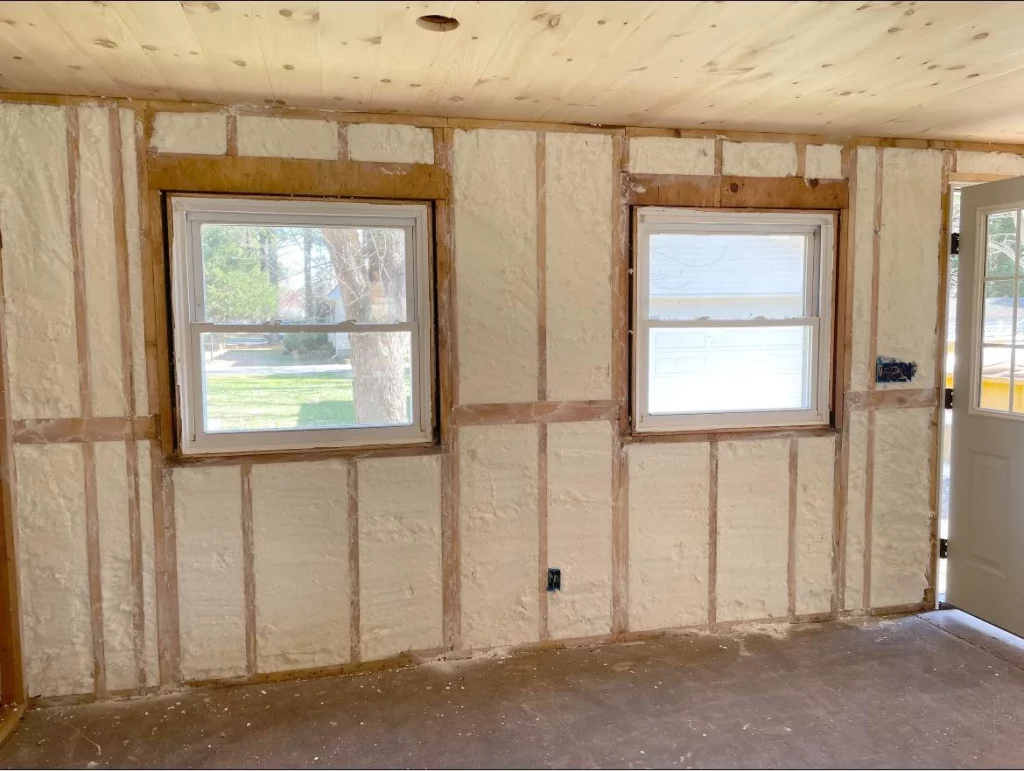
Spray foam warranties come from multiple sources, and understanding what’s covered helps set realistic expectations about longevity.
Spray foam manufacturers typically warrant their products against defects in material composition. These warranties generally cover the foam itself if it fails due to manufacturing problems, but not problems caused by installation errors. Coverage periods vary but often range from 10 years to the lifetime of the building for thermal resistance.
Reading warranty documents carefully matters. Most manufacturer warranties specifically exclude failures caused by improper application, substrate contamination, exposure to chemicals not approved by the manufacturer, or physical damage.
The installing contractor typically provides a workmanship warranty covering their installation quality. This warranty should address problems resulting from application errors. Terms vary significantly between contractors, so understanding what’s covered, for how long, and what the claim process involves is essential before hiring.
A longer warranty period doesn’t necessarily mean better coverage. A 25-year warranty from a contractor who goes out of business in five years provides limited value. The installer’s reputation, experience, and financial stability matter as much as their warranty terms.
Key Takeaways: Spray Foam Warranty Considerations
Understanding longevity helps evaluate the true return on investment for spray foam insulation. Initial costs run higher than traditional insulation options, but the long-term economics often favor spray foam when you consider the full picture.
The superior R-value per inch of closed-cell foam is just one part of the energy efficiency equation. The air sealing effect often provides equal or greater savings by eliminating the convective heat loss that plagues fibrous insulation. A study found that spray foam insulation can reduce air leakage by 50% or more compared to conventional insulation methods.
Over 30 years, these energy savings compound significantly. Even small improvements in monthly energy costs add up to thousands of dollars over the insulation’s lifetime. And because spray foam maintains its performance over time, these savings don’t diminish as they might with settling insulation.
Traditional insulation in attics and walls may need attention during the building’s lifetime. Fiberglass can be damaged by water from roof leaks, pest activity, or renovation work. Replacing insulation in finished walls is invasive and expensive. Spray foam’s permanence eliminates this future liability.
Closed-cell spray foam adds structural strength to walls and roofs. The rigid foam acts as a bonding agent between framing members, increasing resistance to wind and seismic forces. In areas prone to severe weather, this structural benefit has real value that’s difficult to quantify but meaningful over the building’s life.
By serving as both insulation and an air barrier, spray foam helps prevent the moisture problems that cause building deterioration. Wood rot, mold growth, and corrosion of metal components all result from moisture accumulation that spray foam’s air sealing helps prevent. Avoiding these problems saves significant repair costs and extends the building’s useful life.
Expert Tip: When comparing insulation quotes, ask each contractor to provide estimated payback periods based on your specific building and climate. A slightly higher upfront cost may deliver better long-term value if the installation quality and warranty coverage are superior.
While quality spray foam installation should last decades, certain conditions can compromise longevity. Understanding these risks helps you avoid them.
The surface receiving spray foam matters enormously. Dust, oil, moisture, and other contaminants interfere with adhesion. Metal surfaces may need special primers. Concrete and masonry must be dry enough for the foam to bond properly. Rushing preparation to save time inevitably causes problems later.
Spray foam is applied in passes called “lifts.” Each lift should be the proper thickness for the product being used. Too thin, and you don’t achieve full coverage. Too thick, and the exothermic reaction (the heat generated as the foam cures) can cause internal damage. Experienced applicators know the right thickness for their specific product and conditions.
Both the ambient temperature and substrate temperature affect how spray foam cures. Most products have specific temperature ranges for proper application. Too cold, and the foam may not cure fully or adhere properly. Too hot, and the foam may “flash” too quickly, affecting its structure. Professional installers monitor conditions and adjust their approach accordingly.
Spray foam can react with certain chemicals and materials. Some petroleum-based products, certain fire retardants, and incompatible sealants can cause foam degradation. This is why manufacturers specify compatible products and why experienced installers understand what materials can safely contact spray foam.
While cured spray foam is durable, it’s not indestructible. Impact damage, cutting for access, or excessive loading can damage the foam. Roofing work on spray foam roofing systems requires appropriate precautions. In wall cavities, the foam is generally protected from damage, but in exposed applications like rim joists or attics, care during other work prevents damage.
Spray foam technology continues evolving, with recent developments aimed at improving both performance and environmental impact. Understanding where the industry is heading provides context for evaluating current products.
Environmental regulations have driven the development of new blowing agents with lower global warming potential. These newer formulations maintain or exceed the thermal performance of earlier products while reducing environmental impact. The transition to these new blowing agents represents a significant advancement in the industry.
Application equipment continues advancing, with better temperature control, more precise ratio monitoring, and improved spray guns. These advances help ensure consistent quality and may contribute to even better long-term performance by reducing the variation that leads to installation problems.
Thermal imaging, moisture meters, and other diagnostic tools are becoming standard for verifying spray foam installations. Some contractors now document their work with infrared photos that show complete coverage and consistent thickness. This documentation helps ensure quality and provides a baseline for future reference.
Building codes continue evolving to recognize spray foam’s benefits and ensure proper installation. Updated code provisions address fire protection requirements, maximum foam thickness, and proper integration with other building systems. These code improvements help ensure that spray foam installations achieve their potential longevity.
The quality of your spray foam installation directly determines whether you realize the material’s potential 30-50 year lifespan. This makes contractor selection perhaps the most important decision in the entire process.
Look for installers with substantial experience in buildings similar to yours. Residential and commercial applications have different requirements. Different climate zones present different challenges. An installer who understands your specific situation brings relevant knowledge to your project.
Ask about training and certification. Industry organizations offer training programs and certifications that demonstrate commitment to quality. While certification alone doesn’t guarantee quality work, it indicates the contractor takes their profession seriously.
Request references from past clients, preferably from installations that are at least a few years old. This gives you insight into both the initial quality and how the work has held up over time. A contractor confident in their work should be happy to provide references.
Understand their quality control process. How do they verify proper mixing ratios? How do they check coverage and thickness? What do they do if conditions aren’t ideal? A thoughtful approach to quality control suggests the installer will get the details right.
Peninsula Insulation, LLC emphasizes thorough preparation, careful application, and verification of every installation. The difference between spray foam that lasts 20 years versus 50 years often comes down to these details.
Closed-cell spray foam insulation offers exceptional longevity when properly understood, specified, and installed. The material’s unique properties create a permanent thermal barrier that resists moisture, maintains dimensional stability, and provides air sealing in a single application. Most installations will outlast the buildings they insulate.
But realizing this potential requires attention to the factors that matter most. Installation quality stands above all others. The best spray foam product applied poorly will disappoint, while quality installation of any reputable product will perform for decades. Environmental conditions, building design, and protection from damage all play supporting roles in maximizing lifespan.
Armed with this knowledge, you can make informed decisions about spray foam insulation for your project. You know what questions to ask contractors, what warning signs to watch for, and what realistic expectations to set for long-term performance. You understand why spray foam costs more initially and why that investment typically pays dividends over time.
Use this guide as a reference throughout your insulation project. Return to the sections on warning signs if you have concerns about existing foam. Review the maintenance recommendations periodically to ensure your insulation continues performing optimally. And when evaluating contractors, apply the criteria discussed here to find a partner who will deliver an installation that truly lasts.
Making the right decisions about insulation starts with accurate information and experienced guidance. Peninsula Insulation, LLC brings extensive knowledge of spray foam applications across diverse building types and conditions. For questions about spray foam longevity, installation requirements, or evaluating your specific situation, contact Peninsula Insulation, LLC at (410) 770-2624 or email wil@mdsprayfoam.net. The right insulation decision today protects your building for decades to come.
In most cases, properly installed closed-cell spray foam never needs replacement during the building’s lifetime. The material is designed to maintain its thermal and structural properties for 30-50 years or longer. Replacement typically only becomes necessary if the original installation was defective, the foam was damaged by external factors like fire or chemical exposure, or major building renovations require removal.
Spray foam can sometimes be installed over existing insulation, but this approach has important considerations. For closed-cell foam to adhere properly, the substrate must be clean and appropriate. Installing over dirty, dusty, or contaminated insulation can compromise adhesion. Additionally, moisture trapped in existing insulation may cause problems. Each situation requires evaluation based on existing conditions, desired outcomes, and budget.
Signs of proper installation include uniform coverage without gaps or voids, consistent color throughout, firm surface texture, and complete adhesion to substrates. If you can access installed foam, look for separation from surfaces, soft or spongy areas, extensive cracking, or significant color variation. Professional evaluation using thermal imaging can identify coverage problems even in enclosed cavities.
The off-gassing period for spray foam primarily occurs during and shortly after installation. Most products reach 90%+ cure within 24 hours, with full curing continuing over several days to weeks. Once fully cured, properly formulated spray foam does not continue off-gassing at levels that affect indoor air quality. If odors persist beyond the initial curing period, investigation may reveal installation problems or other building issues.
Closed-cell spray foam provides excellent moisture resistance and can help address moisture problems when properly integrated into the overall building system. Its air sealing properties reduce moisture transport through air leakage, and the foam itself doesn’t absorb water. However, spray foam alone doesn’t solve all moisture problems. The building’s overall moisture management, including ventilation, vapor control, and drainage, must be addressed for optimal results.
The value proposition depends on your specific situation and priorities. While closed-cell spray foam costs more upfront, it provides benefits that fiberglass cannot match: superior R-value per inch, air sealing in a single step, moisture resistance, and structural enhancement. Over 30 years, the energy savings, avoided maintenance, and eliminated air sealing costs often make spray foam the more economical choice. For buildings where performance and longevity matter most, spray foam delivers value that justifies its cost.