Weak Wall Insulation? How Closed-Cell Spray Foam Adds Strength in Crofton, MD
Weak wall insulation does more than waste energy. It leaves your home vulnerable to structural stress, moisture problems, and comfort…


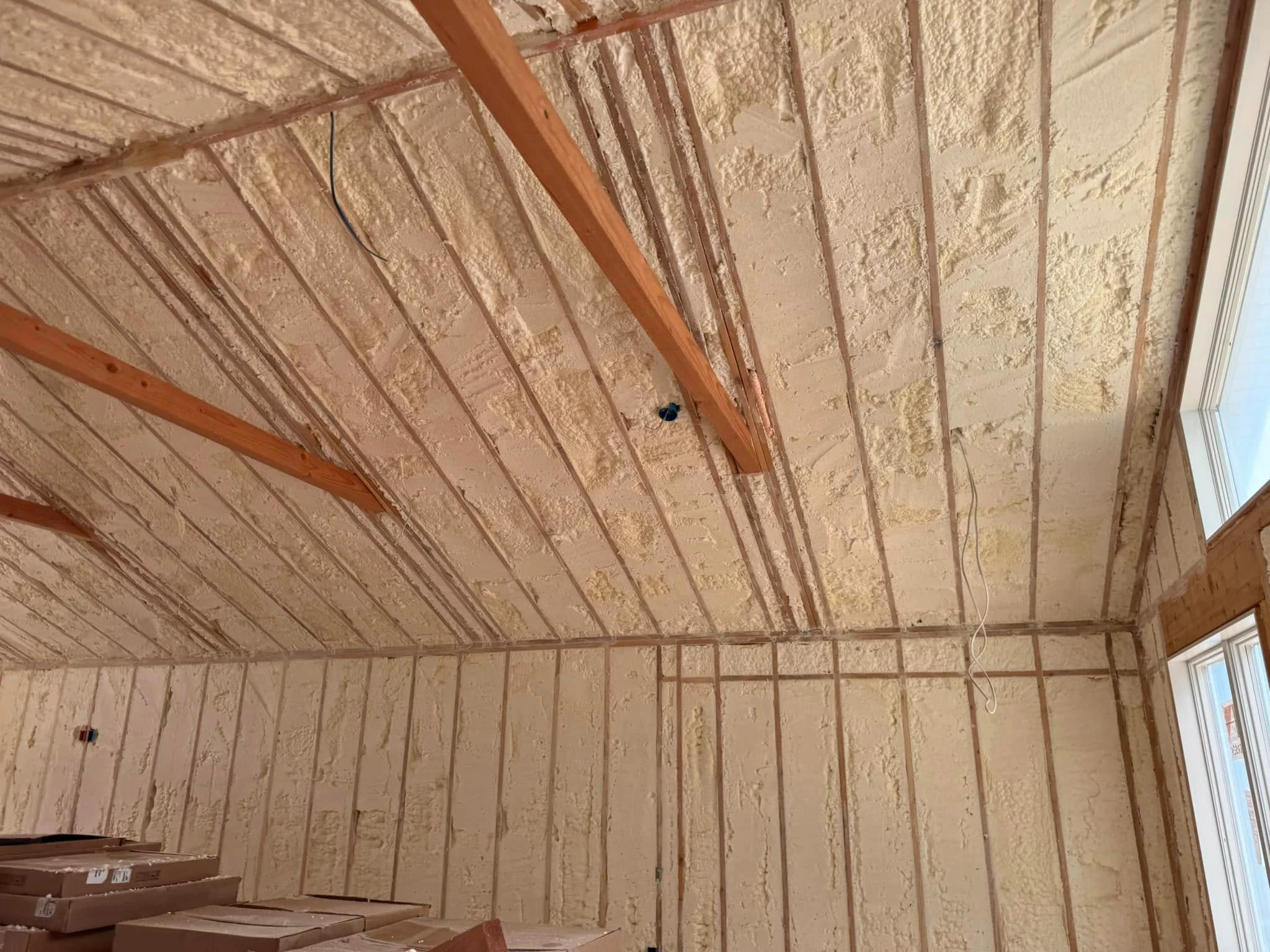
For homeowners and contractors in Easton, Maryland, managing moisture intrusion is one of the most critical challenges in building performance. The region’s humid subtropical climate delivers hot, muggy summers and variable winters, creating year-round conditions that promote condensation, mold growth, and structural damage. Closed-cell spray foam insulation addresses these challenges more effectively than any other insulation type because it combines an air barrier, vapor barrier, and thermal barrier in a single application. While open-cell spray foam, fiberglass, and cellulose each have their place in specific applications, closed-cell spray foam stands apart for moisture-heavy environments like Easton due to its water-resistant cell structure and ability to prevent both air and vapor movement. The right choice depends on the specific building area, budget considerations, and long-term performance goals.
Easton sits in a region where humidity isn’t just a summer inconvenience but a year-round building performance issue. The area experiences a humid subtropical climate characterized by hot, humid summers and mild to cool winters, with moisture levels in the ground remaining consistently high throughout the year, according to Groundworks’ analysis of Easton’s crawl space conditions.
This climate creates several specific problems for traditional insulation approaches. During summer months, warm, moisture-laden air infiltrates cooler crawl spaces and wall cavities, where it condenses on surfaces. This condensation feeds mold growth, rots wood framing, and degrades conventional insulation materials. Winter brings its own challenges, as heated interior air carries moisture into wall assemblies where it can condense on cold sheathing.
Local homeowners frequently report persistent humidity issues, musty odors, and visible mold growth in crawl spaces and basements. According to indoor air quality professionals serving the Easton area, maintaining indoor humidity below 50% relative humidity during warm months is essential to prevent mold and dust mite proliferation, yet many homes struggle to achieve this threshold with standard insulation and ventilation approaches.
Fiberglass batt insulation, while cost-effective and widely available, performs poorly in moisture-heavy environments because it absorbs and retains water. When fiberglass gets wet, its R-value drops dramatically, and it becomes a breeding ground for mold and bacteria. Even after drying, the material often compresses and loses its installed thickness, permanently reducing thermal performance.
Cellulose insulation faces similar challenges. Made from recycled paper products, cellulose is treated with fire retardants but remains vulnerable to moisture absorption. In crawl spaces and rim joist areas where humidity fluctuates, cellulose can settle, clump, and lose effectiveness over time.
Open-cell spray foam offers better air sealing than fibrous insulation, but absorbs water when exposed to liquid moisture or prolonged high humidity. Its lower density and open cell structure allow water vapor to pass through, which is beneficial in some assemblies but problematic in below-grade or high-moisture applications.
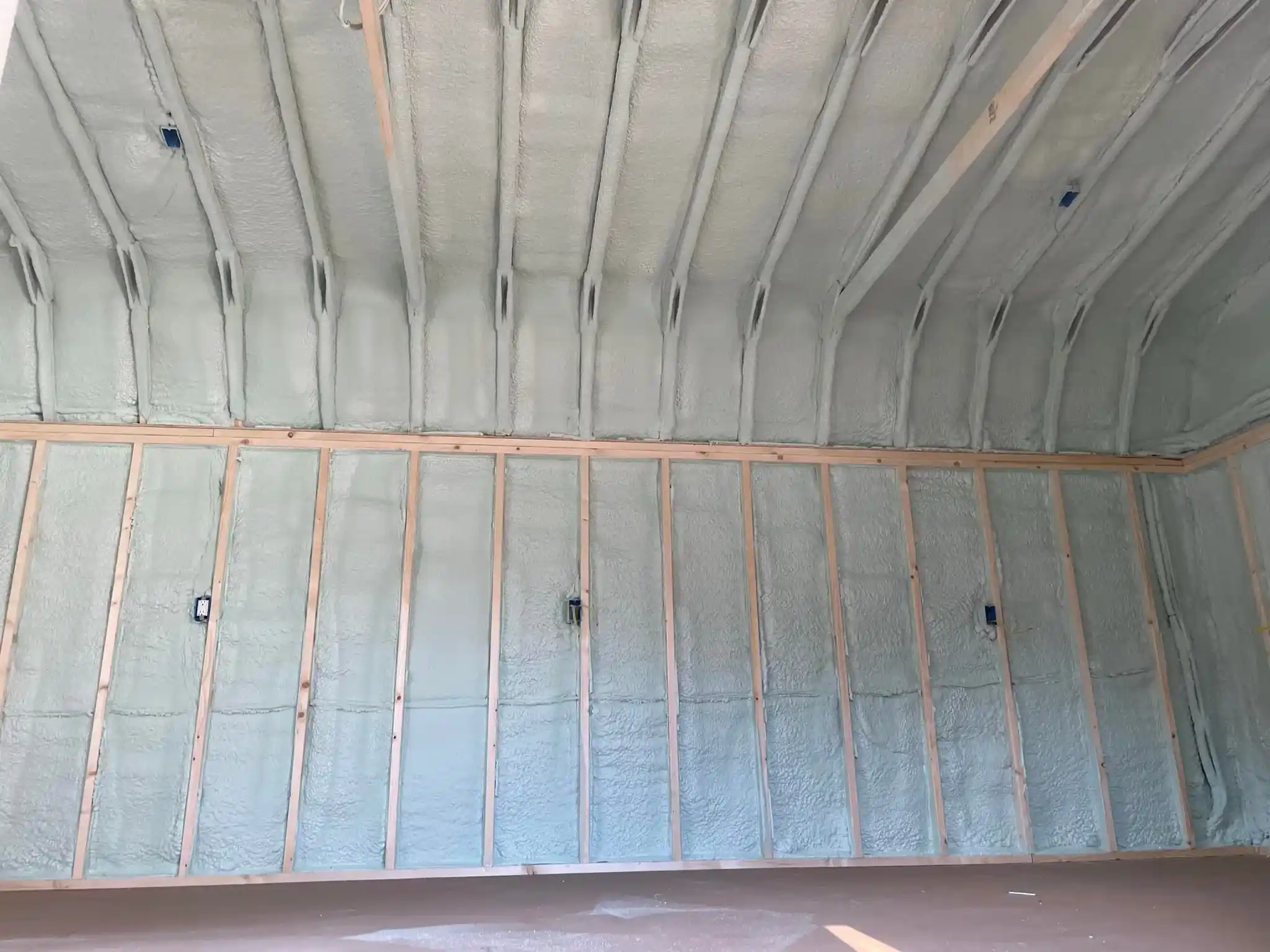
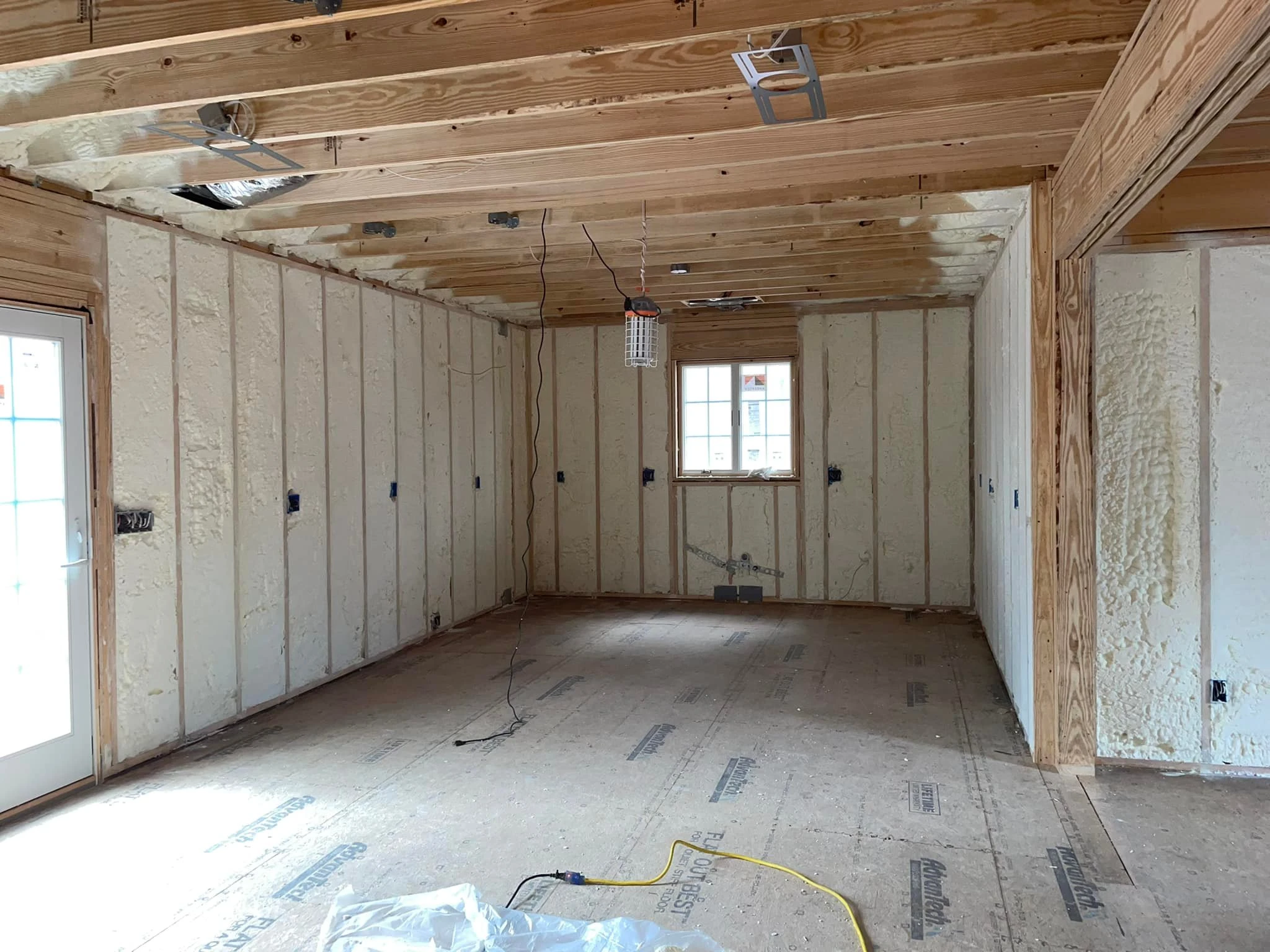
Closed-cell spray foam insulation distinguishes itself through its unique physical structure. During application, the foam expands to fill cavities completely, creating a dense matrix of closed cells filled with insulating gas. This structure provides multiple moisture control mechanisms that work together:
| Property | Closed-Cell Spray Foam | Open-Cell Spray Foam |
|---|---|---|
| Water Absorption | Minimal; flood-resistant material | Absorbs water when exposed |
| Vapor Permeance | Class II vapor retarder at 1.5-2 inches | Vapor permeable; allows drying |
| Air Sealing | Excellent; complete air barrier | Good air barrier, but less dense |
| R-Value Per Inch | R-6 to R-7 | R-3.5 to R-4 |
| Density | 1.8 to 2.5 lb/ft³ | 0.4 to 0.6 lb/ft³ |
| Structural Strength | Adds racking strength | Minimal structural contribution |
| Best Applications | Below-grade, crawl spaces, rim joists, exterior walls in humid climates | Attics, interior walls, sound control |
| Cost Per Board Foot | $1.50 to $3.50 | $0.75 to $1.50 |
The table above illustrates why closed-cell spray foam is superior for moisture-heavy applications in Easton. While open-cell foam has legitimate uses in attics and interior walls where drying potential is desired, closed-cell foam provides the water resistance and vapor control needed in crawl spaces, basements, and exterior wall assemblies exposed to the region’s humid conditions.
Crawl spaces represent the most moisture-vulnerable area of Easton homes. Ground moisture evaporates into the crawl space air, creating humidity levels that often exceed 70% during the summer months. This moisture migrates upward into living spaces, causing comfort issues, indoor air quality problems, and structural damage.
Closed-cell spray foam applied to crawl space walls and rim joist areas creates a continuous thermal and moisture barrier that isolates the crawl space from ground moisture. When combined with a vapor barrier on the floor and proper dehumidification, this approach eliminates the conditions that allow mold and wood decay to develop.
Below-grade walls present unique moisture challenges because they contact soil that remains damp year-round. Traditional interior insulation approaches trap moisture against the wall, promoting mold growth and structural damage. Closed-cell spray foam applied directly to basement walls provides both insulation and moisture protection without creating a moisture trap.
The rim joist area, where the foundation meets the wood framing, is particularly vulnerable in Easton’s climate. Air leakage through this area carries significant moisture into wall assemblies. Closed-cell spray foam seals these gaps completely while providing the vapor protection needed where temperature differentials are most extreme.
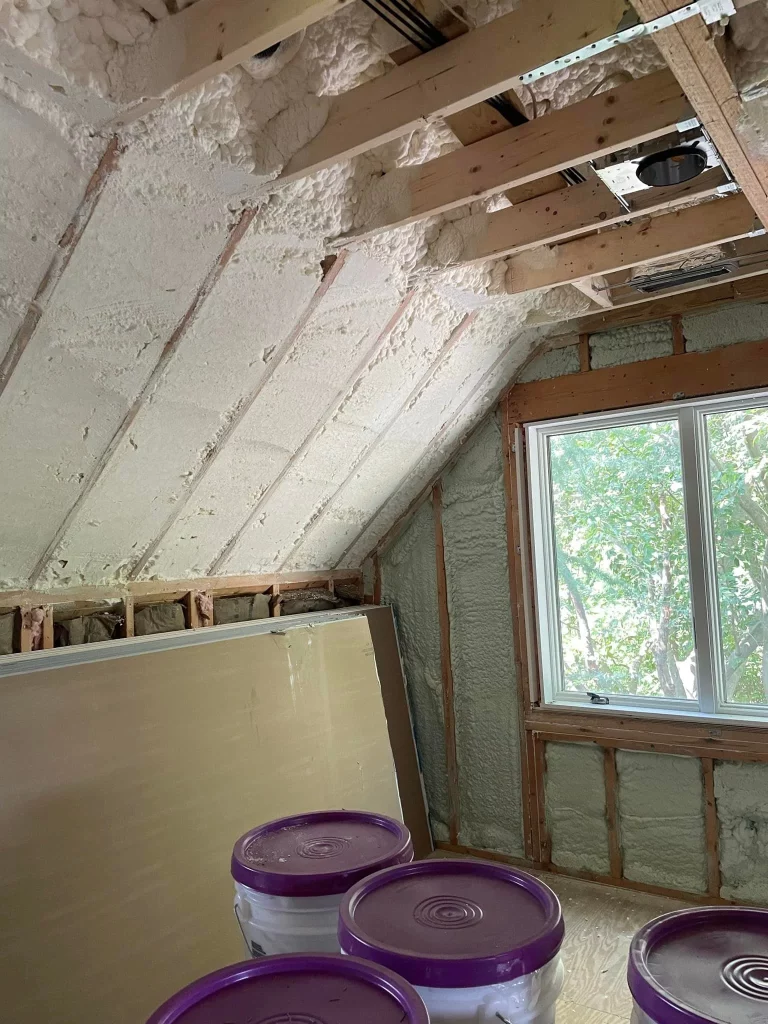
Closed-cell spray foam requires a higher upfront investment than traditional insulation, with costs typically ranging from $1.50 to $3.50 per board foot depending on project complexity, accessibility, and market conditions. However, this investment delivers returns through multiple mechanisms:
| Insulation Type | Initial Cost (1,500 sq ft) | Energy Savings/Year | Moisture Risk | Break-Even Timeline |
|---|---|---|---|---|
| Fiberglass Batts | $1,500 – $3,000 | $200 – $400 | High | 5-8 years (excluding repairs) |
| Open-Cell Spray Foam | $3,000 – $5,000 | $350 – $600 | Moderate | 6-9 years |
| Closed-Cell Spray Foam | $5,000 – $8,000 | $500 – $900 | Low | 7-12 years |
Note: Energy savings estimates assume average Easton utility rates and typical building performance improvements. Actual results vary based on existing conditions and usage patterns.
The performance of closed-cell spray foam depends heavily on proper installation. Off-ratio mixing, inadequate substrate preparation, or improper application thickness can create voids, reduce adhesion, or prevent proper curing. When evaluating insulation contractors in the Easton area, consider these indicators of quality:
Ask potential contractors about their approach to moisture assessment before installation. A thorough contractor will evaluate existing moisture conditions and address bulk water issues before applying spray foam, because no insulation product performs properly when applied over active water intrusion.
Closed-cell spray foam typically needs a minimum thickness of 1.5 to 2 inches to achieve a perm rating below 1.0, qualifying it as a Class II vapor retarder. In crawl spaces and basements, we often recommend 2 to 3 inches to ensure complete coverage and maximum moisture protection, Aeroflex USA.
We generally do not recommend applying closed-cell spray foam directly over existing insulation, as this can trap moisture and prevent proper adhesion. Existing insulation should be removed and the substrate properly prepared before spray foam application to ensure long-term performance.
Closed-cell spray foam prevents future mold growth by controlling moisture, but it does not address existing mold contamination. Active mold must be remediated before insulation is applied. We recommend professional mold assessment and remediation before encapsulating crawl spaces or basements.
Properly installed closed-cell spray foam typically lasts 20 to 30 years or more without significant degradation. Unlike fibrous insulation, it does not settle, compress, or lose R-value over time, making it a durable solution for Easton’s challenging climate conditions.
Once cured, closed-cell spray foam is inert and does not off-gas harmful compounds. The installation process requires proper ventilation and temporary occupant evacuation, typically 24 to 72 hours, depending on the product and application scope. After curing, the material is safe and can improve indoor air quality by preventing mold growth and reducing air infiltration.
At Peninsula Insulation, LLC, we understand Easton’s moisture challenges because we work in this climate every day. Our team specializes in closed-cell spray foam applications designed specifically for the Mid-Atlantic’s humid conditions, from crawl space encapsulation to complete building envelope solutions. We bring technical expertise, quality materials, and a commitment to long-term performance to every project.
Contact us today at (410) 770-2624 or email wil@mdsprayfoam.net to schedule your consultation. We will assess your property’s specific moisture challenges and recommend the right insulation strategy to protect your investment and improve your indoor environment.