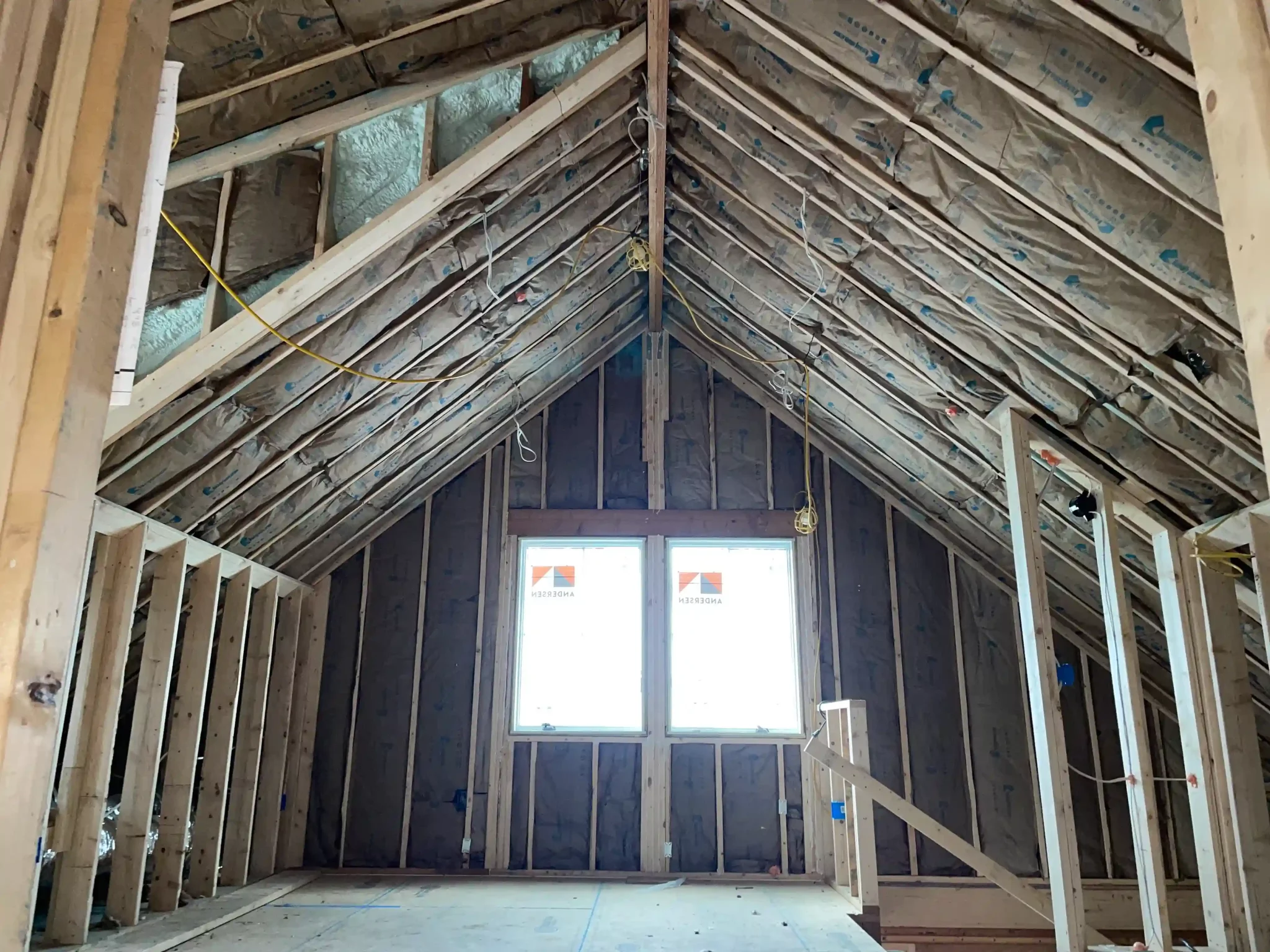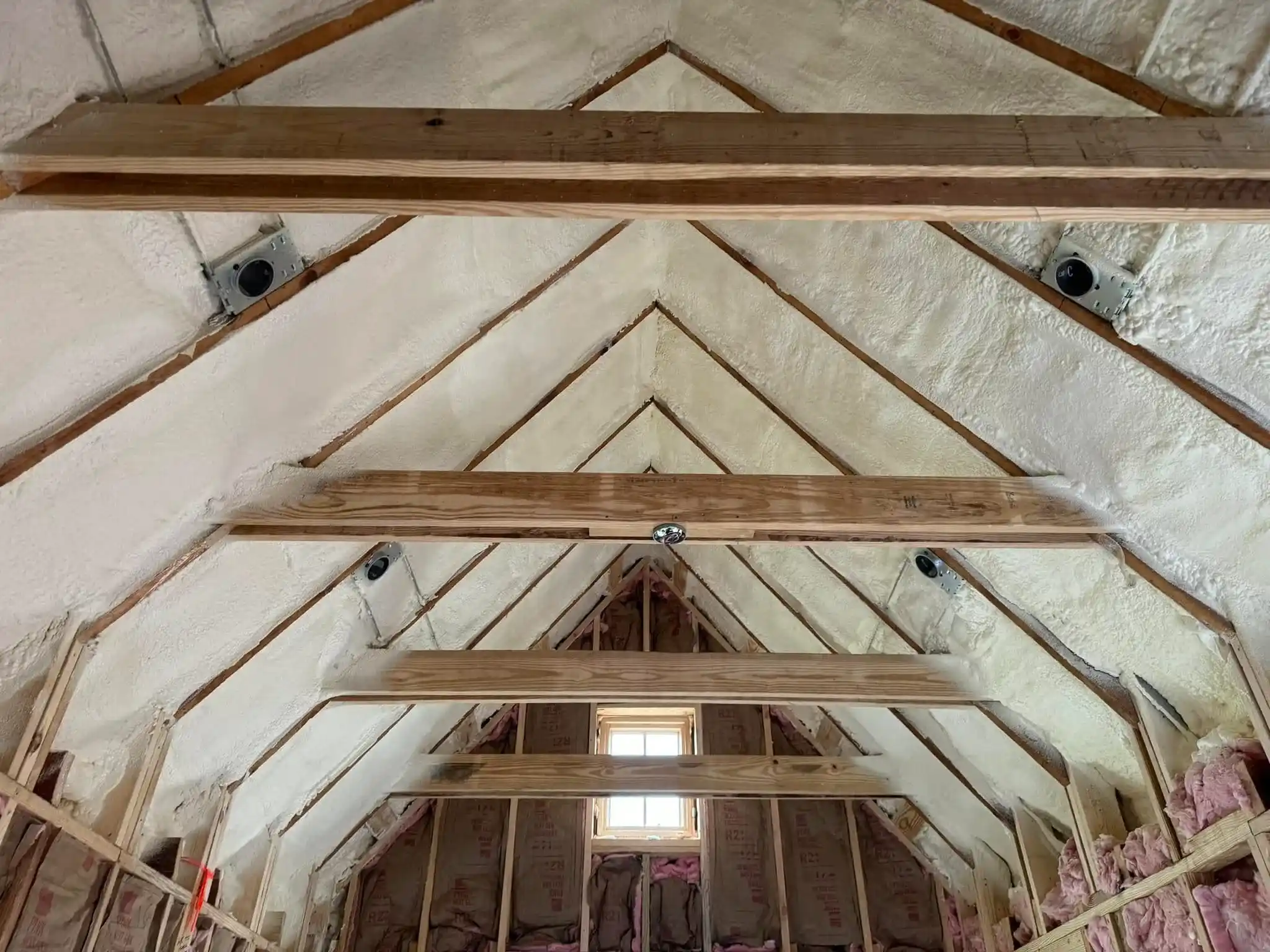
What Happens When Traditional Insulation in New Carrollton, MD Leaves Air Gaps?
When traditional insulation in New Carrollton, MD develops air gaps, it stops doing the one job it was installed to…


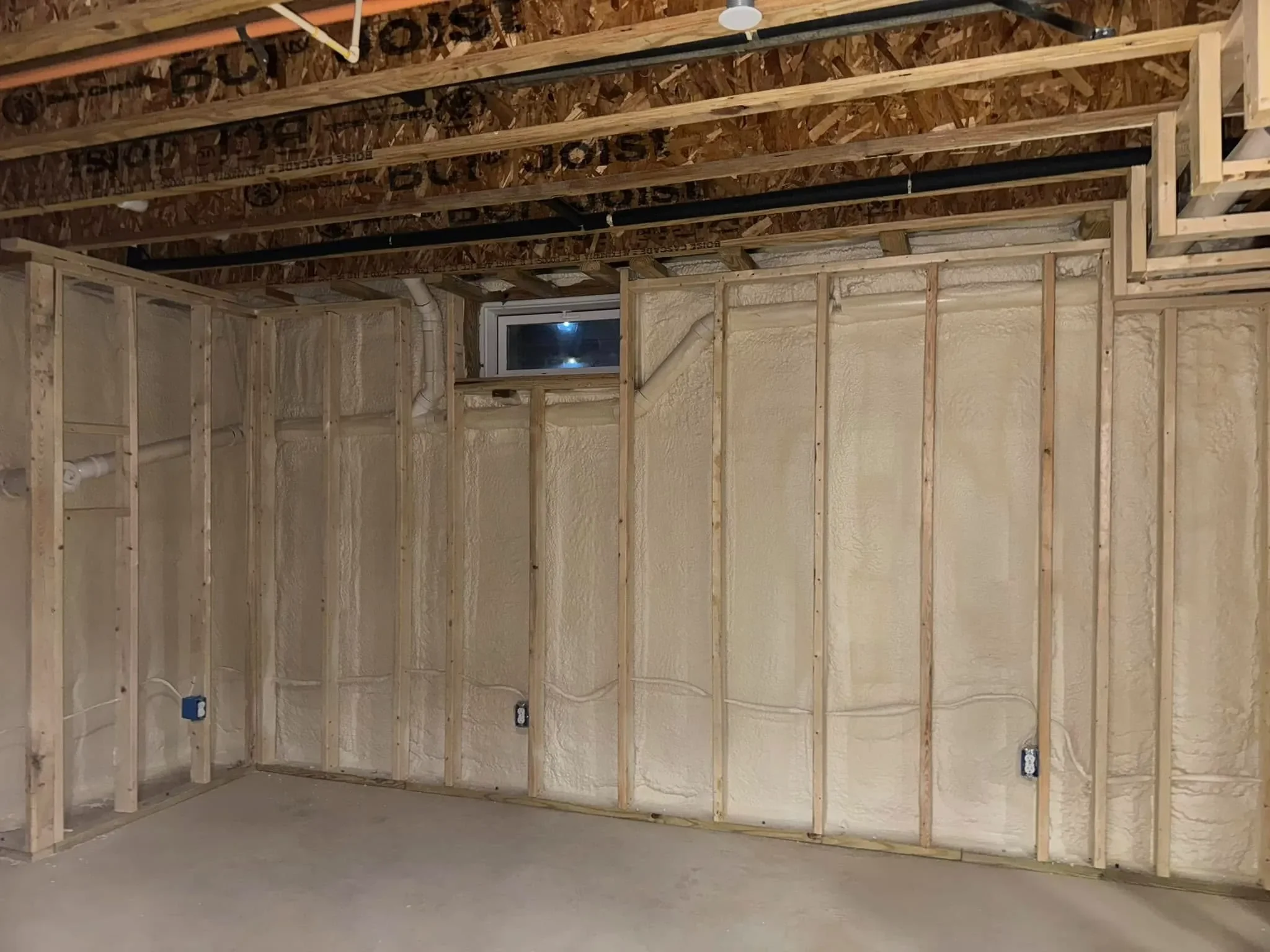
Insulation is one of those purchases you make once and hope never to think about again. Closed-cell spray foam solutions are designed to provide long-term performance, which is why the first question most property owners ask is so direct: how long does closed-cell spray foam last? The material ends up sealed behind drywall and under roof decks, out of sight, so you want real confidence it will keep working for decades. Closed-cell spray foam insulation, which our team at Peninsula Insulation installs in homes and commercial buildings across Maryland, has earned a set-it-and-forget-it reputation because it cures into a rigid, permanent barrier that bonds directly to the structure itself. Fiberglass batts sag and soak up moisture. Closed-cell foam does neither.
Below, we break down the science behind those numbers, the factors that stretch or shorten a foam’s service life, the warning signs worth watching, and the habits that protect your investment. Whether you’re weighing insulation options for new construction, planning an upgrade, or trying to figure out what’s already inside your walls, you’ll find straight answers here. Want the full rundown on the product itself? See our closed-cell spray foam insulation page.
A little background makes the longevity discussion easier to follow. Closed-cell spray polyurethane foam (ccSPF) starts as two separate liquids. One stream carries isocyanate, the other a resin blend. The moment the two meet at the spray gun tip, a chemical reaction takes off: the mixture expands 30 to 50 times its liquid volume and hardens into rigid plastic foam.
“Closed-cell” refers to what’s happening inside once the reaction finishes. The cured foam is packed with tiny gas-filled bubbles, and each one is sealed off from its neighbors by solid cell walls. Gas stays locked inside those cells for years, and that trapped gas is what pushes the R-value into the R-6 to R-7 per inch range.
Open-cell foam takes a different approach. Its internal bubbles connect, which lets moisture pass through and leaves the material soft and flexible. Closed-cell foam’s rigid, water-shedding structure is exactly why it holds up better in demanding, damp environments.
Closed-cell spray foam density specifications matter here too. Most building applications use a 2-pound density formula, meaning roughly two pounds of foam per cubic foot. That density adds genuine structural strength to walls while staying practical for typical insulation depths. Roofing and specialty work use higher-density formulations, usually at a higher price.
Time for the honest answer. Closed-cell spray foam lifespan can extend for decades when the material is installed correctly and maintains its thermal performance and physical strength. Independent laboratory aging studies have pulled samples from buildings decades old and found the foam still performing within acceptable limits.
Lab conditions do set an optimistic ceiling, though. Real installations face temperature swings, moisture events, building movement, and UV exposure before the foam ever gets covered, and all of it shapes how the material ages. Data compiled by the Spray Polyurethane Foam Alliance shows that correctly installed closed-cell foam retains the large majority of its original R-value for 20-plus years across most climate zones.
A process called thermal drift explains some of the early change. Fresh foam hits its peak insulating value thanks to the gas trapped inside the cells at manufacture. Over the first several years, a small amount of that gas diffuses out, and ordinary atmospheric gases move in, which carry a slightly lower insulating value. Manufacturers already plan for this: their published “aged” R-values, typically measured after 180 days or 5 years, reflect the stabilized number. After that early drift, performance levels off and holds steady for the rest of the material’s service life.
Expert Tip: Whenever you compare spray foam quotes, ask for the aged R-value rather than the initial one. It reflects how the foam will actually perform for decades, not just on day one.
Cure time is a separate question from lifespan, but the two are tightly connected. Closed-cell foam reaches a workable cure within 8 to 24 hours in typical conditions, and full off-gassing continues over several days to a couple of weeks. When crews rush the process or spray outside the manufacturer’s recommended temperature window, the foam often pays for it with weaker long-term performance.
A few organizations lead the way on durability testing. The Spray Polyurethane Foam Alliance has recovered foam samples from buildings 20, 30, and even 40-plus years old, and the pattern is consistent: foam that was installed right, kept dry, and shielded from sun shows remarkably little decline. ASTM International publishes the test methods behind compressive strength, water absorption, dimensional stability, and thermal conductivity for foam products, and the current standard for medium-density closed-cell material is ASTM C1029. When comparing products, third-party certifications from organizations like UL, Intertek, or the NAHB Research Center add another layer of confidence.
The answer to why this foam lasts so long sits at the molecular level. Mix the two liquid components, and they form a cross-linked polymer, a dense three-dimensional web of chemical bonds connecting long polymer chains.
That web is the reason the material behaves like a permanent part of the building. Fully cured closed-cell foam does not creep, flow, or permanently deform under ordinary conditions. The cells do not collapse. The material never settles. Dimensional stability holds across a wide temperature range.
Water resistance is the other pillar of durability, and it gets straight to the heart of the closed-cell spray foam moisture question. Those sealed cells simply do not drink water the way fibrous insulation does. Liquid beads up on the surface and drains away instead of wicking in. That matters because moisture is what ruins most other insulation quickly. Soaked fiberglass sheds R-value fast and invites mold. Wet cellulose compacts and stops working. Closed-cell foam sheds water and keeps insulating.
The foam also doubles as an air barrier, so it limits the moisture that rides on leaking air into wall assemblies. That protects the foam itself and the structural materials around it.
No single variable shapes spray foam insulation lifespan more than installation quality. This is exactly where the gap between what the product can do and what it actually does opens up. Correct application demands precise mixing ratios, the right substrate temperature, controlled lift thickness, and acceptable jobsite conditions.
Skew the chemistry and problems follow. Too much isocyanate leaves brittle foam that cracks. Too much resin produces soft foam that never fully cures and may shrink over time. A cold or contaminated substrate blocks proper adhesion. Lifts applied too thick trap heat from the curing reaction and can damage the foam’s internal structure.
Building science researchers, including the team at Building Science Corporation, have documented that installation defects account for the overwhelming majority of spray foam complaints: shrinkage, lingering odors, adhesion failures, and coverage gaps. Foam applied correctly with the same products during the same period rarely shows any of those issues.
Expert Tip: Ask every installer you’re considering to explain their quality control process in detail. Crews that verify their own work with thermal imaging or moisture meters, and that welcome questions about training and equipment, are usually the ones worth hiring.
| Factor | Impact on Lifespan | How to Protect Against It |
|---|---|---|
| Installation quality | The biggest variable; off-ratio mixing and cold substrates cause most failures | Hire certified installers who verify mix ratios, temperatures, and lift thickness |
| UV exposure | Degrades exposed foam within months to a few years | Cover or coat all foam as code requires |
| Standing water | Foam resists water, but bonded substrates can rot | Fix leaks and drainage problems quickly |
| Temperature cycling | Minor stress, mostly on marginal installations | Choose quality foam with proven dimensional stability |
| Pest activity | Occasional tunneling through the foam | Seal entry points and address activity promptly |
Once the foam is in place, the environment starts testing it. Ultraviolet light is the clearest threat: sun-exposed foam yellows, turns chalky, and eventually breaks down, which is one reason building codes require a thermal or ignition barrier over any exposed foam.
Water rarely harms closed-cell foam itself, but long-term standing water can damage the wood or masonry the foam is bonded to. Freezing and thawing cycles push every building material through endless small expansions and contractions. Closed-cell foam handles that motion well, though a marginal installation can suffer under repeated extremes.
The way a building handles air sealing, moisture, and ventilation touches every material inside it, foam included. A structure that traps humidity or develops condensation problems stresses the entire assembly. The foam itself resists water damage, but those conditions still fall short of ideal for squeezing out maximum service life.
Comparisons make the durability picture much clearer. When people ask how long spray foam insulation lasts relative to fiberglass or cellulose, the honest answer is: considerably longer, because the failure modes are completely different.
| Insulation Type | Expected Lifespan | Primary Degradation Mechanisms | Moisture Resistance |
|---|---|---|---|
| Closed-Cell Spray Foam | 30-50+ years | UV exposure, installation defects | Excellent |
| Open-Cell Spray Foam | 20-30 years | UV exposure, moisture absorption | Fair to Good |
| Fiberglass Batts | 15-30 years | Settling, moisture absorption, air movement | Poor |
| Blown Fiberglass | 15-25 years | Settling, moisture absorption | Poor |
| Cellulose | 20-30 years | Settling, moisture sensitivity, mold potential | Poor to Fair |
| Mineral Wool | 30-50+ years | Moisture absorption in some products | Good to Excellent |
Fiberglass loses effectiveness mainly through settling and air movement, with batts drooping inside cavities and leaving exposed gaps. Cellulose can settle 20% or more within wall cavities over time, cutting its effective R-value by the same margin, and it also absorbs moisture and compacts. Mineral wool comes closest to matching closed-cell foam; it resists settling and moisture reasonably well, but it doesn’t seal air leaks the way spray foam does.
The fundamental difference with closed-cell foam is permanence. Once cured, it doesn’t settle, sag, absorb water, or feed mold. What goes into the wall today is essentially the same material still doing its job 30 years from now, provided the installation was done right and the building stays in normal condition.
Is spray foam permanent? For all practical purposes, yes. Once closed-cell foam finishes curing, its cross-linked polymer structure does not break down under ordinary building conditions, and there’s no replacement date circled on any calendar. The material essentially becomes part of the building envelope unless someone removes it, physically damages it, or exposes it to conditions far outside normal use, such as fire or prolonged chemical contact.
That permanence also changes the disposal conversation. End-of-life PUR foam material rarely enters the picture while you own the building, since the foam usually comes out only during demolition or major renovation. Few insulation purchases let you skip the replacement cycle entirely.
Closed-cell foam is remarkably tough, but problems can still develop. Watch for these warning signs so you can act early:
Expert Tip: If something looks wrong, bring in an independent building science consultant for the evaluation instead of leaning only on the original installer’s opinion.
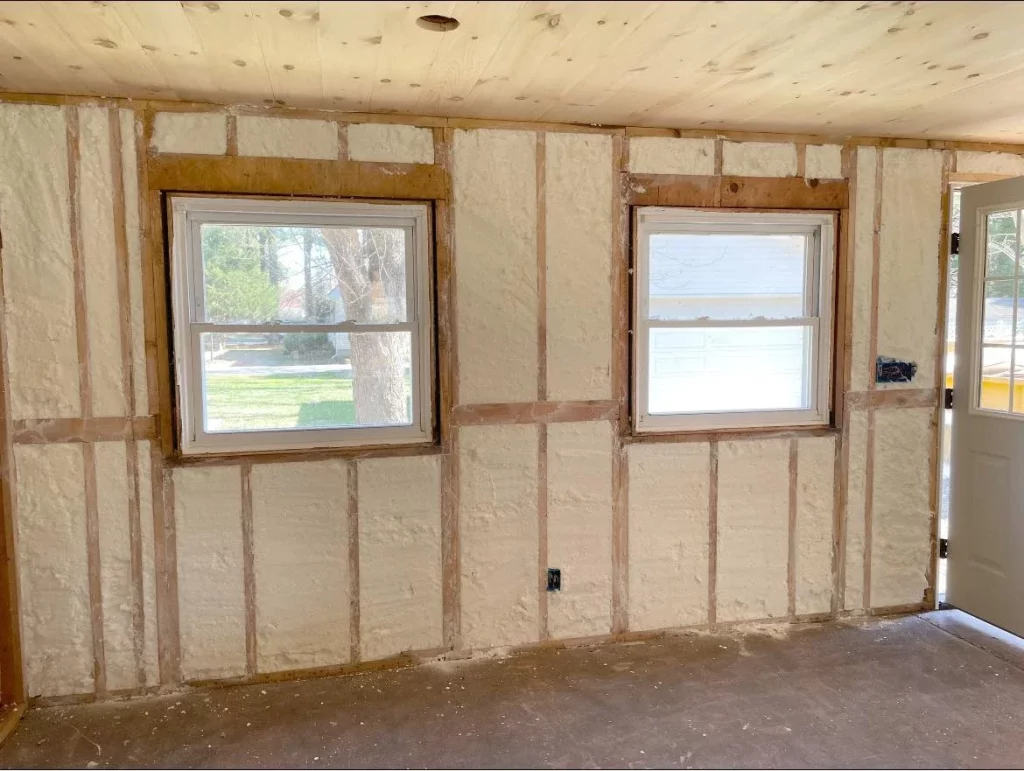
Closed-cell foam asks for almost no upkeep once installed correctly, but a handful of simple habits protect your investment:
Manufacturer warranties generally cover the foam against material defects, running anywhere from 10 years up to the lifetime of the building for thermal resistance, while excluding problems caused by installation mistakes. The installing contractor’s workmanship warranty stands separately and covers application quality specifically.
Key Takeaways:
Yes, spray foam costs more on day one than conventional insulation. The math over time often flips in its favor. Air sealing alone can cut air leakage by roughly 50% or better compared with standard insulation, and since the foam never settles, those savings don’t fade the way they can with fiberglass or cellulose.
There’s also money saved on future repairs. Roof leaks, pests, or renovation work can wreck fiberglass, and digging insulation out of finished walls is invasive and expensive. Closed-cell foam’s permanence removes that future liability, and its rigidity adds real bracing strength to walls and roofs, which matters in areas prone to high wind or seismic activity. Homeowner forums tell the same story; in one Remodel thread on whether closed-cell spray foam is worth the hype, the takeaway matches what the data shows: results ride almost entirely on who holds the spray gun.
Expert Tip: When lining up quotes, ask each contractor to estimate a payback period for your specific building and climate. A modestly higher upfront price often delivers better long-term value when installation quality and warranty support are stronger.
Because installation quality determines whether you ever see that 30- to 50-year lifespan, selecting your installer is the single most important decision in the process. Look for crews with experience on buildings like yours, ask about training and certification, and request references from jobs at least a few years old so you can see how the work has held up. A free quote from an experienced local installer is a smart place to start.
Peninsula Insulation, LLC builds every job around thorough substrate preparation, disciplined application, and verification before we consider the work finished. The difference between foam that lasts 20 years and foam that lasts 50 usually comes down to those details. Our team also provides full residential insulation services for homeowners planning a complete insulation upgrade, not just spray foam alone.
Every smart insulation decision starts with accurate information and an experienced team behind it. Peninsula Insulation, LLC offers a free, no-pressure quote, so if you have questions about spray foam longevity, installation requirements, or your specific building, reach out, and we’ll walk through your options together.
Still gathering details before you decide? Read our complete spray foam insulation guide for a broader look at performance, cost, and applications.
In most buildings, 30 to 50 years or more. Replacement is only necessary when the original installation was defective, the foam suffered fire or chemical damage, or a major renovation requires removal.
Canned expanding foam products generally hold up 10 to 20 years, though the consistency and density fall short of professionally applied closed-cell foam.
Injection foam, the material pumped into existing wall cavities, typically lasts 20 to 30 years or longer, though its performance depends more heavily on cavity conditions than closed-cell spray foam does.
Sometimes, but the substrate must be clean and capable of bonding. Spraying over dusty, dirty, or moisture-trapping material undermines adhesion, so every situation needs an individual evaluation.
Look for even coverage without gaps or voids, consistent color, a firm surface, and full adhesion to the framing. Separation, soft spots, heavy cracking, or uneven color are red flags, and a thermal imaging inspection can catch hidden coverage problems.