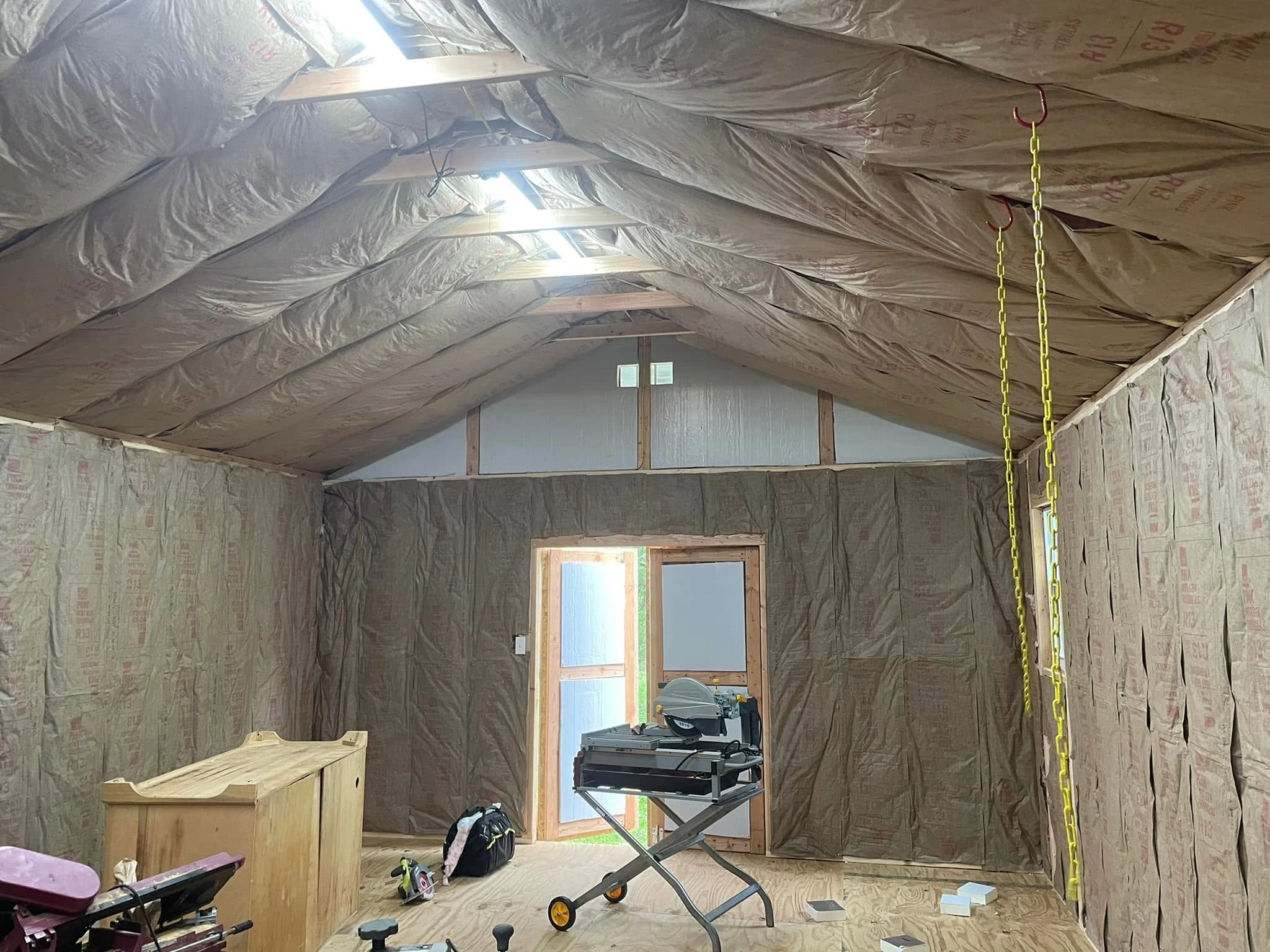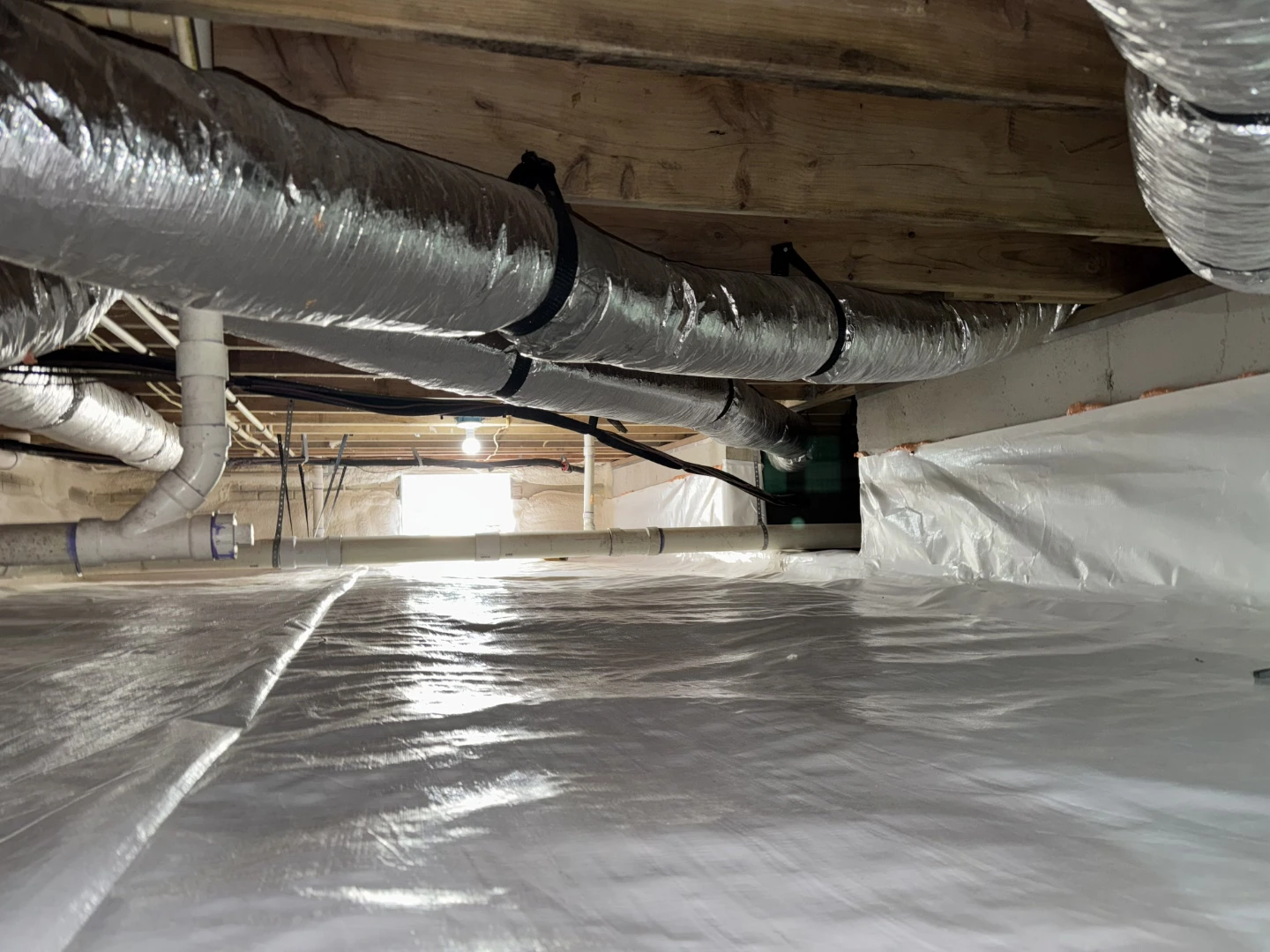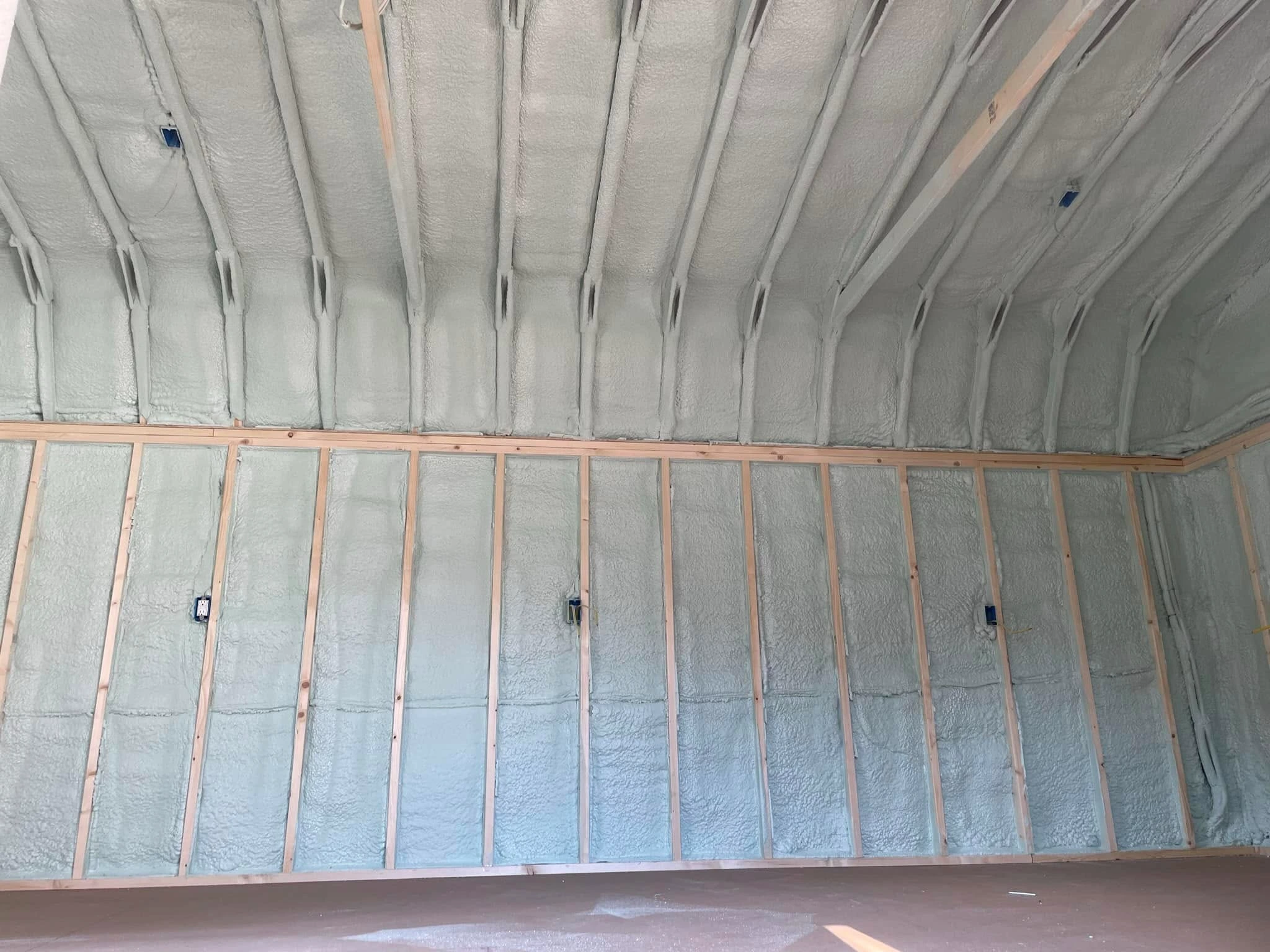
What Factors Determine the Right Spray Foam Insulation Thickness for Stevensville, MD Homes?
Most Stevensville homes need 2 to 3 inches of closed-cell foam in walls and crawl spaces, 4 to 5 inches…


Most Stevensville homes need 2 to 3 inches of closed-cell foam in walls and crawl spaces, 4 to 5 inches on roof decks, and 8 to 10 inches of open-cell foam in attics. The right spray foam insulation thickness in Stevensville, MD homes depends on four things: foam type, your R-value target, the space being insulated, and how our humid Chesapeake climate handles moisture.
Foam type is the first factor because it decides how much R-value every inch delivers. Most closed-cell products list roughly R-6 to R-7 per inch, while open-cell foam typically sits near R-3.5 to R-3.8. Same target R-value, very different depth.
The closed-cell spray foam thickness in Stevensville, MD homes usually gets runs of 2 to 3 inches in wall cavities, 4 to 5 inches on roof decks, and 2 to 3 inches on crawl space walls. Density and low vapor permeance make it the pick where cavities are shallow or moisture is a concern.
The open-cell spray foam thickness in Stevensville, MD attics typically needs to run deeper, around 8 to 10 inches, because each inch carries about half the R-value. It suits deep cavities such as attic floors and 2×6 walls, where expansion fills odd corners that batts usually miss.
| Factor | Closed Cell | Open Cell |
|---|---|---|
| R-value per inch | roughly R-6 to R-7 | roughly R-3.5 to R-3.8 |
| 2×4 wall cavity | 2 inches | not a practical fit |
| 2×6 wall cavity | 3 inches | full 5.5-inch fill |
| Sealed roof deck | 4 to 5 inches | 8 to 10 inches |
| Vapor control | strong | limited |
Local climate is the second factor, and it’s the one national guides often skip. Stevensville sits in IECC climate zone 4A, the mixed-humid band that runs across coastal Maryland.
The spray foam insulation R-value in Stevensville, MD homes should aim for what ENERGY STAR’s zone 4A retrofit table recommends: R-49 in attics that already hold 3 to 4 inches of insulation, R-60 if the attic is bare, R-19 under floors, and R-13-equivalent coverage on crawl space walls. The Department of Energy’s Building America guidance also maps climate zones county by county, so confirm your zone before locking in a number.
Kent Island’s bayfront setting adds a moisture angle. Muggy summers and damp ground keep crawl spaces humid, and closed-cell foam holds back vapor once it reaches roughly two inches, something open-cell cannot do. In our zone, that moisture control often decides the foam choice before thickness even comes up.
Foam type and climate set the range; the space being insulated pins the exact number. Physical depth limits matter as much as R-value math.
In practice, the spray foam thickness in Stevensville, MD homes also depends on framing. Shallow cavities cap the target no matter what the spec sheet promises, so we measure the framing first and set thickness second.
No, and this is where budgets get burned. Once foam closes the leaks, extra inches mostly buy extra cost.
ENERGY STAR reports that air sealing and insulating together can trim up to 10% from annual energy bills, and the seal does much of that work. Past the point where gaps are filled, each added inch returns smaller comfort gains for the money.
Thickness also has a per-pass limit. Most manufacturers cap closed-cell at 2 to 2.5 inches per lift because the curing reaction gives off heat, and stacked passes need cool-down gaps between them. A crew that sprays five inches in one pass on a roof deck is cutting corners, not adding performance.
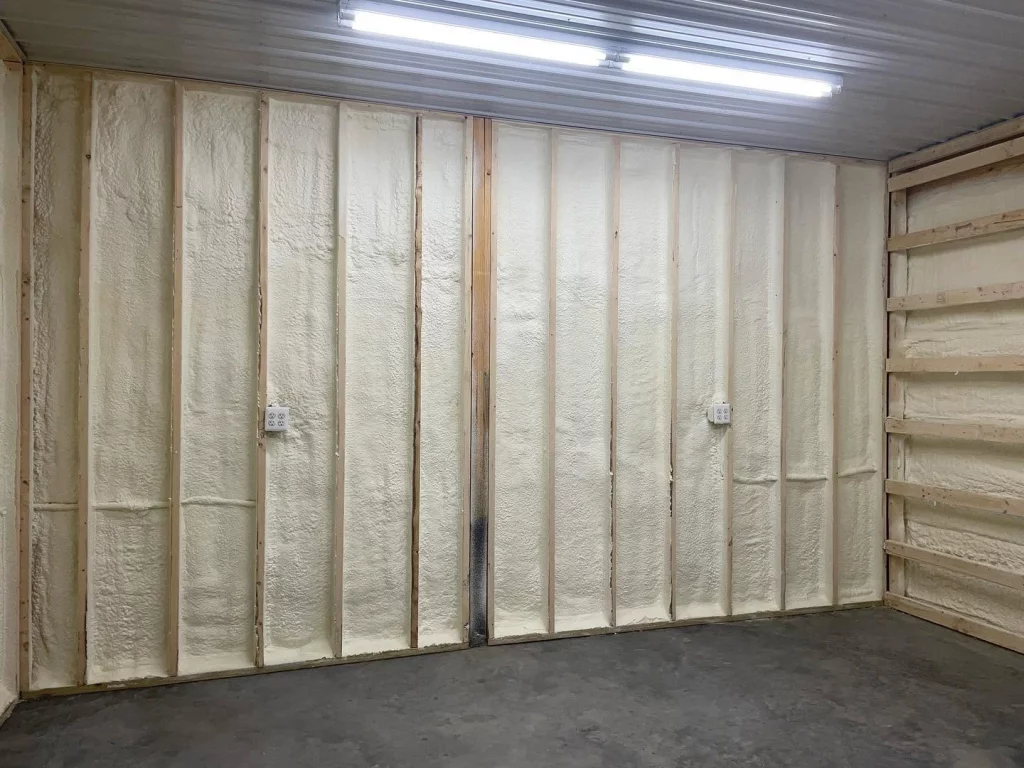
Run through this list before you sign anything. It keeps the thickness conversation honest.
Peninsula Insulation, LLC provides residential spray foam insulation that Stevensville, MD homeowners need across walls, attics, roof decks, and crawl spaces. We measure your framing, set a written thickness target for every space, and put the full scope in writing before any work starts. Quotes are free. Call (410) 770-2624 or email wil@mdsprayfoam.net to book yours.
Yes. Closed-cell foam bonds well to clean, cured foam, so a thin first coat can be topped up rather than torn out.
It does. Open-cell foam absorbs sound, and interior walls built for quiet usually get 3 inches or more.
Spray foam is priced by the board foot, meaning one square foot at one inch deep, so every added inch raises the total. That’s why attic jobs cost more than wall jobs.
Usually, yes. One to two inches delivers a strong air seal where leaks run worst, even though the R-value alone is modest.
Stay out while the crew sprays and until the foam has cured and the space has aired out. Your installer will confirm the exact re-entry window for the product used.