What Factors Determine the Right Spray Foam Insulation Thickness for Stevensville, MD Homes?
Most Stevensville homes need 2 to 3 inches of closed-cell foam in walls and crawl spaces, 4 to 5 inches…

Mineral wool insulation that Easton, MD homeowners ask about offers exceptional fire resistance by withstanding temperatures up to 1,800°F, superior sound attenuation due to its high density, and dependable thermal performance. Understanding mineral wool insulation benefits can help homeowners weigh these advantages against its key limitations: it carries a higher upfront cost than standard fiberglass, can temporarily lose its R-value when saturated with water, and requires meticulous, gap-free installation to achieve its advertised insulating capability.
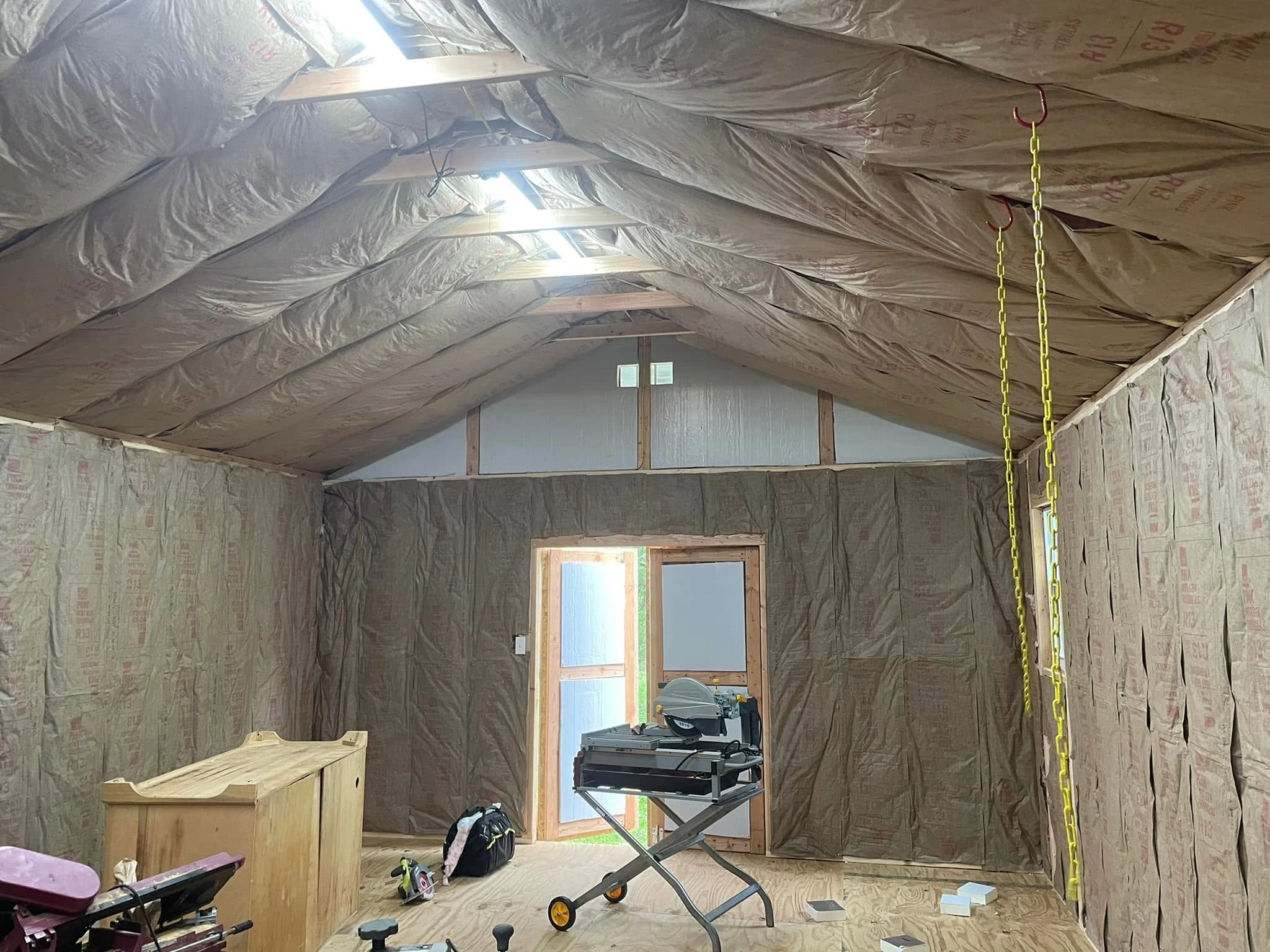
Mineral wool is made by melting basalt rock and steel slag, then spinning them into dense batts. It earns its reputation with fire resistance and sound blocking, and it holds its shape for decades. It comes as batts and boards, and we install it where those strengths pay off.
The mineral wool insulation drawbacks Easton, MD homeowners hear about most show up after the job, not on the label. Water exposure, price, handling, and fit decide whether you get the performance you paid for.
Every material has failure points, and mineral wool is no exception. Here are the four we watch for in Easton homes.
Stone fibers shed light splash, but a roof leak, burst pipe, or flooded crawlspace can soak a batt through. Wet insulation loses R-value until it dries completely, and inside a closed wall cavity, that drying happens slowly. Summers here are warm, muggy, and wet, as Weather Spark documents, which is exactly when slow-drying cavities cause trouble. Most mineral wool insulation problems Easton, MD homeowners report start with hidden water, not the wool itself. The fibers don’t feed mold, but damp framing and dust around them can. Fix the leak before insulating, or the best batt in the world won’t save the wall.
Budget is the honest dealbreaker on many projects. Angi pegs fiberglass at about $0.50 per square foot versus about $0.62 for mineral wool, and that gap grows once labor and thickness upgrades are added. The mineral wool insulation cost Easton, MD homeowners see on quotes also reflects fewer local suppliers, so material can take longer to source. For a whole-house retrofit, that money might do more good on air sealing.
Mineral wool batts are dense, which makes them heavy to lift overhead and rough on skin. The fibers shed slivers that itch and irritate, so gloves, long sleeves, eye protection, and a mask are standard gear for our crew. Cutting takes a serrated knife, and clean cuts around outlets and wiring take time to get right.
Mineral wool delivers roughly R-3 to R-3.3 per inch, better than standard fiberglass but only when batts sit snug, with no gaps, voids, or compression. Cram a batt behind wiring carelessly, and the mineral wool insulation performance in Easton, MD homes drops quietly. Local targets are set by climate zone: ENERGY STAR recommends R-60 in an uninsulated attic and R-19 floors for Zone 4A, numbers no material hits if it’s installed sloppily.
For most Easton homes, the real decision is mineral wool versus fiberglass batts. Angi scores mineral wool ahead on water resistance, sound, and fire; fiberglass fights back on price and weight. The table below shows the trade-offs we walk through with customers.
In the mineral wool vs fiberglass insulation Easton, MD matchup, humidity tilts a few rows. Fiberglass soaks up water and stays soggy; mineral wool sheds water and dries faster, though neither belongs in a chronically wet cavity.
| Factor | Mineral Wool | Fiberglass |
|---|---|---|
| R-value per inch | R-3.0 to R-3.3 | About R-2.2 to R-2.7 |
| Fire | Noncombustible to about 1,800°F | Ignites near 1,000°F |
| Sound | Denser, blocks more noise | Lighter, less blocking |
| Handling | Heavy, needs full PPE | Light, easier to cut |
| Cost | Higher per square foot | Usually the budget pick |
Yes, in the right spots. For selective residential mineral wool insulation Easton, MD jobs, we recommend it around rim joists, mechanical rooms, and beside heat sources, where noncombustible material earns its price. It’s also our pick for shared bedroom walls and media rooms where sound control matters. We steer customers away from it for budget attic top-offs, where blown-in options hit R-60 for less, and from damp crawlspaces until drainage and grading are fixed. Match the material to the problem, and the price stops feeling like a penalty.
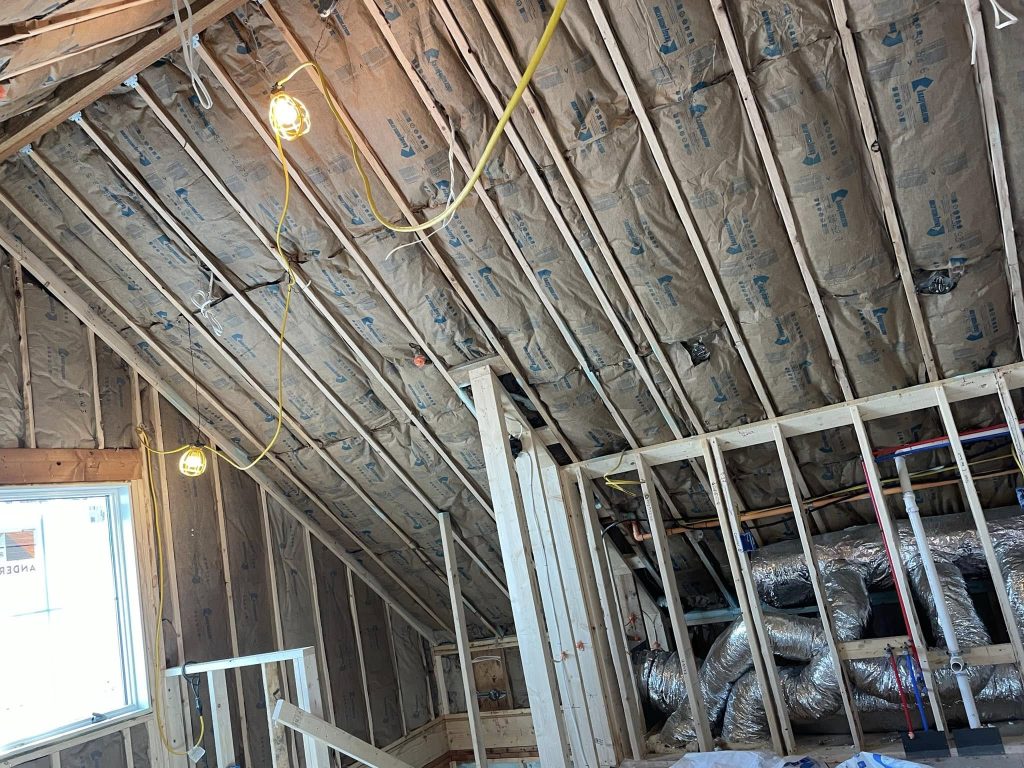
The disadvantages of mineral wool insulation in Easton, MD homes usually come down to water, money, and installation quality, so run these checks before you sign anything.
If any of these limits sound like your house, talk to us before you buy material. Peninsula Insulation, LLC is based in Easton, MD, and we’ll look at the space, flag the moisture risk, and compare your options honestly. The quote is free. Call us at (410) 770-2624 or email wil@mdsprayfoam.net.
Not automatically. Mineral wool lets vapor pass through it, so the right answer depends on your wall assembly, and we check what’s behind the drywall before recommending one.
The fibers aren’t a food source for mold, but mold can grow on wet framing and dust in the same cavity. Keep the assembly dry, and the wool stays inert.
Yes. The irritation happens during handling, and once the wall is closed up, fibers don’t circulate into your living space.
No. Dense stone-fiber batts hold their position and thickness, which is one reason their R-value stays stable for decades.
It’s noncombustible and withstands temperatures up to about 1,800 degrees Fahrenheit, but it doesn’t replace proper fire-stopping details in the assembly.