Weak Wall Insulation? How Closed-Cell Spray Foam Adds Strength in Crofton, MD
Weak wall insulation does more than waste energy. It leaves your home vulnerable to structural stress, moisture problems, and comfort…


Weak wall insulation does more than waste energy. It leaves your home vulnerable to structural stress, moisture problems, and comfort issues that compound over time. Closed-cell spray foam insulation addresses all three problems simultaneously by creating a rigid, air-tight barrier that bonds directly to wall framing. Research from the National Association of Home Builders shows that walls insulated with closed-cell spray foam gain up to 300% more racking strength compared to uninsulated walls, making this insulation method particularly valuable for Crofton homes facing Maryland’s variable climate conditions.
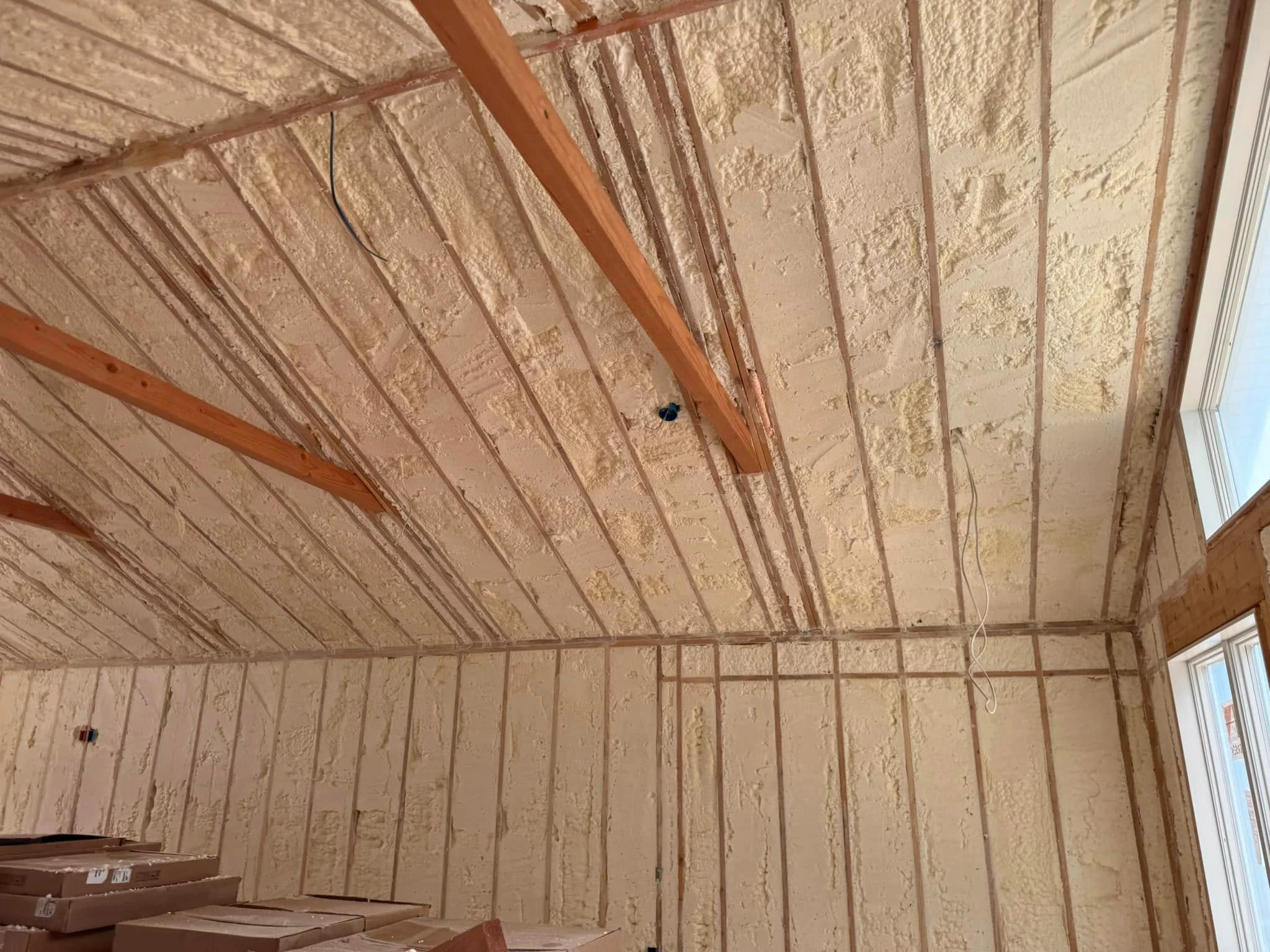
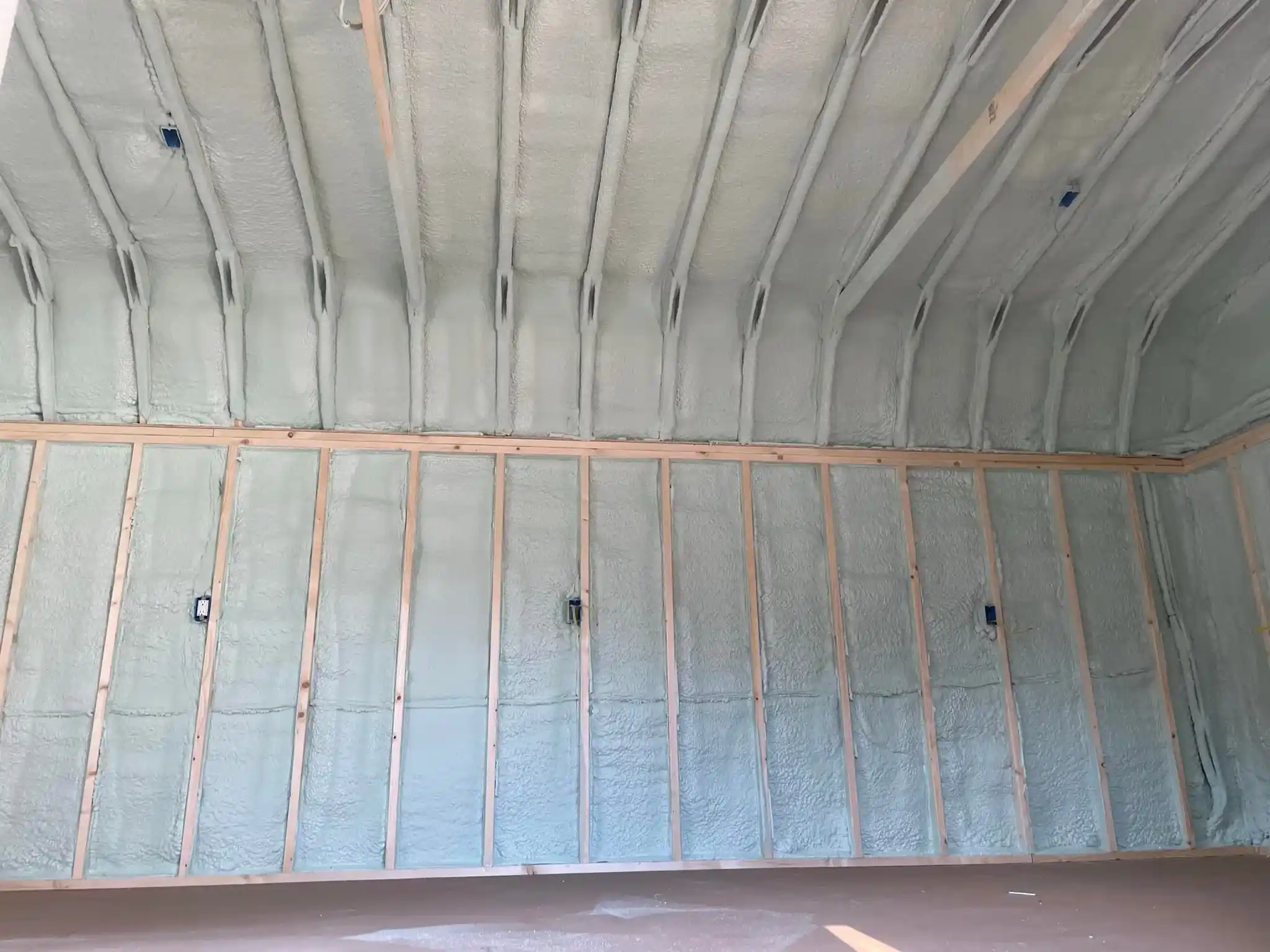
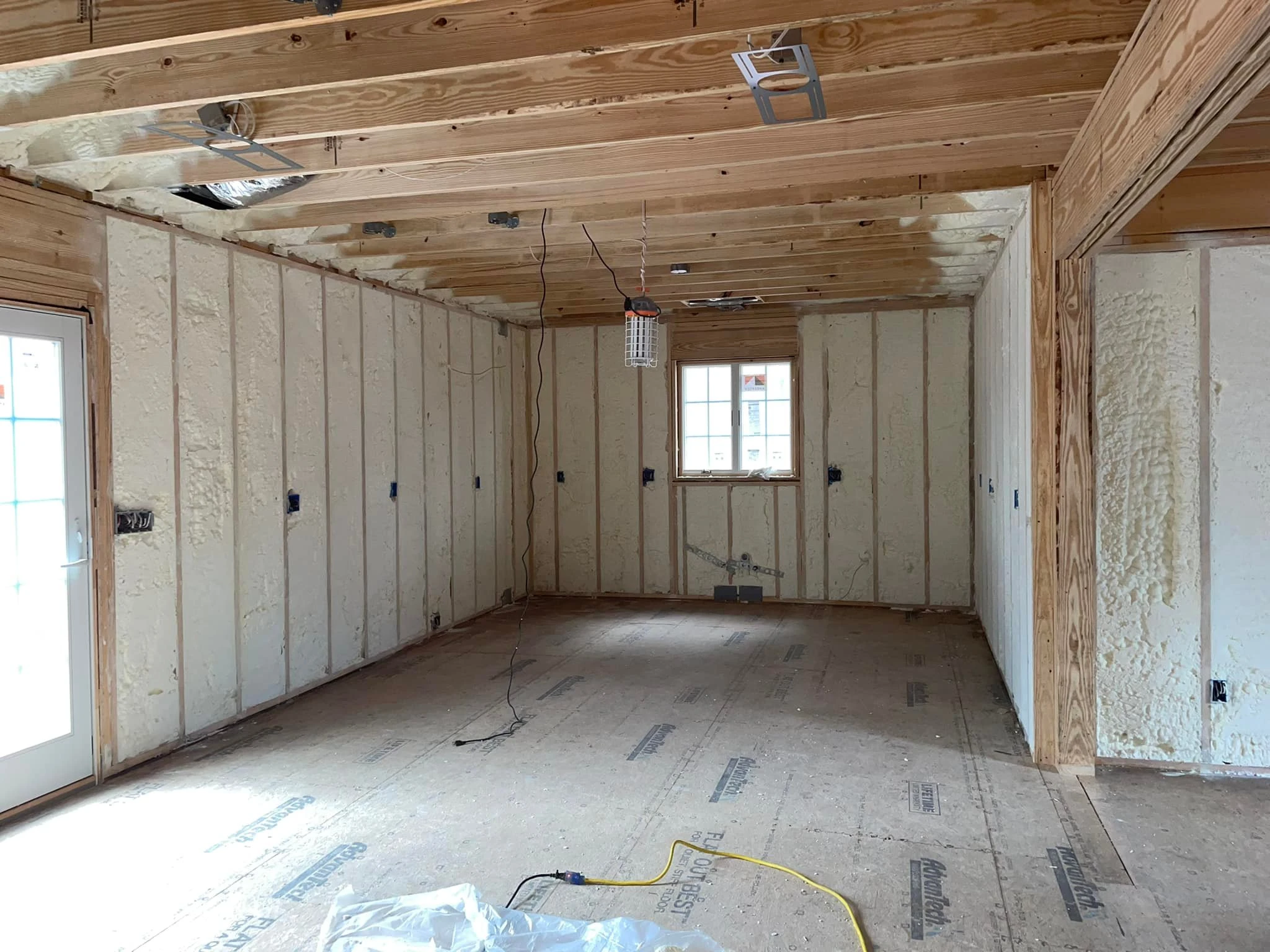
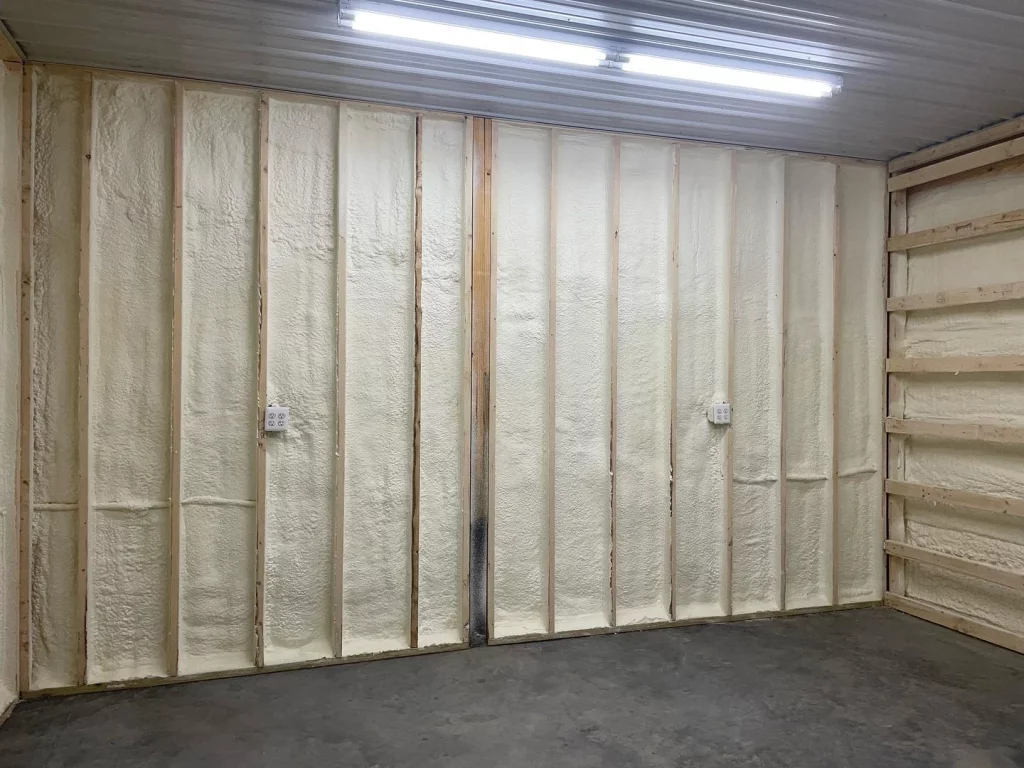
Closed-cell spray polyurethane foam creates structural rigidity through its unique physical properties and application method. Unlike batt insulation that simply sits between studs, closed-cell foam expands and adheres to all surfaces within the wall cavity, effectively gluing the framing members, sheathing, and drywall together into a composite structural panel.
Research from the NAHB Research Center demonstrates that this bonding effect dramatically increases a wall’s resistance to racking forces, the lateral loads that occur during high winds, hurricanes, and seismic events. Walls with closed-cell spray foam showed racking strength increases ranging from 75% to 300%, depending on wall construction and foam thickness.
The Closed-cell structural benefit comes from the foam’s density and closed-cell structure. Each tiny cell within the foam is filled with a gas that provides superior insulating value while creating a rigid material that resists compression and deformation. When applied at typical thicknesses of 2 to 3 inches in wall cavities, the foam creates a semi-structural element that distributes loads across the entire wall assembly rather than concentrating forces at individual framing connections.
Crofton sits in Climate Zone 4, where homes face significant seasonal temperature swings, humidity challenges, and occasional severe weather events. The mid-Atlantic region experiences nor’easters, summer thunderstorms with high winds, and the remnants of hurricanes that track up the East Coast.
Traditional insulation materials like fiberglass batts provide no structural benefit. They can actually create problems when they settle, absorb moisture, or allow air movement that accelerates wall assembly degradation. Weak insulation systems contribute to:
Closed-cell spray foam addresses each of these weaknesses through its multifunctional performance as insulation, air barrier, vapor retarder, and structural reinforcement.
Understanding how closed-cell spray foam compares to alternatives helps Crofton homeowners make informed decisions about wall insulation upgrades.
| Insulation Type | R-Value per Inch | Air Barrier | Moisture Barrier | Structural Benefit | Best Application |
|---|---|---|---|---|---|
| Closed-Cell Spray Foam | R-6.5 to R-7.6 | Yes | Yes (Class II vapor retarder) | High (75-300% racking increase) | Walls, roofs, foundations, crawl spaces |
| Open-Cell Spray Foam | R-3.6 to R-3.8 | Yes (at sufficient thickness) | No (vapor permeable) | Minimal | Interior walls, attics, sound-dampening |
| Fiberglass Batts | R-3.1 to R-3.8 | No (unless faced) | No | None | Standard framing, budget applications |
| Cellulose (dense-pack) | R-3.2 to R-3.8 | Partial (when dense-packed) | No | Minimal | Retrofits, wall cavities |
| Mineral Wool Batts | R-3.0 to R-3.3 | No | No | None | Fire resistance applications |
According to the U.S. Department of Energy, closed-cell spray foam’s superior R-value per inch allows builders and homeowners to achieve required thermal performance in thinner wall assemblies, which is particularly valuable in retrofits where wall cavity depth is fixed.
Weak wall insulation creates continuous energy losses that compound over the years. Studies on closed-cell foam performance show energy consumption reductions of 20% to 50% compared to minimally insulated or poorly insulated walls, with typical payback periods of 3 to 7 years depending on energy costs and climate severity.
For Crofton homeowners, the calculation involves several factors:
Closed-cell spray foam’s air sealing capability eliminates the convective loops that undermine fibrous insulation performance. When air cannot move through wall cavities, the stated R-value of the insulation becomes the actual delivered performance rather than a laboratory ideal.
| Scenario | Home Type | Problem | Solution | Outcome |
|---|---|---|---|---|
| Aging Split-Level | 1970s colonial, Crofton | Fiberglass batts settled and absorbed moisture, creating cold spots and mold risk on north-facing walls | Removed degraded insulation, applied 2 inches closed-cell spray foam, and added fiberglass batt to fill cavity | Eliminated cold spots, reduced heating bills 35%, no moisture issues after 3 years |
| New Addition | Custom home, Anne Arundel County | Builder specified minimum code insulation, homeowner wanted superior performance and strength | 2.5-inch closed-cell spray foam in all exterior walls during framing | Achieved R-17.5 in 2×4 walls, passed blower door test with exceptional air tightness |
| Cathedral Ceiling Retrofit | 1990s contemporary, Crofton | Limited roof cavity depth made standard insulation inadequate, and summer overheating severe | 3-inch closed-cell spray foam applied to the roof deck with proper ventilation | Reduced second-floor temperatures by 12°F, eliminated condensation issues |
| Crawlspace Upgrade | 1960s ranch, Davidsonville | Fiberglass batts falling from floor joists, musty odors in the living space, and high humidity | Removed failed insulation, sealed crawlspace with closed-cell spray foam on walls | Improved indoor air quality, reduced humidity 40%, and eliminated pest access points |
| Historic Renovation | 1920s bungalow, Annapolis | No wall insulation, plaster, and lath interior, exterior siding in good condition | Dense-pack cellulose in most walls, closed-cell spray foam in areas with exposed framing | Maintained historic character, improved comfort dramatically, and addressed moisture in problem areas |
Before recommending solutions, we evaluate existing insulation through visual inspection, infrared thermal imaging, and sometimes exploratory openings in inconspicuous areas. Signs of weak or failed insulation include:
Not every wall requires closed-cell spray foam. The best approach depends on wall construction, cavity depth, moisture conditions, and project budget. We typically recommend closed-cell spray foam for:
Closed-cell spray foam performance depends entirely on installation quality. Professional installers maintain proper:
Quality installation includes verification through:
Several variables influence how well closed-cell spray foam performs in wall applications:
Foam Thickness and Density
The structural benefit increases with foam thickness. While R-6.5 to R-7.6 per inch represents the thermal resistance, the racking strength improvement correlates more closely with the total volume of foam and its adhesion to framing and sheathing. Most structural studies examined applications of 2 inches or more.
Climate Zone Classification
Crofton falls within Climate Zone 4A, the mixed-humid region where both heating and cooling loads are significant, and humidity management matters, UpCodes – Maryland Residential Energy Code. The University of Maryland Extension recommends wall insulation values of R-13 to R-21, depending on construction type, which 2 to 3 inches of closed-cell foam readily achieves.
Wall Assembly Design
Closed-cell foam works within the overall wall system. Proper design considers:
Building Age and Condition
Older Crofton homes often benefit most from spray foam insulation because their wall assemblies lack air barriers and their insulation has degraded over the decades. However, we must evaluate existing conditions to ensure that spray foam addresses rather than masks underlying problems.
Installation Timing and Conditions
Spray foam application requires specific environmental conditions for proper curing. Installation during extreme temperatures or high humidity can compromise foam quality and performance.
Bar Chart Suggestion: R-value per inch comparison across insulation types commonly used in Crofton, MD homes. Show closed-cell spray foam at R-6.5-7.6, open-cell at R-3.6-3.8, fiberglass batts at R-3.1-3.8, and cellulose at R-3.2-3.8. Include a visual indication that closed-cell foam achieves code-required R-values in thinner applications.
Bar Chart Suggestion: Percentage increase in wall racking strength comparing uninsulated walls to walls with closed-cell spray foam. Show the range from 75% to 300% improvement based on NAHB Research Center data, with annotations indicating variables that affect the improvement level.
We recommend closed-cell spray foam most strongly for Crofton homeowners in these situations:
Limited Wall Cavity Depth
When walls have 2×4 framing, achieving high R-values with conventional insulation requires increasing wall thickness or accepting lower performance. Closed-cell foam delivers R-19 to R-23 in standard 2×6 wall cavities, meeting or exceeding code requirements without wall modifications.
Moisture-Prone Areas
Basements, crawl spaces, and walls with water intrusion history benefit from closed-cell foam’s vapor retarder properties. The foam resists moisture absorption and provides a secondary defense against water vapor migration into wall assemblies.
Structural Reinforcement Needs
Homes in areas exposed to high winds, or buildings with structural deficiencies that benefit from added racking resistance, gain measurable strength from closed-cell foam application.
Air Sealing Priorities
When blower door tests reveal significant air leakage through walls, closed-cell spray foam provides both insulation and air sealing in a single application, simplifying the upgrade process.
Research from the National Association of Home Builders shows walls with closed-cell spray foam gain 75% to 300% more racking strength compared to uninsulated walls. The exact improvement depends on wall construction, foam thickness, and application quality. This structural benefit helps Crofton homes resist wind loads and seismic forces.
Closed-cell spray foam costs more upfront but delivers benefits that fiberglass cannot match: higher R-value per inch, air sealing, vapor retarder function, and structural reinforcement. Energy savings of 20% to 50% typically provide payback within 3 to 7 years. For Crofton homes with limited wall cavity depth or moisture concerns, closed-cell foam often represents the best value long term.
Yes, closed-cell spray foam can be installed in existing walls through strategic access points. Installers typically remove exterior siding or interior drywall in sections to access wall cavities. The foam expands to fill voids and adheres to all surfaces, providing superior performance compared to blown-in alternatives that may settle over time.
When properly installed in appropriate applications, closed-cell spray foam helps prevent moisture problems rather than causing them. The foam acts as a Class II vapor retarder, limiting moisture migration into wall cavities. However, we carefully evaluate each wall assembly to ensure proper design and avoid trapping moisture from existing leaks or bulk water intrusion.
Most wall applications in Crofton use 2 to 3 inches of closed-cell spray foam, achieving R-13 to R-23 depending on foam density and installation quality. This thickness provides structural benefits while meeting or exceeding Maryland’s energy code requirements. Thinner applications may not deliver the full air sealing and structural reinforcement benefits.
Peninsula Insulation, LLC specializes in closed-cell spray foam installation for Crofton homeowners seeking superior wall insulation performance and structural benefits. Our team brings extensive experience with Maryland’s unique climate challenges and building conditions, ensuring your insulation upgrade delivers measurable improvements in comfort, energy efficiency, and wall strength. We handle projects from targeted wall insulation upgrades to comprehensive building envelope solutions.
Contact Peninsula Insulation, LLC at (410) 770-2624 or email wil@mdsprayfoam.net to schedule your wall insulation assessment. We provide detailed evaluations, clear recommendations, and professional installation backed by industry training and quality verification processes.