High Energy Bills? Insulation Solutions That Work in Easton, MD
High energy bills in Easton, MD, typically stem from inadequate insulation that fails to meet Climate Zone 4 requirements. Most…


Insulation serves as the essential control mechanism for the complex airflow, thermal dynamics, and acoustic challenges inherent in open floor plan designs. Without a robust thermal envelope, these expansive spaces suffer from the “stack effect,” in which conditioned air rapidly escapes through the roof, drawing unconditioned outdoor air into the lower levels. This cycle forces HVAC systems to run continuously, leading to significant energy waste, and creates uncomfortable temperature zones within the living area.
Modern architecture favors high ceilings and fewer walls, but this aesthetic comes with a physical cost. Walls and standard ceiling heights naturally compartmentalize air, making it easier to heat or cool specific zones. Removing these barriers exposes the home to massive air volume shifts. Proper insulation, specifically materials that provide an air seal, stops this uncontrolled air movement. It stabilizes the indoor climate and prevents the echo-chamber effect often found in large, open rooms. Experience in the field shows that addressing the building envelope is the only way to make an open concept home livable and efficient year-round.
Open floor plans present a unique challenge regarding air volume. In a traditional home, doors and walls trap heat in specific areas. In an open concept, air flows freely. Hot air is lighter than cold air, so it naturally rises. In a room with a cathedral or vaulted ceiling, the warmest air sits uselessly at the highest point, often ten to twenty feet above the occupants.
The primary reason insulation matters here is to stop the stack effect. When heated air rises, it creates positive pressure against the ceiling and roof. If gaps or poor insulation exist in the attic or roof deck, that heat escapes outdoors. This escape creates negative pressure at the bottom of the house, sucking in cold, unconditioned air through rim joists, windows, and doors.
The Department of Energy indicates that proper air sealing and insulation can lower heating and cooling costs by roughly 15% on average. Still, in open-concept homes with high ceilings, this percentage often rises due to the greater volume of air being treated.
The “thermal envelope” refers to the shield between the inside and outside of a structure. In open spaces, this envelope must be continuous. Any break in the insulation layer acts like a puncture in a balloon. The air you pay to heat or cool leaks out immediately.
Bonus Tip: Pay close attention to recessed lighting (can lights) in high ceilings. These are notorious leakage points. Using airtight, IC-rated fixtures or sealing them with spray foam prevents them from becoming chimneys that suck heat into the attic.
Open floor plans look beautiful, but they can sound terrible. Without walls to block sound waves, noise travels unimpeded from the kitchen to the living room and up to any loft areas. Hard surfaces like hardwood floors, granite countertops, and drywall reflect sound, causing it to bounce around the room. This creates a noisy, echoing environment where conversations are challenging to hear.
Insulation acts as a sound absorber. While many people associate insulation solely with temperature, its density helps dampen sound vibration. Installing acoustic insulation in interior walls, even if they don’t separate a room, and between floors, reduces sound transmission.
According to data published by the North American Insulation Manufacturers Association, installing insulation in interior partition walls can improve the Sound Transmission Class (STC) by 3 to 11 points, significantly reducing the perceived loudness of airborne noise.
Not all insulation performs the same task. For open floor plans, the ability to stop air movement is just as valuable as the R-value (thermal resistance). The following table compares common materials based on their suitability for large, open volumes.
| Material Feature | Spray Foam (Closed Cell) | Spray Foam (Open Cell) | Fiberglass Batts | Cellulose (Blown-in) |
|---|---|---|---|---|
| Air Sealing Ability | Excellent (Forms a rigid barrier) | Very Good (Expands to fill gaps) | Poor (Filters air rather than stopping it) | Fair (Densely packed but not an air seal) |
| R-Value Per Inch | High (~R-6.0 to R-7.0) | Moderate (~R-3.5 to R-3.7) | Moderate (~R-3.1 to R-3.4) | Moderate (~R-3.2 to R-3.8) |
| Sound Dampening | Good (Adds structural rigidity) | Excellent (Soft texture absorbs sound) | Good (Absorbs sound effectively) | Very Good (Dense material blocks noise) |
| Moisture Control | Impermeable (Vapor barrier) | Permeable (Allows drying) | Permeable (Retains moisture if wet) | Permeable (Absorbs moisture) |
| Best Use Case | Cathedral ceilings, Rim joists | Roof decks, Interior walls for sound | Standard wall cavities | Attic floors, Retrofit walls |
The demand for energy efficiency in modern housing continues to grow. Homeowners are increasingly aware that the aesthetic appeal of an open plan cannot outweigh the high utility bills it entails.
Choosing the right approach for an open floor plan requires evaluating the specific structure. The strategy differs between new construction and retrofitting an existing home.
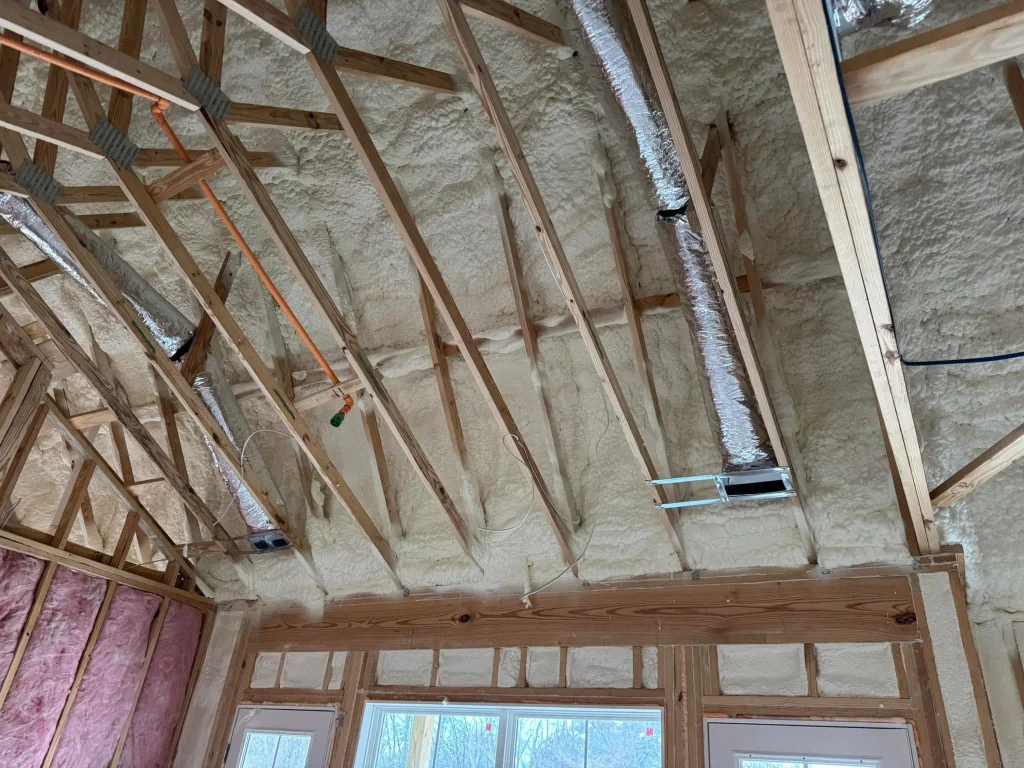
If the open space includes a cathedral ceiling where the drywall attaches directly to the roof rafters, there is no attic space to buffer the heat. In this scenario, the insulation must handle the full force of the sun’s heat on the roof. Closed-cell spray foam is often the preferred choice here because it offers the highest R-value per inch, maximizing the limited space in the rafter cavity.
Large volumes of air contain large amounts of moisture. When warm, moist air rises and hits a cold roof deck, condensation occurs. This can lead to mold growth and structural rot. The insulation choice must account for this. Using a material that creates an air seal prevents moist interior air from reaching the roof deck.
Many HVAC contractors size systems based on square footage. For open plans, volume is the correct metric. If the insulation is poor, the HVAC system will struggle to keep up. However, if the insulation is highly effective (like spray foam), the building becomes tight. This might allow for a smaller, more efficient HVAC unit, offsetting the initial cost of the insulation.
Bonus Tip: When insulating an ample open space, do not ignore the rim joist in the perimeter area where the floor joists meet the foundation. This is a significant source of air infiltration that makes floors feel cold, regardless of how well the ceiling is insulated.
Closed-cell spray foam is typically superior for vaulted ceilings. It offers the highest R-value per inch and adds structural strength. Since space is limited between the ceiling and the roof, getting maximum thermal resistance in that shallow depth is vital.
Soft, porous insulation materials like open-cell foam or mineral wool absorb sound waves rather than reflecting them. Installing these materials in interior walls or between floor joists breaks the sound’s path, reducing the “gymnasium effect” common in open layouts.
Insulation fixes drafts coming through walls, ceilings, and rim joists. However, if the drafts are coming directly from the glass or the window frame, those specific units may need to be sealed or replaced. Insulation stops the drafts that pull in through the structure due to the pressure differences.
When applied by certified professionals, spray foam is safe. After the required curing period (usually 24 to 48 hours), the material becomes inert, and off-gassing stops. It creates a sealed environment that actually improves indoor air quality by blocking outdoor allergens and pollutants.
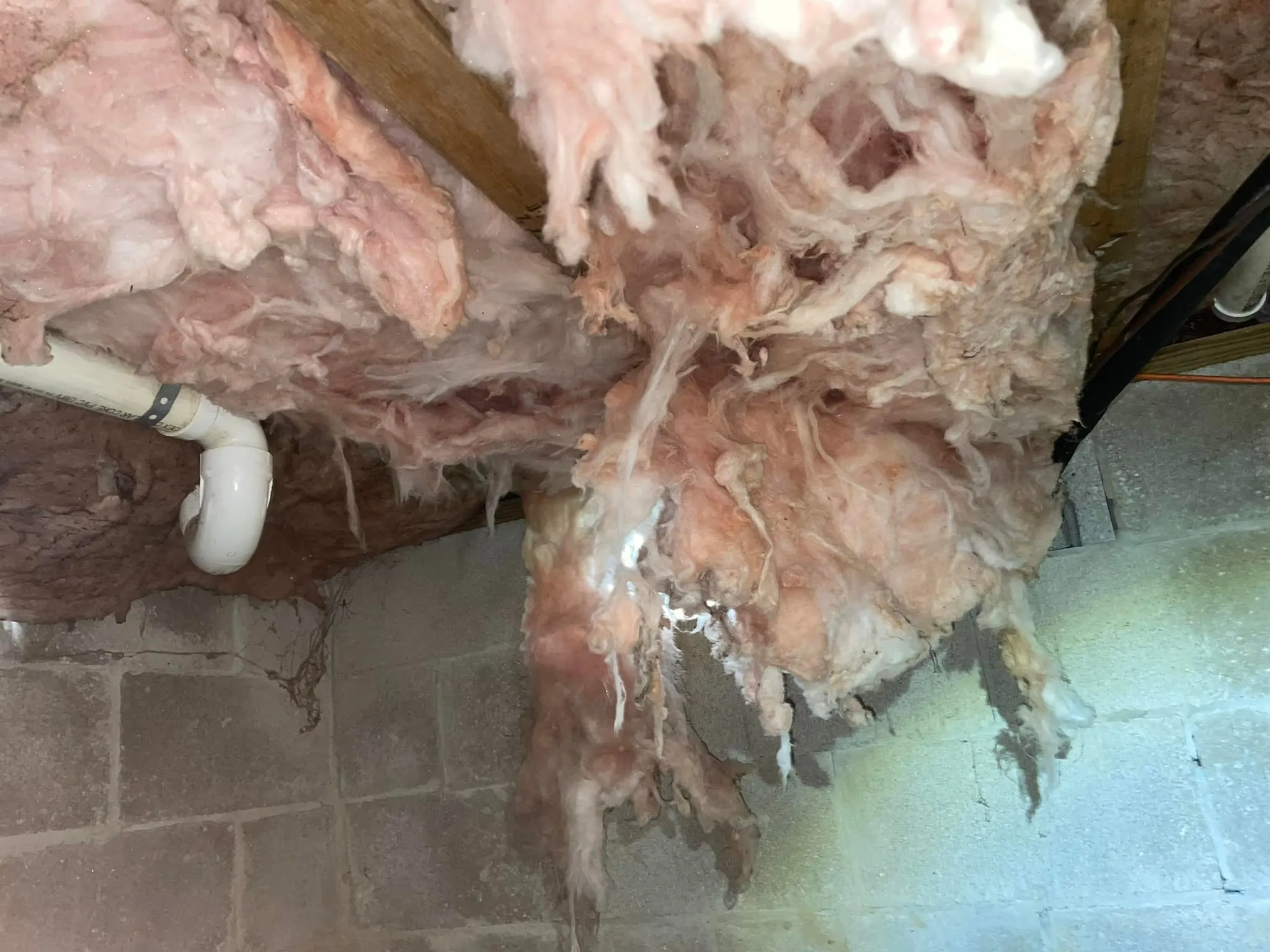
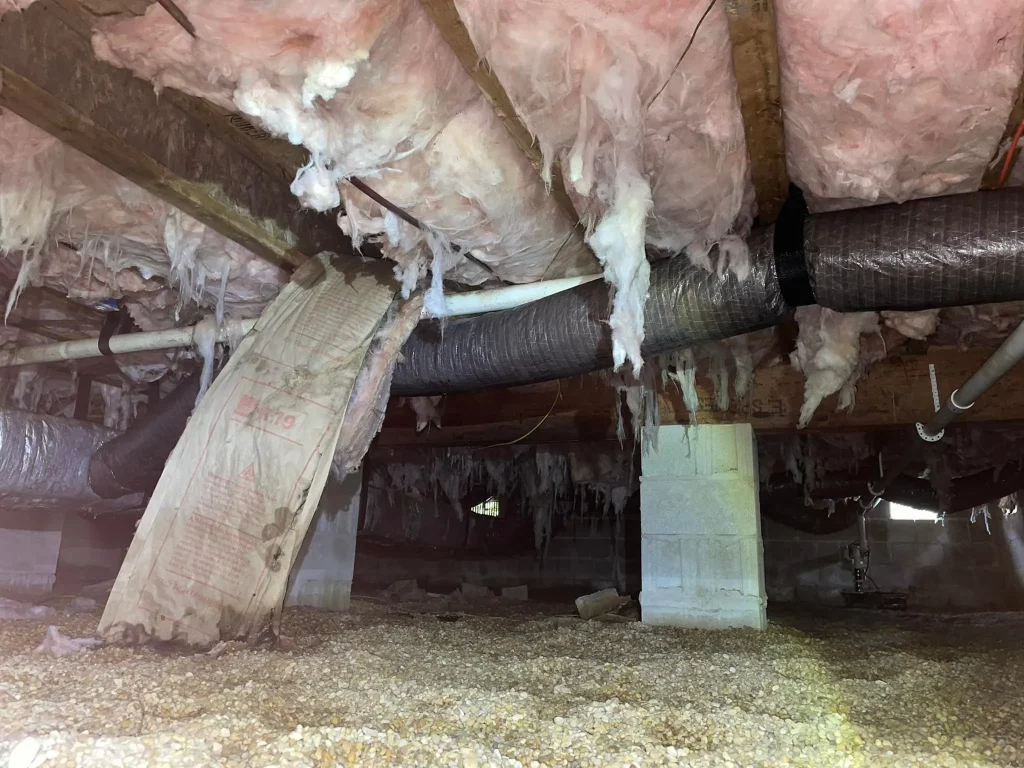
Adding more insulation without air sealing is often a waste of money. If air can still move through the old insulation, the R-value is compromised. It is usually better to remove damaged or dirty insulation, seal the gaps, and then install new material.
Insulating an open floor plan requires a strategy that goes beyond simple R-values. The focus must be on controlling air movement and managing the massive volume of space. Effective insulation stabilizes temperatures, protects against moisture damage, and quiets the acoustic chaos that often plagues open designs.
Homeowners should evaluate their current building envelope to identify where the stack effect is causing energy loss. Investing in the right materials today prevents years of high utility bills and discomfort. A well-insulated home performs better, lasts longer, and delivers the comfort level the open design was intended to provide.
Peninsula Insulation, LLC specializes in solving complex comfort and efficiency problems in homes across the region. If your open floor plan feels drafty, noisy, or impossible to heat, our team can assess the situation and provide a permanent solution. We focus on building science principles to ensure your investment delivers real results.
Contact Peninsula Insulation, LLC:
Phone: (410) 770-2624
Email: wil@mdsprayfoam.net