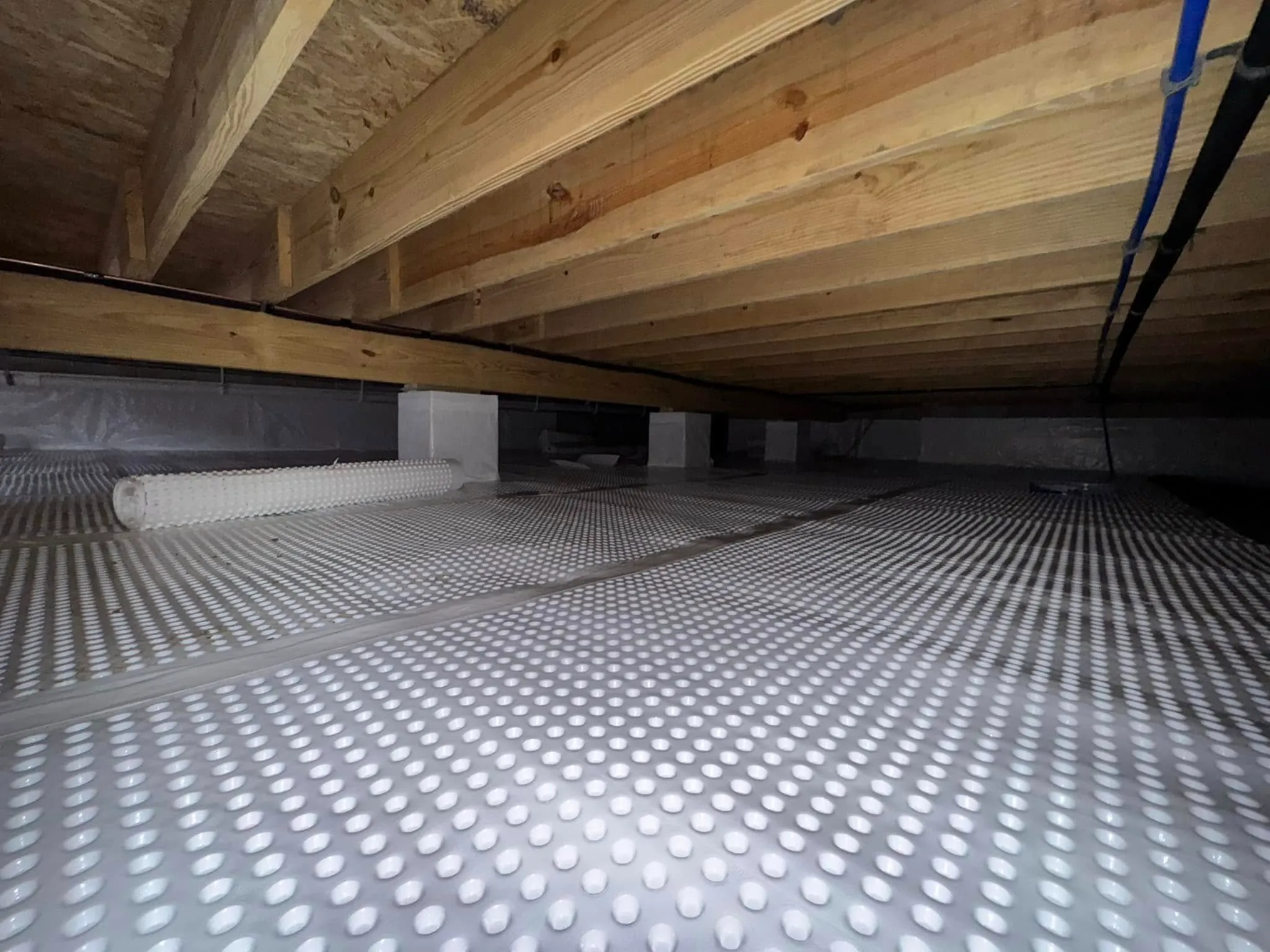
What Materials Are Commonly Used for Crawl Space Encapsulation in 2026, and Why Do They Matter?
Most crawl space encapsulation material choices in 2026 fall into five groups: a polyethylene vapor barrier over the soil and…

You step into your home on a cold day and feel that instant warmth, or you walk into an office in summer and notice the air staying cool and steady. That is insulation doing its job, quietly controlling temperature and keeping energy bills in check. What actually separates a comfortable, efficient building from one with drafts and high utility costs comes down to the types of insulation installed and how well they are matched to the space.
Insulation works as a barrier that slows heat transfer, whether heat is escaping during winter or pushing in during summer. For homeowners, this means steadier rooms and lower heating and cooling bills. For businesses, it means more comfortable workspaces and lower operating costs. This guide walks through every major insulation material, how to choose between them for a home or a commercial building, and what to expect during installation. If you want to see how insulation fits into a larger home performance plan, our insulation services page covers the full range of options we install.
TL;DR
Insulation fills the gaps in walls, attics, and floors to trap air, which naturally resists temperature change. Think of it as a thick coat for the building. Without it, an HVAC system has to work harder, pulling more electricity or gas just to hold a steady temperature.
Buildings account for a large share of total energy consumption, and most of that is tied to heating and cooling, according to the International Energy Agency. Proper insulation tightens the building envelope, which lowers energy use and reduces the fuel burned to heat or cool a space.
For homeowners, solid insulation means fewer cold rooms or hot spots and more consistent comfort day to day. For businesses, steady indoor temperatures help keep employees comfortable and productive, and in commercial spaces like warehouses, insulation also helps control noise and moisture, which reduces the risk of mold.
Not every insulation material performs the same way. R-value, a measure of thermal resistance, plays a major role, and higher R-values resist heat flow more effectively. Where the insulation goes matters too. Attics typically need a higher R-value than interior walls.
Key Takeaways
Many insulation materials exist, but a handful dominate the market because they balance cost, ease of installation, and performance. The main categories are fiberglass, mineral wool, cellulose, spray foam, rigid foam board, and reflective insulation.
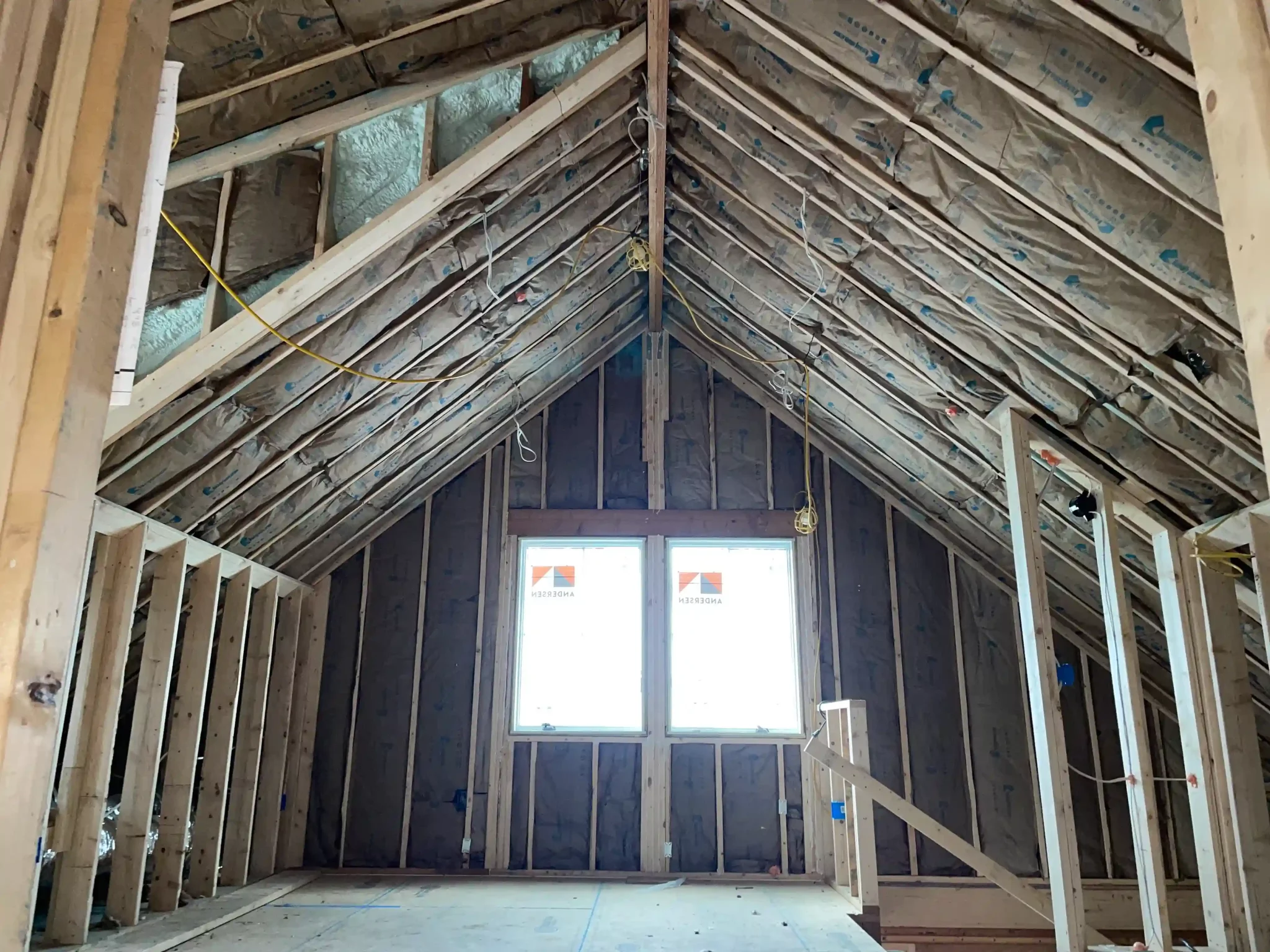
Fiberglass comes as loose-fill, batts, or rolls made from fine glass fibers, and it remains one of the most affordable and widely available options on the market. It is blown into attics or fitted between wall studs during construction.
It costs roughly $0.50 per square foot and resists fire well since glass does not burn easily. It is also common for DIY projects because it is stocked at most hardware stores. The tradeoff is that it can irritate skin and lungs during handling, so protective gear matters, and it can settle over time if it is not installed correctly.
In a typical two-story home, fiberglass batts in the walls provide a solid baseline of protection without a high upfront cost. For businesses, it is frequently used in drop ceilings for office space.
Expert Tip: When installing fiberglass batts, cut them slightly oversized so they fit snugly around pipes and wiring. This closes the small gaps that let heat escape.
Also called rock wool, mineral wool is made from basalt rock and slag spun into fibers. It comes in batts or boards and is denser than fiberglass, which gives it strong soundproofing qualities, making it a common choice for homes near busy roads or commercial spaces with machinery.
Mineral wool resists fire up to roughly 2,000 degrees Fahrenheit and repels water, which lowers the risk of mold. It costs more than fiberglass, at around $1 per square foot, and it is heavier, so it needs sturdy support during installation. Research from the National Institute of Standards and Technology has documented mineral wool’s durability in high-moisture conditions.
A home theater room is a good example of where mineral wool earns its cost, since it quiets outside noise while keeping the room comfortable.
Cellulose is made from recycled paper treated with fire retardants and is blown into attics or wall cavities with specialized equipment. It is one of the more eco-conscious options, often made with a high percentage of recycled content, and it settles tightly to fill irregular spaces.
At around $1.50 per square foot, cellulose sits in the mid-range on price. It absorbs moisture more readily than synthetic materials, which can be an advantage or a drawback depending on climate. In damp regions, a vapor barrier is usually recommended alongside it.
Older homes are a strong fit for cellulose retrofits since it conforms to irregular or older framing without requiring siding removal.
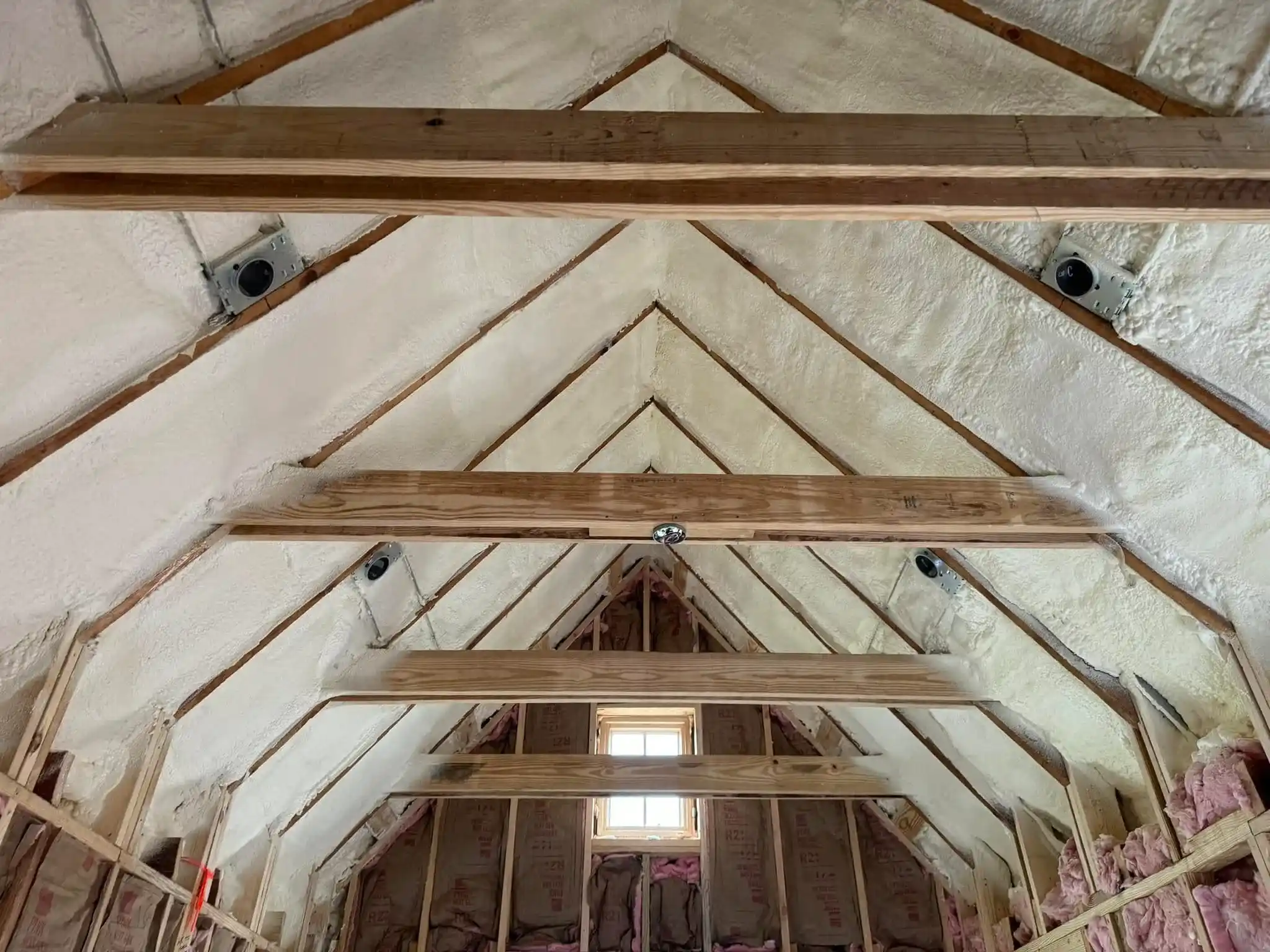
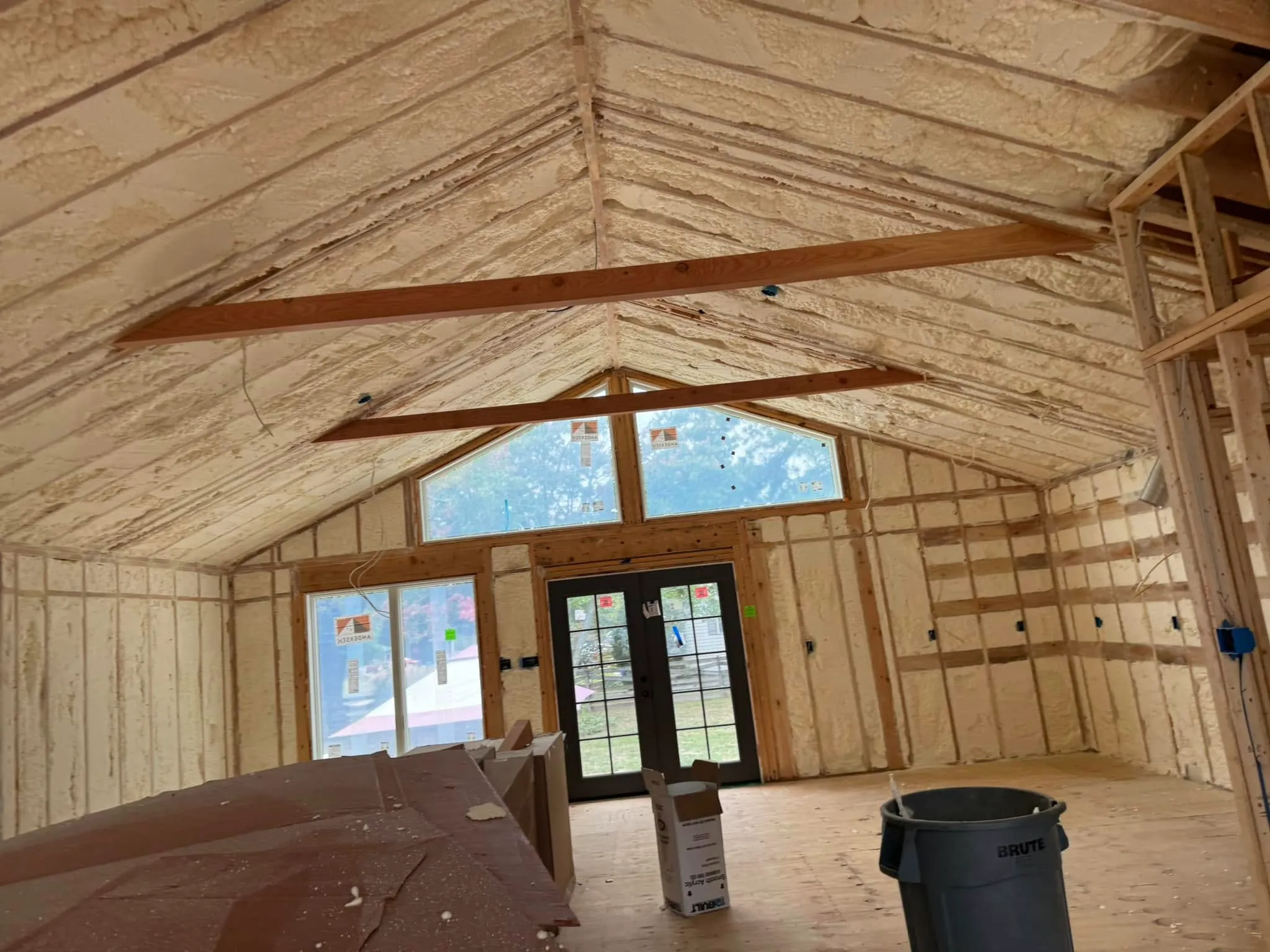
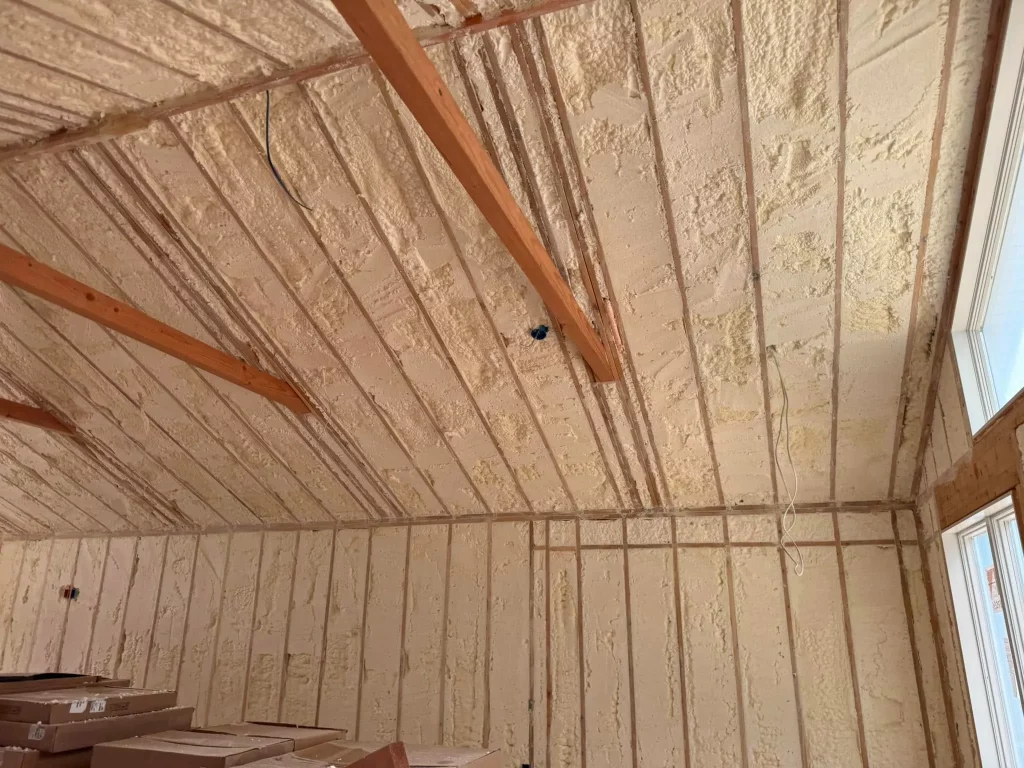
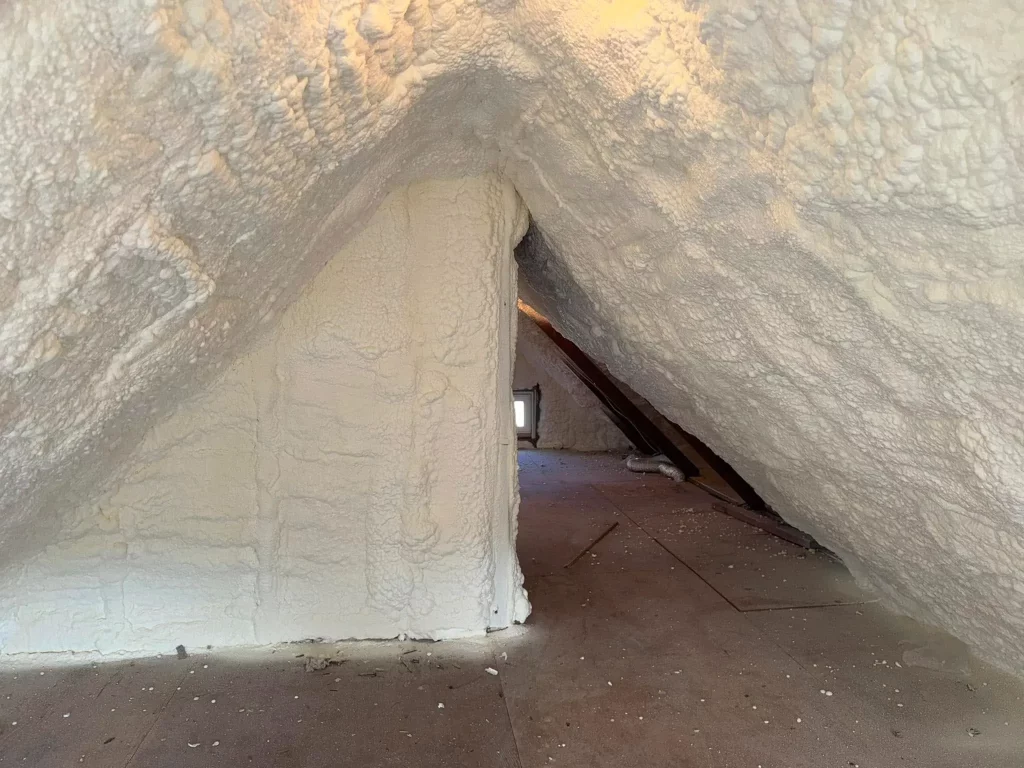
Spray foam expands on contact from liquid chemicals, creating a seamless seal across gaps and cavities. Open-cell spray foam is softer and better for sound absorption, while closed-cell spray foam is rigid and moisture-resistant. Pricing typically runs from $1 to $3 per square foot, but it can last for decades once installed.
Closed-cell spray foam can reach an R-value up to 7, higher than most other materials, and it adds structural rigidity to roof assemblies. Open-cell foam is lighter and less expensive but allows some air movement. In humid climates, closed-cell foam helps prevent rot by locking out moisture and sealing air leaks far more tightly than batt insulation.
For businesses like restaurants, spray foam under slabs helps keep kitchen floors cooler and more energy efficient.
Expert Tip: Have spray foam installed by a professional. Uneven mixing during application can lead to off-gassing or weak spots that compromise the entire job.
Rigid foam boards are stiff panels of polystyrene or polyisocyanurate that are cut to fit basements or exterior walls. They are moisture-resistant and offer a high R-value per inch, up to about 5, which makes them a strong choice for below-grade spaces.
Cost ranges from $0.25 to $2 per square foot. Because the panels are rigid rather than fluffy like batts, they work well where space is limited. The main drawback is that furring strips are usually needed to attach drywall over them, which adds a step to installation.
In commercial retrofits, rigid boards are often installed over existing walls to boost insulation performance without gutting the interior.
Reflective insulation uses foil-faced material to bounce heat away rather than absorb it, and it is commonly used in attics or as a radiant barrier. It installs quickly and performs well in hot climates.
At around $0.50 per square foot, reflective insulation is budget-friendly, though it is less effective against conductive heat transfer than the materials above. It works best as a supplement layered with another insulation type in sunny regions.
| Type | R-Value per Inch | Cost per Sq Ft | Best For |
| Fiberglass | 2.9-3.8 | $0.50 | Attics, Walls |
| Mineral Wool | 3.0-4.0 | $1.00 | Soundproofing |
| Cellulose | 3.1-3.8 | $1.50 | Retrofits |
| Spray Foam (Open-Cell) | 3.5 | $1.00 | Air Sealing |
| Spray Foam (Closed-Cell) | 6.0-7.0 | $2.00-$3.00 | Moisture Control |
| Rigid Foam Board | 3.8-5.0 | $0.25-$2.00 | Basements |
| Reflective | Varies | $0.50 | Hot Climates |
Key Takeaways
Homes vary by size, age, and location, so the right choice starts with an honest look at your building’s needs. In colder climates, prioritize a high R-value in the attic; generally, R-49 is a common recommendation for northern regions. In milder climates, focus more attention on the walls.
Start with an energy audit to find leaks. A blower door test can reveal weak spots that are easy to miss. From there, layering materials often works best: fiberglass in the walls, spray foam in rim joists, for more complete coverage.
Older homes benefit from blown-in cellulose, which fills wall cavities without removing siding. New builds do well with rigid boards under the siding for a continuous barrier around the structure.
If you are weighing insulation types for homes and want a professional assessment of your specific house, our home insulation services team can walk through the options with you.
Expert Tip: In homes with radiant floor heating, pair reflective insulation with foam boards to improve floor efficiency without interfering with the pipes.
Commercial spaces demand durability and a fast return on investment. Warehouses often use spray foam across large roof areas to reduce HVAC load, while offices tend to favor mineral wool in partition walls for acoustic control.
Occupancy type matters too. High-traffic retail spaces typically need fire-rated options such as fiberglass, while cold storage facilities rely on closed-cell foam to hold sub-zero temperatures consistently.
Commercial buildings with updated insulation frequently see measurable annual savings on energy costs, and the payback period is often shorter than owners expect once air sealing is factored in alongside the insulation upgrade itself.
DIY installation can work well for loose-fill insulation, but spray foam and other specialized materials are best left to professionals to avoid gaps or voids. A general installation sequence looks like this:
Hiring certified installers can also open the door to rebates, and an improperly installed job often wastes material and undercuts performance.
Expert Tip: Test air tightness after installation with a smoke pencil. Any puffs of smoke that drift will reveal gaps you can seal on the spot.
Loose-fill insulation can settle over time, which is best addressed by compacting it properly during installation. Moisture trapped in wet insulation reduces its effectiveness, so basements in particular benefit from improved drainage.
Pests can chew through fiberglass, and treating it with borates helps deter this. Noise during installation can be disruptive for businesses, so scheduling work during off-hours is worth considering.
Regular inspections catch most of these issues early and help maintain R-value performance over the life of the insulation.
Track results by comparing utility bills before and after installation. Infrared cameras can spot hot and cold areas that indicate weak coverage. According to ENERGY STAR, sealing air leaks and adding insulation can meaningfully lower annual heating and cooling costs for most homes.
Smart materials with phase-change technology are starting to adjust to temperature shifts automatically. Aerogels offer very high R-values in thin layers, and bio-based foams made from plant materials are reducing reliance on synthetic chemicals. Expect continued growth in insulation demand as building codes tighten and energy efficiency standards rise.
Check your climate zone to find the recommended range. Northern regions generally need higher attic R-values than southern regions, and factors like ceiling height and window count also affect the ideal level.
For most homes where air sealing is a priority, yes. The upfront premium is often offset by energy savings within a few years. For simpler jobs, batt insulation may be sufficient.
Yes. Mineral wool and open-cell spray foam absorb sound more effectively than fiberglass, making them a good choice for interior walls where noise control matters.
A general guideline is every five to ten years, or after major storms. Look for signs of settling, moisture damage, or pest activity.
Insulation helps by stabilizing indoor temperatures, though it works best paired with a dehumidifier in damp areas like basements. Closed-cell spray foam resists moisture better than most alternatives.
Incentive programs and utility rebates for energy-efficient upgrades change from year to year, so it is worth checking current federal and local programs before starting a project.
You now have a clear picture of the major insulation types, from budget-friendly fiberglass to high-performance spray foam, along with guidance for both homes and businesses. The key is matching the material to the space: start with an audit, choose based on your building’s actual needs, and keep up with maintenance over time.
For tailored advice on selecting and installing the right insulation for your property, reach out to our team. We bring hands-on field experience to help you get the performance you are paying for. Contact us today to discuss your project and get a consultation.