What Should Homeowners Know About Spray Foam Insulation in Older Talbot County, MD Houses?
Spray Foam Insulation for older homes in Talbot County, MD works well when you check the wiring, fix moisture problems,…


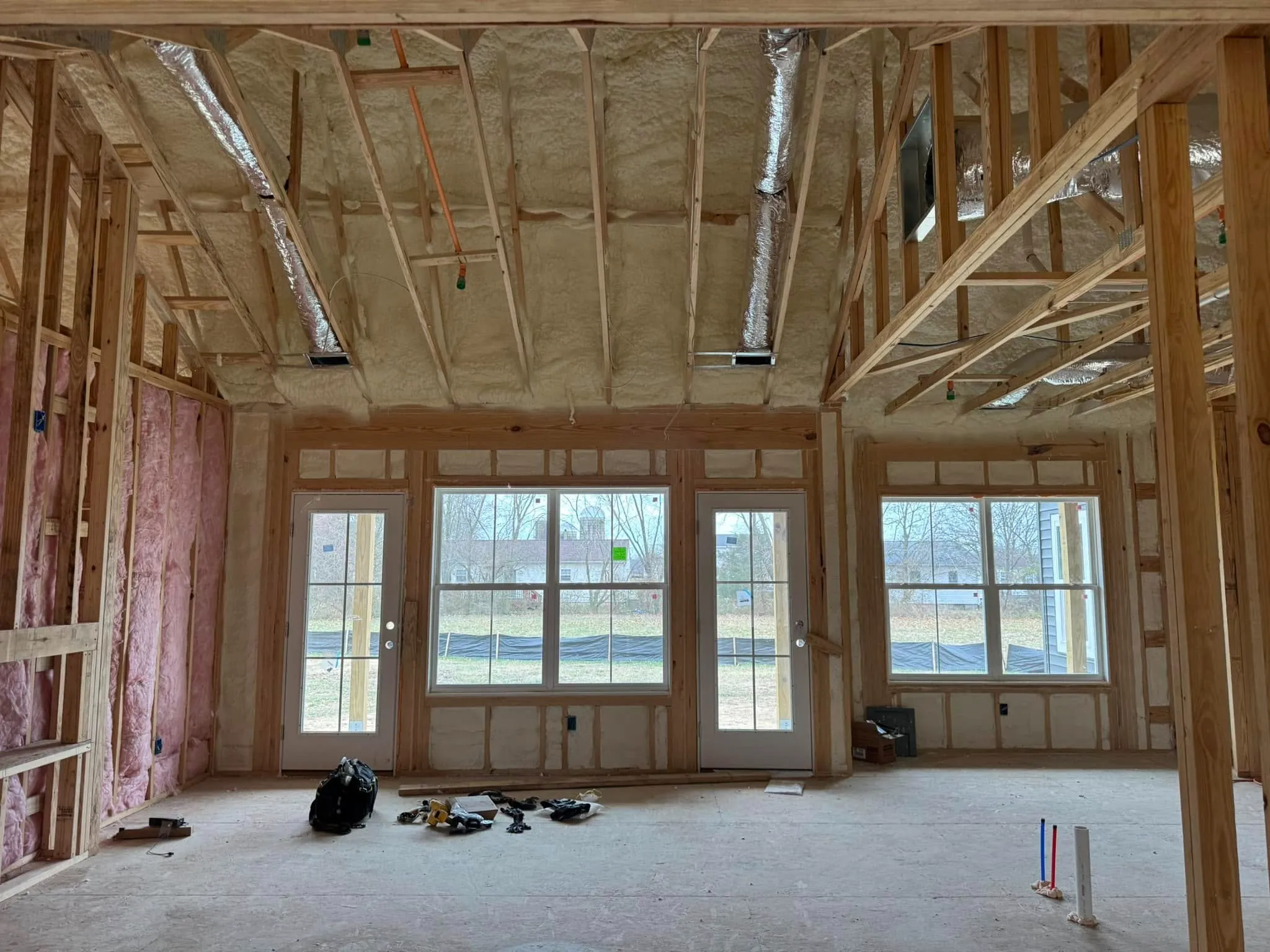
For residential spray foam insulation in Stevensville, MD, homeowners, the attic, crawl space, and rim joists usually pay off first. Attics lose the most heat, crawl spaces collect moisture, and rim joists let air leak through. Walls and roof decks help in specific cases, like remodels or finished attics.
Stevensville sits on Kent Island, surrounded by Chesapeake Bay water. Damp air, summer heat, and winter wind all push on your house at once. Maryland Energy Administration says only Garrett County is in Climate Zone 5, so we’re in Zone 4. For Zone 4, the code lists R-49 for ceilings and R-10 continuous or R-13 cavity for crawl space walls. Those numbers apply to new homes and major changes, but older houses may fall short of them.
Home Insulation Areas: Stevensville, MD owners overlook most are the rim joists and crawl space, since you rarely see them. A drafty rim joist or a damp crawl space can undo a well-insulated attic.
Start where the most air escapes and the most moisture gets in. This table shows how we usually rank the common spots.
| Area | Main Problem | Usual Foam |
|---|---|---|
| Attic | Heat gain and loss | Open or closed cell |
| Crawl space | Moisture, cold floors | Closed cell |
| Rim joist | Drafts, moisture | Closed cell |
| Walls | Gaps, thin cavities | Open or closed cell |
| Roof deck | Hot attic, ducts | Open or closed cell |
The attic and crawl space cover the most surface, so they usually come first.
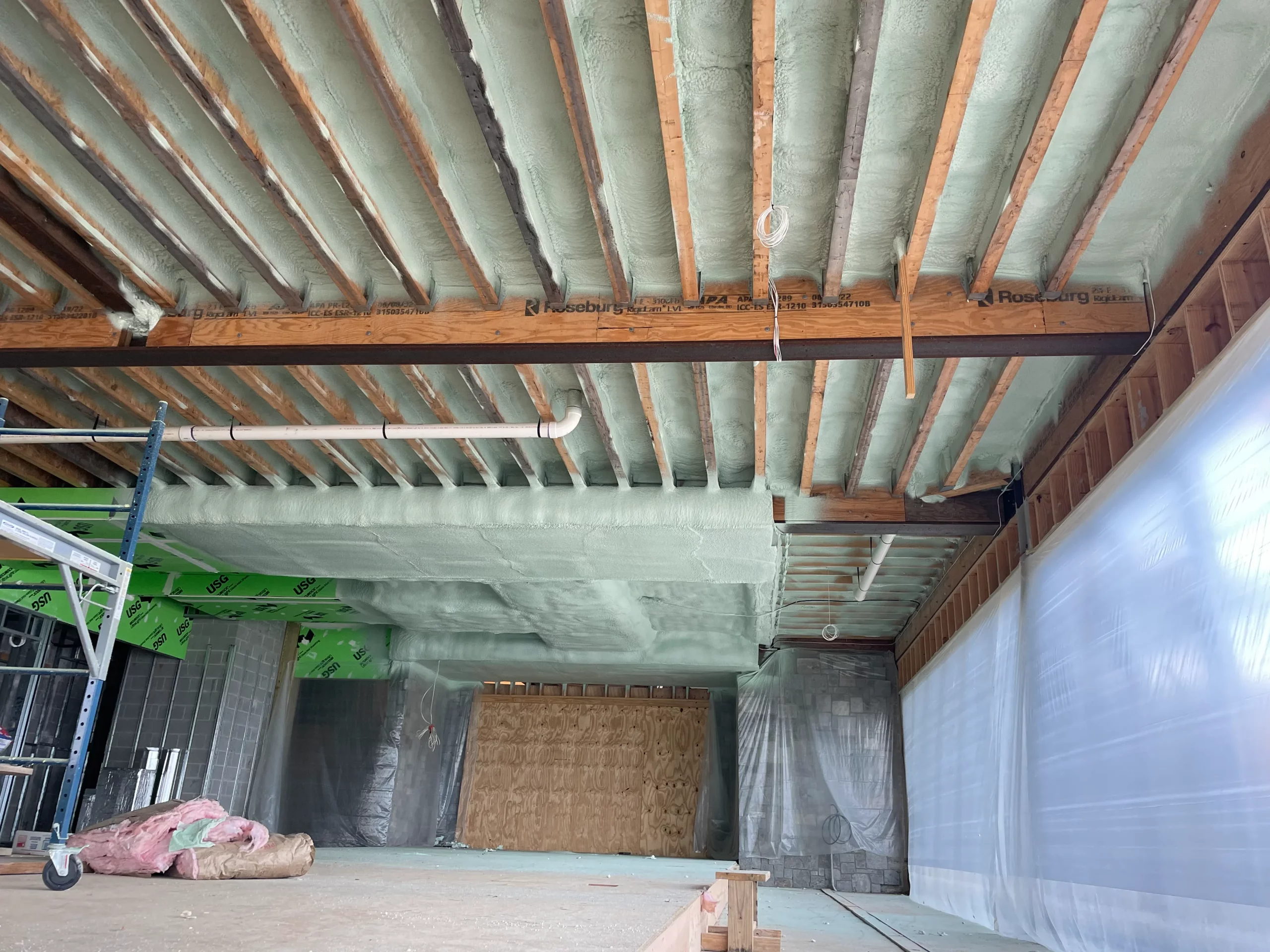
Heat rises, and in summer the sun bakes your roof. An under-insulated attic lets both problems into your living space. Our Spray Foam Insulation for Attics in Stevensville, MD jobs start with air sealing, then insulation. University of Maryland Extension recommends R-49 to R-60 for existing Maryland attics and puts spray foam at about R-6 per inch. By our math, that’s roughly 8 to 10 inches of foam. The same source says you’d need about 15 inches of fiberglass batts to reach R-49. Foam also works as an air barrier, so it seals leaks that batts miss.
Crawl spaces on the island deal with humid summer air and damp ground. Cold floors in winter and a musty smell in summer are the usual signs. Fiberglass batts in a damp crawl space often soak up moisture, sag, and lose R-value. Our Spray Foam Insulation for Crawl Spaces in Stevensville, MD work replaces them with foam that seals tight against the walls and rim.
Foam type matters here. The U.S. Department of Energy says closed-cell foam resists moisture better but costs more, and open-cell foam shouldn’t go below ground level because it could absorb water. If your crawl space takes on standing water, we fix drainage first, because foam can’t fix a wet space.
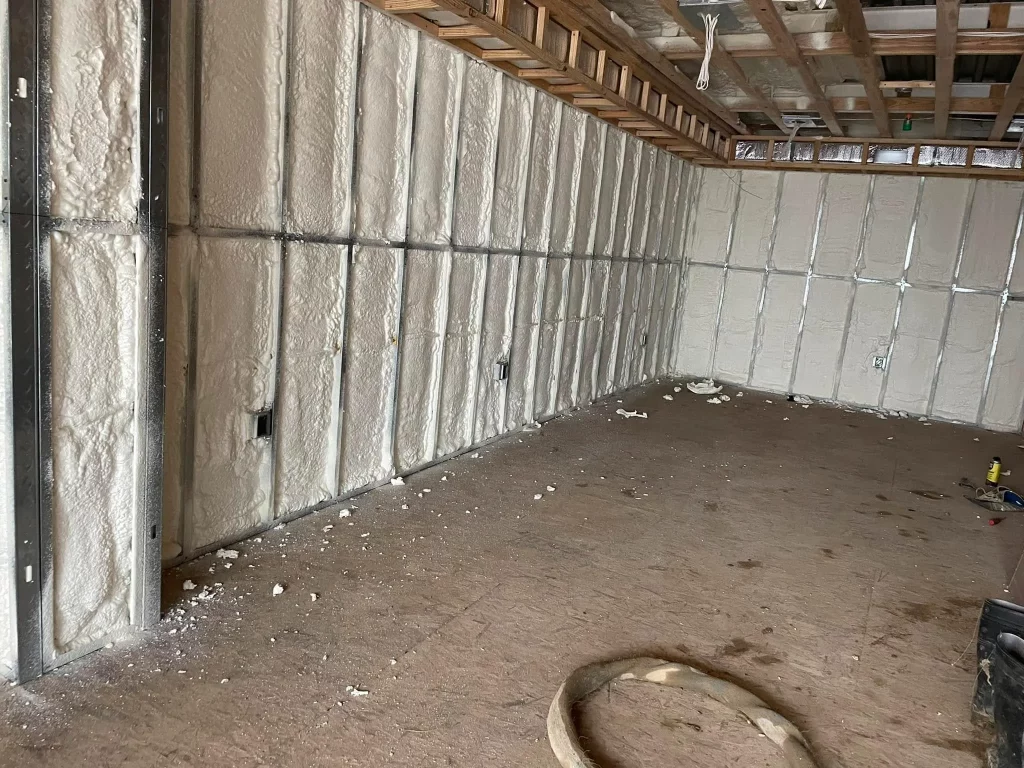
The rim joist is where your foundation meets the floor frame, and it leaks air in many older houses. Walls matter too, but only in certain situations. We seal rim joists with air-impermeable foam, since fiberglass batts alone usually can’t stop air or moisture.
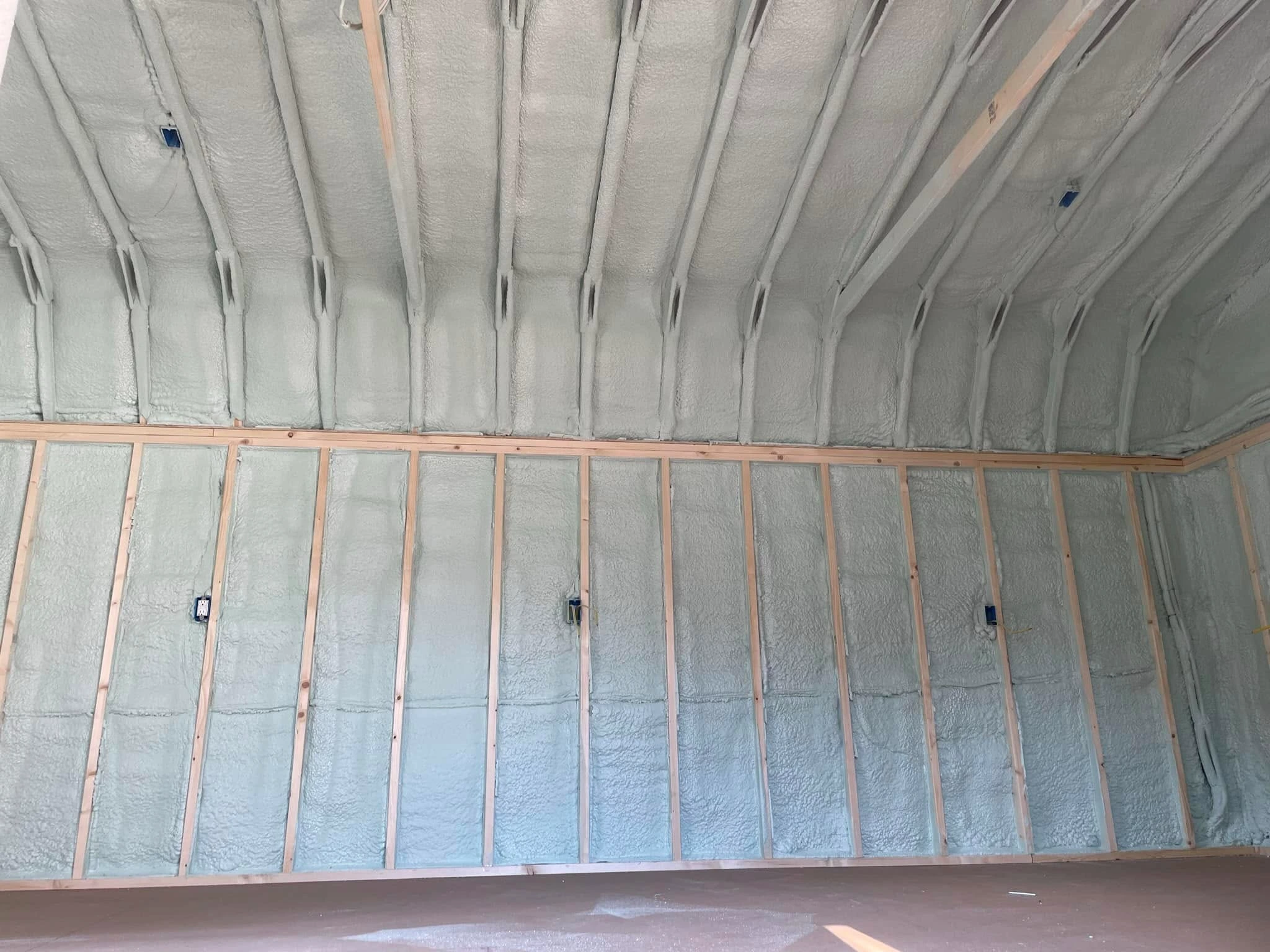
Spray Foam Wall Insulation in Stevensville, MD makes the most sense during remodels, additions, or any time the cavities are open. Recommended wall levels run about R-13 to R-21, depending on how the house was built.
Not every attic is an open floor. Some have sloped ceilings, kneewalls, or ducts running through them.
In those homes, Spray Foam Roof Insulation in Stevensville, MD can move the insulation up to the roofline. That puts the ducts and attic inside the conditioned space. We check the roof, ductwork, and layout before we recommend it.
Foam works best on a dry, sealed, well-prepped house. A few checks up front keep you from paying to cover up a problem.
Cold floors, a hot attic, or drafts you can’t trace? Tell us which room bothers you most, and we’ll help you decide where to start. Peninsula Insulation, LLC in Stevensville, MD, offers free quotes.
Phone: (410) 770-2624
Email: wil@mdsprayfoam.net
Often yes. Old fiberglass in the attic, crawl space, or rim joist is usually pulled out first so the foam bonds to clean framing.
In humid areas like ours, sealing the walls and rim joists is the common choice because it keeps the space inside the home’s envelope. We confirm the right call after seeing how much moisture is there.
Foam acts as an air barrier, but some building codes don’t count it as a vapor barrier. You may still need a separate vapor retarder.
No. Blown-in cellulose is the least disruptive way to fill closed wall cavities, while foam suits open cavities and odd-shaped spaces.
Small cans work for gaps around pipes and windows. Larger areas need special equipment and trained installers.