High Energy Bills? Insulation Solutions That Work in Easton, MD
High energy bills in Easton, MD, typically stem from inadequate insulation that fails to meet Climate Zone 4 requirements. Most…


If you’re standing in your unfinished basement or attic looking at the studs and wondering how to make your home more comfortable and energy-efficient, you’ve probably considered insulation. The challenge isn’t just deciding to insulate, it’s choosing the right type from the overwhelming options available. Open-cell spray foam insulation has emerged as a popular solution, but selecting the right product and ensuring proper installation requires careful consideration. This guide draws on years of hands-on experience working with countless homeowners and contractors, helping them navigate the complex landscape of insulation options. You’ll learn everything from the basic science behind open-cell foam to specific selection criteria, installation best practices, and how to calculate the return on your investment.
Open-cell spray foam insulation is a type of polyurethane foam that expands to fill gaps, cracks, and cavities in your building envelope. Unlike traditional insulation materials like fiberglass or cellulose, spray foam creates a seamless barrier that adheres directly to surfaces. The “open-cell” designation refers to the foam’s cellular structure, tiny bubbles that aren’t completely closed, making the foam softer, more flexible, and less dense than its closed-cell counterpart.
When mixed during application, two liquid components (an isocyanate and a polyol resin) react chemically and expand rapidly, up to 100-200 times their original volume. This expansion allows the foam to reach every nook and cranny, creating an air-tight seal that traditional batt insulation simply cannot match. The open-cell structure gives this insulation its unique properties, including sound absorption capabilities and moisture vapor permeability, which we’ll explore in detail.
The science behind open-cell foam centers around its low density, typically around 0.5 pounds per cubic foot. This lightweight nature makes it ideal for certain applications where adding significant structural weight would be problematic. The foam’s ability to stop air movement is perhaps its most valuable feature, addressing one of the primary sources of energy loss in buildings.
Open-cell spray foam insulation has several distinct properties that affect its performance and suitability for different applications:
R-value per inch: Open-cell foam typically provides an R-value of 3.5-3.8 per inch, which is higher than most traditional insulation materials but lower than closed-cell foam. This means you might need slightly more thickness to achieve the same thermal resistance as closed-cell alternatives.
Air sealing: This is where open-cell truly excels. The foam expands to fill gaps, creating an air barrier that eliminates drafts and reduces the load on your HVAC system. Studies show that air sealing can account for up to 40% of energy savings in insulation upgrades.
Sound absorption: The open-cell structure makes it an excellent sound dampener, reducing noise transmission between rooms and from outside sources. This property makes it particularly valuable for home offices, media rooms, and apartments.
Moisture vapor permeability: Unlike closed-cell foam, open-cell foam allows moisture vapor to pass through slowly. This “breathable” quality can help prevent moisture accumulation and mold growth in certain applications, though it requires careful consideration of climate conditions.
The advantages of open-cell spray foam extend beyond basic thermal insulation. Understanding these benefits helps determine if it’s the right choice for your specific situation.
Energy efficiency stands as the primary benefit for most homeowners. By creating an airtight seal, open-cell foam significantly reduces air leakage, which accounts for a substantial portion of energy loss in typical homes. The U.S. Department of Energy reports that proper insulation and air sealing can save homeowners up to 15% on heating and cooling costs.
The sound-dampening qualities of open-cell foam make it ideal for specific applications. Home offices, nurseries, and media rooms benefit from reduced noise transmission. The foam’s ability to absorb sound waves rather than reflect them creates quieter indoor spaces. This acoustic performance comes from the same open-cell structure that gives the foam its vapor-permeable qualities.
Moisture management represents another significant advantage in certain climates. The semi-permeable nature of open-cell foam allows trapped moisture to escape slowly, preventing the accumulation that can lead to mold growth. This characteristic makes it suitable for interior applications where moisture might otherwise become trapped against the building envelope. However, this benefit requires careful consideration of your local climate and the specific application.
Open-cell spray foam excels in specific applications where its unique properties provide the most benefit:
Interior walls and ceilings: For sound dampening between rooms and floors, open-cell foam offers superior performance compared to traditional insulation. The foam fills all gaps and absorbs sound vibrations effectively.
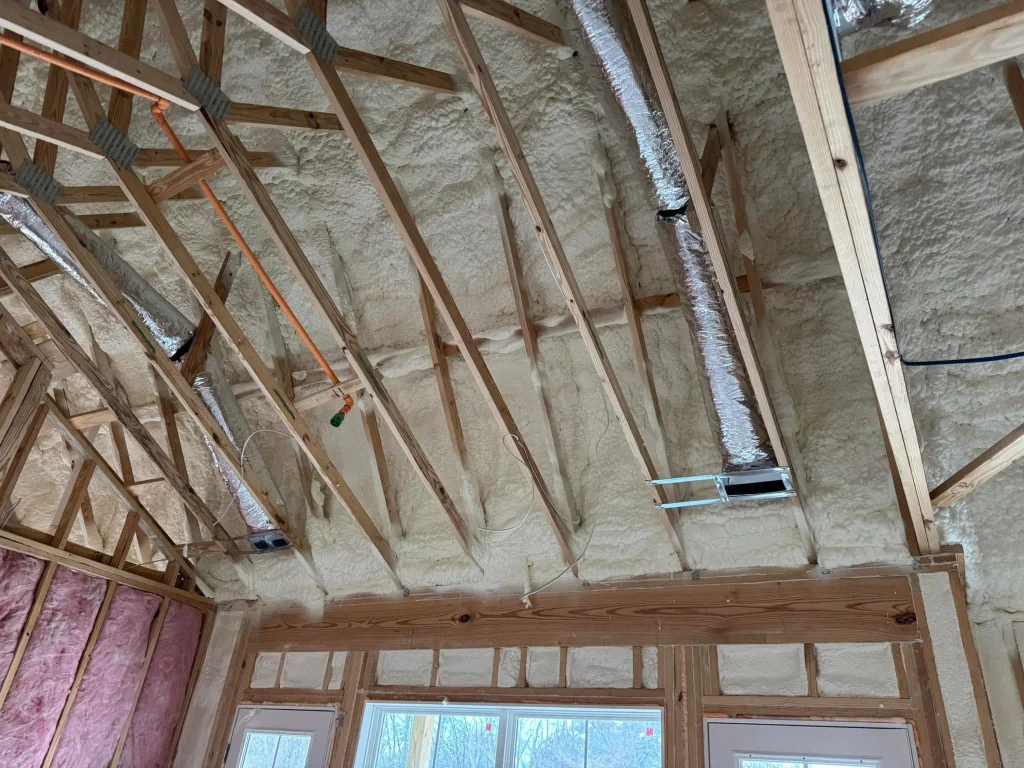
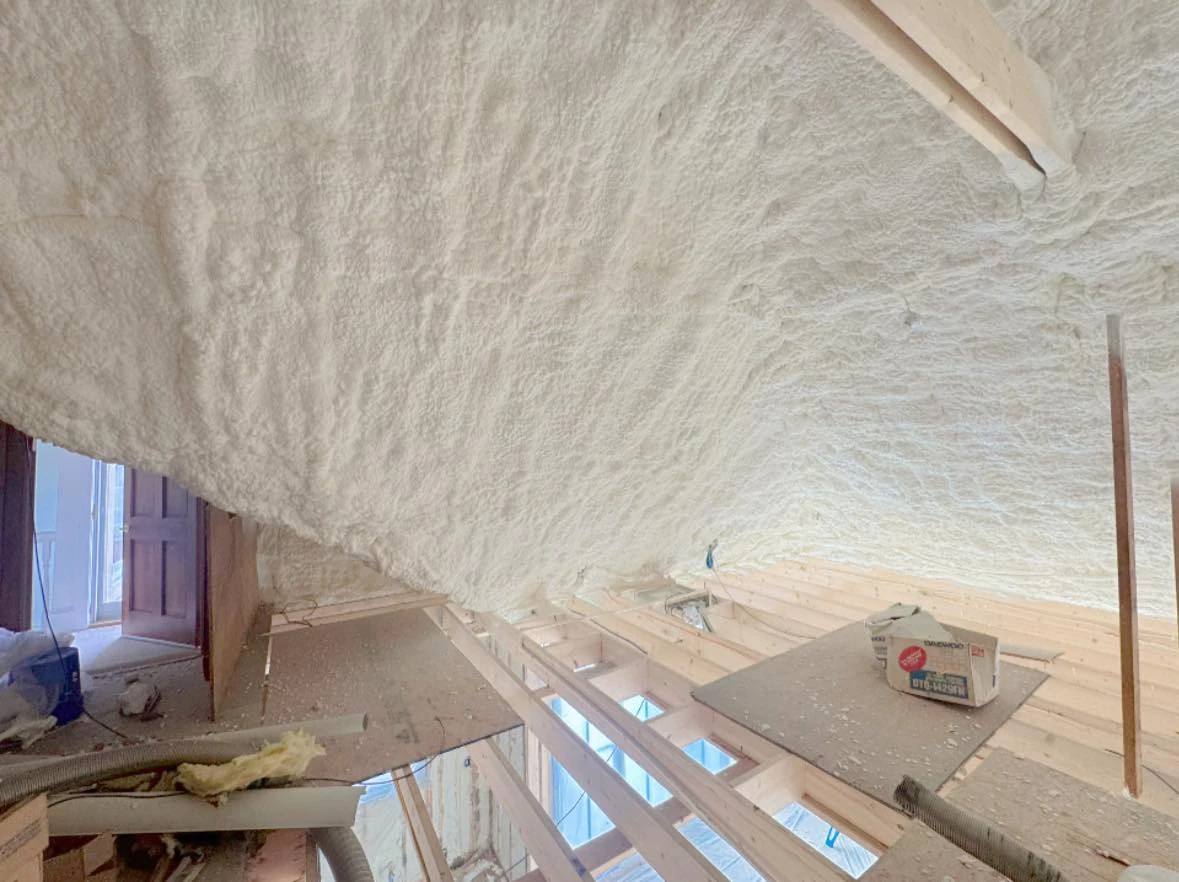
Attics: In vented attic assemblies, open-cell foam applied to the roof deck can create a conditioned attic space while still allowing the roof assembly to breathe. This application can reduce HVAC duct loss and improve overall home efficiency.
Interior cavity walls: For retrofit applications in existing homes, open-cell’s expansion properties allow it to fill irregular cavities completely without exerting excessive pressure on existing wall structures.
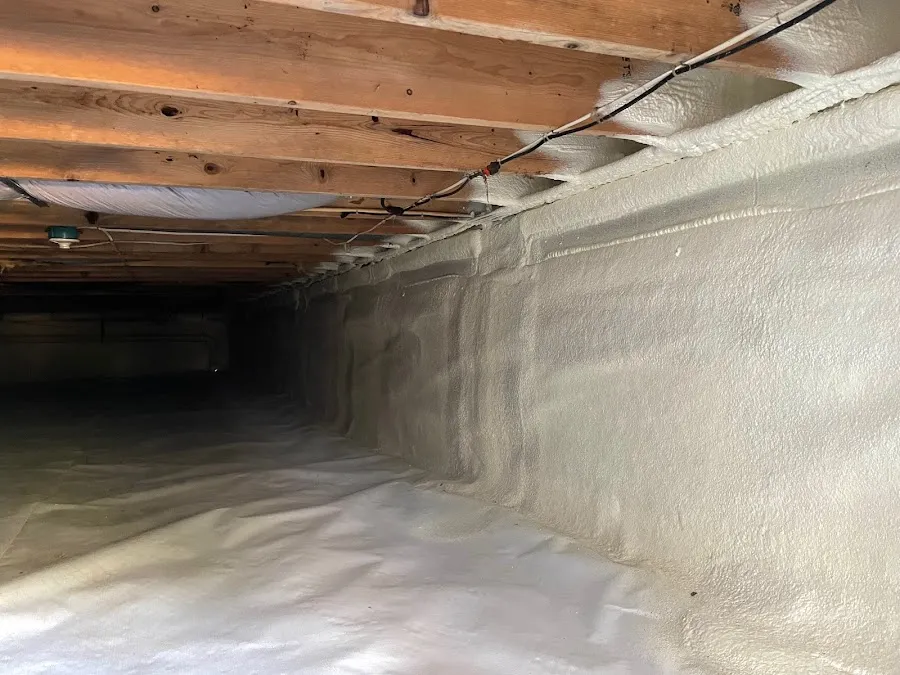
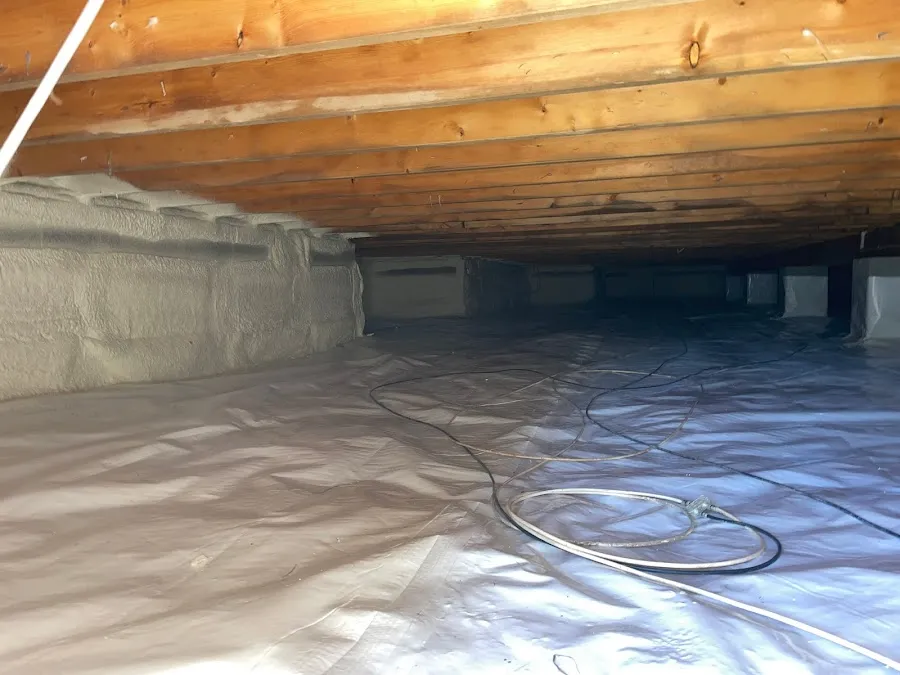
Crawlspace walls: In vented crawlspaces in appropriate climates, open-cell foam can provide insulation while allowing the space to breathe, preventing moisture accumulation.
Open-cell spray foam insulation creates a seamless air barrier with an R-value of 3.5-3.8 per inch. Its unique properties include excellent sound absorption, moisture vapor permeability, and superior gap-filling capabilities. These characteristics make it particularly valuable for interior applications where air sealing and sound control are priorities, while its breathable nature requires careful climate consideration.
Understanding the differences between open-cell and closed-cell spray foam is essential for selecting the right product. While both are types of spray polyurethane foam, their distinct properties make them suitable for different applications.
The fundamental difference lies in the cellular structure. Closed-cell foam has completely sealed cells that trap gas, making it denser and more rigid. Open-cell foam has partially open cells, giving it a softer, more flexible nature. This structural difference creates significant variations in performance characteristics that affect where and how each type should be used.
Closed-cell foam typically offers an R-value of 6.0-7.0 per inch, nearly double that of open-cell. This higher thermal resistance per inch means closed-cell can achieve the same insulating value with less thickness, which matters in space-constrained applications. The denser structure also gives closed-cell foam superior compressive strength and resistance to moisture infiltration.
However, these advantages come with trade-offs. Closed-cell foam costs significantly more—typically 30-50% more than open-cell on a per-board-foot basis. Its moisture-impermeable nature can trap water if it gets behind the foam, potentially causing hidden damage. The higher density also adds more weight to the structure, which may be a concern in some applications.
| Property | Open-Cell Foam | Closed-Cell Foam |
|---|---|---|
| R-Value per Inch | 3.5-3.8 | 6.0-7.0 |
| Density (lbs/ft³) | 0.4-0.5 | 1.5-2.0 |
| Vapor Permeability | Semi-permeable (2-10 perms) | Nearly impermeable (<1 perm) |
| Sound Absorption | Excellent | Good |
| Expansion Ratio | 100-200x | 30-40x |
| Best Applications | Interior walls, attics, sound control | Exterior walls, foundations, and metal buildings |
Expert Tip: Don’t automatically assume a higher R-value means better performance. For interior applications where space isn’t limited and sound control matters, open-cell often provides better overall value despite its lower per-inch R-value.
Climate plays a significant role in this decision. In colder northern climates, the higher R-value of closed-cell foam can help reduce heating costs, while the vapor barrier properties prevent interior moisture from condensing within wall cavities. In humid southern climates, the breathability of open-cell foam can be advantageous, allowing moisture to escape rather than becoming trapped.
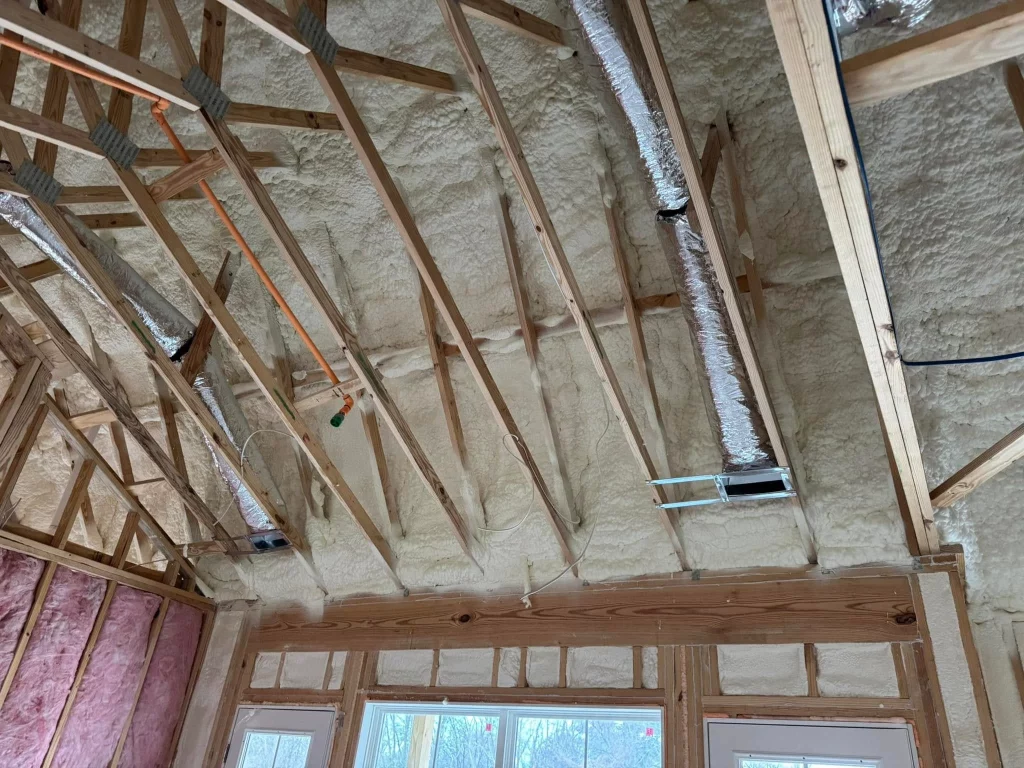
Selecting the right open-cell spray foam involves evaluating several critical factors specific to your project. These criteria help ensure you choose a product that performs well in your particular situation and provides lasting value.
Climate considerations should be your starting point. The relationship between outdoor temperature, humidity levels, and your heating/cooling needs significantly affects which insulation type will perform best. In heating-dominated climates, moisture moving from warm interior spaces to cold exteriors can cause condensation problems if not properly managed. In cooling-dominated climates, the reverse moisture movement creates different challenges. Open-cell foam’s semi-permeable nature (typically 2-10 perms) allows some moisture diffusion, which can be beneficial in certain applications but problematic in others.
Building type and construction method matter too. New construction offers different opportunities than retrofit applications. In new builds, you can design around the foam’s properties, integrating it with other building systems for optimal performance. Retrofaces present challenges like limited access to cavities and the need to work around existing structures. The structural capacity of your building also matters—while open-cell foam is relatively lightweight, it still adds mass to the structure.
The specific location within the building envelope requires careful thought. Interior partition walls have different requirements than exterior walls or attic assemblies. Each location faces different temperature differentials, moisture loads, and structural considerations. For example, open-cell foam performs exceptionally well in interior walls where sound control is desired and moisture concerns are minimal.
Your local building codes establish minimum insulation requirements, but aiming for these minimums may not provide optimal performance or comfort. Climate zones in the United States range from 1 (hot-humid) to 8 (subarctic), each with different recommended R-values for various assembly types.
For open-cell foam specifically, achieving code minimum requirements often means installing greater thickness than with closed-cell alternatives. In Zone 5 (much of the northern United States), walls might require R-13-R-21, which translates to approximately 3.5-6 inches of open-cell foam. In attics, where higher R-values are needed (R-49-R-60 in the same zone), you might need 14-17 inches of open-cell foam.
Budget constraints always factor into decision-making. While open-cell foam costs less per square foot than closed-cell, it remains more expensive than traditional insulation options. The total project cost includes both materials and installation labor. Consider the long-term operating savings rather than just upfront costs. According to the North American Insulation Manufacturers Association, proper insulation can reduce energy bills by up to 20%, providing ongoing savings that offset the initial investment.
Expert Tip: When comparing costs between insulation types, calculate the cost per R-value, not just the material cost alone. This gives you a true performance-for-cost comparison across different options.
Proper installation makes the difference between insulation that performs as advertised and one that fails to deliver on its promises. Open-cell spray foam installation requires specific equipment, training, and attention to detail that goes beyond DIY capabilities.
Preparation begins with protecting your space. Spray foam installation creates overspray that sticks to everything it contacts. Professional installers use plastic sheeting to cover floors, windows, and any surfaces not receiving foam. They also seal off areas adjacent to the work zone using temporary barriers to prevent foam drift into unintended spaces. This preparation work isn’t just about cleanup, it’s about safety and quality control.
The application process itself requires precise equipment calibration. Spray foam guns mix the two chemical components at a specific ratio and temperature. This ratio must remain consistent throughout the application, or the foam won’t cure properly. Temperature affects both the foam’s expansion characteristics and its cure time. Most professional systems maintain the chemical temperature between 120-140°F during application, regardless of ambient conditions.
Installers apply the foam in layers, typically called “passes,” with each pass limited to 1-2 inches thick. Thicker applications can trap excessive heat from the chemical reaction, potentially causing scorching or compromising the foam’s structural integrity. These thin passes build up to the desired total thickness, ensuring proper curing throughout the depth of the insulation.
Safety cannot be overstated during spray foam installation. The chemicals involved present potential hazards that require proper precautions:
Ventilation remains critical during and after application. The chemicals release volatile organic compounds (VOCs) as they react and cure. Professional installers use ventilation fans and often require residents to vacate the premises for 24-48 hours following application, depending on the specific product used and ventilation capacity.
Personal protective equipment (PPE) includes respirators with organic vapor cartridges, chemical-resistant gloves, eye protection, and full-body suits. The uncured chemicals can cause skin irritation and respiratory issues. The fully cured foam is inert and safe, but the application process requires these precautions.
Environmental controls prevent overspray from reaching unintended areas. Overspray can travel surprising distances if not properly contained, potentially damaging finishes or creating cleanup nightmares in adjacent spaces.
Professional installation is essential for open-cell spray foam performance. The process involves extensive preparation, precise equipment calibration, application in thin passes, and critical safety measures. Attempting DIY installation typically results in poor performance, potential health hazards, and may void product warranties.
The curing process continues for 24-48 hours after application, though the foam becomes tack-free within minutes. During this time, the foam continues to off-gas and may expand slightly. Avoid disturbing the foam until it’s fully cured to prevent compromising its cellular structure. Most manufacturers recommend leaving the area ventilated for at least 24 hours before returning to normal occupancy.
Even with professional installation, open-cell spray foam projects can encounter challenges. Understanding these potential issues helps you address them proactively and ensure long-term performance.
Moisture management represents perhaps the most significant challenge with open-cell foam. Its semi-permeable nature allows vapor transmission, which can be beneficial but also creates risks. In cold climates, warm interior moisture reaching cold exterior surfaces through the foam can condense within the assembly. This risk increases dramatically when open-cell foam is installed on exterior walls without proper exterior sheathing or drainage planes. The solution often involves adding a vapor retarder on the warm side of the assembly or choosing closed-cell foam for these applications.
Improper installation creates a host of problems. Incomplete cavity filling leaves gaps that compromise the air barrier. Overfilling cavities can exert excessive pressure on interior finishes, potentially causing bowing or cracking. Application to surfaces that are too cold, dirty, or damp results in poor adhesion and delamination over time. These installation issues underscore the importance of hiring experienced professionals who understand the science behind the application.
Compatibility issues with other building materials sometimes arise. Certain types of wiring, particularly some plastic-sheathed varieties, can be affected by the chemicals during application. Some sealants and adhesives don’t bond well to cured foam. Understanding these interactions prevents problems down the road. For example, petroleum-based products can deteriorate cured foam, so they should be avoided for finishing or sealing around the insulation.
Even properly installed foam can develop issues over time. Here are some common problems and their solutions:
Shrinking or pulling away from studs: This typically indicates improper chemical mixing during application. The solution is removal and replacement, as the compromised insulation won’t provide the expected air barrier. This issue highlights the importance of experienced installers who maintain their equipment properly.
Odor complaints: Some homeowners notice a persistent chemical odor after installation. While the cured foam should be inert and odorless, poor curing or incompatible products can create lasting smells. Increased ventilation often helps, but persistent odors may require investigation for potential installation errors or product defects.
Pest infiltration: Unlike some insulation materials, cured foam doesn’t provide food value for pests. However, its soft texture can be tunneled by rodents in severe infestations. Addressing pest entry points before installation prevents this issue. In areas with known pest problems, consider closed-cell foam or combine foam treatments with pest exclusion measures.
Moisture staining on exterior surfaces: This often appears as discoloration on exterior sheathing or siding and indicates moisture movement through the assembly. The solution requires identifying and addressing the moisture source, which may involve additional air sealing, improved exterior drainage, or in some cases, partial replacement with closed-cell foam.
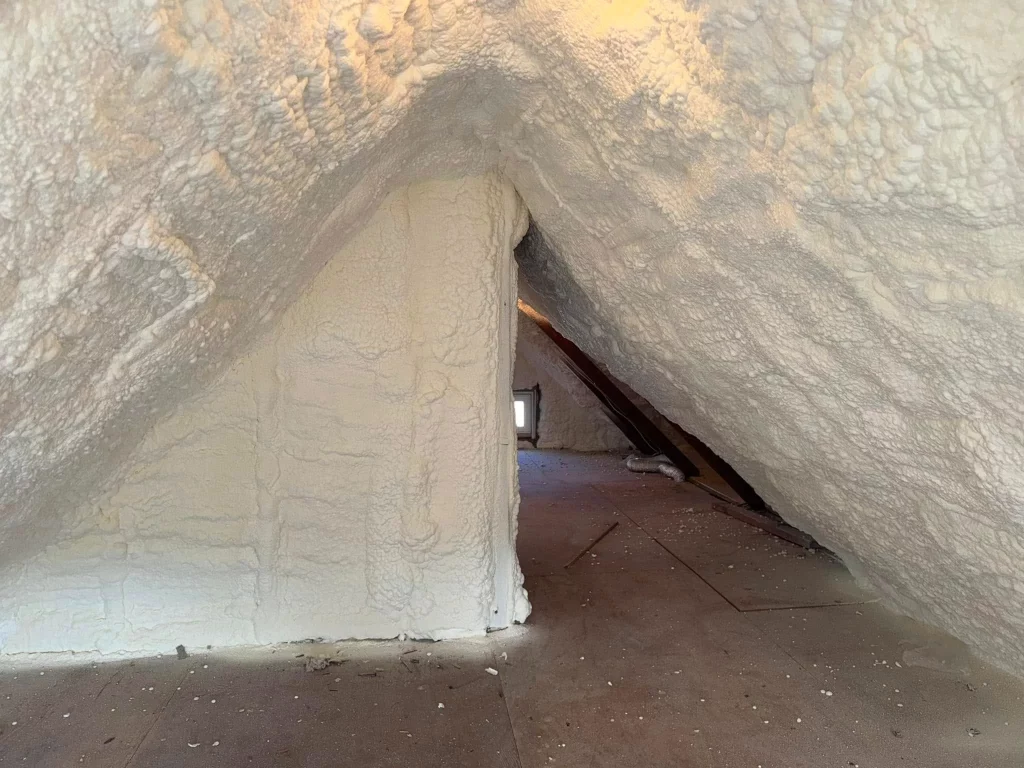
Understanding the financial aspects of open-cell spray foam helps you make informed decisions and justify the investment. While the upfront costs are higher than traditional insulation, the long-term benefits often provide substantial value.
These costs vary based on geographic location, project complexity, accessibility of the application area, and contractor expertise. Removal of existing insulation, if required, adds to the project cost. Some projects may also require additional work, like air sealing bypasses or adding ventilation systems, before foam application.
The return on investment comes from several sources beyond direct energy savings. Improved indoor air quality through reduced infiltration of outdoor pollutants and allergens has health benefits that are harder to quantify but nonetheless valuable. The increased comfort from eliminating drafts and maintaining more consistent temperatures throughout the home represents another quality-of-life benefit.
The actual energy savings from open-cell foam installation vary based on climate, home construction, existing insulation, and utility rates. However, case studies provide some reference points. The Insulation Institute reports that homeowners who add spray foam insulation see average energy savings of 15-25%, with some studies showing even higher results in poorly sealed homes. This simple calculation doesn’t account for rising energy prices, which would shorten the payback period, nor does it include the value of improved comfort and air quality.
Expert Tip: The most significant savings often come from combining open-cell foam insulation with other energy efficiency measures. Address air sealing issues completely, upgrade HVAC systems as needed, and consider window improvements for maximum impact on your energy bills.
Additional value comes from potential increases in home resale value. Energy-efficient homes increasingly command premium prices in many markets. While exact figures vary by region, several studies indicate that energy efficiency upgrades can increase home value by several times the annual energy savings. This potential appreciation should factor into your investment calculations, particularly if you plan to sell within the next 5-10 years.
The spray foam industry continues evolving, with new formulations and applications emerging regularly. Understanding these trends helps you make informed decisions about timing your insulation project and selecting products that incorporate the latest advancements.
Sustainability improvements represent one of the most significant recent developments. Manufacturers have introduced bio-based formulations that replace petroleum-derived polyols with renewable resources like soy or castor oil. While these products still contain petroleum-based components, the reduced reliance on virgin petroleum decreases the overall environmental footprint. Some manufacturers have also developed products with higher recycled content and lower global warming potential (GWP) blowing agents.
The next generation of spray foam may incorporate smart technology. Researchers are experimenting with phase change materials (PCMs) that can absorb and release thermal energy, providing additional thermal mass that helps stabilize indoor temperatures. Other innovations include spray foams with integrated sensors that can monitor moisture levels, temperature differentials, or air leakage within wall assemblies.
Installation technology continues advancing as well. New application equipment provides better temperature control and more precise mixing ratios, reducing the potential for installation errors. Some manufacturers have developed delivery systems with better environmental controls that capture overspray and improve workplace conditions.
Building codes continue to evolve, placing increasing emphasis on air sealing and energy efficiency. The International Energy Conservation Code (IECC), which many states adopt as their baseline, has progressively increased insulation requirements and mandated blower door testing to verify air sealing performance. These changes favor insulation products like spray foam that provide both thermal resistance and air barrier properties in one application.
Environmental regulations also affect spray foam formulations. The AIM Act (American Innovation and Manufacturing Act) is phasing down the use of hydrofluorocarbons (HFCs) with high global warming potential. This legislation has prompted manufacturers to reformulate their products using alternative blowing agents with lower environmental impact. These regulatory changes drive innovation but may temporarily increase costs as manufacturers adapt their production processes.
Fire safety requirements continue influencing spray foam development. All spray foams require thermal barriers or ignition barriers when installed in habitable spaces. New formulations aim to improve fire resistance without compromising performance. Some manufacturers have developed integrated thermal barrier coatings that can simplify the installation process while meeting code requirements.
Selecting the right insulation is a significant decision that affects your home’s comfort, energy efficiency, and long-term value. Open-cell spray foam offers unique advantages in air sealing, sound control, and moisture management when applied to appropriate projects. The key is matching the product characteristics to your specific needs, climate, and building conditions.
Start by assessing your priorities, whether energy savings, sound control, or moisture management drives your decision. Consider the specific applications within your home where open-cell’s properties provide the most benefit. Research qualified installers in your area, requesting references and examples of previous work. Obtain multiple quotes and compare not just prices but the scope of work and warranties offered.
Remember that insulation performance depends heavily on proper installation. Cutting corners during application can compromise even the best products. Investing in certified professionals who follow manufacturer guidelines ensures you get the performance you pay for. Plan the project carefully, considering how insulation integrates with other home systems like HVAC and ventilation.
This guide provides a comprehensive reference for your decision-making process. Refer back to specific sections as you evaluate proposals from contractors or plan your project timeline. The information here should help you ask the right questions and evaluate options effectively.
Making insulation decisions can feel overwhelming with so many options and technical considerations. Peninsula Insulation, LLC brings years of experience helping homeowners select and install the right insulation solutions for their specific needs. For professional guidance on your insulation project, reach out to the experts at Peninsula Insulation, LLC by calling (410) 770-2624 or emailing wil@mdsprayfoam.net. A consultation can help clarify your options and ensure you make the best choice for your home and budget.
When properly installed and fully cured, open-cell spray foam is safe and inert. The chemicals used during installation require professional handling and proper ventilation. Most manufacturers recommend vacating the premises for 24-48 hours following installation to allow off-gassing to complete. Always hire certified professionals who follow manufacturer safety guidelines and local building codes.
When properly installed, open-cell spray foam insulation should last the lifetime of your building without degradation in performance. The cured foam is chemically stable and resistant to settling, compression, or breakdown. Most manufacturers offer limited lifetime warranties on their products when installed by certified applicators.
DIY installation is not recommended for spray foam products. The application requires specialized equipment, precise chemical mixing ratios, temperature control, and extensive safety precautions. Professional installation is essential for achieving proper performance and ensuring safety. Additionally, manufacturer warranties typically require installation by certified professionals.
Open-cell foam is semi-permeable to moisture vapor, allowing some diffusion through the material. In many applications, this breathability is advantageous. However, in certain climate zones and applications, additional vapor retarders may be needed to prevent moisture issues. A qualified insulation professional can assess your specific situation and local requirements.
When properly installed and cured, open-cell spray foam can improve indoor air quality by reducing air infiltration of outdoor pollutants, allergens, and dust. The seamless barrier also helps prevent moisture movement that can lead to mold growth. During installation, proper ventilation is critical to avoid exposure to chemical fumes. After curing, the foam is inert and doesn’t off-gas harmful substances.
Open-cell spray foam is versatile but not ideal for every application. It excels in interior walls, attics, and sound-dampening applications. For below-grade installations like basements or in exterior walls in cold climates, closed-cell foam may be more appropriate. Consult with an insulation professional to determine the best application for each area of your home.