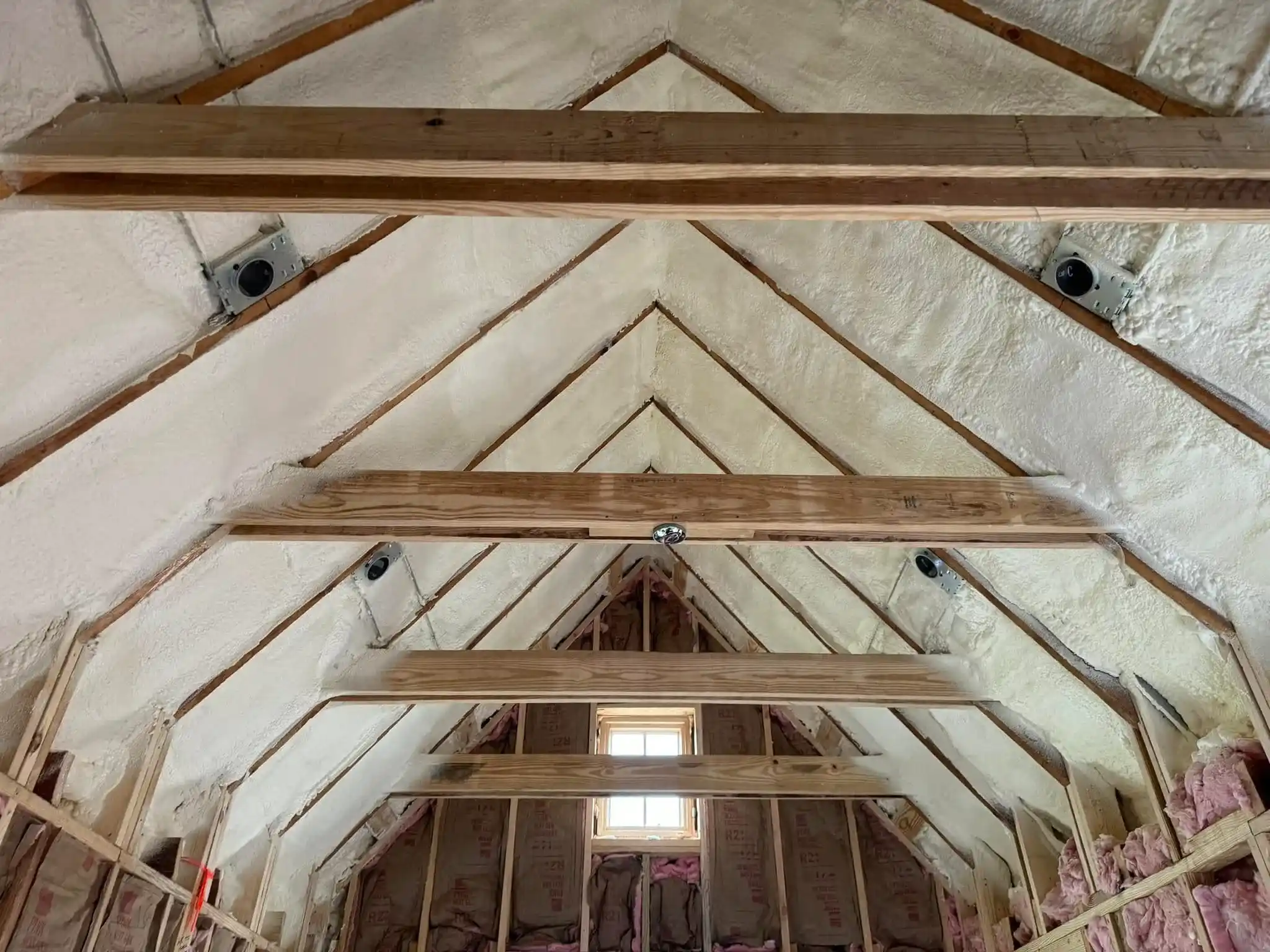
What Happens When Traditional Insulation in New Carrollton, MD Leaves Air Gaps?
When traditional insulation in New Carrollton, MD develops air gaps, it stops doing the one job it was installed to…


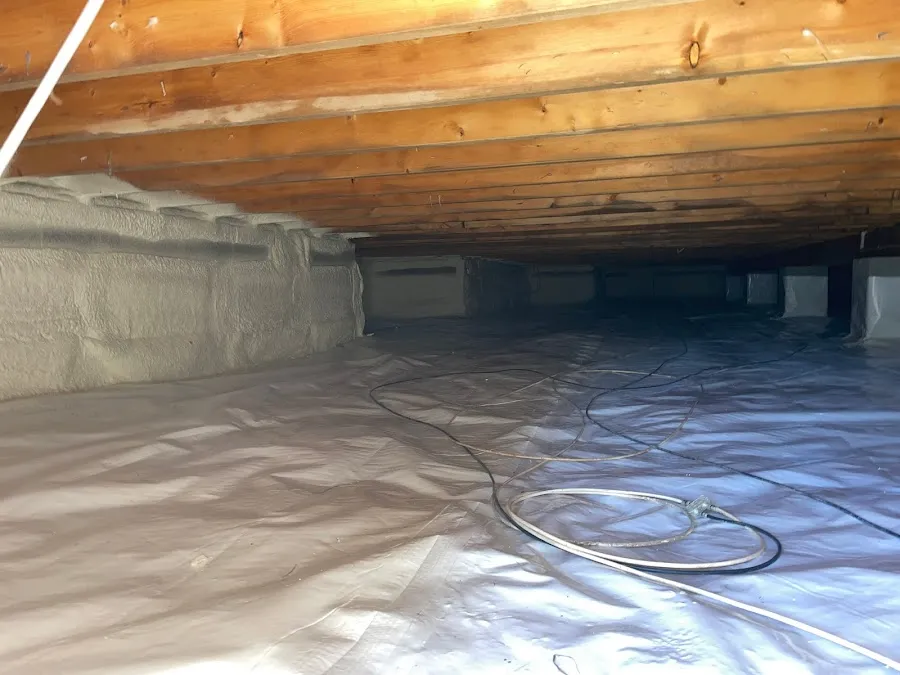
If your crawl space smells musty, the smell itself is a symptom, not the problem. It almost always points to excess moisture, active mold growth, or poor ventilation pulling damp air up into your living space. In Pasadena, MD, where humidity averages 65-70% year-round, and the Chesapeake Bay keeps moisture pressure high, this is one of the most common calls we get. Our complete guide to crawl space encapsulation covers the full process in more depth, but this page focuses specifically on why the odor happens and how to get rid of it for good.
When you catch that earthy, damp odor coming from under the house, a few related problems are usually working together. Understanding them explains why quick fixes rarely hold and why a complete approach works.
The most common cause is simple evaporation. A bare earth floor can release roughly 4 to 25 gallons of water vapor a day, depending on soil moisture and temperature. That constant moisture supply is exactly what mold and bacteria need to establish themselves. According to the EPA, mold needs only moisture, a food source, and the right temperature to start growing within 24 to 48 hours.
In many Pasadena homes, warm air rising through the house creates negative pressure in the crawl space below, pulling in replacement air through vents and foundation cracks. That air carries mold spores, bacteria, and the musty smell straight into your living areas. Indoor air quality research consistently ties moisture problems to poor indoor air conditions.
Where moisture sticks around, biological growth follows. Mold feeds on the organic materials common in a crawl space, wood joists, subflooring, and paper-backed insulation, while bacteria build up on damp soil. Different mold species produce different smells, but an earthy, damp odor typically means active growth on building materials or soil.
Damp crawl spaces attract rodents and insects. Their droppings, nesting material, and decomposition add to the odor, and termite activity in damp wood creates more entry points for moisture.
Pasadena’s location on the Chesapeake Bay creates persistent moisture pressure: high water tables, clay-heavy soil that holds water, and humid summers with frequent storms. Anne Arundel County averages 42-44 inches of rainfall annually, with groundwater often close to the surface. In this climate, moisture management is a requirement, not an upgrade.
Full encapsulation works because it addresses every moisture source at once instead of treating one symptom. That’s the core of musty crawl space smell solutions that actually last.
Loose plastic sheeting tears and leaves gaps around the edges. A standalone dehumidifier without a vapor barrier can’t keep up with constant moisture from bare earth. Vent fans that pull humid outside air into the space actually make things worse during Maryland summers. Building Science Corporation’s research on moisture control backs this up, showing that addressing only one moisture source at a time lets the underlying problem persist and often return quickly. Effective crawl space odor removal means treating the moisture source, not just moving air around.
| Feature | Vented Crawl Space | Encapsulated Crawl Space |
| Humidity Level | 70-90% typical | 40-50% maintained |
| Mold Growth Risk | High, especially in summer | Eliminated |
| Indoor Air Quality Impact | Negative, musty odors common | Neutral to positive |
| Energy Efficiency | Poor, thermal losses | Improved |
| Pest Activity | Common, attracted by moisture | Reduced, no water source |
| Structural Risk | Wood rot, decay possible | Protected from moisture damage |
| Maintenance | Regular inspection needed | Annual dehumidifier check |
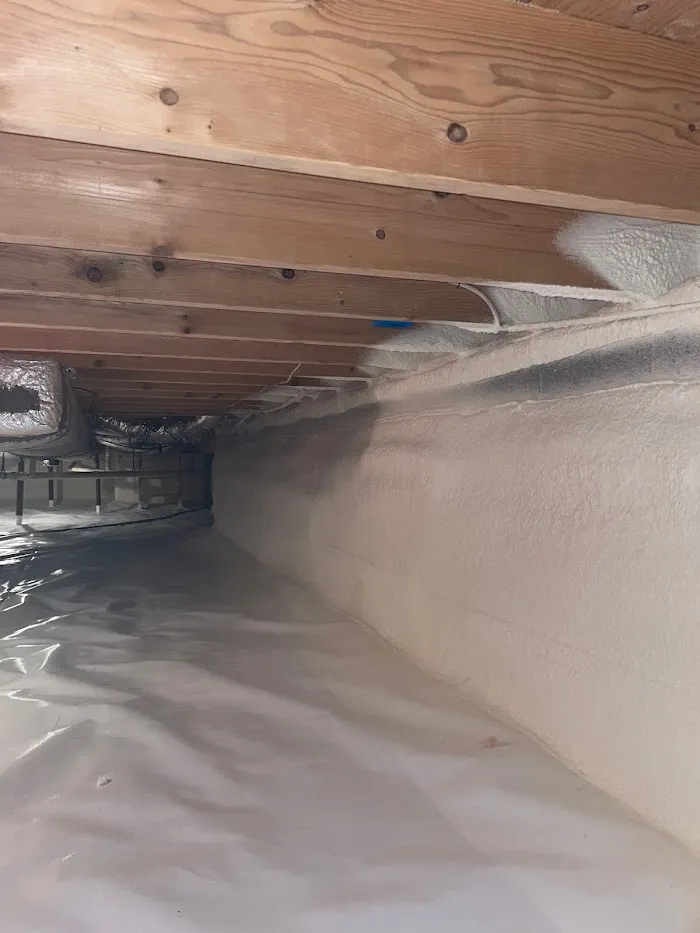
Air from your crawl space doesn’t stay there. Through the stack effect, a meaningful share of the air on your first floor can originate below the house, carrying mold spores, bacteria, and soil gases with it. The Whole Building Design Guide explains that moisture in the building envelope is directly tied to indoor air quality and occupant health. Moisture-related indoor air problems are commonly linked to allergic reactions, worsened asthma symptoms, headaches, fatigue, and respiratory irritation, with children, older adults, and anyone with existing respiratory conditions facing higher risk.
A typical encapsulation project runs 2-4 days depending on size and condition:
Not every encapsulation job is equal. Look for a contractor who provides a detailed written proposal, uses a minimum 20-mil vapor barrier, sizes a dehumidifier correctly for your space, offers a materials and workmanship warranty, and can speak specifically to Maryland’s climate and building code requirements. Be cautious of anyone proposing plain plastic sheeting with no drainage plan.
If your crawl space smells musty, the smell isn’t going to fix itself, and it usually gets worse before it gets better. Get a free, no-pressure inspection and quote, and we’ll tell you exactly what’s causing it and what it takes to fix it permanently.
For a deeper look at how the entire process works from start to finish, see our crawl space encapsulation overview.
Our team also provides direct crawl space encapsulation services for homeowners ready to move forward.
A musty smell almost always comes from excess moisture, whether that’s evaporation from bare earth, humid air pulled in through vents, or standing water. That moisture supports mold and bacterial growth, which produces the characteristic earthy odor.
Yes, when properly installed. Encapsulation removes the moisture source causing the odor. Existing mold on wood surfaces will dry out and stop producing smell, though heavily contaminated materials may need remediation first.
Quality 20-mil vapor barriers typically last 15-25 years or more. The dehumidifier may need replacement after 10-15 years of continuous use, but the barrier itself stays effective for decades when installed correctly.
In most cases, yes. Since crawl space air moves upward into the living space through the stack effect, sealing off the moisture source at the crawl space level typically resolves musty odors noticed on the main floor as well.
Yes. The vapor barrier creates a clean, dry surface, which actually makes the space easier to work in for future service calls, without mud, standing water, or mold.
Often, yes, especially when electrical work is needed for a sump pump or dehumidifier. A reputable contractor handles permitting and ensures the work meets local code.