What Materials Are Commonly Used for Crawl Space Encapsulation in 2026, and Why Do They Matter?
Most crawl space encapsulation material choices in 2026 fall into five groups: a polyethylene vapor barrier over the soil and…

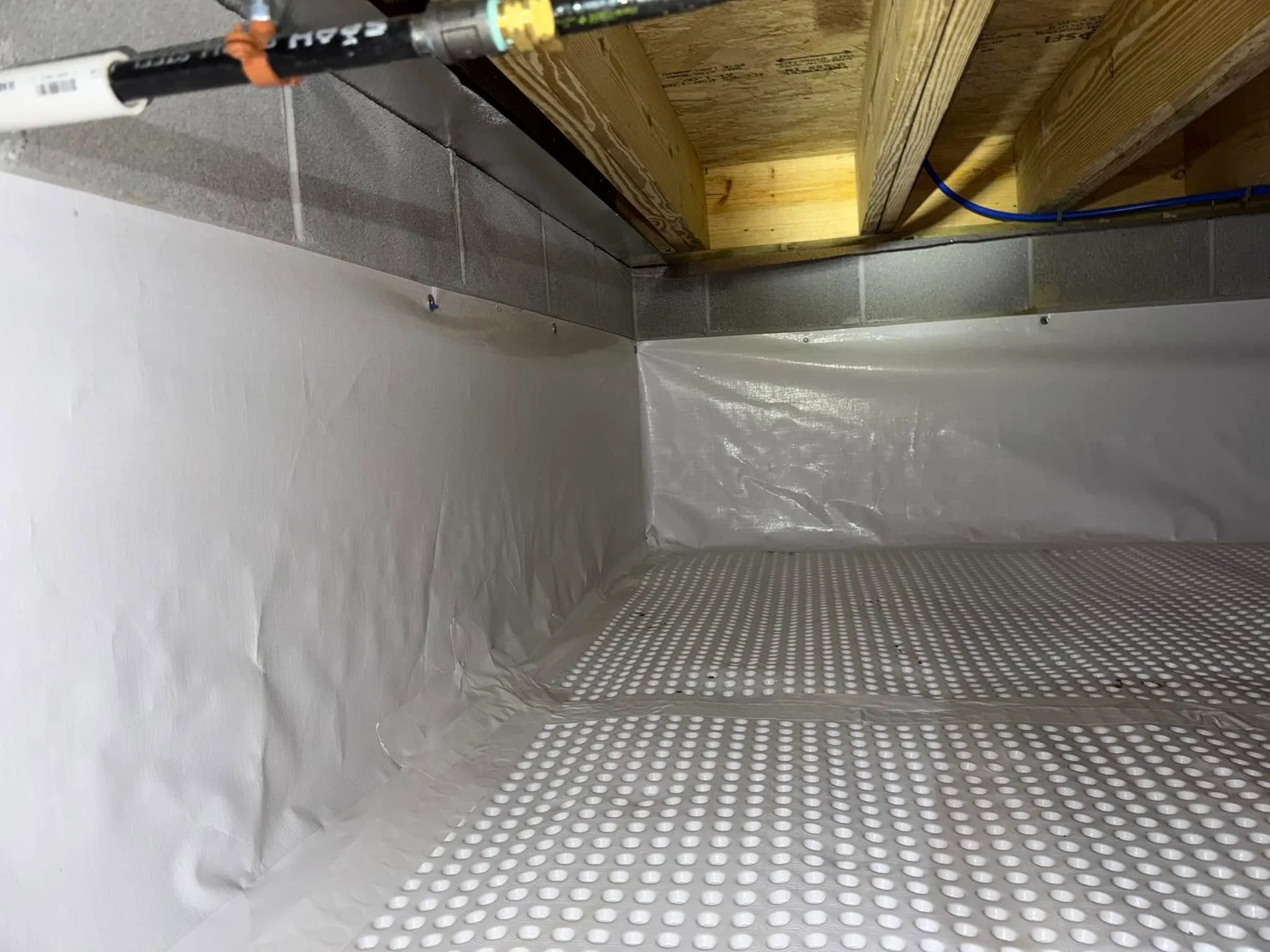
That dark, musty space beneath your floors is easy to ignore. For most homeowners, the crawl space is out of sight and out of mind. But what if that neglected area was quietly driving up your energy bills, damaging your home’s structure, and affecting the air you breathe every day? A traditional dirt or vented crawl space is often a source of moisture, mold, and poor air quality that spreads through the entire house.
Crawl space encapsulation is the fix. It seals the crawl space off from the earth and outside air, turning a damp, uncontrolled space into a clean, dry, conditioned part of your home. This guide walks through the full crawl space encapsulation process, the materials involved, what it costs, and the benefits you can expect. If you would rather skip ahead to see how professional installation works in your home, visit our crawl space encapsulation services page for a full breakdown of what our team includes in every project.
Your crawl space is more connected to your living space than most homeowners realize, and its condition has a direct effect on your home.
A crawl space is a shallow, unfinished area between the ground and the first floor of a home. Older homes were often built with foundation vents on the theory that outside air circulation would keep the space dry. In most climates, especially humid ones, this does the opposite. Vented crawl spaces pull in moisture-laden air, which condenses on cooler surfaces like floor joists and ductwork, creating the perfect environment for trouble.
An open, unsealed crawl space is a breeding ground for problems that can affect both your health and your home’s structure.
Air in your crawl space does not stay there. The “stack effect” pulls air upward through your home, entering at the lower levels and rising as it warms. Research from Advanced Energy found that as much as half of the air on your first floor can originate in the crawl space. That means mold spores, dust mite allergens, and musty odors from below get pulled straight into the air your family breathes.
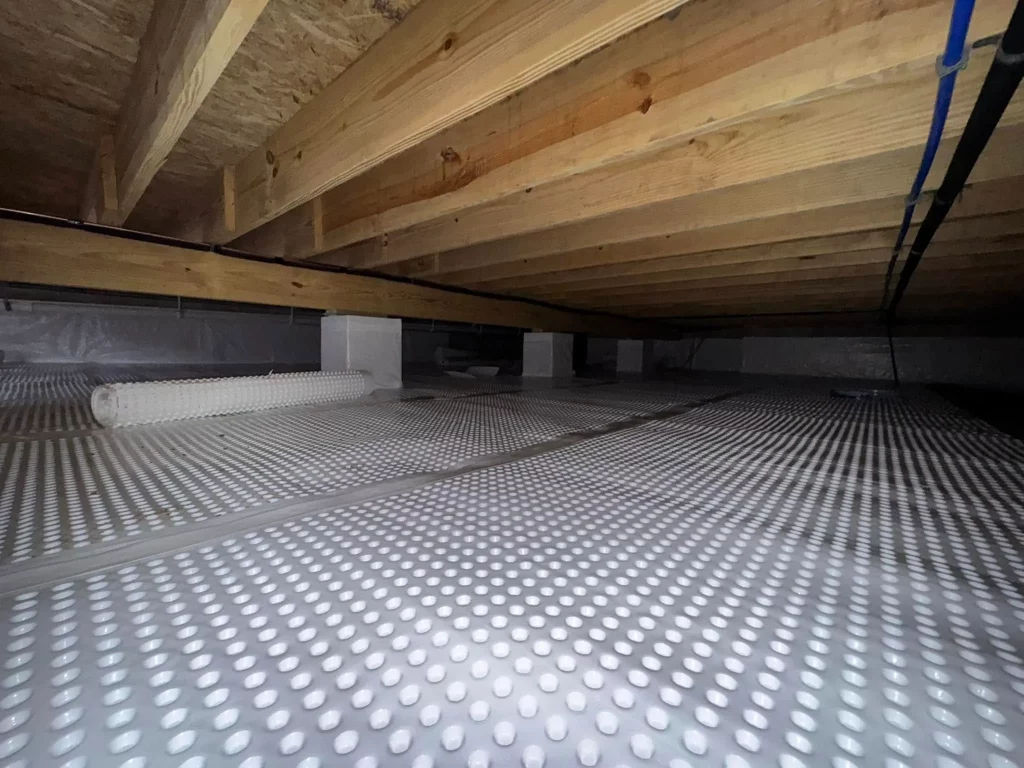
Crawl space encapsulation is the process of fully isolating the crawl space from the ground and outside air, turning a damp, problematic area into a clean, dry, controlled part of your home’s environment.
True encapsulation is not just laying down plastic. It is a complete system built to control moisture from every angle, sealing every source of air and water intrusion while actively managing humidity.
| Feature | Vented Crawl Space | Encapsulated Crawl Space |
| Foundation vents | Open to the outside | Permanently sealed |
| Ground cover | Exposed dirt or thin plastic | Heavy-duty, sealed vapor barrier |
| Humidity level | Uncontrolled, often above 70% | Controlled, kept under 50% |
| Air quality | Poor: mold, dust, musty odors | Clean and healthy |
| Energy efficiency | Low: energy loss through the floor | High: conditioned space reduces load |
| Pest access | Easy entry points | Sealed against pests |
| Structural risk | High risk of wood rot and mold | Low risk; wood is protected |
A professional crawl space encapsulation process follows five core steps to create a complete, lasting seal. The details can vary by home, but the sequence stays the same.
Old, failing insulation, construction debris, and organic material are removed first. If there is standing water, it has to be addressed with proper drainage before any other work begins.
All outside vents are sealed from the inside to stop unconditioned air from entering. Technicians also seal gaps around pipes, wiring, and the sill plate where the foundation meets the home’s wooden frame.
Expert tip: Pay close attention to the rim joist. It is a major source of air leakage in many homes and needs to be sealed carefully with foam or caulk.
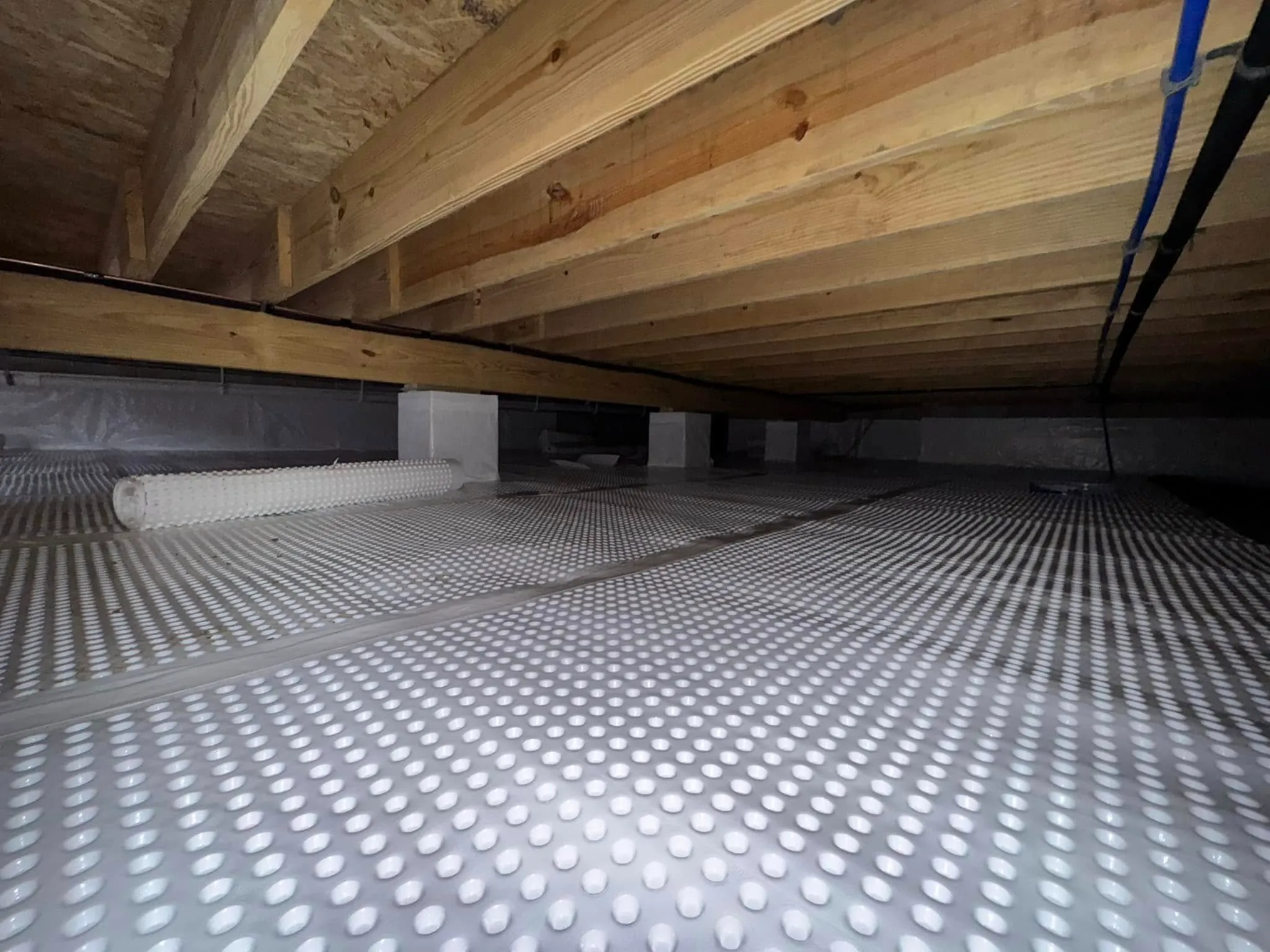
With the space prepped, the heavy-duty vapor barrier goes down, covering 100% of the dirt or concrete floor and running up the foundation walls and around support piers. Seams are overlapped and taped with moisture-impervious tape to create one continuous barrier against ground moisture.
Once the vapor barrier is in place, insulation is added to the foundation walls. Rigid foam board resists moisture and provides a thermal break. Closed-cell spray foam can insulate and air-seal the walls in a single step.
Expert tip: Insulate the walls, not the ceiling. This brings your ductwork and pipes inside the home’s conditioned envelope and improves HVAC efficiency.
A commercial-grade crawl space dehumidifier monitors relative humidity and cycles on as needed to keep the air dry and stable. A condensate pump usually drains the collected water automatically.
With up to half of your indoor air originating in the crawl space, cleaning up that environment has a direct effect on what you breathe. Removing mold, dust mites, and damp odors at the source reduces allergens for the whole household.
Encapsulation can produce real energy savings. Advanced Energy found that homes with a closed, conditioned crawl space averaged a 15% reduction in heating and cooling costs, since the HVAC system does not have to fight cold or hot air entering through the floor.
Moisture is the top enemy of a home’s foundation and wood floor system. A dry crawl space prevents the slow damage caused by wood rot, protecting joists and beams from decay and helping you avoid sagging floors and costly structural repairs. According to the National Association of Home Builders, moisture control projects like this are also one of the more reliable ways to protect a home’s resale value over time.
A sealed, dry crawl space is far less attractive to pests. Closing entry points and removing the moisture that termites and other insects need creates a strong barrier against unwanted visitors.
Once encapsulated, a crawl space becomes a clean, dry area suitable for storing seasonal decorations, tools, and other items that do not belong in the main part of the house.
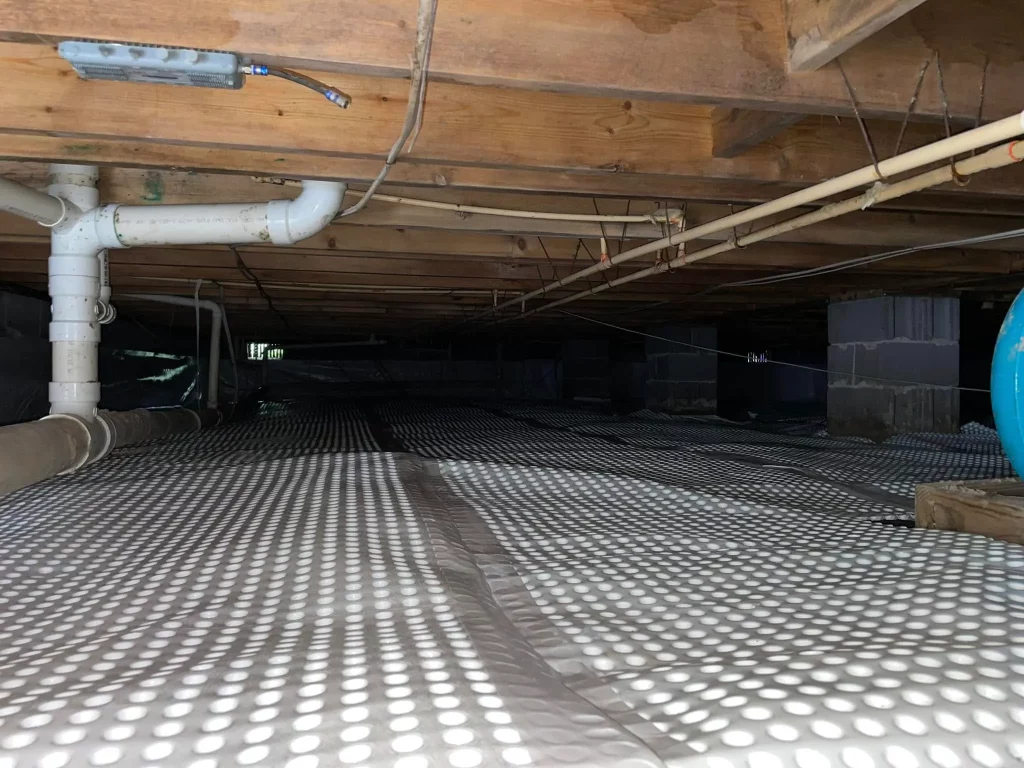
The industry standard for a quality vapor barrier is a minimum of 12 mil, with 20 mil reinforced liners offering more durability and puncture resistance. These liners are polyethylene, often string-reinforced, and built to hold up to installation traffic and storage use.
There is no single price for encapsulation. Cost depends on a few factors:
Expert tip: A DIY approach can be tempting to save money, but precision matters here. An improper install can trap moisture instead of blocking it, and a professional assessment can catch drainage issues that need fixing first.
For an average home, professional installation typically takes 2 to 4 days, depending on the crawl space’s condition and complexity.
Yes. A clean, dry, energy-efficient crawl space is a meaningful selling point, giving buyers confidence that the foundation is protected and the home is healthy.
Encapsulation helps by sealing entry points and removing moisture, but you should still maintain a termite bond and regular inspections. Many systems include a clear inspection gap at the top of the wall for this purpose.
Relative humidity in an encapsulated crawl space should stay between 35% and 50%, a range too dry for mold or dust mites to thrive.
For most homeowners, yes. Factoring in energy savings, avoided structural repairs, better air quality, and added home value, it is one of the more effective investments you can make in a property.
Yes. Heavy-duty liners are built to handle storage containers and foot traffic, making the space genuinely usable for storage.
Your crawl space is the foundation of your home, and its condition is tied to the health of your entire living environment. Leaving it vented and exposed is an outdated approach that leads to moisture damage, poor air quality, high energy bills, and pest problems. Sealing vents, installing a durable vapor barrier, insulating the walls, and conditioning the air permanently changes that. If you want to see how the same principles apply to insulation projects beyond the crawl space, our complete guide to mineral wool insulation is a useful next read.
If you suspect your crawl space is causing problems in your home, a professional inspection is the best way to get clear answers. Reach out for a consultation, and we will walk you through the right options for your specific situation.
National Association of Home Builders – industry data on home improvements and resale value.
U.S. Environmental Protection Agency – health effects of mold exposure in homes.
Advanced Energy – building science research on the stack effect and closed crawl spaces.