What Materials Are Commonly Used for Crawl Space Encapsulation in 2026, and Why Do They Matter?
Most crawl space encapsulation material choices in 2026 fall into five groups: a polyethylene vapor barrier over the soil and…

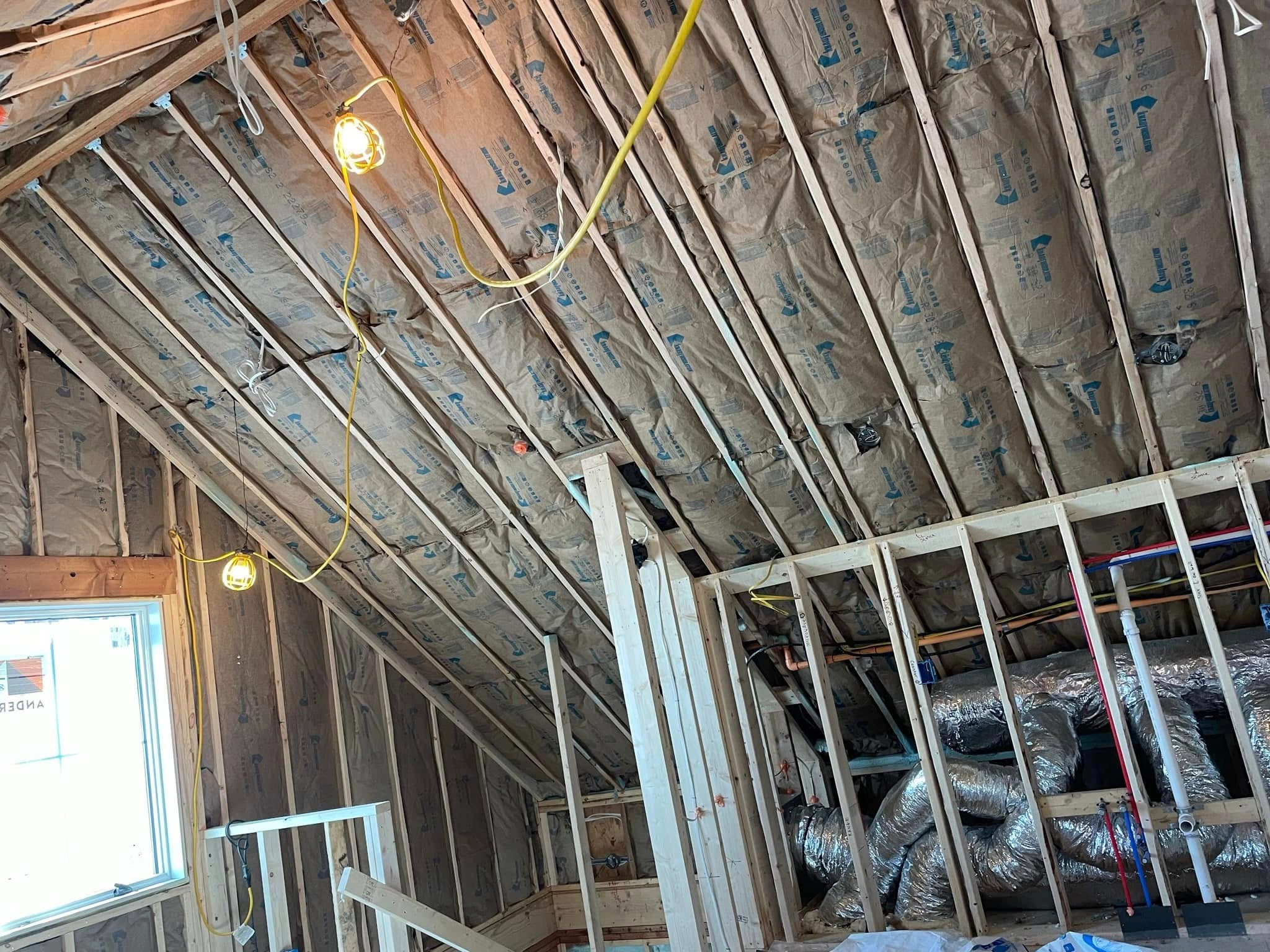
If you have ever walked through a house in January and felt a cold draft sneaking through the walls, or sat in a noisy office wishing the walls could swallow up the commotion from the next room, you have already felt the absence of quality insulation. Most buildings lose a staggering amount of energy through walls, roofs, and foundations every single day. That loss hits your utility bills hard, month after month, year after year. And while plenty of insulation options exist, mineral wool stands out for a reason that goes beyond just keeping warm air in and cold air out. It resists fire, absorbs sound, manages moisture, and holds its performance for decades. Whether you are building a new home, retrofitting a century-old office building, or simply trying to make your current space more comfortable and efficient, mineral wool insulation deserves a serious look.
This guide covers everything you need to know about mineral wool insulation, from what it is and how it is made, to where it works best and how it stacks up against other insulation types. We will walk through the science behind its performance, the different product forms available, installation best practices we have learned on the job, and common pitfalls to avoid. After years of working with insulation materials across residential and commercial projects, we have put together this resource to help you make an informed decision. Let us get into it.
Mineral wool is a fibrous insulation material created by spinning or drawing molten mineral or rock materials into fine fibers. As Wikipedia explains, it is formed from natural rock such as basalt or diabase, along with industrial slag, a byproduct of steel manufacturing. The material has been produced commercially since the 1870s and was actually North America’s most widely used insulation before fiberglass became dominant in the mid-20th century.
The two main types you will encounter are stone wool (made primarily from volcanic rock like basalt and dolomite) and slag wool (made predominantly from blast furnace slag). Both types share very similar performance characteristics, with the primary difference being the ratio of raw materials used. Stone wool typically consists of 70 to 75 percent natural rock, while slag wool flips that ratio and uses approximately 70 percent blast furnace slag. Either way, you end up with a dense, fibrous material that insulates, resists fire, and deadens sound.
Mineral wool insulation is available in several forms to suit different applications. You will find it as batts and rolls that fit between wall studs, joists, and rafters. It comes as rigid boards used for continuous exterior insulation. And it is produced as loose-fill material that gets blown into wall cavities and attic spaces using specialized equipment. Each form has its own strengths, and the right choice depends on your project’s specific needs.
Understanding how mineral wool is manufactured gives you a better appreciation for why it performs the way it does. The process is more industrial than most people realize, but the result is a remarkably effective building product.
According to the U.S. Environmental Protection Agency, the manufacturing process begins with raw materials, either natural rock (basalt or diabase) or industrial slag, being loaded into a cupola furnace in alternating layers with coke. The mixture is heated to between 1,300 and 1,650 degrees Celsius (roughly 2,400 to 3,000 degrees Fahrenheit) until everything reaches a molten state.
Once molten, the material exits the bottom of the furnace and falls onto a fiberization device. There are two primary methods used. The Powell process uses groups of high-speed rotors that distribute the molten material in a thin film across their surfaces, flinging fibers outward by centrifugal force. The Downey process uses a spinning concave rotor with a high-velocity stream of air or steam to pull and stretch the material into fibers. In both cases, the result is a mass of fine, intertwined fibers with a typical diameter of just 2 to 6 micrometers.
During the spinning process, a binding agent (typically a phenol-formaldehyde resin) and a small amount of oil are sprayed onto the airborne fibers. The binder gives structural rigidity to batts and boards, while the oil suppresses dust. The fibers are then collected on a conveyor, compressed to the desired density, and cured in an oven at 150 to 320 degrees Celsius. After cooling, the material is cut into its final form, whether that means batts, boards, rolls, or loose-fill insulation.
What makes mineral wool worth considering over cheaper alternatives comes down to a combination of performance characteristics that are difficult to match in a single material.
R-value measures how well a material resists the flow of heat. The higher the R-value, the better the insulation. According to ENERGY STAR, the most common insulation types, including mineral wool, deliver an R-value of approximately 3 to 3.5 per inch of thickness. Some mineral wool products push closer to R-3.7 to R-4.2 per inch, putting it ahead of standard fiberglass batts (which typically land around R-2.9 to R-3.8 per inch) and behind only rigid foam boards in terms of thermal resistance per inch.
In practical terms, a standard 2×4 wall cavity (3.5 inches deep) filled with mineral wool batts can achieve roughly R-15, while a 2×6 cavity (5.5 inches deep) can reach R-23. For attics, mineral wool loose-fill or multiple layers of batts can achieve the R-49 to R-60 values recommended by the Department of Energy for many climate zones.
What sets mineral wool apart from some competing materials is that it maintains its R-value consistently over time. Unlike some foam insulations that can degrade or lose effectiveness in cold temperatures, mineral wool delivers its rated thermal performance regardless of climate conditions.
This is where mineral wool genuinely separates itself from most other insulation materials. It is inherently non-combustible because it is made from rock and slag, not organic materials. As EURIMA reports, mineral wool insulation does not conduct heat and can resist temperatures above 1,000 degrees Celsius (roughly 1,832 degrees Fahrenheit). Some rock wool products can withstand temperatures as high as 2,150 degrees Fahrenheit without melting, burning, or producing toxic smoke.
In practical terms, mineral wool achieves a Class A fire rating under ASTM E84 testing and serves as a passive fire barrier within wall assemblies. It slows the spread of flames between rooms and between floors, buying critical time for occupants to evacuate and for fire services to respond. No chemical fire retardants need to be added during manufacturing because the base material simply does not burn.
The dense, fibrous structure of mineral wool makes it an effective sound absorber. With a Noise Reduction Coefficient (NRC) typically ranging from 0.90 to 1.05 (where 1.0 means the material absorbs essentially all sound energy that hits it), mineral wool outperforms standard fiberglass at blocking and absorbing sound. In wall assemblies, adding mineral wool to stud cavities can raise the Sound Transmission Class (STC) rating by 5 to 10 points depending on the overall wall configuration. This is why recording studios, home theaters, and office partitions often rely on dense mineral wool batts to achieve the quiet environments they need.
Mineral wool is hygroscopic and vapor-permeable, meaning it can absorb and release small amounts of moisture without losing its insulating properties. As noted by Green Building Advisor, the material maintains roughly 90 percent of its insulating qualities over its lifetime and has a vapor permeance rating of about 50 perms. This allows wall assemblies to dry out if moisture gets in, which helps prevent mold growth and wood rot.
Mineral wool also provides no food source for mold, fungi, or bacteria because it is entirely inorganic. Even if the material gets damp, it will not support microbial growth or degrade structurally. Once it dries out, it returns to full thermal performance. This is a meaningful advantage over organic insulation materials like cellulose, which can harbor mold when moisture persists.
Key Takeaways
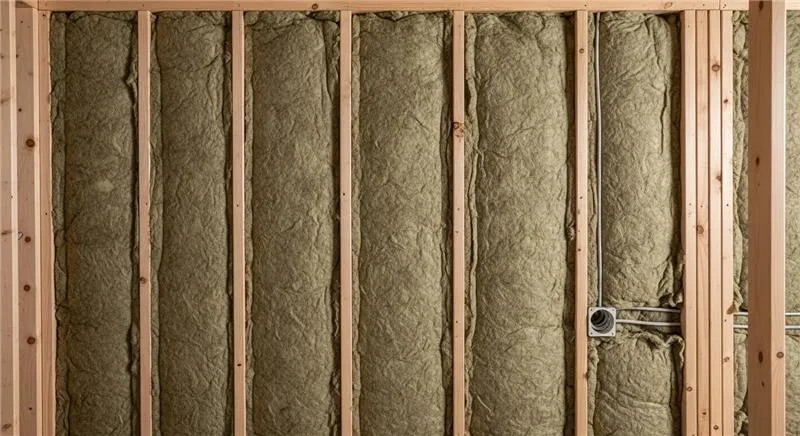
Batts and rolls are the most common form of mineral wool you will encounter in residential construction. They come in standard widths designed to fit between studs, joists, and rafters at 16 or 24 inches on center. Mineral wool batts are denser and stiffer than fiberglass, which actually makes them easier to handle and install in many cases. They hold their shape within cavities and do not sag or settle over time, which means you will not develop cold gaps along the top plates of your walls years down the road. Pre-cut batts are available in common R-values for 2×4 walls (R-15) and 2×6 walls (R-23), among other configurations.
Rigid mineral wool boards are used primarily as continuous exterior insulation, installed over wall sheathing and behind cladding. This application addresses thermal bridging, the phenomenon where heat conducts through framing members like studs, which are poor insulators compared to the cavities between them. By wrapping the entire exterior of a building in a continuous layer of insulation, you significantly improve the overall thermal performance of the wall assembly. Rigid mineral wool boards typically come in thicknesses from 1 to 4 inches and deliver roughly R-4 to R-4.2 per inch. Unlike foam board insulation, mineral wool exterior boards do not melt, produce toxic fumes in a fire, or attract termites.
Loose-fill mineral wool is blown into wall cavities and attic spaces using specialized equipment. This form is particularly useful for retrofitting existing buildings where removing drywall to install batts is impractical. It conforms to irregular shapes and fills around obstructions like wiring and plumbing. The U.S. Department of Energy notes that mineral wool loose-fill is produced using approximately 75 percent post-industrial recycled content, making it one of the more environmentally friendly insulation options available.
Beyond standard thermal insulation, mineral wool is manufactured into fire-rated boards, firestop materials, and safing insulation designed for perimeter fire containment systems in commercial buildings. These products achieve 1-hour, 2-hour, and even 3-hour fire resistance ratings when used in tested assemblies. Specialty products also include acoustic ceiling tiles, pipe insulation for industrial applications, and high-density boards used in structural fireproofing.
In new construction and deep energy retrofits, mineral wool batts in stud cavities paired with rigid mineral wool board on the exterior create a high-performance wall assembly. The cavity insulation fills between the studs, while the continuous exterior board eliminates thermal bridging through the framing. This combination approach is increasingly required by modern building energy codes, which now call for continuous insulation on exterior walls in many climate zones.
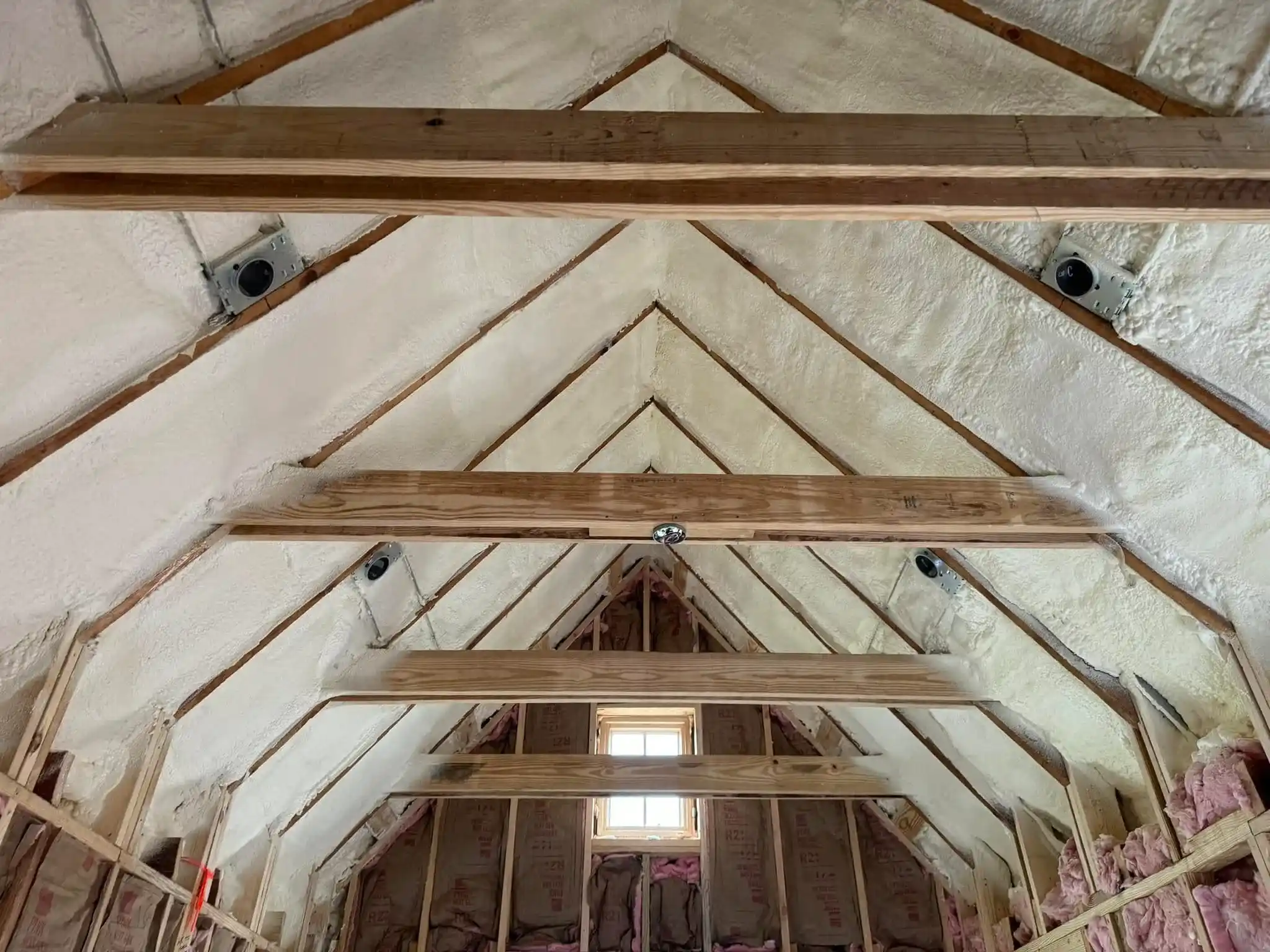
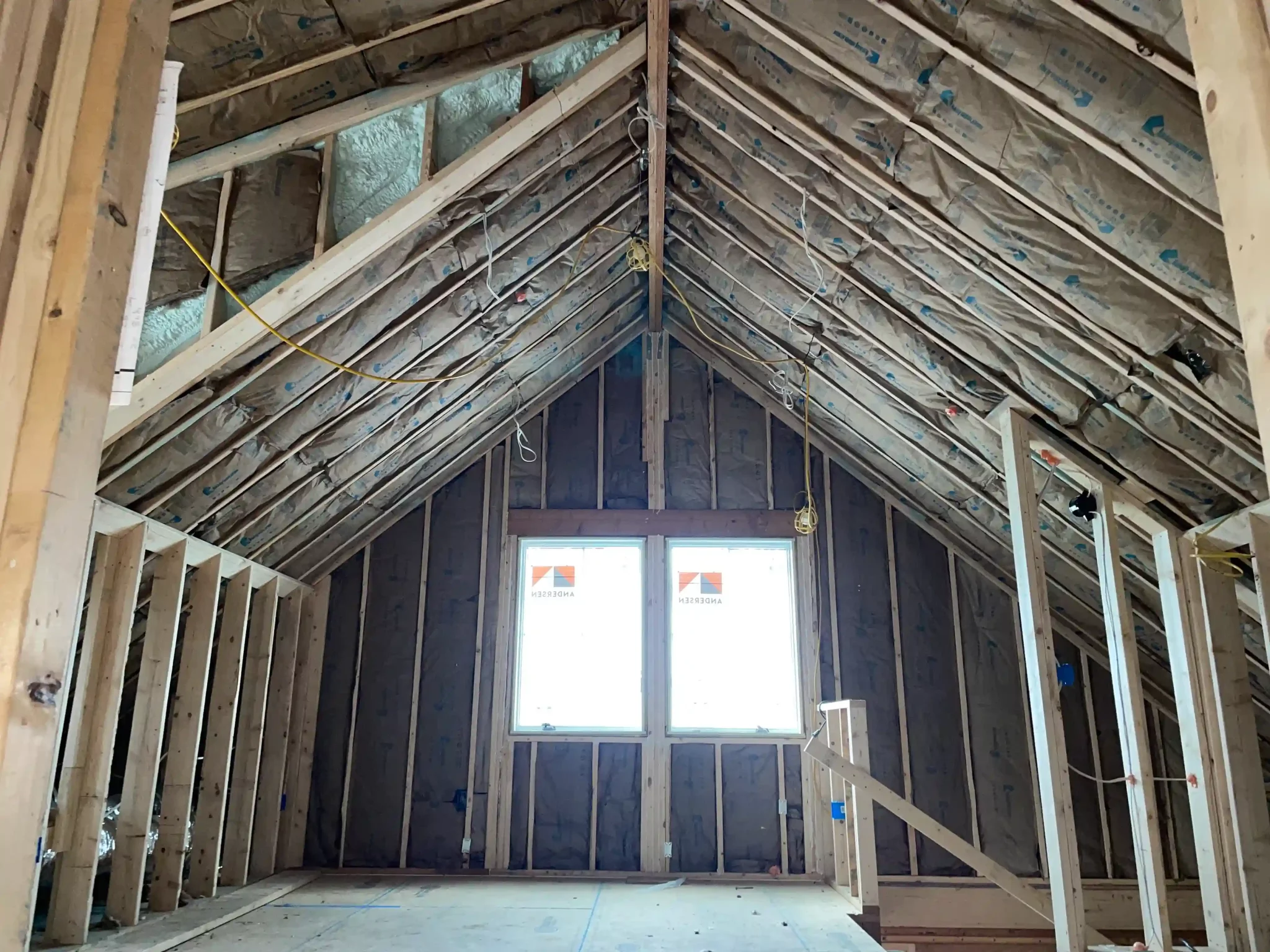
Mineral wool batts and loose-fill are both effective in attics. For vented attics, insulation is installed on the attic floor above the ceiling plane. For unvented cathedral ceilings or conditioned attic spaces, mineral wool batts can be installed directly against the roof deck, provided adequate air sealing and ventilation details are addressed. The material’s fire resistance is an added benefit in attics, where recessed light fixtures and electrical wiring can present ignition risks.
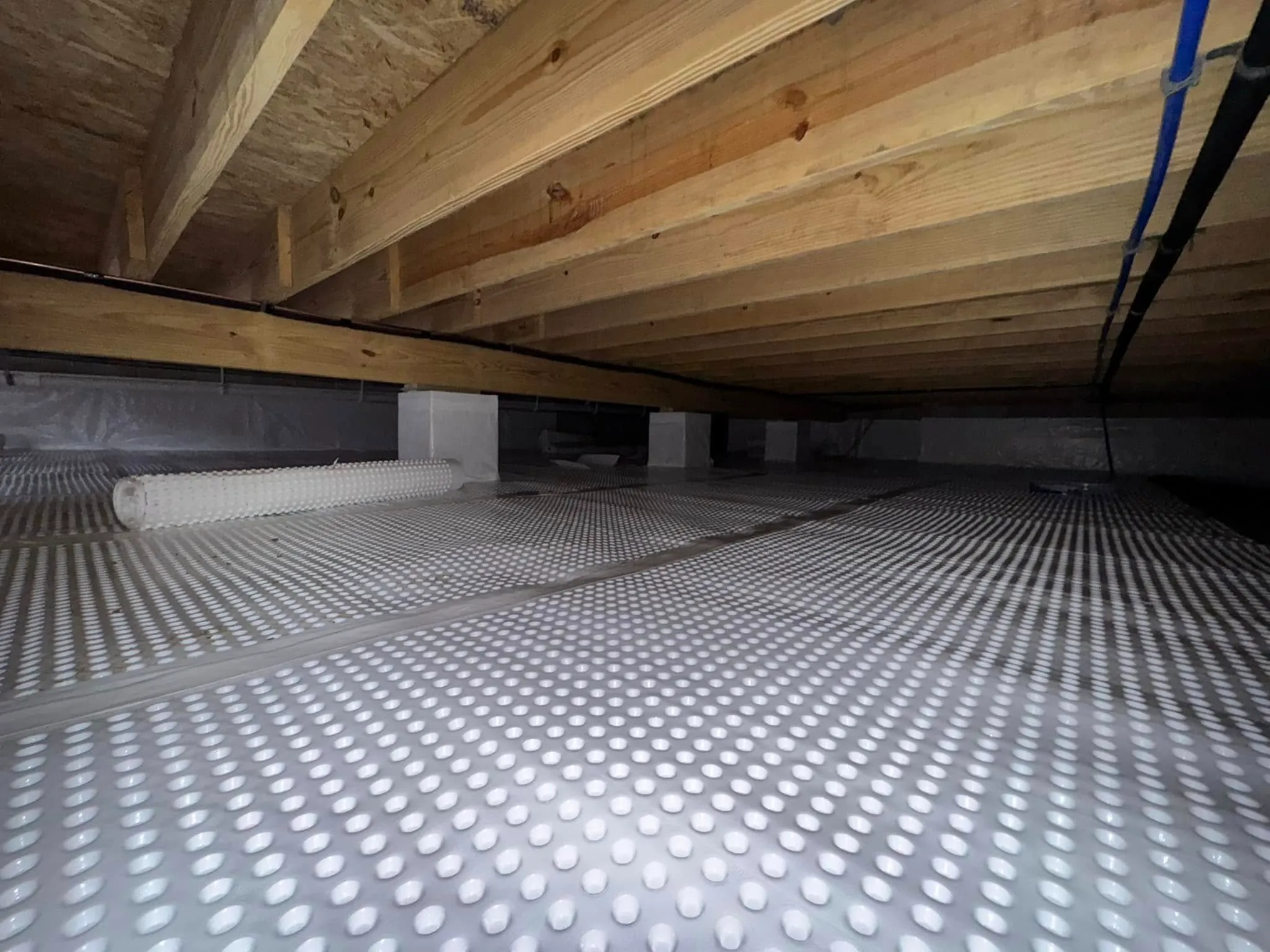
Below-grade spaces benefit from mineral wool’s moisture resistance and inorganic composition. Unlike fiberglass, mineral wool does not absorb water in the same way, and it will not support mold growth even in damp environments. It can be installed on basement walls (both interior and exterior applications) and in crawlspaces where moisture is a persistent concern. Its resistance to pests, including termites, is another advantage in below-grade applications.
In commercial construction, mineral wool serves multiple roles. It provides continuous insulation on exterior walls behind metal panels, glass, and other cladding systems. It acts as a fire barrier in fire-rated wall and ceiling assemblies. And it delivers acoustic performance in office partition walls, conference rooms, and mechanical rooms where noise control matters. Rigid mineral wool boards are commonly used as the primary insulation layer in commercial rain screen wall systems.
Choosing the right insulation means understanding the trade-offs. Here is a straightforward comparison of mineral wool against the other insulation types you are likely to consider.
| Property | Mineral Wool | Fiberglass | Cellulose | Spray Foam (Open Cell) | Spray Foam (Closed Cell) |
|---|---|---|---|---|---|
| R-Value per Inch | 3.0 to 4.2 | 2.9 to 3.8 | 3.1 to 3.8 | 3.5 to 3.7 | 5.6 to 6.5 |
| Fire Resistance | Non-combustible, no chemicals needed | Burns/melts, needs fire retardant | Treated with fire retardant chemicals | Burns | Burns |
| Sound Absorption (NRC) | 0.90 to 1.05 | 0.85 to 0.95 | 0.80 to 0.90 | 0.30 to 0.50 | 0.20 to 0.30 |
| Moisture Resistance | Hydrophobic, vapor-permeable | Absorbs water, loses R-value when wet | Absorbs water, can support mold | Absorbs water | Resists water (vapor barrier) |
| Air Sealing | No (must seal separately) | No (must seal separately) | Moderate when dense-packed | Yes (air barrier) | Yes (air and vapor barrier) |
| Recycled Content | 70 to 75% | 20 to 60% | 80%+ (recycled paper) | Minimal | Minimal |
| Lifespan | 50+ years, no settling | Can settle, may degrade | Can settle, 20-30 years | 20+ years | 20+ years |
Mineral wool does not seal air leaks on its own, which is an important point. Neither fiberglass nor cellulose does either, but spray foam does. If you choose mineral wool for your wall cavities, you still need a separate air-sealing step to get the full energy-efficiency benefit. That usually means sealing gaps, cracks, and penetrations with caulk, spray foam, or specialized tape before the insulation goes in.
Expert Tip: We always recommend air sealing before insulating, regardless of the insulation type you choose. Air leaks account for a significant portion of energy loss in most buildings. If you skip this step, even the best insulation will underperform because air movement bypasses it entirely.
When installing mineral wool, proper protective equipment is essential. The tiny mineral fibers can irritate your skin, eyes, and lungs. Wear a long-sleeved shirt, gloves, safety glasses, and a high-quality dust mask or respirator. While mineral wool is less itchy than fiberglass for many people, some individuals do experience skin irritation during handling. Working in a well-ventilated area and minimizing dust generation with careful cutting techniques goes a long way.
Mineral wool batts cut cleanly with a serrated insulation knife or a fine-tooth saw. Measure your cavities carefully and cut batts slightly oversized (about a quarter inch wider than the cavity) so they friction-fit snugly between framing members without gaps or compression. Gaps create air channels that bypass the insulation, while compression reduces the R-value. The density of mineral wool makes it hold its shape well once fitted, and it will not slump out of the cavity over time like fiberglass sometimes does.
For rigid board installation on exterior walls, use mechanical fasteners or approved adhesive to secure the boards to the sheathing. Tape all joints with an approved tape to maintain the weather-resistant barrier. For blow-in applications, hire an experienced contractor who understands the correct density settings to achieve the target R-value without overfilling or underfilling cavities.
Expert Tip: When installing mineral wool around electrical boxes, plumbing pipes, and other obstructions, take the extra time to cut precise fits rather than stuffing loose scraps into gaps. Poorly fitted insulation around penetrations is one of the most common installation defects we see, and it directly reduces thermal performance.
This point bears repeating because it is so often overlooked. Seal all gaps around windows, doors, electrical penetrations, plumbing runs, and rim joists before any insulation goes into cavities. Use caulk for small gaps, spray foam for larger ones, and backer rod with sealant for gaps between framing and foundations. Mineral wool does not stop air movement on its own, so unsealed gaps will allow conditioned air to escape and unconditioned air to infiltrate, regardless of how much insulation you stack in the cavity.
Mineral wool occupies an interesting space in the sustainability conversation. On one hand, the manufacturing process is energy-intensive. Melting rock and slag to 1,650 degrees Celsius in furnaces that run around the clock requires substantial energy input, much of it from coke (a coal derivative) and natural gas.
On the other hand, the environmental benefits during the product’s in-use phase are substantial. According to EURIMA, for every tonne of CO2 emitted during the manufacturing of mineral wool insulation, approximately 200 tonnes of CO2 are saved over the product’s lifetime through reduced heating and cooling demand. Buildings account for over a third of the EU’s total CO2 emissions, and up to 80 percent of the energy used by buildings could theoretically be saved through proper insulation and other proven technologies.
The recycled content story is strong too. Mineral wool produced from slag uses blast furnace waste that would otherwise go to landfills. Between 1992 and 2005 alone, slag wool insulation manufacturers used over 13 billion pounds of waste blast furnace slag. Stone wool products typically contain 70 percent or more recycled content when you factor in both slag and post-industrial recycled materials. During the manufacturing process, off-cuts and production scraps are recycled back into the production line, reducing waste.
The material also lasts an exceptionally long time. Research commissioned by EURIMA found that mineral wool retains its thermal performance for over 55 years without defects when analyzed in buildings across Germany, Denmark, Lithuania, and Switzerland. Unlike some insulation materials that settle, degrade, or lose their fire-retardant properties over time, mineral wool essentially maintains its original performance for the life of the building.
The main environmental downside is end-of-life disposal. Mineral wool does not decompose or biodegrade, and it is difficult to recycle once installed in a building. The industry is working on take-back programs and improved recycling methods, but this remains an area where alternatives like hemp, cork, and wood fiber have an advantage.
This is the most common complaint from both DIYers and professionals. While mineral wool has improved significantly in terms of dust reduction over the years, the fibers can still cause temporary skin irritation and respiratory discomfort during handling. The solution is straightforward: wear proper PPE and work methodically. Use a sharp blade for clean cuts (which generate less dust than tearing), keep the material compressed in its packaging until you are ready to install it, and avoid rubbing your eyes during installation. A light mist of water on the surface of batts before cutting can also help suppress dust.
Mineral wool is not always as readily available at big-box retail stores as fiberglass. Depending on where you live, you may need to visit a specialty building supply retailer or order it online. For large projects, ordering directly from a distributor or through a contractor often makes the most sense. Plan and allow extra lead time for sourcing, especially if you need specific thicknesses or R-values that may not be stocked locally.
Mineral wool is denser than fiberglass, which means it weighs more per square foot. In most wall and ceiling applications, this is not an issue. But for ceiling installations where the insulation will rest on drywall, or for retrofit attic floor applications where the weight adds up quickly, make sure your framing and ceiling surfaces can support the load. Rigid board installations on exterior walls also require adequate mechanical fastening to support the added weight.
Expert Tip: When using mineral wool in ceiling applications, verify that your ceiling drywall is rated for the weight. Standard half-inch drywall on ceiling joists at 16 inches on center will generally support mineral wool batts without a problem, but check with a building professional if you have any doubts, especially with thicker products.
We mentioned this earlier, but it deserves emphasis here because it is the single most common source of underperformance. Mineral wool is an excellent thermal and acoustic insulator, but it is not an air barrier. Air moves through and around fibrous insulation. If your building envelope has significant air leaks, mineral wool will not stop them. The fix is simple: invest in thorough air sealing before insulation goes in, and you will get the full benefit of the material’s thermal performance.
Key Takeaways
When evaluating whether mineral wool is worth the investment, consider the full picture rather than just the upfront material cost. The return comes through several channels: lower heating and cooling bills, improved comfort and indoor air quality, enhanced fire safety, and better sound isolation. Buildings that are well-insulated and properly air-sealed can see significant reductions in energy consumption for heating and cooling. According to the U.S. Department of Energy, proper insulation is one of the most cost-effective ways to improve a home’s energy efficiency.
The durability factor matters too. Mineral wool does not settle, degrade, or lose its fire resistance over time. A well-installed mineral wool insulation job will perform at its rated level for decades without needing replacement or replenishment. When you factor in the longevity of the product alongside its multi-functional benefits (thermal, fire, and acoustic performance in a single material), the value proposition becomes clearer.
The mineral wool industry is evolving in several directions that are worth watching. Manufacturing processes are shifting toward cleaner energy sources, with some producers moving away from coke toward natural gas and exploring electric furnace technology. The recycled content story continues to improve, with manufacturers finding ways to incorporate post-consumer waste from building demolition and renovation projects.
Building codes are also driving demand. As energy codes become more stringent, requiring higher R-values and continuous insulation on exterior walls, mineral wool is increasingly specified as the go-to material for continuous exterior insulation because of its fire resistance and vapor permeability, both of which are advantages over foam board in many wall assemblies.
The global market for mineral wool insulation reflects this growing demand. According to data compiled by Market Research Future, the mineral wool insulation market was valued at approximately $22.24 billion in 2024 and is projected to reach $33.20 billion by 2032, growing at a compound annual growth rate of about 5.14 percent. This growth is driven by increased construction activity, stricter building energy codes worldwide, and a growing awareness of fire safety in building design.
Expert Tip: If you are planning a new construction project or a major renovation, check your local building codes for continuous insulation requirements before finalizing your insulation strategy. Many jurisdictions now mandate exterior continuous insulation that mineral wool is particularly well-suited to provide.
We have covered a lot of ground in this guide, from the volcanic origins of the raw materials to the performance characteristics that make mineral wool stand out. The key points to carry with you as you evaluate your options:
Mineral wool delivers a combination of thermal insulation, fire resistance, sound absorption, and moisture management that few other materials can match in a single product. It is made from abundant natural rock and recycled industrial waste, contains no chemical fire retardants, and maintains its performance for the lifetime of the building.
The material comes in batts, rigid boards, and loose-fill forms, each suited to different applications from exterior walls to attics to commercial fire-rated assemblies. While it costs more than fiberglass and does not air-seal on its own, its multi-functional benefits and decades-long durability make it a strong choice for both residential and commercial projects.
Whatever insulation type you choose, remember that proper installation and thorough air sealing are just as important as the material itself. The best insulation in the world will underperform if it is poorly installed or if air leaks are left unaddressed. Use this guide as a reference as you plan your project, and do not hesitate to consult a professional installer for complex applications.
Deciding on the right insulation for your home or business involves a lot of variables, from climate zone requirements to building assembly details. Our team at Peninsula Insulation, LLC has the experience to help you evaluate your options and get the job done right. Reach out to us at (410) 770-2624 or email wil@mdsprayfoam.net to discuss your project. We are happy to answer your questions and provide guidance tailored to your specific situation.
Yes. The International Agency for Research on Cancer classifies stone wool and slag wool as “not classifiable as to carcinogenicity in humans” (Group 3), and modern mineral wool products meet strict safety standards. Fibers can cause temporary skin or respiratory irritation during installation, but once installed behind drywall, the material poses no health risk to occupants.
Mineral wool is hydrophobic and repels liquid water, but it can absorb some moisture from humid air. Unlike fiberglass, its thermal performance is not significantly affected by moisture exposure, and it dries out without losing its insulating properties. It will not support mold growth because it is inorganic.
It depends on your climate zone and wall assembly design. In many climates, mineral wool’s vapor-permeable nature (roughly 50 perms) allows wall assemblies to dry in both directions, which is actually a benefit. Consult a building science professional or your local building code for specific vapor barrier requirements in your area.
Mineral wool is denser, stiffer, and holds its shape better in cavities, which many people find makes it easier to install cleanly. Fiberglass is lighter and more widely available. Both require proper protective equipment. Many experienced installers prefer mineral wool because it cuts cleanly and stays in place without the floppy sagging common with fiberglass.
That depends on your priorities. Mineral wool provides higher R-value per inch, superior fire resistance, better sound absorption, and moisture resistance that fiberglass cannot match. If these benefits matter for your project, the additional cost is often justified by the performance gains and long-term durability.
Batts cannot be installed without opening wall cavities, but loose-fill mineral wool can be blown into existing wall cavities through small holes drilled through the drywall. This makes it a viable option for retrofit insulation projects where removing finishes is impractical.