Why Are More Homeowners in Federalsburg, MD Choosing Spray Foam Insulation Today?
Wil Perkins
July 28th, 2026
Homeowners in Federalsburg are switching to spray foam insulation because it addresses two problems at once: persistent air leaks and inadequate thermal protection that plague older homes in Maryland’s mixed-humid climate. Federalsburg sits in Caroline County on the Eastern Shore, classified under IECC Climate Zone 4A, a region defined by hot, humid summers and moderately cold winters. With a median home construction year of 1970 and roughly 29% of the housing stock built before 1940, a large share of townhomes were never designed to meet modern insulation standards. An ultimate guide to spray foam insulation explains how modern insulation systems help improve energy efficiency and indoor comfort in older homes. Spray foam insulation stands apart from traditional materials like fiberglass and cellulose because it expands on application to fill gaps, cracks, and voids while simultaneously creating an air barrier. That dual capability is what makes it especially effective for Federalsburg’s aging homes and demanding humidity conditions.
TL;DR
Federalsburg falls within IECC Climate Zone 4A (mixed-humid), which requires specific R-value minimums for ceilings, walls, and foundations that many older homes in the area do not meet.
Nearly 30% of Federalsburg homes were built before 1940, meaning they often lack wall insulation, have degraded attic insulation, and experience extensive air infiltration.
Spray foam provides both insulation and air sealing in a single application, unlike fiberglass or cellulose, which primarily slow conductive heat transfer but do not block air movement.
Open-cell spray foam delivers roughly R-3.6 per inch and works well in walls, attics, and sound-dampening applications. Closed-cell spray foam delivers roughly R-6 to R-6.5 per inch, doubles as a vapor barrier, and adds structural rigidity.
The EPA’s ENERGY STAR program estimates homeowners can save an average of 15% on heating and cooling costs by air sealing and adding insulation in attics, crawl spaces, and basements.
In hot-humid climates like Zone 4A, closed-cell foam is the preferred choice for foundations, crawl spaces, and below-grade applications due to its moisture resistance.
Federal tax credits of up to $1,200 are available for qualifying insulation upgrades, making now a practical time to invest.
Federalsburg’s Aging Housing Stock Creates Real Demand
The housing profile of Federalsburg tells much of the story behind the spray foam trend. According to U.S. Census data compiled on Federalsburg’s Wikipedia page, the town had 1,210 housing units as of the 2020 census, with a population of 2,833. It is classified as entirely rural, with quiet neighborhoods spread across just under two square miles. Demographic data from housing records shows the median construction year for homes in Federalsburg is 1970, and approximately 29.4% were built before 1940.
These numbers matter because homes from that era were constructed with little to no insulation by today’s standards. Many have balloon framing, no vapor barriers, and attics insulated with a few inches of deteriorated cellulose or nothing at all. When you combine that construction legacy with the temperature and humidity swings of a mixed-humid climate, the result is high energy bills, drafty rooms, moisture problems, and HVAC systems that work overtime year-round.
Spray foam insulation directly targets the root causes of these problems in a way that retrofitting with fiberglass batts or blown-in cellulose cannot match.
How Spray Foam Works Differently from Traditional Insulation
Traditional insulation materials like fiberglass batts and blown-in cellulose primarily resist conductive heat transfer, meaning they slow down the movement of heat through solid materials. They do relatively little to stop air from passing through gaps around the insulation itself. Gaps around studs, wiring holes, plumbing penetrations, rim joists, and attic hatches remain open pathways for air infiltration. Proper air sealing also helps reduce the risk of spray foam roof leaks by limiting unwanted moisture movement through the building envelope.
Spray polyurethane foam, by contrast, is applied as a liquid that expands into a continuous solid, filling every crack, void, and irregular shape it contacts. Both open-cell and closed-cell formulations are classified as air-impermeable at typical application thicknesses, according to the DOE Building America research guide. That means once the foam cures, air cannot pass through it, effectively eliminating the uncontrolled air leakage that accounts for a substantial portion of residential energy loss.
The DOE guide further notes that both types of spray foam are “excellent at air-sealing, a once overlooked, but critical aspect of insulated assemblies.” This air-sealing quality is what allows spray foam to outperform traditional insulation in real-world conditions, even when the rated R-value per inch appears similar on paper.
Open-Cell vs. Closed-Cell: Understanding the Two Types
Spray foam insulation comes in two distinct formulations, each with different physical properties and ideal applications. Understanding the differences helps Federalsburg homeowners make informed decisions about where each type belongs in their home.
Open-Cell Spray Foam
Open-cell foam is the lighter and less expensive option. It expands up to 150 times its original volume, creating a soft, flexible material that fills cavities completely. Key properties include:
R-value of approximately R-3.6 per inch (DOE Building America)
Air-impermeable but vapor-permeable, allowing moisture to pass through
Lower installed cost per board foot
Excellent sound-dampening qualities (STC rating of 23 in a standard wall assembly)
Typically applied in a single pass up to 10 inches thick
Open-cell foam is well suited for interior wall cavities, attic rafters in ventilated assemblies, and any application where sound control is beneficial.
Closed-Cell Spray Foam
Closed-cell foam is denser, more rigid, and approximately four times heavier than open-cell foam. It expands about 35 to 50 times its original volume. Key properties include:
Both air-impermeable and vapor-impermeable at typical application thicknesses
Hydrophobic, meaning it does not absorb water
Adds structural strength to wall and roof assemblies
Higher installed cost but delivers more R-value per inch in thinner layers
Closed-cell foam is the preferred choice for crawl spaces, basements, rim joists, band joists, below-grade applications, and any area where moisture control is essential.
Property
Open-Cell Foam
Closed-Cell Foam
R-Value per Inch
R-3.6
R-6 to R-6.5
Density
0.5 lb/cu ft
2.0 lb/cu ft
Vapor Permeability
Vapor-permeable
Vapor-impermeable
Water Absorption
Can absorb and hold water
Hydrophobic, repels water
Air Sealing
Air-impermeable
Air-impermeable
Structural Reinforcement
Minimal
Significant
Best Applications
Wall cavities, attics, sound control
Crawl spaces, basements, rim joists, foundations
Energy Savings in a Mixed-Humid Climate Zone
Federalsburg’s placement in Climate Zone 4A means homes face heating demands in winter and significant cooling and dehumidification loads in summer. The EPA’s ENERGY STAR program estimates that homeowners can save an average of 15% on heating and cooling costs by air sealing their homes and adding insulation in attics, floors over crawl spaces, and basements.
In practice, spray foam often delivers even greater savings because it combines insulation and air sealing in one step. The expanded foam eliminates the gaps, cracks, and penetrations that traditional insulation leaves exposed. For homes in Federalsburg where the building envelope has never been properly sealed, the reduction in air infiltration alone can produce noticeable improvements in comfort and lower monthly utility bills.
Additionally, spray foam’s air-sealing properties reduce the workload on HVAC equipment. When less conditioned air escapes through leaks, the system runs fewer cycles and maintains more consistent indoor temperatures. Over time, this reduced strain can extend the service life of heating and cooling equipment.
The Moisture Challenge on the Eastern Shore
Humidity management is one of the most important considerations for insulation decisions in Federalsburg. The “A” designation in Climate Zone 4A indicates humid conditions year-round. Summer dew points in this region regularly exceed 65 degrees Fahrenheit, creating conditions where moisture control is not optional but essential.
The DOE Building America guide specifically addresses this concern, noting that in hot-humid climates, closed-cell spray foam is the “preferred” choice for frame-wall cavities because it provides effective air-sealing and moisture-vapor control at the exterior of the wall assembly. Open-cell foam is rated as “acceptable” in hot-humid wall applications, but it requires careful attention to exterior drainage planes and bulk water management. Working with an experienced spray foam insulation contractor in Federalsburg, MD helps ensure the right foam type is selected and installed correctly for local climate conditions.
For below-grade applications like basements and crawl spaces, the distinction is clear-cut. The DOE guide rates open-cell foam as “not acceptable” in foundations and below-grade spaces due to its moisture-permeable nature, while closed-cell foam is the “preferred” option because it creates a water-resistant barrier directly against the foundation wall.
Where Spray Foam Delivers the Biggest Impact in Federalsburg Homes
Not every area of a home benefits equally from spray foam insulation. Prioritizing the right locations maximizes return on investment, especially for retrofit projects.
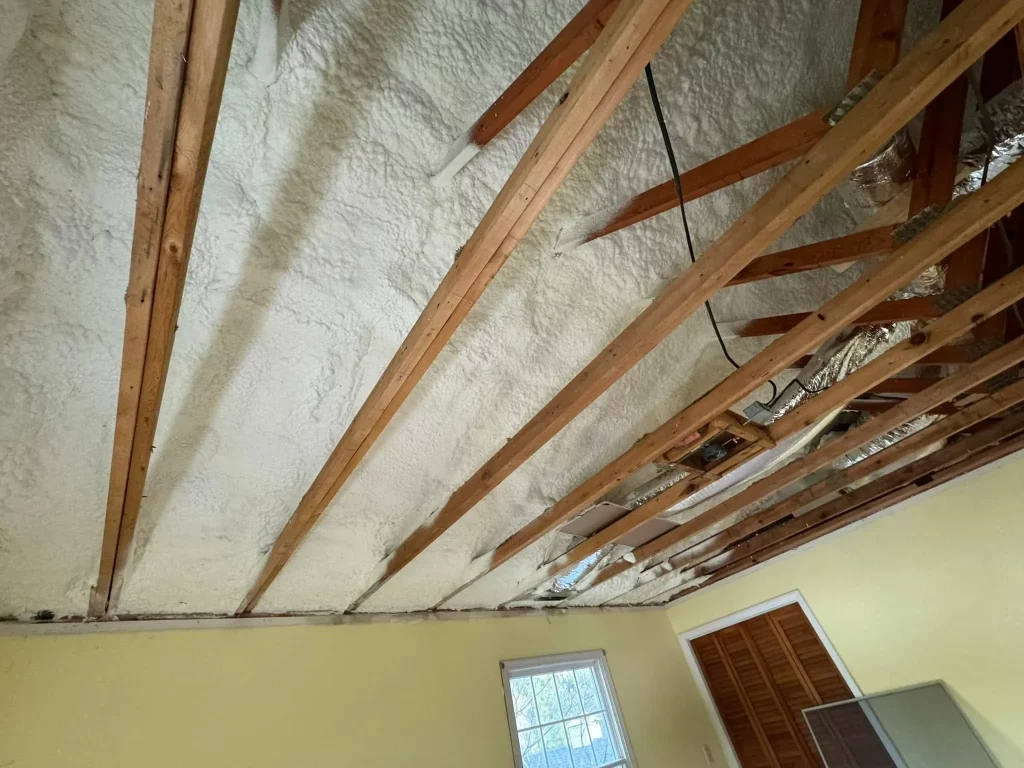
Attics and roof rafters. Attics are responsible for a disproportionate share of energy loss in older homes. Spray foam applied to the roof deck creates a conditioned attic, eliminating the temperature extremes that drive heat transfer through ceiling insulation. This approach is particularly effective in homes where adding insulation at the attic floor is impractical due to HVAC equipment or ductwork located in the attic space.
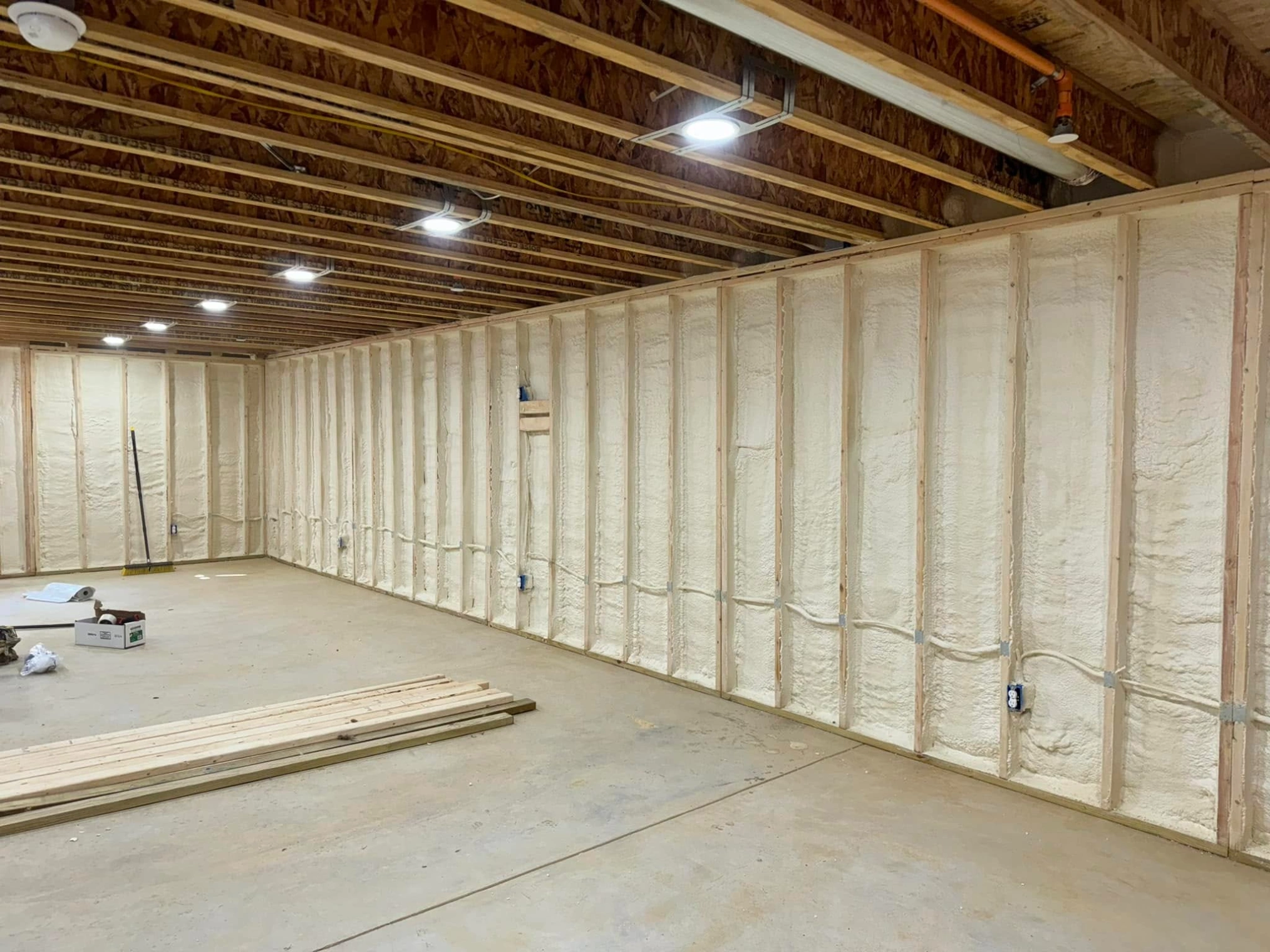
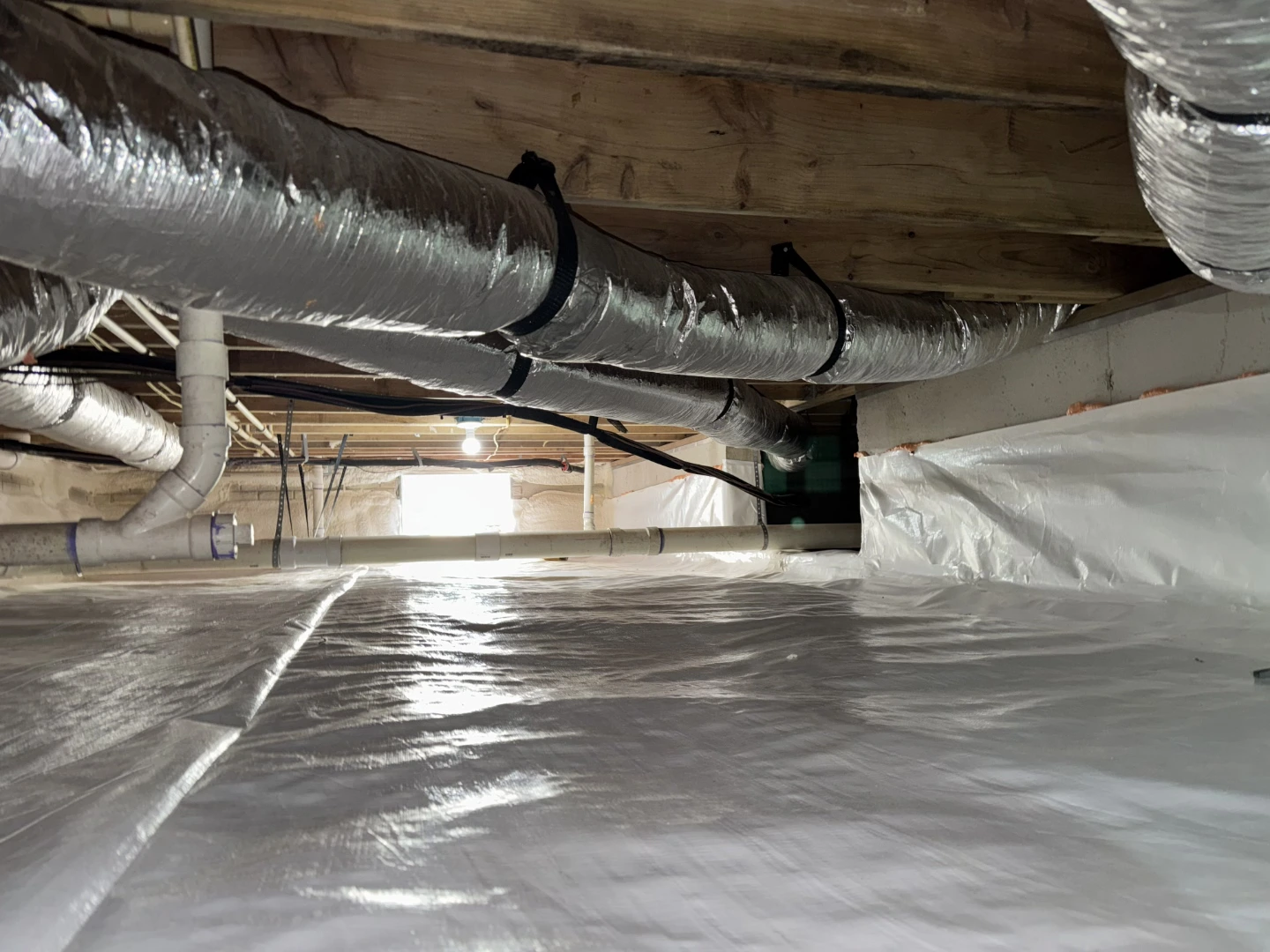
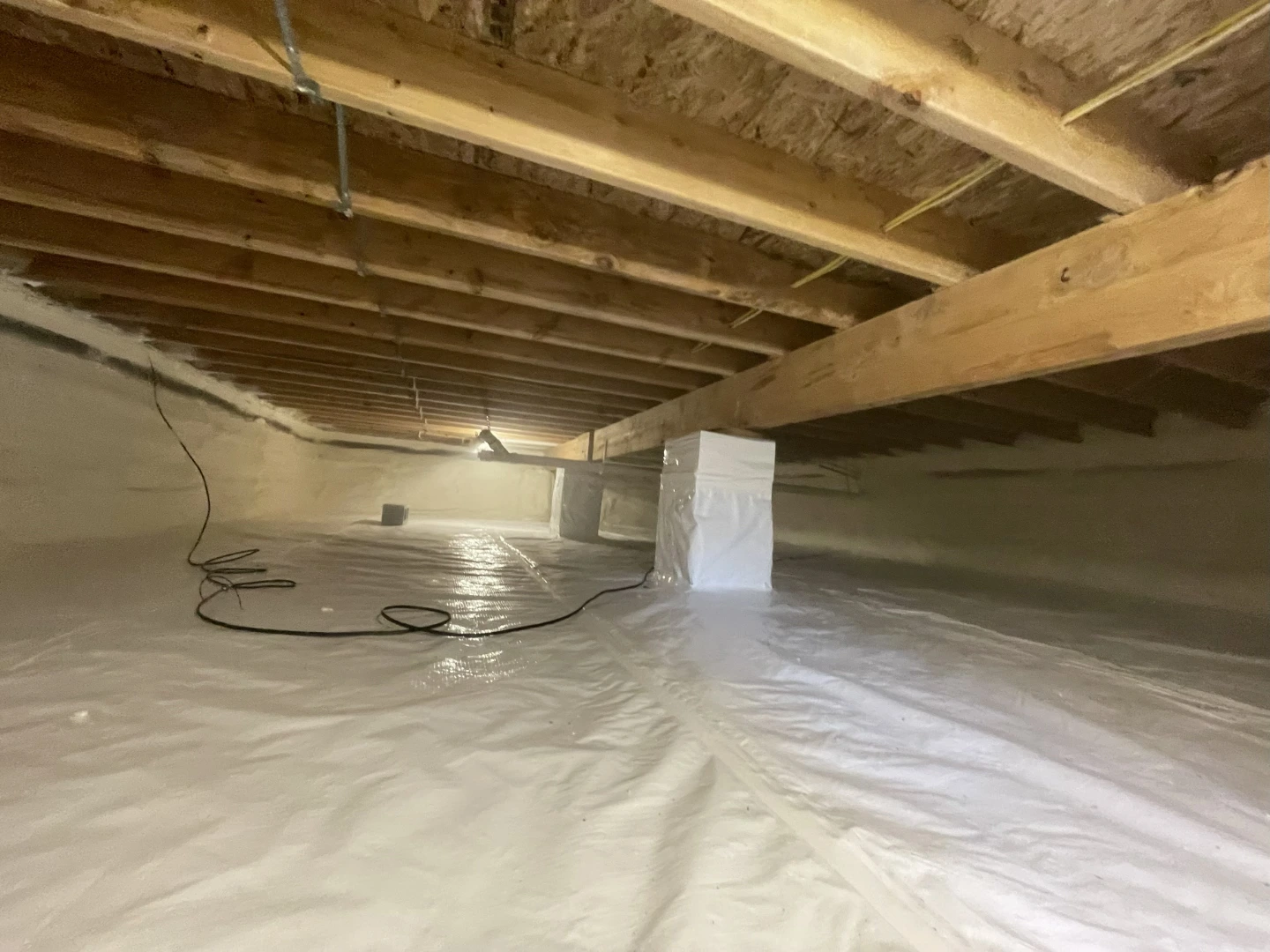
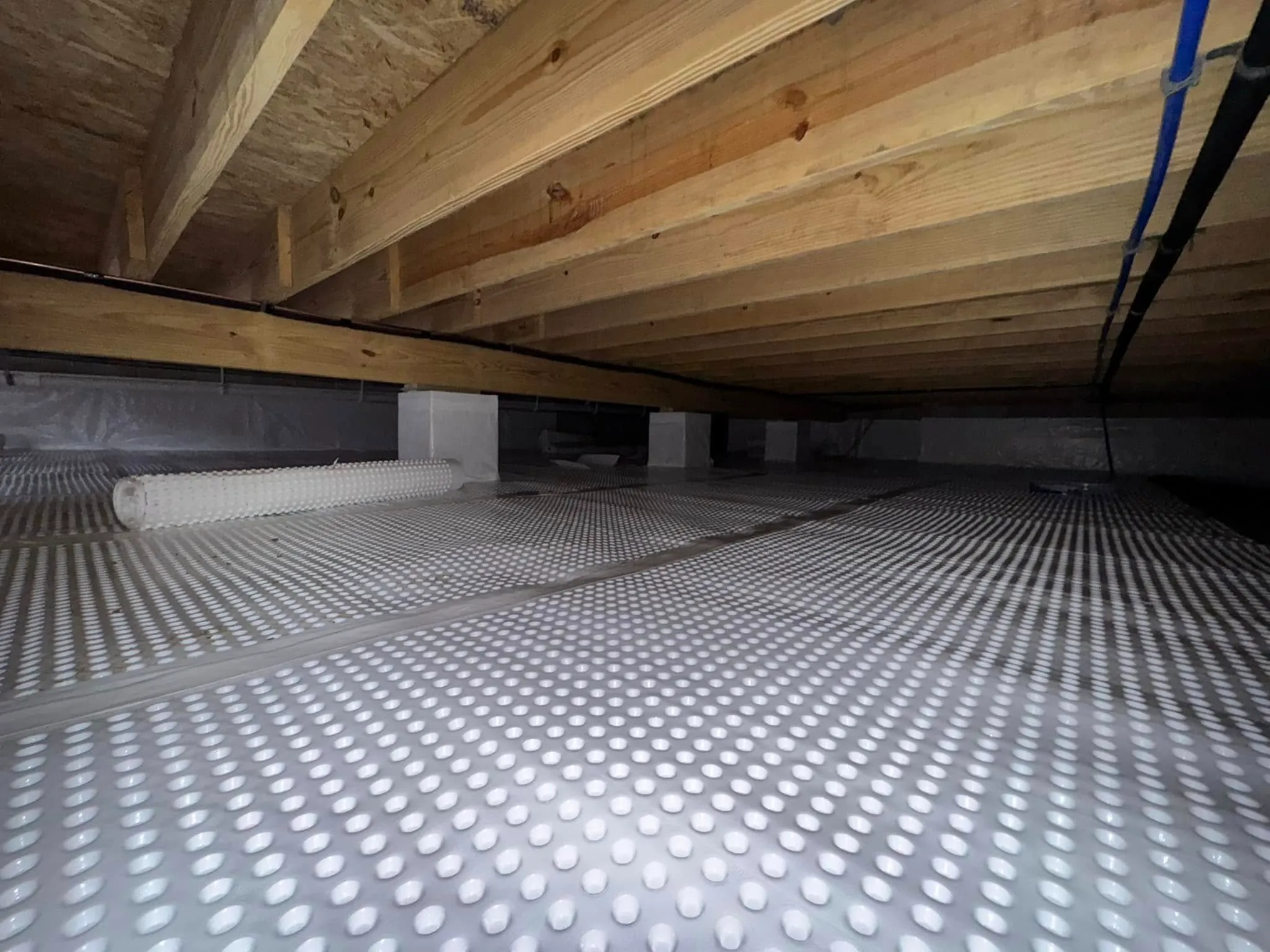
Crawl spaces and basements. Ground-level moisture and humid outdoor air infiltrate through vented crawl spaces and uninsulated basement walls. Closed-cell spray foam applied to foundation walls and rim joists seals these areas against moisture intrusion and air leaks simultaneously.
Rim joists and band joists. These perimeter areas where floor framing meets exterior walls are notoriously difficult to insulate with traditional materials. Spray foam fills the irregular voids, creating a continuous seal at a location that is often a major source of air infiltration.
Exterior wall cavities. In homes undergoing renovation where drywall is being removed, spray foam in wall cavities provides the highest whole-wall performance. However, as Fine Homebuilding’s analysis of whole-wall R-values points out, the framing factor (the percentage of wall area occupied by wood studs, plates, and headers) reduces the effective R-value regardless of insulation type. What matters is the whole-wall assembly performance, not just the rated R-value of the insulation material between studs.
Recommendations by Home Type
Every Federalsburg home presents a different starting point. Here is how spray foam insulation fits common scenarios.
Home Type
Typical Condition
Recommended Approach
Priority Areas
Pre-1940 homes (29% of stock)
No wall insulation, degraded attic insulation, balloon framing, extensive air leaks
Closed-cell for crawl space and rim joists; open-cell for accessible wall cavities during renovation
Attic, crawl space, rim joists
1940-1970 homes
Minimal wall insulation, some attic fiberglass, unsealed penetrations
Closed-cell for foundation and band joists; open-cell for attic rafters or ceiling plane
Attic, band joists, basement
1970-2000 homes
Some insulation present but often under code, gaps around penetrations, vented crawl spaces
Targeted closed-cell for crawl space encapsulation; open-cell for attic top-off
Crawl space, attic air sealing
New construction
Blank slate, full access to all cavities
Open-cell or closed-cell throughout based on budget and performance targets; closed-cell for foundations
Full envelope
Signs You Have Found the Right Insulation Contractor
Choosing the right installer matters as much as choosing the right insulation material. Spray foam requires specialized equipment, proper chemical mixing ratios, and trained technicians who understand building science. Here are indicators that a contractor is qualified for the job:
Clear explanation of open-cell vs. closed-cell recommendations based on your specific home, not a one-size-fits-all pitch
Willingness to discuss moisture control strategy, including vapor barrier placement and drainage considerations appropriate for Climate Zone 4A
References from local projects in Federalsburg or surrounding Caroline County communities with similar housing types
Detailed written scope covering areas to be insulated, foam type and thickness, thermal or ignition barrier requirements, and cleanup
Knowledge of building code requirements for spray foam, including IRC Section R314 covering foam plastic insulation and required thermal barriers
A qualified contractor will also ask about your existing HVAC system, any moisture issues you have noticed, and your long-term goals for the home. That kind of thorough assessment signals someone who approaches insulation as a building science decision, not just a product sale.
Ready to Upgrade Your Home’s Insulation?
Peninsula Insulation, LLC serves homeowners throughout Federalsburg and the surrounding Maryland Eastern Shore with professional spray foam insulation installation. Our team evaluates your home’s specific needs, recommends the right foam type for each area, and delivers a complete insulation solution backed by building science expertise and local experience. Whether your home was built in 1920 or 2005, we know how to seal and insulate it for maximum comfort and efficiency.
Call us at (410) 770-2624 or email wil@mdsprayfoam.net to get started. Let our experienced team help you make your Federalsburg home more comfortable, energy efficient, and protected against moisture, starting with a thorough assessment of your insulation needs.
Frequently Asked Questions
How does spray foam insulation compare to fiberglass in older homes?
Spray foam fills gaps and cracks that fiberglass cannot reach, providing both insulation and an air seal. In older Federalsburg homes with irregular framing and numerous penetrations, this makes spray foam far more effective at reducing energy loss and improving comfort than adding more fiberglass on top of existing material.
Is closed-cell spray foam worth the extra cost for crawl space encapsulation?
In Federalsburg’s humid Climate Zone 4A environment, closed-cell foam is the preferred choice for crawl spaces and basements because it acts as both an air barrier and a vapor barrier. Its moisture resistance prevents the condensation and mold problems that can develop with vapor-permeable insulation in below-grade applications.
How long does a spray foam insulation installation take?
Most residential projects in the Federalsburg area can be completed in one to two days, depending on the scope of work. A single crawl space or attic project may take half a day, while a full-home insulation upgrade involving multiple areas typically requires one to two days of active installation plus curing time.
Does spray foam insulation qualify for federal tax credits?
Yes, qualifying insulation improvements, including spray foam, may be eligible for federal tax credits under the ENERGY STAR Home Upgrade program. Homeowners should check current IRS guidelines or consult a tax professional to confirm eligibility for the available credits, which can reduce the overall investment.
Can spray foam be installed in walls without removing drywall?
In most cases, spray foam cannot be applied inside finished wall cavities without opening the wall surfaces. However, our team can apply spray foam to accessible areas like attics, crawl spaces, basements, rim joists, and band joists, which often deliver the greatest performance improvement per dollar invested without any interior disruption.
Sources
DOE Building America – Which Spray Foam Is Right For You? – Comprehensive U.S. Department of Energy guide covering open-cell and closed-cell spray polyurethane foam properties, R-values, and climate-specific application recommendations for residential construction.
Federalsburg, Maryland – Wikipedia – Census data, geographic details, and housing unit statistics for the town of Federalsburg in Caroline County, Maryland.
Spray-Foam Insulation – Fine Homebuilding – Editorial overview of spray polyurethane foam types, performance characteristics, R-values, installation considerations, and environmental factors in residential construction.
Closed-Cell Foam Between Studs Is a Waste – Fine Homebuilding – Building science analysis of whole-wall R-value performance comparing open-cell and closed-cell spray foam in standard wood-framed wall assemblies, including thermal bridging effects.
I’m Wil Perkins, founder of Peninsula Insulation, with nearly five years of industry experience. As a longtime Easton, Maryland resident, I focus on quality spray foam services and lasting insulation results.