What Materials Are Commonly Used for Crawl Space Encapsulation in 2026, and Why Do They Matter?
Most crawl space encapsulation material choices in 2026 fall into five groups: a polyethylene vapor barrier over the soil and…


Most crawl space encapsulation material choices in 2026 fall into five groups: a polyethylene vapor barrier over the soil and up the walls, tape and sealants for the seams, insulation, water and humidity control, and sealed vent covers or doors. A crawl space encapsulation contractor can help determine which materials and sealing methods are appropriate for the space. The liner does the most work, and building code asks for a sealed Class I vapor retarder, not a specific thickness. Everything else decides whether the liner keeps working.
A sealed crawl space works as a system. Each material handles a different way moisture gets in, and Polyguard, a crawl space vapor barrier manufacturer, breaks the parts down like this:
Thickness gets most of the attention, but the code cares more about installation. Here’s what’s required and where the rest is a judgment call.
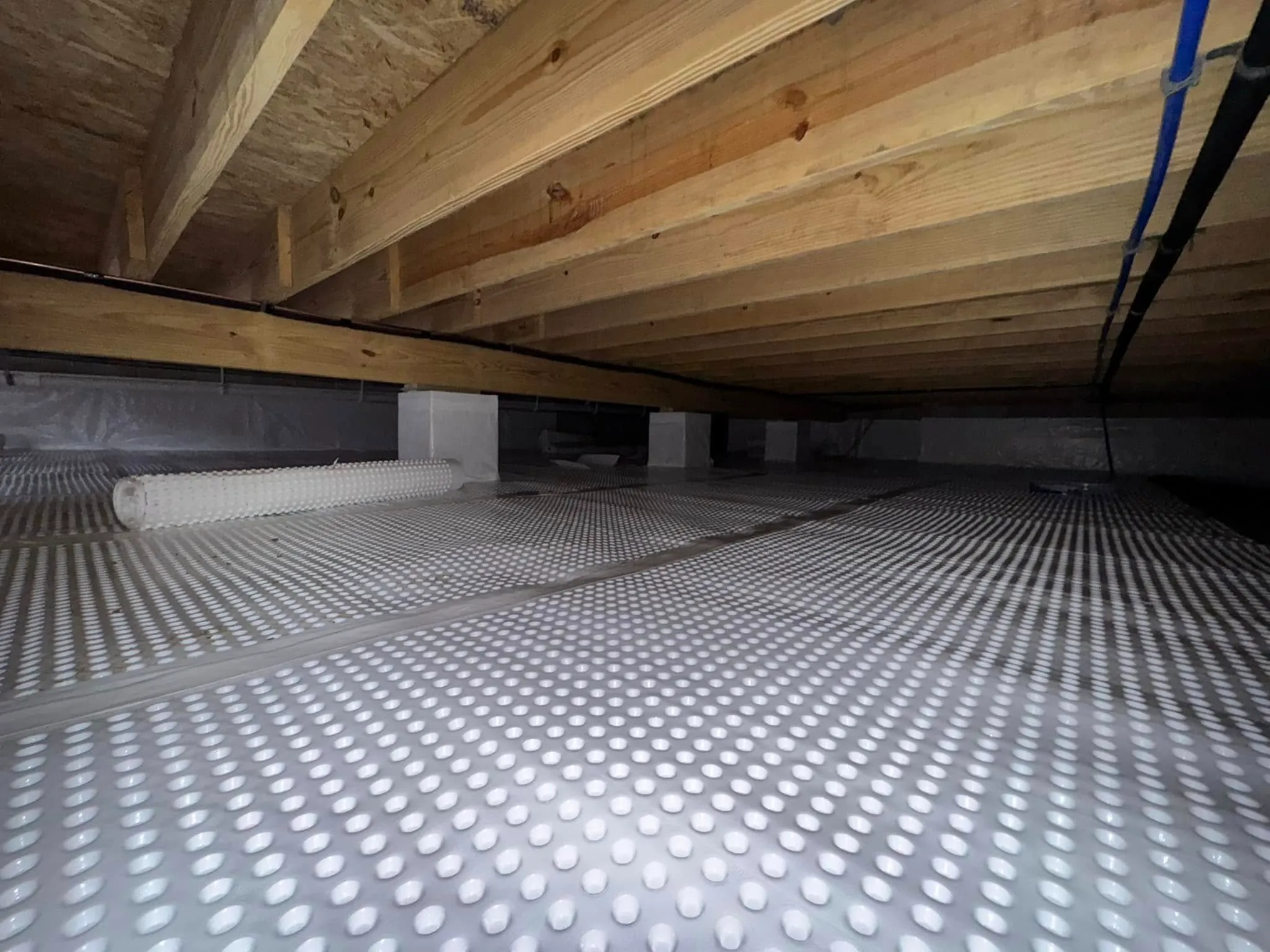
Under the 2021 IRC, an unvented crawl space needs a continuous Class I vapor retarder over all exposed earth, according to the code text quoted by Green Building Advisor. Joints overlap by 6 inches and get sealed or taped. The edges run at least 6 inches up the stem wall and attach and seal to the wall or its insulation.
That section doesn’t name a thickness or a product. The same article calls polyethylene the most common choice and 6-mil poly an effective Class I vapor retarder. Your local building department decides which code edition applies, so check before you buy.
Thickness is about survival, not vapor control. A crawl space encapsulation materials guide can help explain how liner thickness affects durability and protection in a crawl space. Polyguard suggests polyethylene in the 10 to 20 mil range, while Green Building Advisor’s 2024 product guide recommends 10 mil or thicker when people store items or service equipment in the space. Any plastic can be punctured by tools and boots, so a thicker liner buys margin, not immunity.
| Liner | Best Fit | Trade-Off |
| 6-mil poly | Crawl spaces nobody enters | Tears more easily; about $65 per 10′ x 100′ roll |
| 10-mil poly | Occasional storage or equipment service | Standard 10-mil may lack ASTM E1745 certification; about $100 per roll |
| 15-mil and up | Regular foot traffic | Heavier and harder to source; $250 to $600 per roll |
Fit and prices come from Green Building Advisor‘s 2024 guide, so expect today’s numbers to differ.
A liner with open seams is a tarp, not a vapor barrier. The tape and sealant decide whether it stays tight.
Polyguard recommends overlapping seams 6 to 12 inches and taping them, then sealing penetrations around pipes and ducts with spray foam or caulk. The code minimum is 6 inches, so a wider lap is a choice, not a rule. The Department of Energy’s Building America Solution Center, run by PNNL, adds that the layers should continue around piers and supports and lap up the walls, secured with furring strips and fasteners, tape or mastic.
Piers and wall edges need extra attention. That’s where one continuous sheet has to turn corners.
Sometimes, and it depends on whether water shows up and how the space gets conditioned.
Drainage comes first. The Building America Solution Center says to install a drain and sump pump if the crawl space has a history of flooding or pooling water, and to fix moisture problems before insulating the floor. It also says a crawl space with ground below the surrounding grade needs perimeter drainage, like a basement.
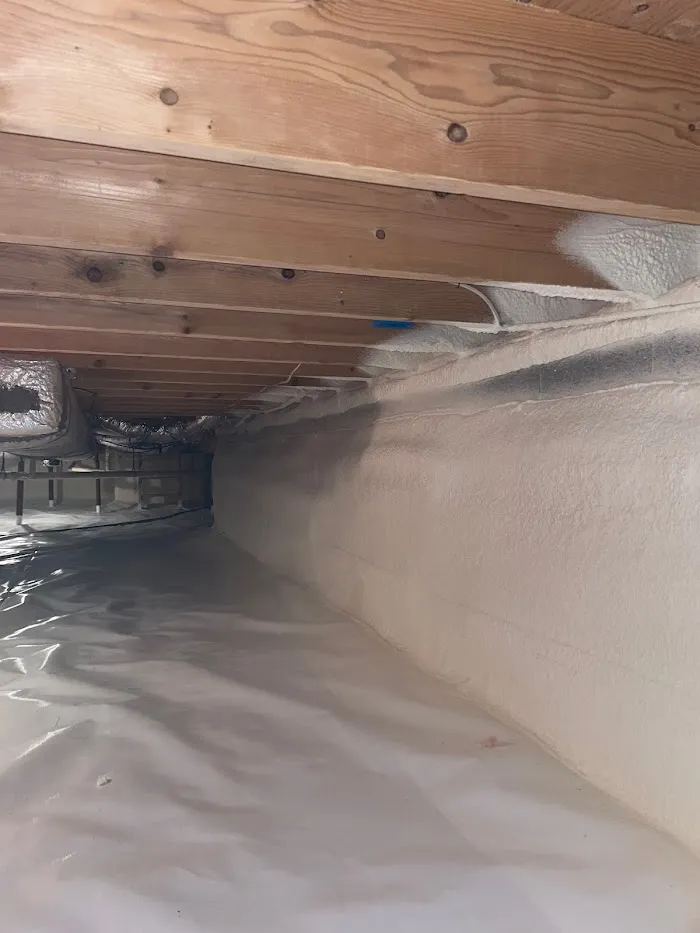
Humidity is a separate question. The 2021 IRC lists four ways to condition a sealed crawl space, per Green Building Advisor: continuous exhaust ventilation, a conditioned air supply, a plenum in some existing homes, or dehumidification sized to the manufacturer’s specifications. A dehumidifier is one accepted path. Ask your building department which it approves.
The same DOE-backed guide explains why sealing beats venting in humid climates: warm, humid outside air entering a vented crawl space can condense on cooler floor joists.
These are the mistakes the guidance above warns against.
If you’re weighing a liner, sealing materials, and insulation for your own crawl space, call Peninsula Insulation, LLC at (410) 770-2624 or email wil@mdsprayfoam.net. Tell us how you use the space and what you see down there, and we’ll talk through which materials fit.
These answers cover questions the sections above don’t.
Sometimes. The author at Green Building Advisor says a simple 6-mil sheet can work if nobody enters the space, and suggests a thicker product if people go in occasionally. Local code still has the final say.
Not by itself. Thickness mostly improves durability. A continuous, sealed liner, plus drainage and humidity control where the space needs them, is what keeps moisture out.
The Building America Solution Center suggests testing radon levels before a crawl space insulating project. If a mitigation system is needed, it says to install the radon vent pipe and stack before insulating the floor.
A different code section may apply. The 2021 IRC’s R506.2.3 calls for a minimum 10-mil retarder meeting ASTM E1745 Class A under concrete floor slabs, as Green Building Advisor points out. Ask your building official which section governs.
Your local building department decides. Codes get adopted and amended by state and county, so confirm the edition and any local changes before you choose materials.