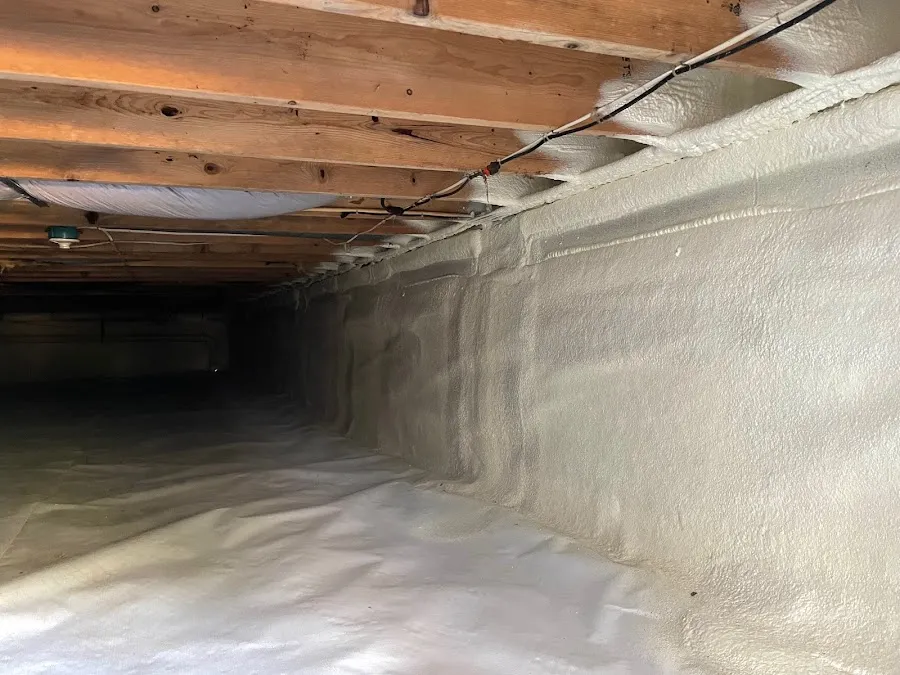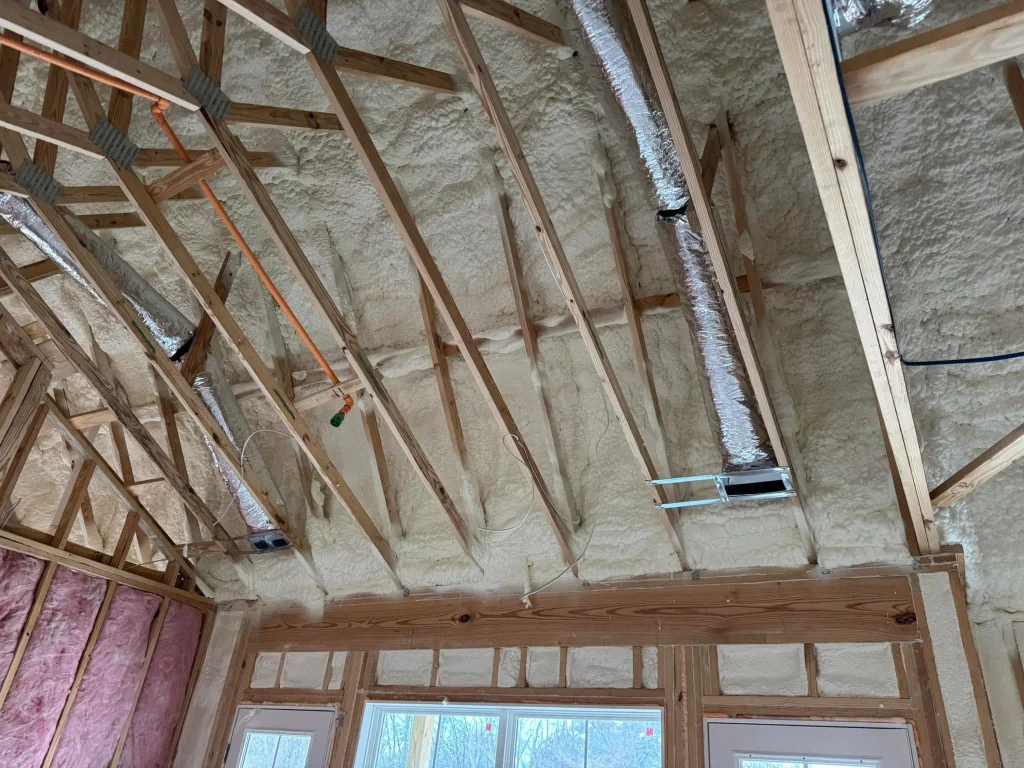
High Energy Bills? Insulation Solutions That Work in Easton, MD
High energy bills in Easton, MD, typically stem from inadequate insulation that fails to meet Climate Zone 4 requirements. Most…

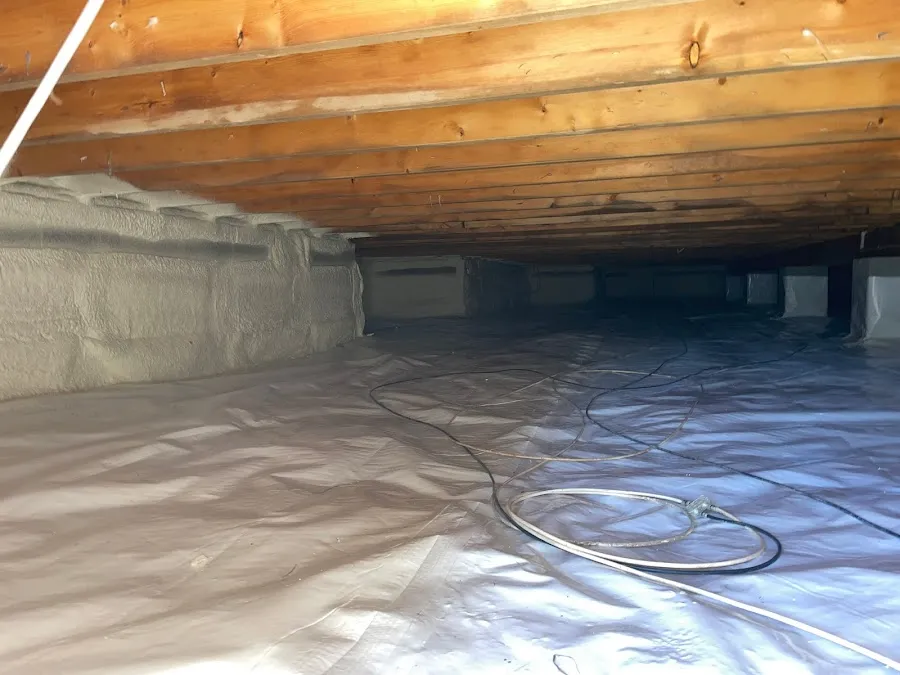
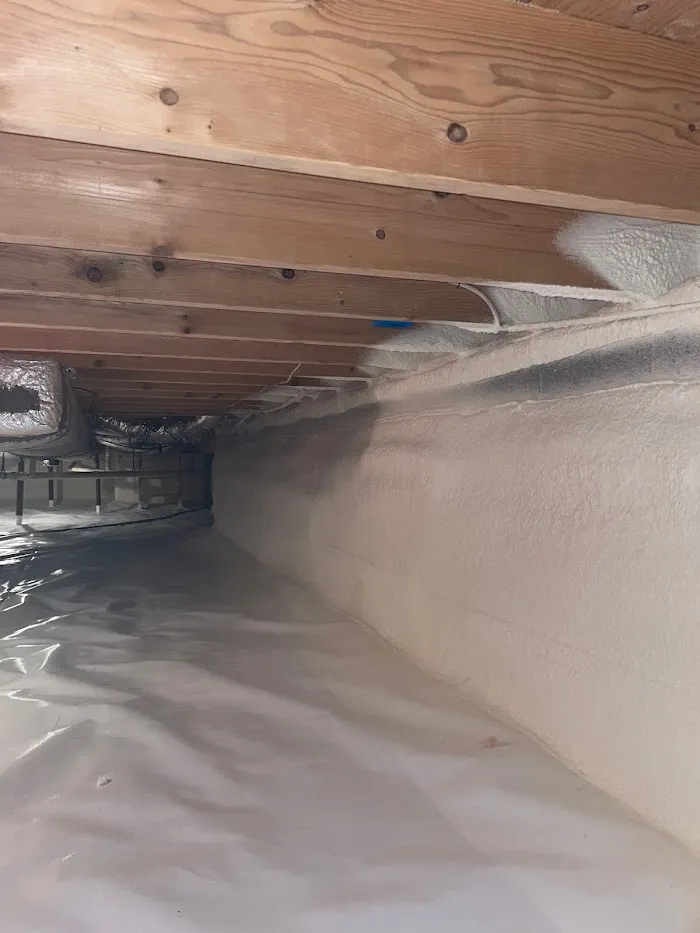
A musty smell in your crawl space typically indicates excess moisture, mold growth, and poor ventilation that allows damp air to circulate throughout your home. In Pasadena, MD, where humidity levels average 65-70% annually and the Chesapeake Bay influence creates persistent moisture conditions, crawl space problems are especially common. Encapsulation solves this by sealing the space with a heavy-duty vapor barrier, closing vents, adding drainage systems, and installing a dehumidifier to create a dry, conditioned environment that eliminates the source of musty odors permanently.
When you detect that characteristic, earthy, damp odor emanating from beneath your home, several interconnected problems are likely at work. Understanding these root causes helps you see why partial fixes fail and why encapsulation provides a comprehensive solution.
The most common cause of crawl space odors is simple evaporation. Bare earth floors release approximately 4-25 gallons of water vapor daily into the air, depending on soil moisture content and temperature differentials. This constant moisture source creates the perfect breeding ground for mold and bacteria. According to the EPA’s guidance on mold and moisture, molds need only moisture, a food source, and the right temperature to begin growing within 24-48 hours.
Here in Pasadena, we see homes where the stack effect pulls crawl space air directly into living spaces. Warm air rises, creating negative pressure in the crawl space that draws in replacement air through foundation vents and cracks. This airflow carries mold spores, bacteria, and that characteristic musty smell throughout your home. The EPA reports that indoor air quality significantly impacts respiratory health, with moisture problems being a primary contributor to poor conditions.
Where moisture persists, biological growth follows. Mold thrives on organic materials common in crawl spaces: wood joists, subflooring, paper backing on insulation, and debris left by previous owners. Bacterial activity on damp soil surfaces also contributes to musty odors. Different mold species produce varying smells, but earthy, damp odors typically indicate active growth on building materials or soil.
Rodents, insects, and other pests are attracted to damp crawl spaces. Their droppings, nesting materials, and eventually their decomposing remains contribute to foul odors. Termite galleries in damp wood create additional entry points for moisture and accelerate decay processes.
Pasadena’s location along the Chesapeake Bay creates unique moisture challenges. High water tables, clay-heavy soils that retain moisture, and humid summers with regular thunderstorms mean your crawl space faces constant moisture pressure. Anne Arundel County experiences an average annual precipitation of 42-44 inches, with groundwater levels often rising within feet of the surface. These conditions make crawl space moisture management essential rather than optional.
Encapsulation works because it addresses all moisture sources simultaneously, creating a controlled environment that cannot support mold growth or bacterial activity. The system transforms your crawl space from a damp, dirty area into a clean, dry space that protects your home’s structure and air quality.
Professional encapsulation involves several integrated components that work together:
We often encounter homeowners who have tried simpler solutions that failed to solve their odor problems. Plastic sheeting laid loosely on the floor tears easily and allows moisture to escape around the edges. Basic dehumidifiers without vapor barriers cannot handle the constant moisture load from bare earth. Vent fans that pull outside air into the crawl space actually increase humidity during Maryland’s humid summer months.
Research from Building Science Corporation demonstrates that moisture control in building enclosures requires addressing all moisture sources simultaneously. Partial measures allow problems to persist and often return quickly.
| Feature | Vented Crawl Space | Encapsulated Crawl Space |
|---|---|---|
| Humidity Level | 70-90% typical | 40-50% maintained |
| Mold Growth Risk | High, especially in summer | Eliminated |
| Indoor Air Quality Impact | Negative, musty odors common | Neutral to positive |
| Energy Efficiency | Poor, thermal losses | Improved, 15% savings typical |
| Pest Activity | Common, attracted by moisture | Reduced, no water source |
| Structural Risk | Wood rot, decay possible | Protected from moisture damage |
| Maintenance Requirements | Regular inspection needed | Annual dehumidifier check |
Encapsulation provides measurable financial returns beyond odor elimination. According to industry data from Moisture Loc, homeowners typically save approximately 15% on heating and cooling costs after encapsulation. This occurs because:
For Pasadena homeowners with average energy bills of $150-250 monthly, encapsulation can save $270-540 annually. Combined with avoided repair costs from moisture damage, the investment typically pays for itself within 5-8 years while immediately eliminating musty odors.
| Scenario | Home Type | Problem | Solution | Outcome |
|---|---|---|---|---|
| Waterfront Property | 1970s ranch, 1,800 sq ft | Severe musty smell, visible mold on joists, 85% humidity | Full encapsulation with sump pump and dehumidifier | Odor eliminated, humidity at 45%, family’s allergy symptoms improved |
| Inland Subdivision | 1990s colonial, 2,400 sq ft | Seasonal odor, wet insulation falling, and standing water after storms | Encapsulation, drainage system, and insulation replacement | Dry crawl space, no odors, $320 annual energy savings |
| Historic Home | 1950s bungalow, 1,200 sq ft | Persistent musty smell despite ventilation, uneven floors | Encapsulation, structural repairs, and a dehumidifier | Odor gone, floors stabilized, home value increased |
| New Construction | 2020s build, 2,800 sq ft | Damp smell within 2 years, builder-installed vents are inadequate | Retroactive encapsulation, vent sealing | Dry conditions maintained, warranty preserved |
The air in your crawl space does not stay there. Through the stack effect and natural air movement, up to 50% of the air you breathe on your first floor originates from your crawl space. This means mold spores, bacteria, dust mites, and chemical vapors from soil gases all enter your living environment.
The Whole Building Design Guide explains that moisture in building envelopes creates conditions affecting indoor air quality and occupant health. Common health symptoms linked to crawl space moisture include:
Children, elderly residents, and those with existing respiratory conditions face higher risks from poor crawl space air quality. Encapsulation removes these health hazards by eliminating the moisture that supports biological contaminants.
A professional encapsulation project typically follows this timeline:
Most homes are completed within 2-4 days, depending on size and condition. According to Modernize, average professional encapsulation costs range from $1,500 to $15,000, depending on size, with $5,500 being typical for standard homes.
Not all encapsulation projects are equal. Proper installation requires specific knowledge of building science and local conditions. Look for contractors who:
Avoid contractors who propose simple plastic sheeting, do not address drainage needs, or cannot explain how their system prevents moisture from all sources.
Encapsulated crawl spaces require minimal maintenance but benefit from annual inspections. The dehumidifier should be checked to ensure proper drainage and filter cleanliness. The vapor barrier should be inspected for tears or damage from service personnel. Most quality encapsulation systems include warranties of 25 years or longer on materials when installed by certified professionals.
According to Advanced Energy research, encapsulated crawl spaces maintain significantly better conditions than vented alternatives, with consistent humidity control being the primary factor in long-term performance.
Professional encapsulation with quality 20-mil vapor barriers typically lasts 15-25 years or more. The dehumidifier system may need replacement after 10-15 years of continuous operation, but the barrier itself remains effective for decades when properly installed.
Yes, when properly installed, encapsulation eliminates the moisture source that causes musty odors. Existing mold growth on wood surfaces will dry out and stop producing odors, though heavily contaminated materials may require remediation before encapsulation.
Absolutely. The vapor barrier creates a clean, dry surface that actually improves crawl space accessibility. Service personnel can work in the space without contending with mud, standing water, or mold.
Many encapsulation projects require permits, especially when electrical work is needed for sump pumps and dehumidifiers. Reputable contractors handle permit applications and ensure compliance with local building codes.
Most homeowners report noticeable improvement in indoor air quality and odor reduction within days of encapsulation completion. The dehumidifier system stabilizes conditions within 1-2 weeks, and musty smells are permanently eliminated.
Peninsula Insulation, LLC specializes in crawl space encapsulation for Pasadena, MD, homeowners dealing with musty odors and moisture problems. We understand the unique challenges of Anne Arundel County’s climate and building conditions. Our encapsulation systems address all moisture sources to eliminate odors permanently while improving your home’s energy efficiency and indoor air quality.
Contact us today for a thorough inspection and detailed proposal. Call (410) 770-2624 or email wil@mdsprayfoam.net to schedule your consultation and breathe easier in your home.