High Energy Bills? Insulation Solutions That Work in Easton, MD
High energy bills in Easton, MD, typically stem from inadequate insulation that fails to meet Climate Zone 4 requirements. Most…


High energy bills in Easton, MD, typically stem from inadequate insulation that fails to meet Climate Zone 4 requirements. Most homes in the Easton area need R-38 to R-49 insulation in attics and R-13 to R-21 in walls to achieve proper thermal resistance and reduce heating and cooling costs by 15-20% annually. Upgrading insulation, sealing air leaks, and choosing the right insulation type for Maryland’s humid subtropical climate can significantly lower monthly energy expenses while improving indoor comfort year-round.
Easton, Maryland, sits on the Eastern Shore and falls within Climate Zone 4, which experiences both hot, humid summers and moderately cold winters. This mixed climate demands insulation that performs well in both heating and cooling seasons. According to the Maryland Energy Administration, most of Maryland, including Easton, follows International Energy Conservation Code requirements for Zone 4, which specify minimum insulation levels for new construction and major renovations.
The humid subtropical climate means homes must manage not just temperature differences but also moisture. Insulation that becomes damp loses much of its thermal resistance, making proper installation and moisture management critical for long-term performance, Maryland Residential Energy Code Field Study.
Many Easton homes, especially those built before 1990, suffer from inadequate insulation that falls far short of current standards. Common issues include:
The University of Maryland Extension notes that insulation effectiveness is measured by its R-value, which indicates resistance to heat flow, and the higher the R-value, the better the insulation performs. However, even high R-value insulation fails if air can bypass it through gaps and cracks. Maryland Insulation Code Requirements Summary.
| Problem Area | Heat Loss Percentage | Monthly Cost Impact | Annual Cost Impact |
|---|---|---|---|
| Uninsulated Attic | 25-30% | $30-$60 | $360-$720 |
| Air Leaks and Gaps | 30-40% | $40-$80 | $480-$960 |
| Uninsulated Walls | 20-25% | $25-$50 | $300-$600 |
| Rim Joists and Foundation | 10-15% | $15-$30 | $180-$360 |
Bar Chart Suggestion: Cost impact comparison showing monthly and annual energy waste from different insulation deficiencies in typical Easton homes.
| Insulation Type | R-Value per Inch | Air Barrier | Moisture Resistance | Best Application |
|---|---|---|---|---|
| Closed-Cell Spray Foam | R-6.0 to R-7.0 | Yes | Excellent | Rim joists, attics, crawl spaces |
| Open-Cell Spray Foam | R-3.5 to R-3.8 | Partial | Fair | Walls, roof decks |
| Fiberglass Batts | R-2.9 to R-3.8 | No | Poor | Standard wall cavities, attics |
| Blown Fiberglass | R-2.2 to R-2.7 | No | Fair | Attics, hard-to-reach areas |
| Blown Cellulose | R-3.2 to R-3.8 | No | Good when treated | Attics, walls, retrofits |
The U.S. Department of Energy emphasizes that the maximum thermal performance of insulation depends heavily on proper installation. Even the best materials fail when installed incorrectly or at the wrong density.
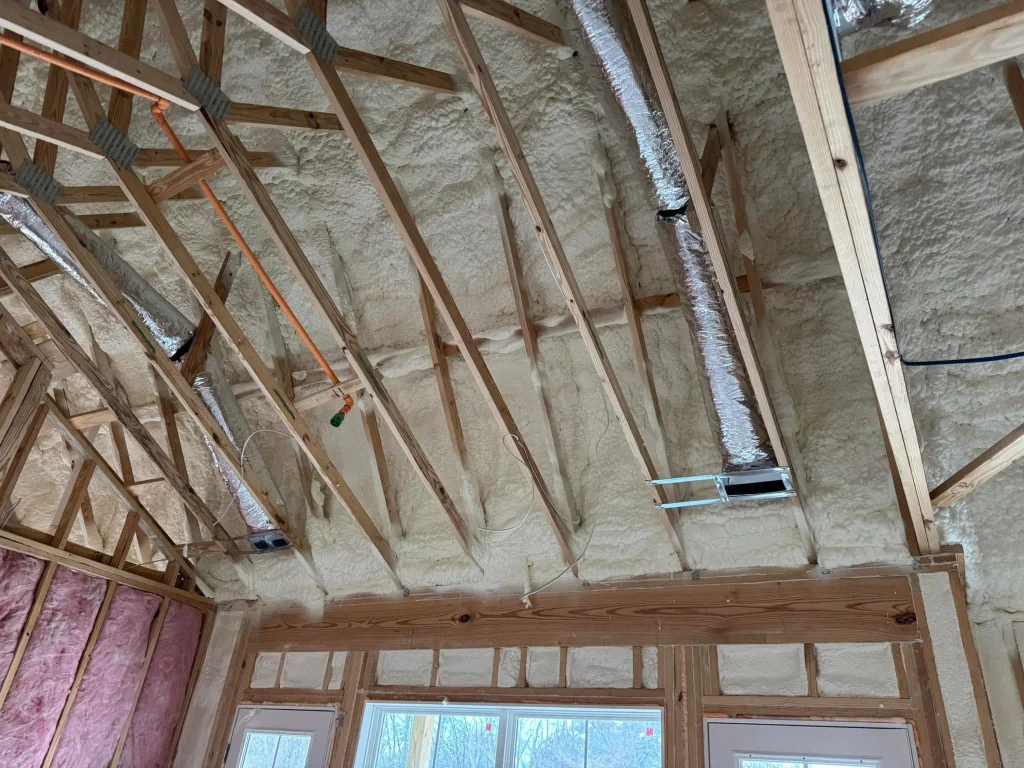
Spray foam insulation offers unique advantages for Easton’s climate. Closed-cell spray foam provides both a high R-value per inch and creates an effective air and vapor barrier in a single application. This dual function addresses the two biggest sources of energy waste: heat transfer and air leakage.
For homes in humid climates like Easton, closed-cell spray foam’s moisture resistance is particularly valuable. Unlike fiberglass or cellulose, closed-cell foam does not absorb water, maintaining its insulating properties even in high humidity conditions.
Fiberglass and cellulose insulation remain popular for their lower upfront cost and proven performance. Blown fiberglass and cellulose work well for attic insulation upgrades, where they can be installed over existing insulation to increase total R-value.
Energy Star recommends specific R-values based on climate zone, with Zone 4 homes typically needing R-38 to R-49 in attics and R-13 to R-21 in walls for optimal efficiency.
| Scenario | Home Type | Problem | Solution | Outcome |
|---|---|---|---|---|
| Historic Victorian | 1920s, 2,400 sq ft | No wall insulation, settled attic insulation | Dense-pack cellulose walls, R-49 blown fiberglass attic | 28% reduction in energy bills |
| 1980s Colonial | 2,200 sq ft | Under-insulated attic (R-19), air leaks | Air sealing plus R-38 additional blown insulation | $720 annual savings |
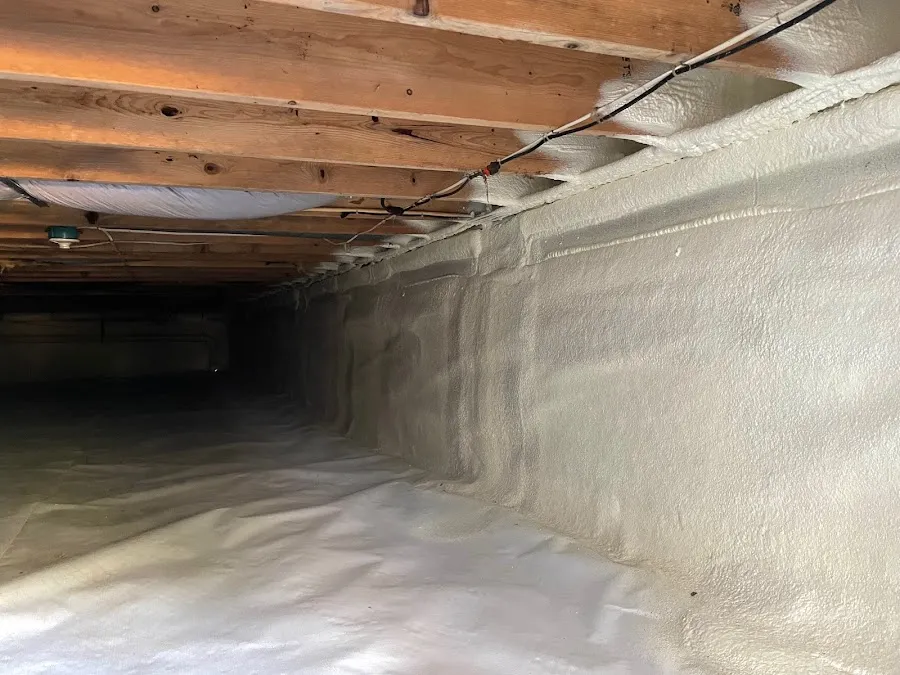
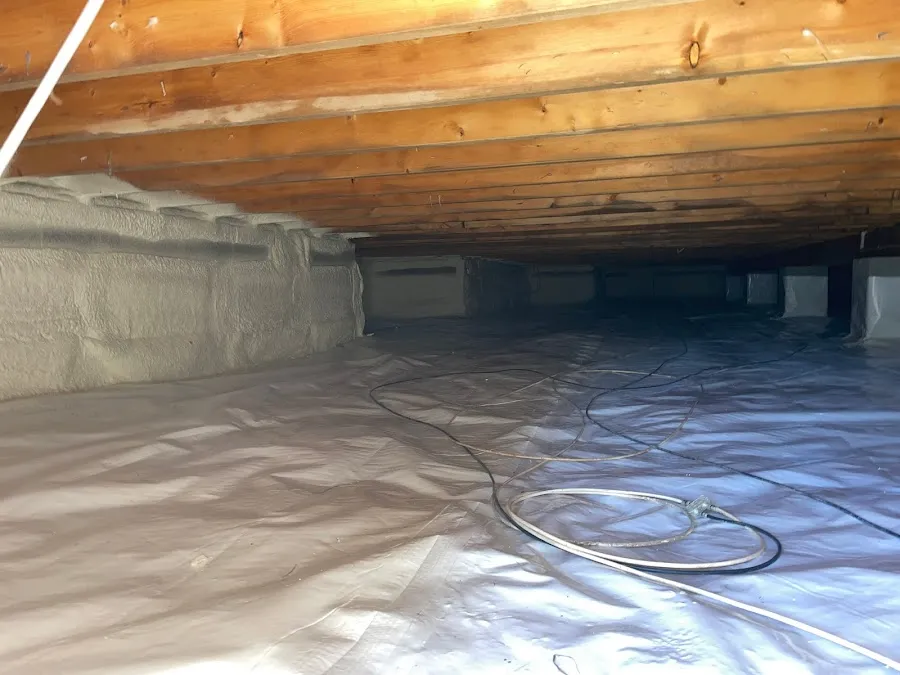
| Waterfront Cottage | 1,600 sq ft | Crawl space moisture, floor drafts | Closed-cell spray foam rim joists and crawl space | Eliminated drafts, 22% savings |
| New Construction | 3,000 sq ft | Code minimum insulation | Upgraded to R-49 attic, spray foam rim joists | Exceeds code, superior comfort |
| Ranch Renovation | 1,800 sq ft | Ice dams, high heating costs | Spray foam roof deck, air sealing package | Ice dams eliminated, 35% savings |
A professional energy audit identifies exactly where your home loses energy and prioritizes improvements based on potential savings. Audits typically include blower door testing to measure air leakage, infrared thermography to reveal insulation gaps, and a detailed report with recommended upgrades and projected ROI.
Air sealing must happen before or during insulation installation. Common air leakage points in Easton homes include:
Sealing these gaps prevents conditioned air from escaping and unconditioned air from entering, making your insulation more effective.
Since heat rises, attic insulation provides the highest return on investment for most homes. Bringing attic insulation up to R-38 to R-49 typically pays for itself within 3-5 years through energy savings. Consider removing old, compressed insulation before adding new material to maximize R-value per inch.
Rim joists, the areas where floor joists meet the foundation wall, are often uninsulated and represent a significant source of heat loss. Closed-cell spray foam is ideal for this application because it insulates, seals air gaps, and resists moisture. For homes with crawl spaces, insulating and conditioning the crawl space can dramatically improve comfort and efficiency.
Adding wall insulation to existing homes requires careful consideration. Dense-pack cellulose can be blown into wall cavities through small holes, providing R-3.5 to R-3.8 per inch. For homes undergoing significant renovations, spray foam or fiberglass batts may be appropriate depending on wall construction and budget.
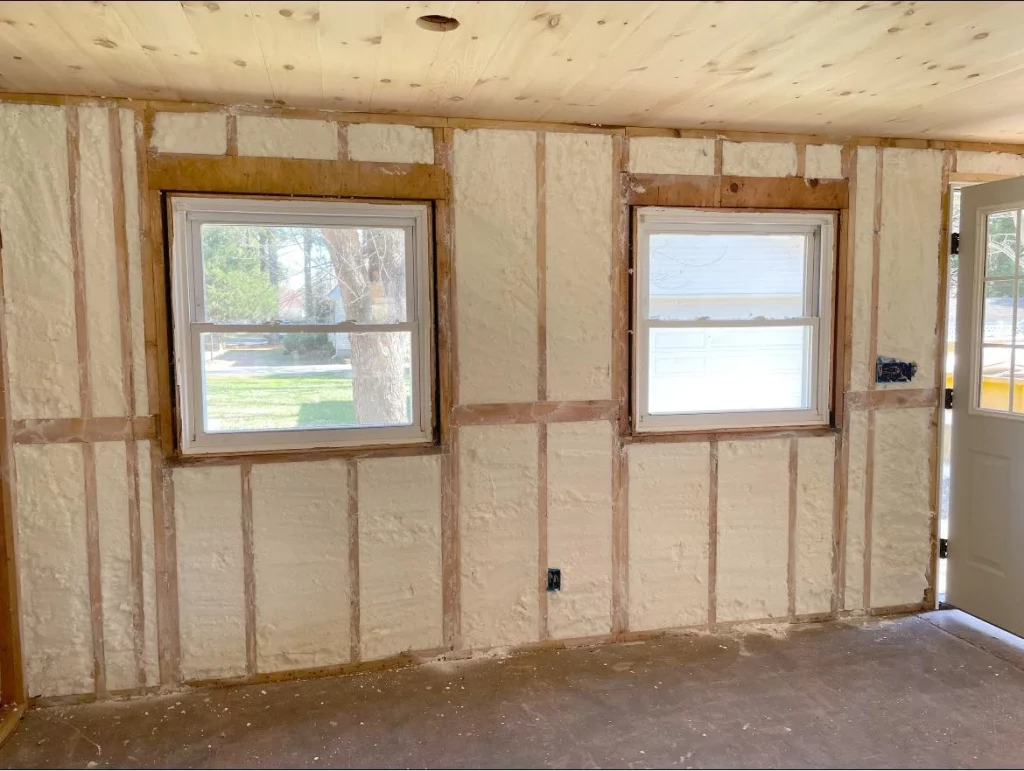
According to the North American Insulation Manufacturers Association, proper installation is critical for achieving rated R-values. Gaps, voids, and compressed insulation all reduce effective R-value. Professional installation ensures correct density and coverage.
Easton’s humid climate makes moisture management essential for insulation performance. Vapor barriers, proper ventilation, and moisture-resistant materials help maintain insulation effectiveness. Closed-cell spray foam and properly treated cellulose resist moisture better than standard fiberglass.
Older homes often present unique challenges, including:
Understanding these factors helps determine the best approach for each home.
Insulation works best when combined with comprehensive air sealing. The Building Performance Institute field studies show that homes with both proper insulation and air sealing perform significantly better than homes with insulation alone.
Easton homes must meet specific insulation requirements based on their location in Climate Zone 4. These requirements establish minimum R-values for different building components:
| Building Component | Minimum Code R-Value | Recommended for Energy Savings |
|---|---|---|
| Attic | R-38 | R-49 to R-60 |
| Walls (Wood Frame) | R-13 | R-15 to R-21 |
| Floors over Unconditioned Space | R-19 | R-30 |
| Crawl Space Walls | R-10 | R-13 to R-19 |
| Basement Walls | R-10 | R-13 to R-19 |
Pie Chart Suggestion: Breakdown of heat loss percentages by building component in typical Climate Zone 4 homes without adequate insulation.
While some insulation projects suit experienced DIY homeowners, professional installation offers several advantages:
Professional insulation contractors also have access to specialized equipment for dense-pack installation, spray foam application, and infrared diagnostics that ensure optimal results.
Easton homes in Climate Zone 4 require minimum R-38 attic insulation to meet code, but R-49 to R-60 is recommended for optimal energy efficiency and comfort. Higher R-values provide better thermal resistance and greater energy savings over time.
Proper insulation upgrades typically reduce heating and cooling costs by 15-20% annually, with some projects achieving savings up to 35% when combined with comprehensive air sealing. The exact savings depend on your current insulation levels, home size, and heating and cooling systems.
Spray foam insulation offers superior R-value per inch, creates an effective air barrier, and resists moisture, making it particularly valuable for Easton’s humid climate. While the upfront cost is higher than fiberglass or cellulose, the combination of insulation and air sealing in one step often provides better long-term value.
Signs of inadequate insulation include uneven temperatures between rooms, high energy bills compared to similar homes, cold floors in winter, and ice dams on the roof. A professional energy audit with infrared imaging can identify specific deficiencies and recommend targeted improvements.
Yes, you can add new insulation over existing material, provided the old insulation is dry and in good condition. However, compressed or moisture-damaged insulation should be removed before adding new material to ensure optimal R-value and prevent mold growth.
High energy bills should not be a permanent fixture in your home. Peninsula Insulation, LLC specializes in insulation solutions tailored to Easton’s Climate Zone 4 conditions, helping homeowners achieve 15-35% reductions in energy costs through expert assessment, quality materials, and professional installation. Our team understands the unique challenges of Maryland’s Eastern Shore homes, from historic properties to new construction, and we deliver results that improve comfort and lower bills.
Contact Peninsula Insulation, LLC today:
Schedule your energy assessment and discover how proper insulation can transform your home’s efficiency and comfort.