High Energy Bills? Insulation Solutions That Work in Easton, MD
High energy bills in Easton, MD, typically stem from inadequate insulation that fails to meet Climate Zone 4 requirements. Most…


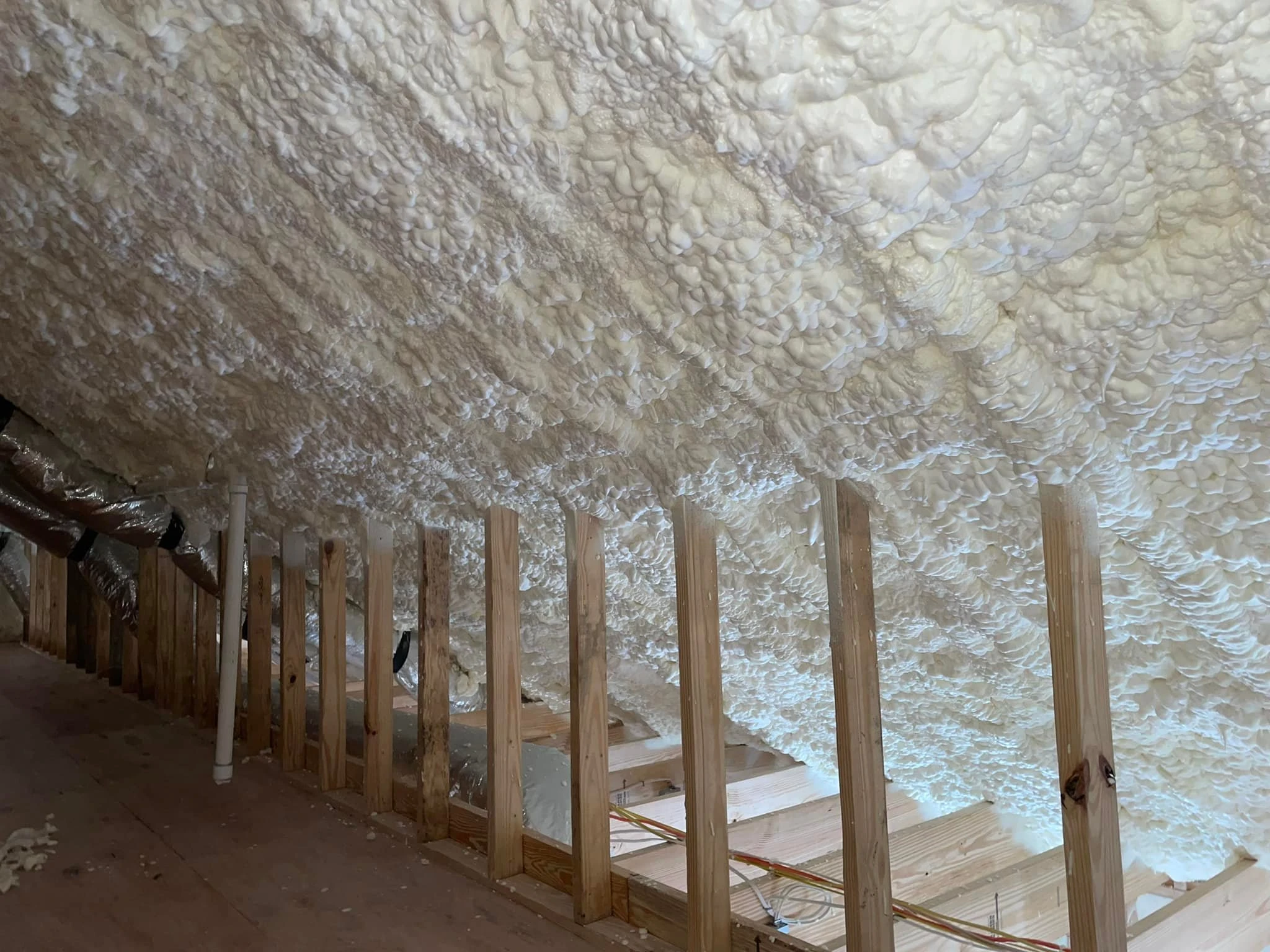
Open-cell spray foam insulation prevents ice dams in Easton, MD, by creating a continuous air barrier that eliminates heat loss through the roof assembly, keeping the roof surface cold and preventing snow from melting and refreezing at the eaves. This insulation method seals gaps and cracks that traditional insulation materials leave exposed, stopping warm indoor air from rising into the attic space and warming the roof deck from below. The foam’s air-sealing properties work in tandem with its thermal resistance to maintain uniform roof temperatures throughout the winter months, which is particularly important in Easton’s coastal climate, where freeze-thaw cycles are common. This comprehensive approach addresses the root cause of ice dams rather than just treating symptoms, making it an effective long-term solution for homeowners in the region.
The following information explains the mechanics of ice dam formation, why conventional insulation often fails in Eastern Shore conditions, and how open-cell spray foam provides superior protection based on years of installation experience in the local area. Readers will learn practical details about installation requirements, cost considerations, and performance expectations specific to Easton’s climate patterns.
Ice dams form when heat escapes from inside the home, warming the roof surface and melting snow. This water flows down the roof until it reaches the colder eaves, where it refreezes and creates an ice barrier. As this process repeats, the ice dam grows larger, potentially causing water to back up under shingles and leak into the house. Easton’s location near Chesapeake Bay creates specific conditions that exacerbate this problem. Moderate winter temperatures hover around freezing, and periodic thaws followed by cold snaps create perfect ice dam conditions.
The issue is particularly prevalent in homes with inadequate insulation or ventilation in the attic space. When warm air from living areas rises into the attic through gaps, light fixtures, or poorly sealed penetrations, it creates significant temperature differences between the upper roof and eaves. Even a 5-10-degree temperature differential can initiate the melting-freezing cycle that leads to ice dams. Local weather patterns compound the problem – Easton typically receives 15-20 inches of snow annually, with average winter temperatures ranging from 25-40°F, ideal for ice dam formation Energy Star.
Conventional insulation materials such as fiberglass batts and blown cellulose have significant limitations in preventing ice dams. These materials work primarily by trapping air in tiny pockets, reducing conductive heat transfer, but they do nothing to stop air movement through the insulation itself. In practice, this means warm indoor air can still flow through gaps and cracks in the insulation, reaching the roof deck and creating those problematic warm spots.
Research from the Building Science Corporation shows that even small gaps in insulation can reduce its effective performance by 30% or more. Traditional insulation also settles over time, creating voids where heat loss accelerates. In Easton’s older housing stock, particularly in historic districts where many homes date from the 19th and early 20th centuries, these problems are magnified by construction methods that prioritized ventilation over air sealing.
Another limitation is compression – fiberglass insulation loses R-value when compressed, and installers often stuff it into tight spaces around framing members. This creates thermal bridges where heat conducts directly through wood framing, bypassing the insulation entirely. These thermal bridges can account for up to 25% of heat loss in attics with conventional insulation.
Open-cell spray foam insulation works through two primary mechanisms: superior thermal resistance and complete air sealing. The foam expands 100-150 times its liquid volume when applied, filling every cavity, crack, and gap in the insulation cavity. This creates a monolithic insulation layer with no voids or compressed spots. The foam’s cellular structure consists of millions of tiny, partially closed cells that trap air, providing effective insulation while still allowing moisture to diffuse through the material.
The air-sealing capability is what truly sets open-cell foam apart for ice dam prevention. The foam adheres tenaciously to wood, concrete, and metal substrates, creating an airtight seal that prevents convective heat loss. This stops the stack effect that normally draws warm air upward and out through the attic. By eliminating air movement through the insulation assembly, open-cell foam maintains uniform roof temperatures across the entire surface, from ridge to eave.
In Easton’s climate, the foam’s vapor permeability is particularly valuable. Open-cell foam has a perm rating of approximately 10, allowing any moisture that does accumulate in the assembly to dry to the interior. This is crucial in the humid Eastern Shore environment, where trapped moisture can cause mold growth and structural damage. The foam’s ability to “breathe” while still stopping air movement provides the ideal balance for coastal Maryland homes.
Proper installation is critical for open-cell spray foam to prevent ice dams effectively. The foam should be applied to achieve a minimum depth of 5.5 inches in roof assemblies, which provides approximately R-19 thermal resistance. This depth creates the necessary insulation value while still allowing adequate space for ventilation in designs that require it. Application should be continuous across all roof planes, including tricky areas like valleys, dormers, and skylight wells.
The installation process begins with thorough preparation – any existing insulation must be removed, and the roof sheathing should be inspected for leaks or damage. All penetrations for plumbing vents, electrical boxes, and light fixtures must be carefully sealed with foam before the main application. In existing homes, this often means removing portions of drywall to access areas where air leakage occurs, such as top plates of interior walls and chimney chases.
Temperature and humidity conditions affect foam application quality. The ideal temperature for spraying open-cell foam is between 70-80°F, though modern formulations can be applied in temperatures as low as 40°F. Easton installers must time projects carefully, often scheduling applications in spring or fall when conditions are optimal. Professional installers also use thermal imaging cameras after application to verify complete coverage and identify any gaps that need additional attention.
| Insulation Type | R-Value per Inch | Air Sealing | Vapor Permeability | Ice Dam Prevention |
|---|---|---|---|---|
| Open-Cell Spray Foam | 3.5-3.6 | Excellent | Semi-permeable (10 perms) | Excellent |
| Closed-Cell Spray Foam | 6.5-7.0 | Excellent | Vapor barrier (<1 perm) | Excellent |
| Fiberglass Batts | 2.9-3.8 | Poor | Highly permeable | Poor |
| Blown Cellulose | 3.2-3.8 | Fair | Semi-permeable | Fair |
| Mineral Wool | 3.2-3.3 | Poor | Highly permeable | Poor |
The table above clearly shows why open-cell spray foam outperforms traditional options for ice dam prevention. While closed-cell foam offers similar performance, its higher cost and vapor-impermeable nature make it less suitable for many Easton homes, especially those with existing moisture issues. The moderate cost of open-cell foam, combined with its superior air sealing and appropriate vapor permeability, makes it the optimal choice for most residential applications in the region.
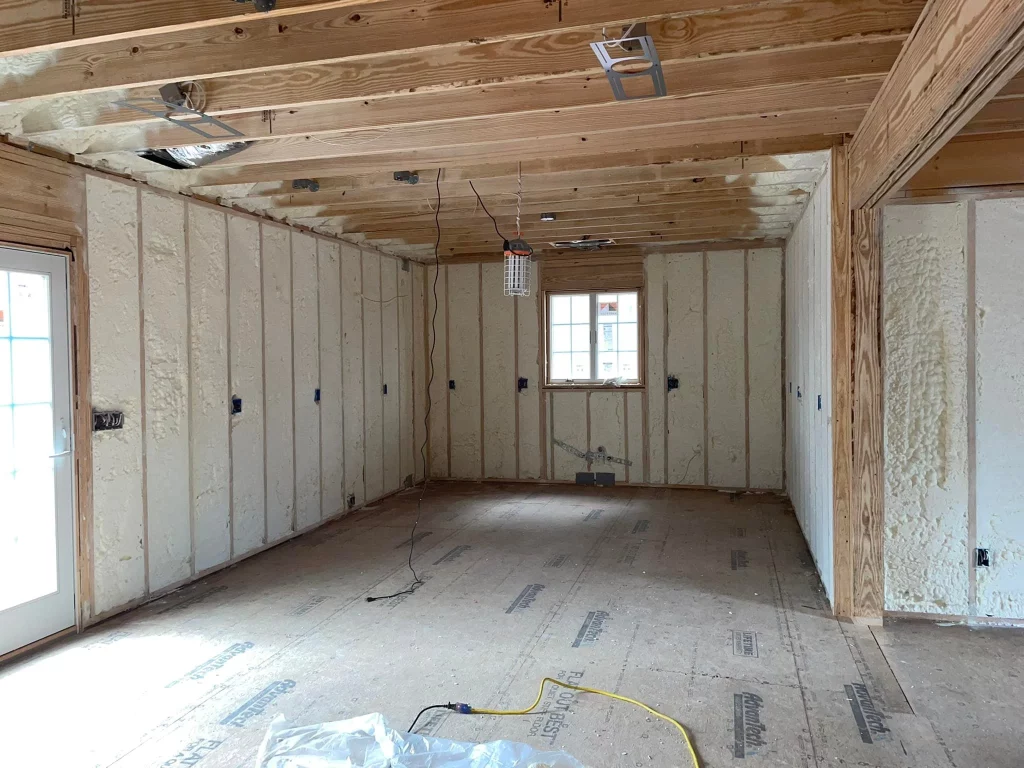
Before investing in open-cell spray foam insulation for ice dam prevention, homeowners should evaluate several key factors specific to their situation. The age and condition of the roof assembly matter greatly. Older homes with structural issues or damaged sheathing may need repairs before insulation can be effectively installed. Homes with existing moisture problems or inadequate ventilation may require additional measures beyond insulation alone.
Budget considerations are important, as spray foam typically costs 2-3 times more than traditional insulation. However, energy savings often provide a payback period of 5-7 years in Easton’s climate International Association of Certified Home Inspectors. Homeowners should also consider disruption to their living space: spray foam installation can generate dust and odors, requiring temporary relocation in some cases.
The choice between open-cell and closed-cell foam depends on specific home characteristics. Open-cell works better in most residential applications due to its breathability and lower cost. Closed-cell may be preferred in areas with extreme moisture concerns or where structural strengthening is desired. Peninsula Insulation typically recommends open-cell for most ice dam prevention projects in the Easton area.
Local building codes and historical district restrictions may affect installation approaches, especially in East’s historic neighborhoods. Some properties require approval for exterior changes or specific insulation methods. Working with installers familiar with local requirements helps ensure compliance while maximizing ice dam prevention effectiveness.
Ensure proper roof flashing installation around all penetrations, chimneys, and valleys before insulating. Many ice dam problems actually begin at the roof details, where water can find its way under shingles. Addressing these details during insulation installation provides comprehensive protection against water intrusion.
Consider installing heat cables only as a last resort or for temporary protection. While they can help with immediate ice dam problems, they increase energy costs and don’t address the underlying heat loss issue. Spray foam insulation eliminates the need for most heat cable systems, providing a more permanent and energy-efficient solution.
Open-cell spray foam insulation provides the most effective long-term solution for preventing ice dams in Easton’s challenging winter climate. By combining superior thermal resistance with complete air sealing, it addresses the root cause of ice dams rather than treating symptoms. The installation requires professional expertise and careful attention to detail, particularly in older homes common to the Eastern Shore.
While the initial investment exceeds traditional insulation costs, the energy savings, improved comfort, and protection against water damage provide significant long-term value. For Easton homeowners dealing with chronic ice dam problems, spray foam offers a permanent solution that eliminates the annual cycle of damage and repairs.
Evaluate your specific situation carefully – consider roof condition, budget constraints, and any moisture issues before proceeding. The most successful projects involve comprehensive air sealing beyond just the roof cavity, including attic hatches, knee walls, and penetrations. With proper installation by experienced professionals familiar with Easton’s climate and housing stock, spray foam insulation can provide reliable ice dam prevention for the life of your home.
For homeowners in Easton dealing with ice dam problems, Peninsula Insulation, LLC offers comprehensive evaluation services to determine whether open-cell spray foam is the right solution for your specific situation. With extensive experience installing spray foam insulation in Eastern Shore homes, Peninsula Insulation understands local climate challenges and building practices. Contact Peninsula Insulation, LLC at wil@mdsprayfoam.net or call (410) 770-2624 to schedule a professional assessment of your ice dam prevention needs and receive a detailed recommendation tailored to your home’s requirements.
Most homeowners notice immediate differences in roof snow melt patterns after spray foam installation. The first winter typically shows a dramatic reduction in ice dam formation, with complete elimination of chronic issues within the first season. The foam’s air sealing effects are instantaneous, though full thermal performance develops as the foam fully cures over 24-48 hours.
Energy efficiency upgrades like spray foam insulation typically increase home resale value by 3-5% according to market data. The ice dam prevention aspect is particularly valuable in Easton’s market, where buyers recognize the cost savings and protection benefits. Proper documentation of the installation helps maximize this value impact.
Icicles form when melting snow drips and refreezes, while ice dams are thick ridges of ice that form at the roof edge, preventing water drainage. Icicles alone don’t necessarily indicate an ice dam problem, but large icicles often signal inadequate insulation and potential ice dam formation. Spray foam addresses both issues by preventing snow melt in the first place.
Yes, spray foam insulation provides numerous winter performance benefits, including reduced heating costs (typically 20-30% savings), elimination of cold drafts, and prevention of frozen pipes in attics or crawl spaces. The same air sealing that prevents ice dams also improves overall comfort and energy efficiency throughout the winter months.
The proximity to Chesapeake Bay creates specific conditions that make ice dams particularly problematic in Easton. The area’s higher humidity makes freeze-thaw cycles more severe, and moderate winter temperatures keep roofs near the freezing point. Spray foam’s air sealing properties are especially valuable in these conditions where small temperature differences trigger ice dam formation.