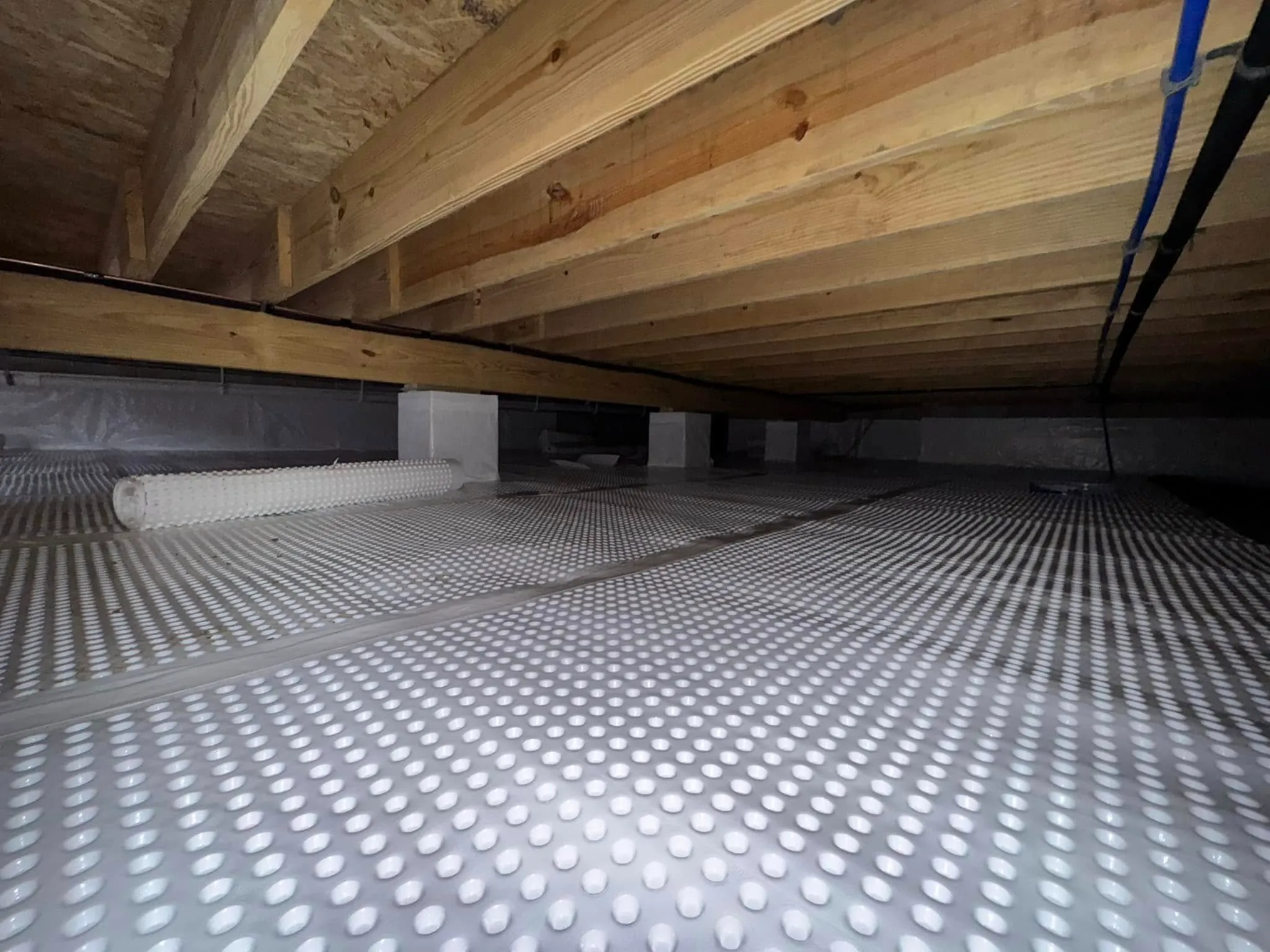
What Materials Are Commonly Used for Crawl Space Encapsulation in 2026, and Why Do They Matter?
Most crawl space encapsulation material choices in 2026 fall into five groups: a polyethylene vapor barrier over the soil and…


If you are standing in an unfinished attic or basement, trying to decide how to insulate it, open-cell spray foam insulation is probably on your shortlist. It has become one of the most requested products in residential insulation because it seals gaps that traditional batts simply cannot reach and reduces noise between rooms. Before choosing it for your project, it helps to understand how it performs, where it works best, and how it compares to the alternatives. This guide, drawn from years of hands-on open cell spray foam installations, covers the science, the numbers, and the real-world considerations that matter most.
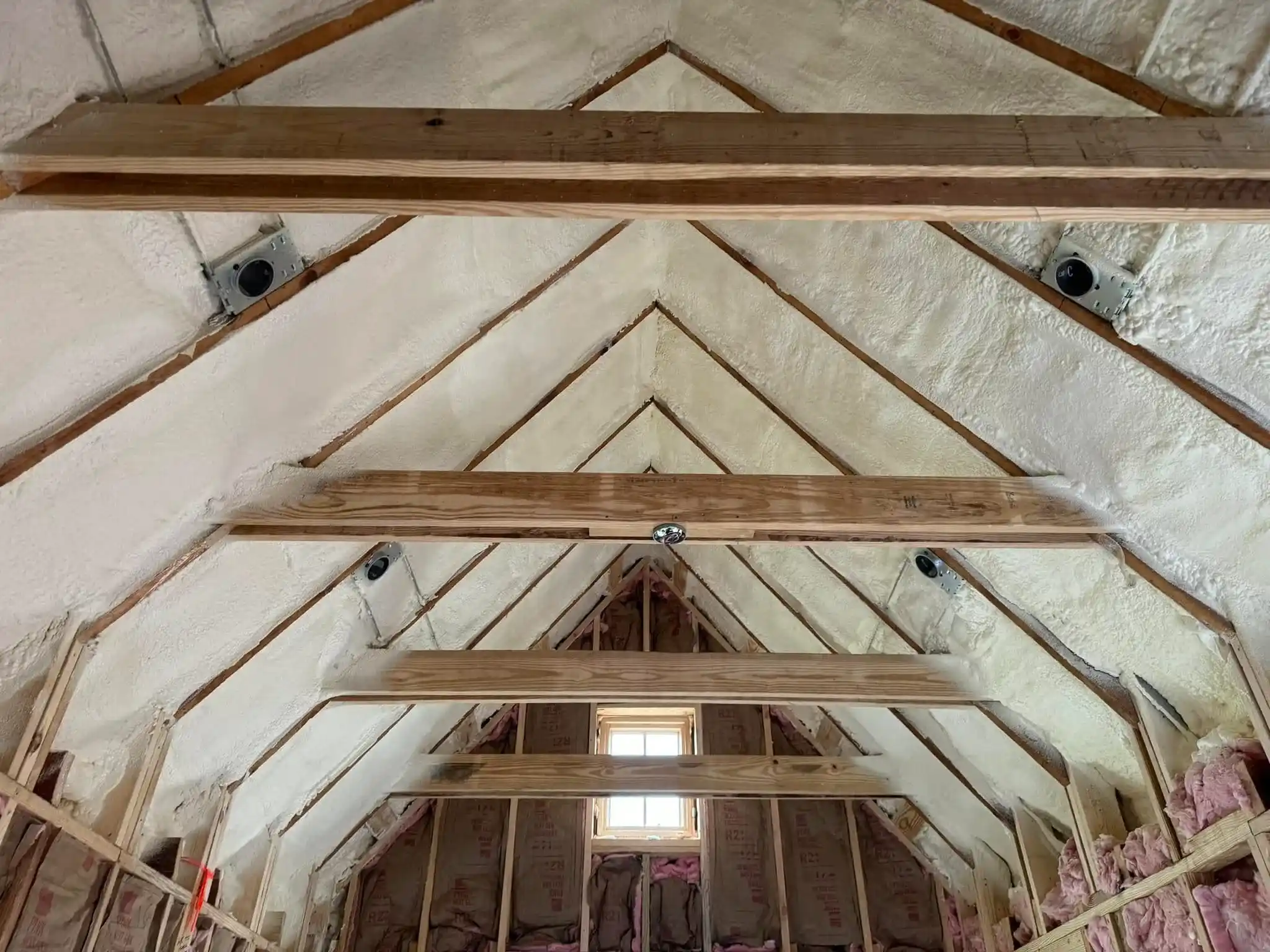
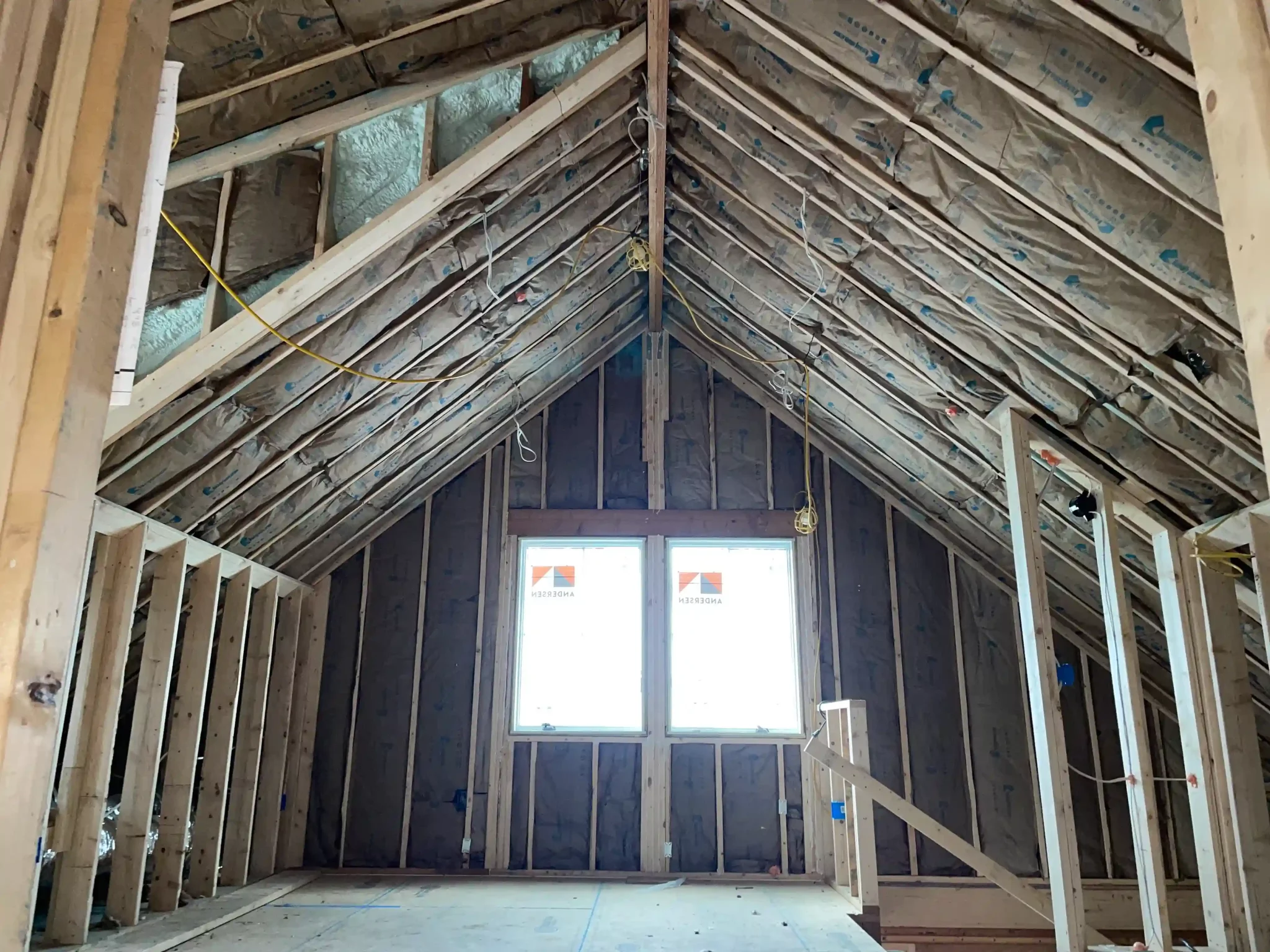
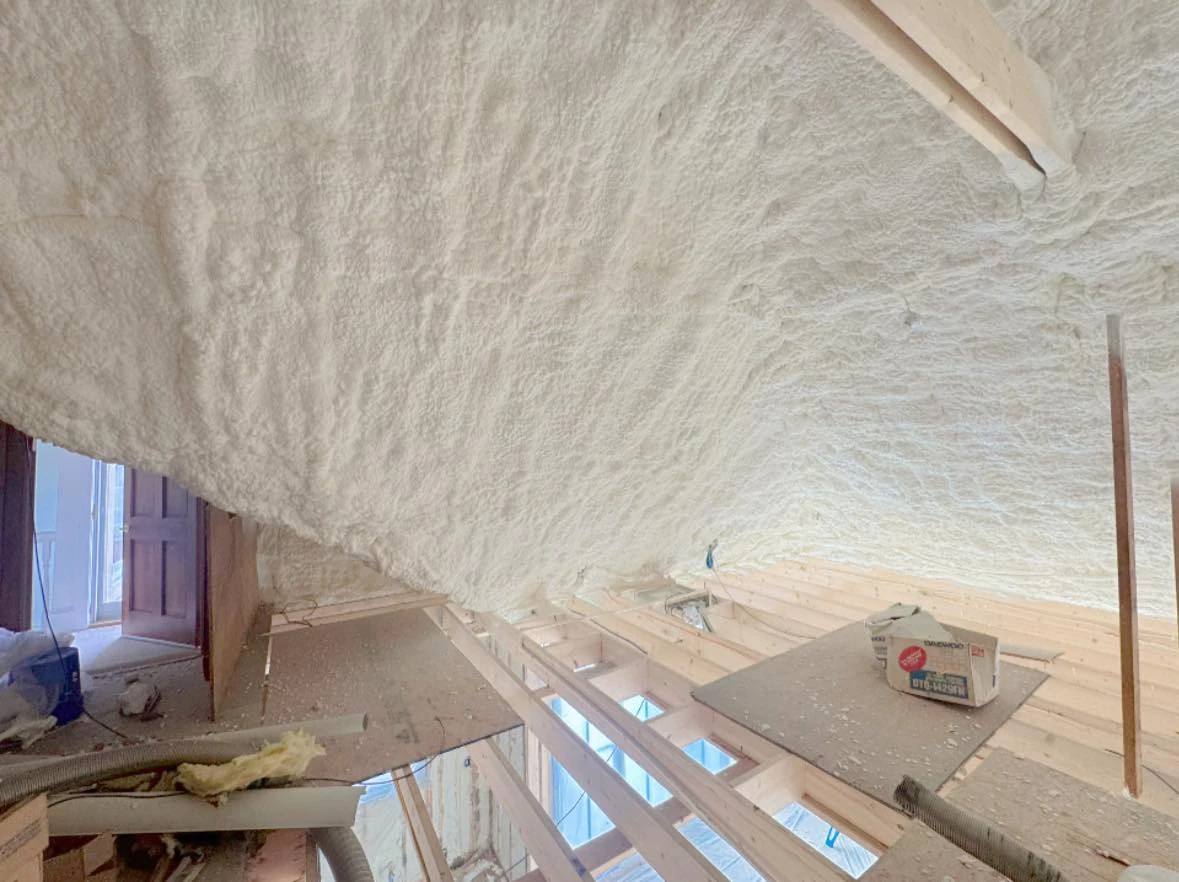
Open cell foam insulation is a type of polyurethane foam that expands to fill gaps, cracks, and cavities in a building’s walls, attic, and floor assemblies. Unlike fiberglass or cellulose, it creates a seamless barrier that bonds directly to surfaces instead of sitting loosely in a cavity. The “open cell” designation describes the foam’s cellular structure: tiny bubbles that are not fully sealed, which makes the foam softer, lighter, and more flexible than closed cell foam.
During application, two liquid components (an isocyanate and a polyol resin) react and expand rapidly, growing to 100 to 200 times their original volume. That expansion lets the foam reach into every gap, creating an airtight seal that traditional batt insulation cannot match.
The low density of open cell foam, typically around 0.5 pounds per cubic foot, makes it suitable for applications where added structural weight is a concern. Its main strength is stopping air movement, which addresses one of the biggest sources of energy loss in most homes.
R-value per inch: Open-cell spray foam typically delivers an R-value of 3.5 to 3.8 per inch, higher than most traditional insulation but lower than closed cell foam’s 6.0 to 7.0 per inch. This means slightly more thickness is needed to hit the same thermal resistance as closed-cell alternatives.
Air sealing: This is where open cell performs best. The foam expands into every gap, creating an air barrier that eliminates drafts and reduces strain on HVAC systems. Air sealing alone can account for a significant share of total energy savings in an insulation upgrade.
Sound absorption: The open-cell structure makes this foam an effective sound dampener, reducing noise transfer between rooms and from outside. It is a common choice for home offices, media rooms, and shared-wall apartments.
Does open cell spray foam breathe? Yes, to a degree. Unlike closed cell foam, open cell foam allows moisture vapor to pass through slowly, at roughly 2 to 10 perms. This semi-permeable quality can help prevent trapped moisture in certain interior applications, though it is not a substitute for a vapor barrier in every climate and location.
Energy efficiency is the top reason most homeowners choose open-cell foam. By creating an airtight seal, it cuts down on the air leakage that drives a large share of energy loss in a typical home.
The sound-dampening quality also makes it a strong fit for interior partition walls, nurseries, and media rooms, where the same open-cell structure that allows vapor permeability also absorbs sound waves rather than reflecting them.
Where open-cell spray foam performs best:
Understanding how open cell compares to closed cell foam is essential for choosing the right product for each part of your home.
| Property | Open Cell Foam | Closed Cell Foam |
| R-Value per Inch | 3.5 to 3.8 | 6.0 to 7.0 |
| Density (lbs/ft³) | 0.4 to 0.5 | 1.5 to 2.0 |
| Vapor Permeability | Semi-permeable (2 to 10 perms) | Nearly impermeable (under 1 perm) |
| Sound Absorption | Excellent | Good |
| Expansion Ratio | 100 to 200x | 30 to 40x |
| Best Applications | Interior walls, attics, sound control | Exterior walls, foundations, metal buildings |
Expert Tip: A higher R-value does not automatically mean better performance for every application. In interior spaces where sound control matters and space is not limited, open-cell foam often delivers better overall value despite its lower per-inch R-value.
Climate plays a real role in this decision. In colder climates, closed cell’s higher R-value and vapor-blocking properties help prevent condensation inside wall cavities. In humid climates, open-cell’s breathability can be an advantage by letting moisture escape rather than becoming trapped. For a deeper side-by-side breakdown, see our comparison on closed-cell versus open-cell durability.
Homeowner and contractor feedback on open-cell spray foam insulation tends to center on a few consistent themes. Air sealing performance is the most frequently praised benefit, with noticeably fewer drafts and a more stable indoor temperature after installation. Noise reduction between rooms is the second most common upside, especially in homes with open floor plans or shared walls.
The most common concerns in reviews trace back to installation quality rather than the material itself. Poor mixing ratios, incomplete cavity fills, or application in the wrong climate zone account for the majority of performance complaints. This is why hiring a certified, experienced installer matters as much as the product choice itself.
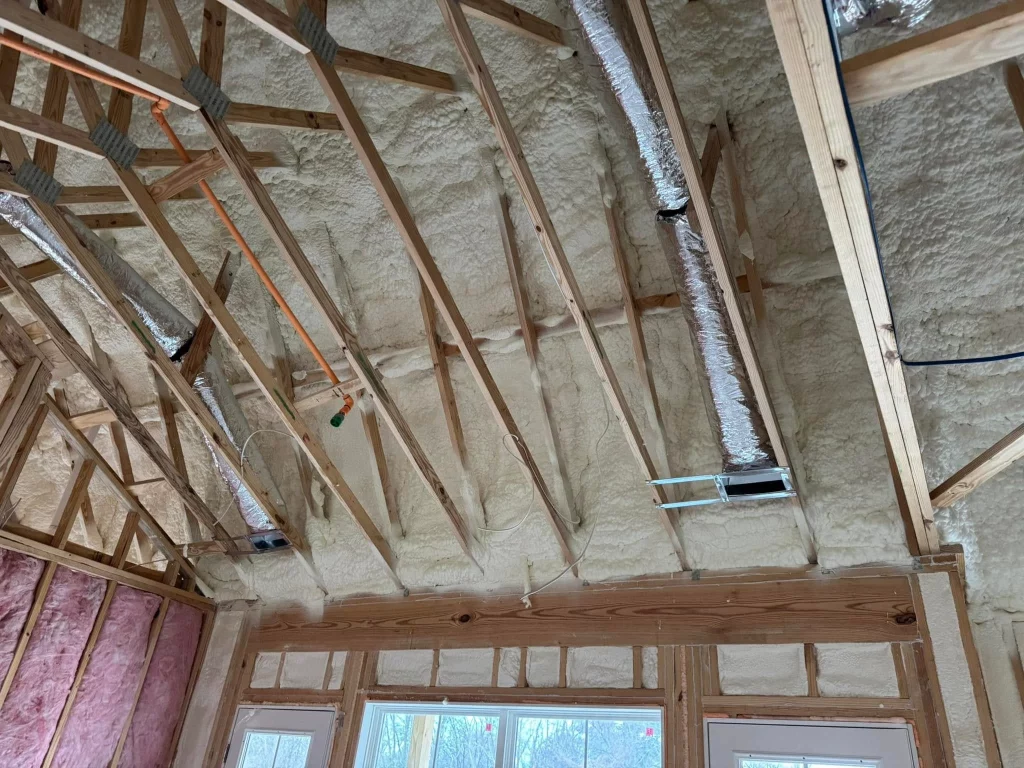
Because open-cell foam is semi-permeable, it does not function as a stand-alone vapor barrier in every application. In cold climates, warm interior moisture reaching cold exterior surfaces through the foam can condense inside the wall assembly if the assembly is not designed correctly. This risk increases when open-cell foam is applied to exterior walls without proper sheathing or a drainage plane.
The typical solution is adding a vapor retarder on the warm side of the assembly, or switching to closed-cell foam for exterior applications in colder zones. A qualified insulation contractor should evaluate your specific wall assembly and climate zone before recommending a vapor barrier strategy.
Local building codes set minimum insulation requirements, but code minimums are not always the same as optimal performance. Climate zones in the U.S. range from 1 (hot-humid) to 8 (subarctic), each with different recommended R-values.
For open cell foam specifically, meeting code minimums often means installing more thickness than closed cell alternatives would require. In Zone 5, for example, wall assemblies typically call for R-13 to R-21, which translates to roughly 3.5 to 6 inches of open cell foam. Attics in the same zone, needing R-49 to R-60, may require 14 to 17 inches.
Proper installation is what separates insulation that performs as expected from insulation that underdelivers. Professional installers begin by protecting the space with plastic sheeting over floors, windows, and any surfaces not receiving foam, and sealing off the work area to prevent overspray drift.
Spray equipment mixes the two chemical components at a precise ratio and temperature, typically between 120 and 140°F, regardless of ambient conditions. Foam is applied in passes of 1 to 2 inches at a time; thicker single passes can trap heat from the chemical reaction and compromise the foam’s structure.
Safety during installation:
Once cured, the foam is inert and safe. Curing typically continues for 24 to 48 hours after the surface becomes tack-free.
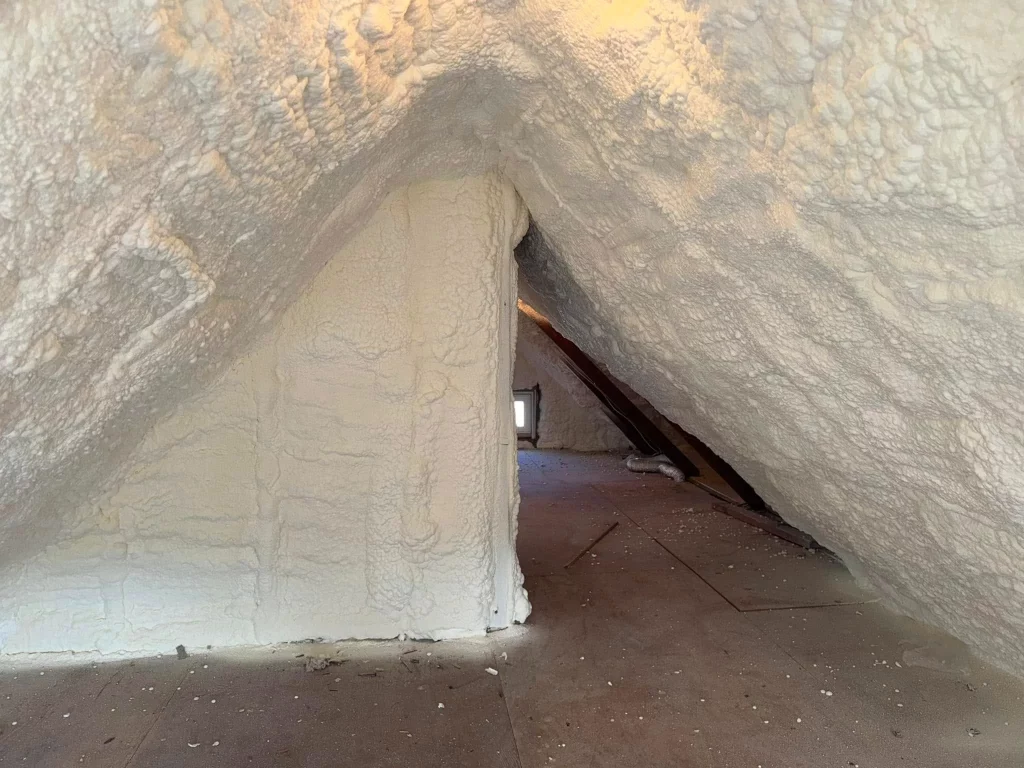
Open-cell spray foam costs more upfront than fiberglass or cellulose, but less per square foot than closed cell foam. Total project cost depends on location, project complexity, accessibility, and whether existing insulation needs removal first.
Beyond direct energy savings, the return on investment includes improved indoor air quality from reduced infiltration of outdoor pollutants and allergens, plus the comfort gains from eliminating drafts. According to the North American Insulation Manufacturers Association, proper insulation upgrades can reduce energy bills by a meaningful margin, offsetting the initial investment over time.
Expert Tip: Compare insulation options by cost per R-value, not material cost alone, for a true performance-for-cost comparison.
Moisture management is the most significant challenge with open-cell foam, given its semi-permeable nature. In cold climates, warm interior moisture reaching cold exterior surfaces through the foam can condense within the assembly if a vapor retarder is not included where needed.
Improper installation causes most other issues: incomplete cavity filling compromises the air barrier, overfilling can bow interior finishes, and application to cold, dirty, or damp surfaces leads to poor adhesion. These risks underscore why experienced, certified installers matter.
Some materials are also incompatible with cured foam. Certain plastic-sheathed wiring can be affected during application, and petroleum-based sealants can deteriorate cured foam over time, so they should be avoided when finishing around it.
When properly installed and fully cured, it is safe and inert. The chemicals used during installation require professional handling and proper ventilation, and most manufacturers recommend vacating the home for 24 to 48 hours after installation to allow off-gassing to finish.
Properly installed open cell foam should last the lifetime of the building without degrading in performance. The cured foam is chemically stable and resistant to settling or compression, and many manufacturers offer lifetime warranties when it is installed by certified applicators.
Open cell spray foam typically delivers an R-value of 3.5 to 3.8 per inch, roughly half that of closed cell foam per inch, though it still outperforms most traditional batt insulation on an air-sealing basis.
It depends on the climate zone and application. Its semi-permeable nature is often an advantage in interior applications, but exterior walls in colder climates may need an added vapor retarder. A qualified installer can assess your specific assembly.
DIY installation is not recommended. The process requires specialized equipment, precise chemical mixing, temperature control, and safety precautions that go beyond what most homeowners can safely manage, and manufacturer warranties typically require certified installation.
It is generally not recommended for below-grade applications like basement walls or exterior walls in cold climates, where its lower R-value and vapor permeability are less advantageous. Closed-cell foam is usually the better fit for those areas.
Choosing between open cell and closed cell foam, or figuring out where each belongs in your home, is easier with an expert assessment. Reach out to schedule a consultation and get a recommendation built around your home’s specific layout and climate needs.