High Energy Bills? Insulation Solutions That Work in Easton, MD
High energy bills in Easton, MD, typically stem from inadequate insulation that fails to meet Climate Zone 4 requirements. Most…


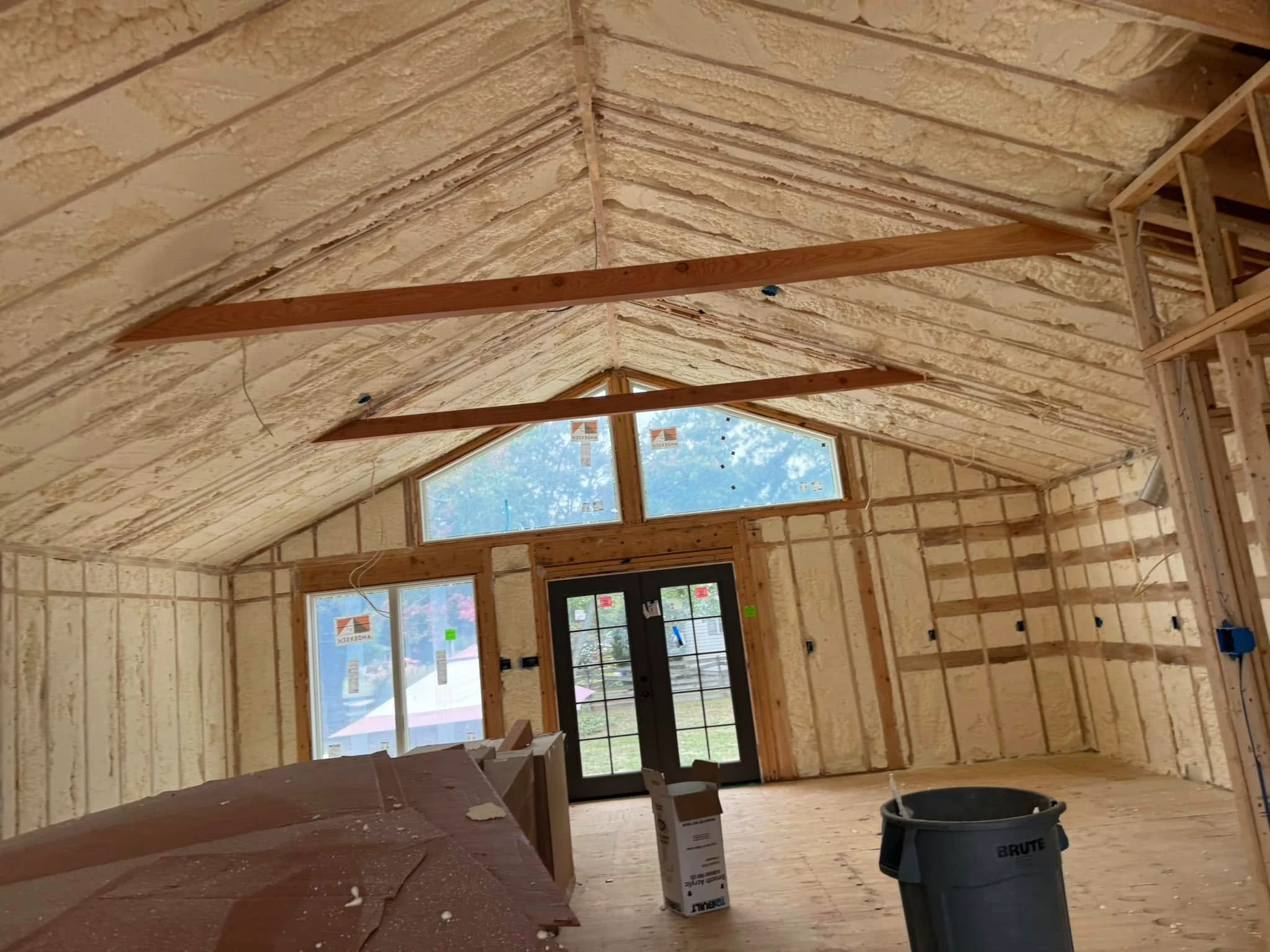
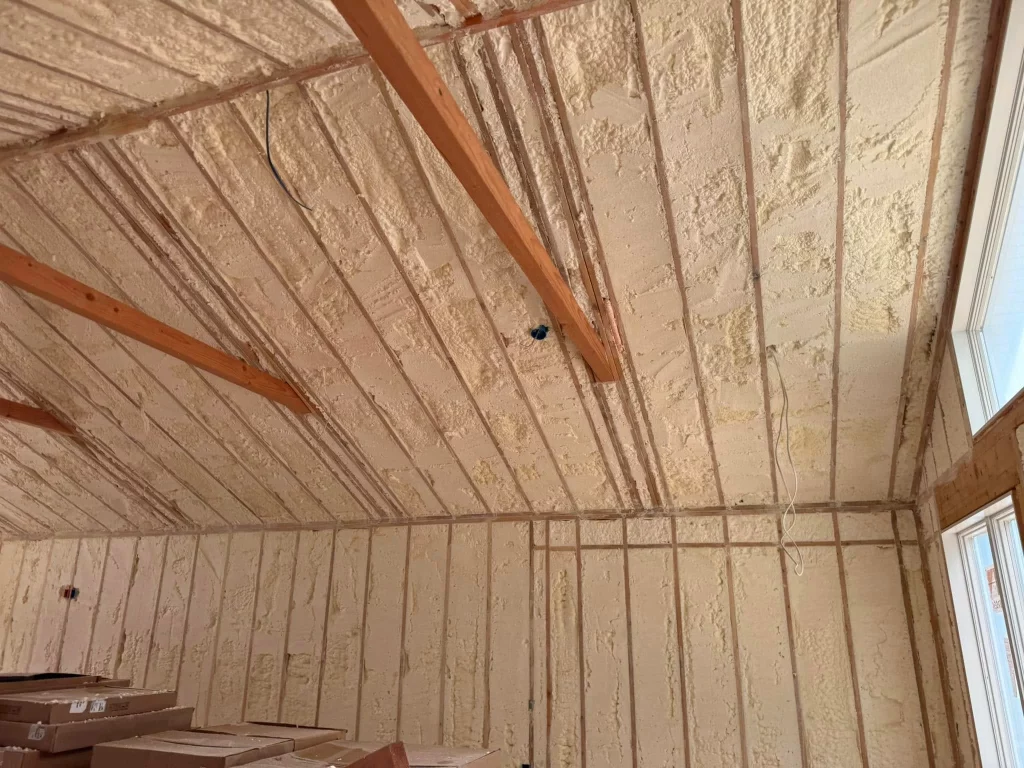
Open-cell spray foam insulation reduces voice transfer by trapping sound waves in its cellular structure, converting acoustic energy into heat through friction. The foam’s open-cell matrix contains millions of tiny air pockets that absorb sound vibrations rather than allowing them to pass through walls, ceilings, and floors. This absorption occurs because the interconnected cells create a tortuous path that dissipates sound energy, effectively muffling conversations and reducing noise transmission between rooms. The material’s density and cell structure work together to provide superior acoustic performance compared to traditional insulation options.
This article explains the technical mechanisms behind sound reduction, compares open-cell foam to other insulation materials, and provides practical guidance for homeowners considering acoustic improvements. The information comes from years of hands-on experience installing spray foam insulation in residential properties throughout the mid-Atlantic region, where understanding both thermal and acoustic properties is essential for optimal building performance.
Sound travels through buildings as vibrations that move through air and solid materials. When these vibrations hit open-cell spray foam, they encounter a matrix of tiny, interconnected cells filled with air. The sound waves enter these cells and bounce around, losing energy with each collision against the cell walls. This process, called acoustic damping, transforms sound energy into small amounts of heat through air friction within the foam structure.
The effectiveness of open-cell foam for sound control comes from its unique composition. Unlike solid materials that transmit sound efficiently, the foam’s structure creates multiple barriers that disrupt sound wave propagation. According to research from the Oak Ridge National Laboratory, materials with open-cell structures can absorb sound across a wide frequency range, making them particularly effective for reducing human speech transmission.
The foam’s sound-absorbing properties are most effective for mid- to high-frequency sounds, including most human voices. Lower frequency sounds, like bass from speakers or mechanical equipment, are more challenging to block completely and may require additional soundproofing measures depending on the specific application.
Different insulation materials handle sound transmission in distinct ways. Open-cell spray foam stands out for its acoustic properties, but understanding how it compares to other options helps in making informed decisions.
The following comparison highlights the key differences in sound reduction capabilities:
| Material | Sound Reduction Coefficient | Density | Best Applications |
|---|---|---|---|
| Open-Cell Spray Foam | 0.70-0.85 | 0.5-0.6 lbs/ft³ | Interior walls, ceilings, and between floors |
| Closed-Cell Spray Foam | 0.20-0.35 | 1.7-2.0 lbs/ft³ | Exterior walls, moisture control areas |
| Fiberglass Batts | 0.35-0.50 | 0.5-1.0 lbs/ft³ | Standard wall cavities, attics |
| Mineral Wool | 0.60-0.75 | 3.0-4.0 lbs/ft³ | Studios, home theaters |
| Cellulose | 0.45-0.60 | 2.5-3.0 lbs/ft³ | Attics, retrofit applications |
Open-cell spray foam’s sound reduction coefficient of 0.70-0.85 means it absorbs 70-85% of sound energy that contacts it, outperforming most traditional insulation materials. The key advantage lies in its ability to fill every gap and crack, eliminating air gaps that would otherwise allow sound to travel through walls.
For maximum sound reduction between rooms, combine open-cell spray foam with resilient channel systems or double drywall construction. The foam handles airborne sound while the additional techniques address structure-borne sound transmission.
Open-cell spray foam works exceptionally well in specific applications within homes. The most common areas include:
In humid climates like those found in Maryland and the Chesapeake Bay region, open-cell foam offers additional benefits beyond sound control. While it doesn’t provide the vapor barrier properties of closed-cell foam, it allows buildings to breathe and dry properly, which can be advantageous in older homes with traditional construction methods.
A report from the U.S. Environmental Protection Agency indicates that proper insulation selection can improve indoor air quality by reducing moisture accumulation and preventing mold growth. Open-cell foam’s vapor-permeable nature helps achieve this balance while still providing excellent acoustic performance.
In coastal areas like Maryland’s Eastern Shore, temperature fluctuations between seasons can cause building materials to expand and contract. Open-cell spray foam remains flexible, maintaining its seal and acoustic properties year-round, unlike some rigid insulation materials that can develop gaps over time.
Before choosing open-cell spray foam for sound reduction, several factors deserve careful evaluation:
Cost Considerations Open-cell spray foam typically costs more upfront than traditional insulation materials. However, the combined benefits of superior sound reduction, air sealing, and thermal performance often justify the investment over time. According to market data from IBISWorld, the spray foam insulation market has grown significantly as homeowners recognize these combined benefits.
Application Requirements Proper installation requires specialized equipment and trained installers. The foam expands during application, filling cavities completely but potentially causing bowing in drywall if installed too thick in wall cavities. Professional installers understand these limitations and adjust application techniques accordingly.
Building Codes and Requirements Local building codes may have specific requirements for insulation types and applications, particularly in new construction or major renovations. Check with local authorities before proceeding with any insulation project.
Moisture Concerns While open-cell foam is vapor-permeable, it should not be used in direct contact with water or in areas prone to flooding. Applications in basements or crawl spaces require careful evaluation of moisture conditions.
For retrofit projects, consider combining open-cell foam installation with replacing existing electrical outlets and switches with acoustically sealed versions. These small openings can be significant paths for sound transmission between rooms.
Open-cell spray foam insulation provides an effective solution for reducing voice transfer between rooms by absorbing sound energy in its cellular structure. The material outperforms most traditional insulation options for acoustic applications while offering additional benefits like air sealing and thermal insulation. Success depends on proper installation techniques and understanding the material’s limitations, particularly regarding low-frequency sounds and moisture-prone areas.
Evaluate your specific sound control needs, budget constraints, and existing construction before making a decision. Consider combining open-cell foam with other soundproofing techniques for maximum acoustic performance in critical areas like home offices, media rooms, or nurseries.
For homeowners in Maryland seeking professional open-cell spray foam installation, Peninsula Insulation, LLC offers experienced services for both new construction and retrofit applications. Our team specializes in acoustic insulation solutions tailored to residential properties. Contact Wil at wil@mdsprayfoam.net or call (410) 770-2624 to schedule a consultation and discuss your home’s specific sound-reduction needs.
Open-cell foam and double drywall serve different functions. Foam reduces airborne sound transmission within wall cavities, while double drywall adds mass to block sound. The best approach combines both methods for maximum sound reduction.
For sound reduction applications, 3-5 inches of open-cell foam typically provides the best balance between acoustic performance and practical installation thickness in standard wall cavities.
Open-cell foam is most effective for internal sound control between rooms. For external noise reduction, focus on exterior wall insulation with closed-cell foam and consider additional window treatments specifically designed for sound blocking.
Spray foam installation requires careful preparation. The process involves spraying a liquid material that expands and cures quickly. Professional installers use protective coverings and follow proper cleanup procedures to minimize mess.
When properly installed, open-cell spray foam insulation lasts the lifetime of the building without degradation in its acoustic or thermal performance. The material is stable and does not settle or compress over time like some traditional insulation materials.