What Materials Are Commonly Used for Crawl Space Encapsulation in 2026, and Why Do They Matter?
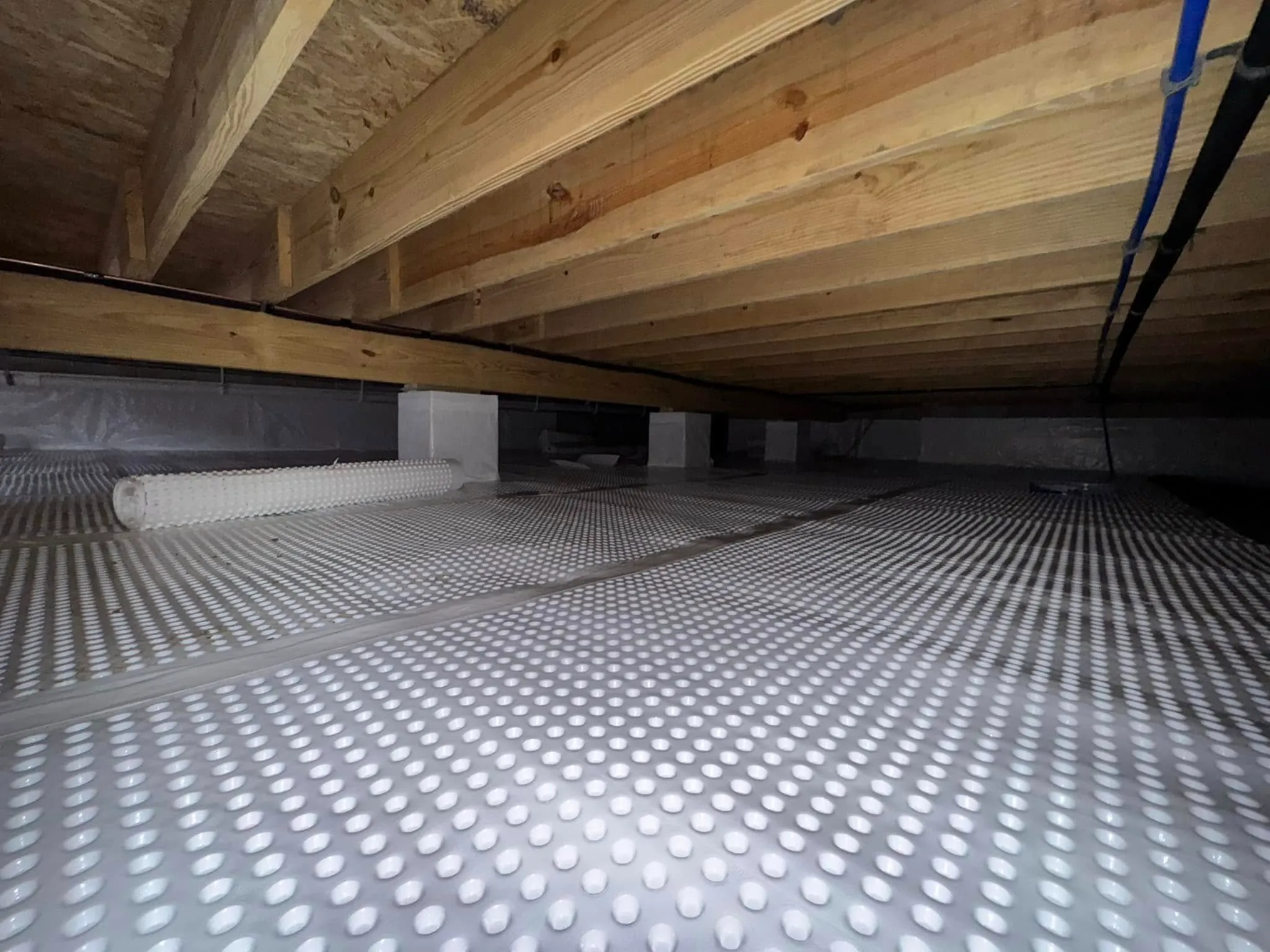
Most crawl space encapsulation material choices in 2026 fall into five groups: a polyethylene vapor barrier over the soil and…


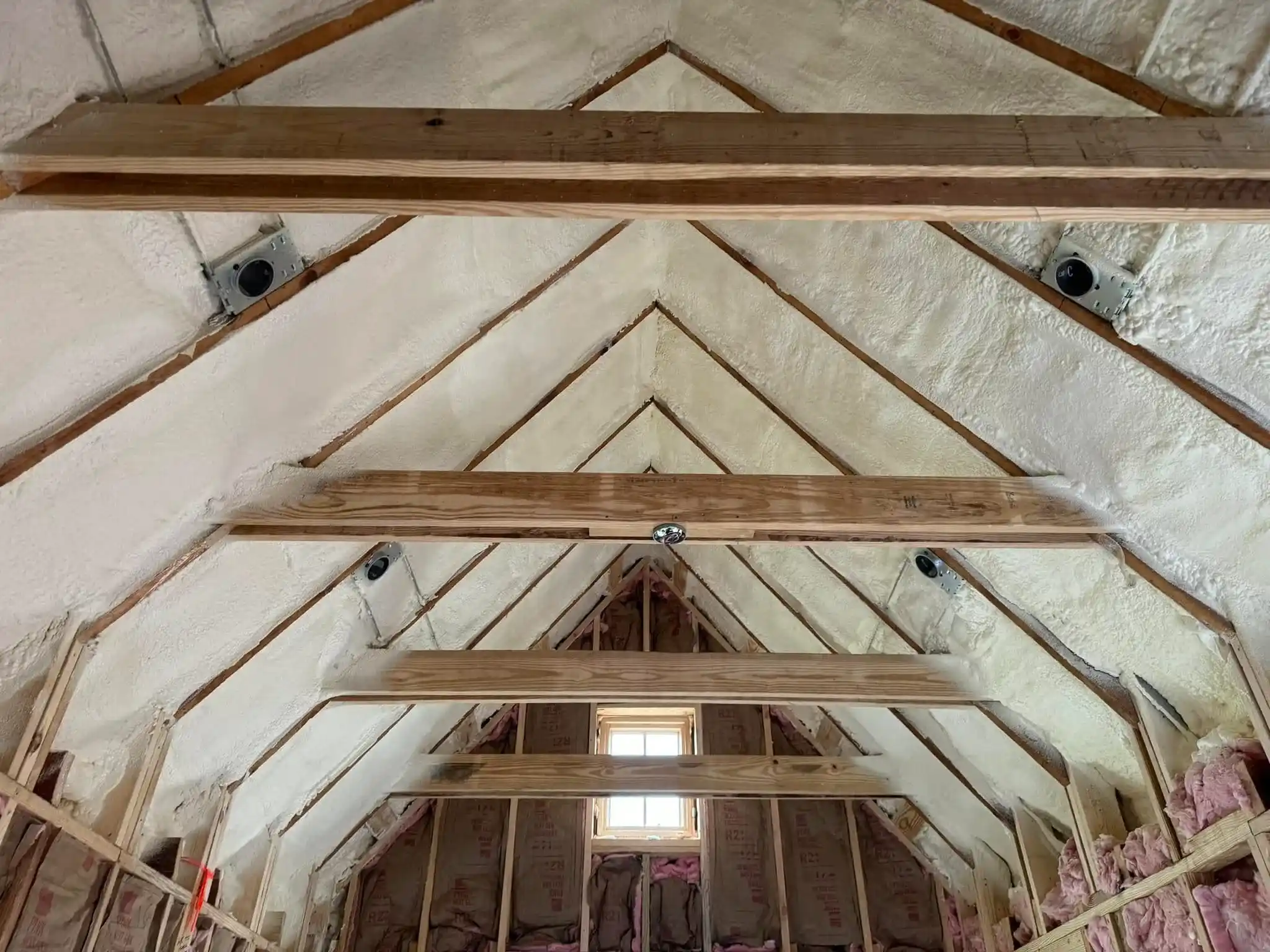
If your home feels drafty in winter, your energy bills keep climbing, and some rooms never seem comfortable, your building envelope is likely underperforming. Easton, MD, sits in Climate Zone 4A, where winter lows regularly dip into the upper 20s, and summer humidity pushes indoor cooling systems to their limit. The EPA estimates that homeowners can save an average of 15% on heating and cooling costs by air sealing their homes and adding insulation in key areas like attics, floors over crawl spaces, and basement rim joists. Spray foam insulation addresses both thermal resistance and air leakage in a single application, making it one of the most effective upgrades available for homes in Easton’s mixed-humid climate. Explore spray foam insulation solutions in Easton, MD for long-term energy efficiency and comfort.
Easton’s climate presents a demanding mix of cold, windy winters and hot, humid summers. Average winter lows hover around 28 degrees Fahrenheit, while summer highs regularly reach the upper 80s. Homes built before modern energy codes were enforced often have fiberglass batt insulation that has settled, gaps around framing members, and minimal attention to air sealing. This is especially problematic in large structures, making energy-efficient spray foam insulation in Easton, MD critical for controlling air leakage and moisture.
The primary efficiency killers in Easton-area homes fall into a few common categories:
According to EPA guidelines, a knowledgeable homeowner or skilled contractor can save up to 20% on heating and cooling costs by sealing and insulating properly. The savings potential is higher in northern and mixed climates like Easton’s, where the difference between indoor and outdoor temperatures is greatest during winter.
Understanding the differences between insulation types helps homeowners make informed decisions. Spray foam stands apart from fiberglass and cellulose in several important ways, primarily because it acts as both an insulator and an air barrier in one application.
| Insulation Type | R-Value per Inch | Air Barrier | Moisture Barrier | Best Application |
|---|---|---|---|---|
| Closed-cell spray foam | R-6.0 to R-7.0 | Yes | Yes (Class II vapor retarder) | Crawl spaces, rim joists, basement walls, flood-prone areas |
| Open-cell spray foam | R-3.6 to R-3.7 | Yes | No | Wall cavities, attics (vented assemblies), sound dampening |
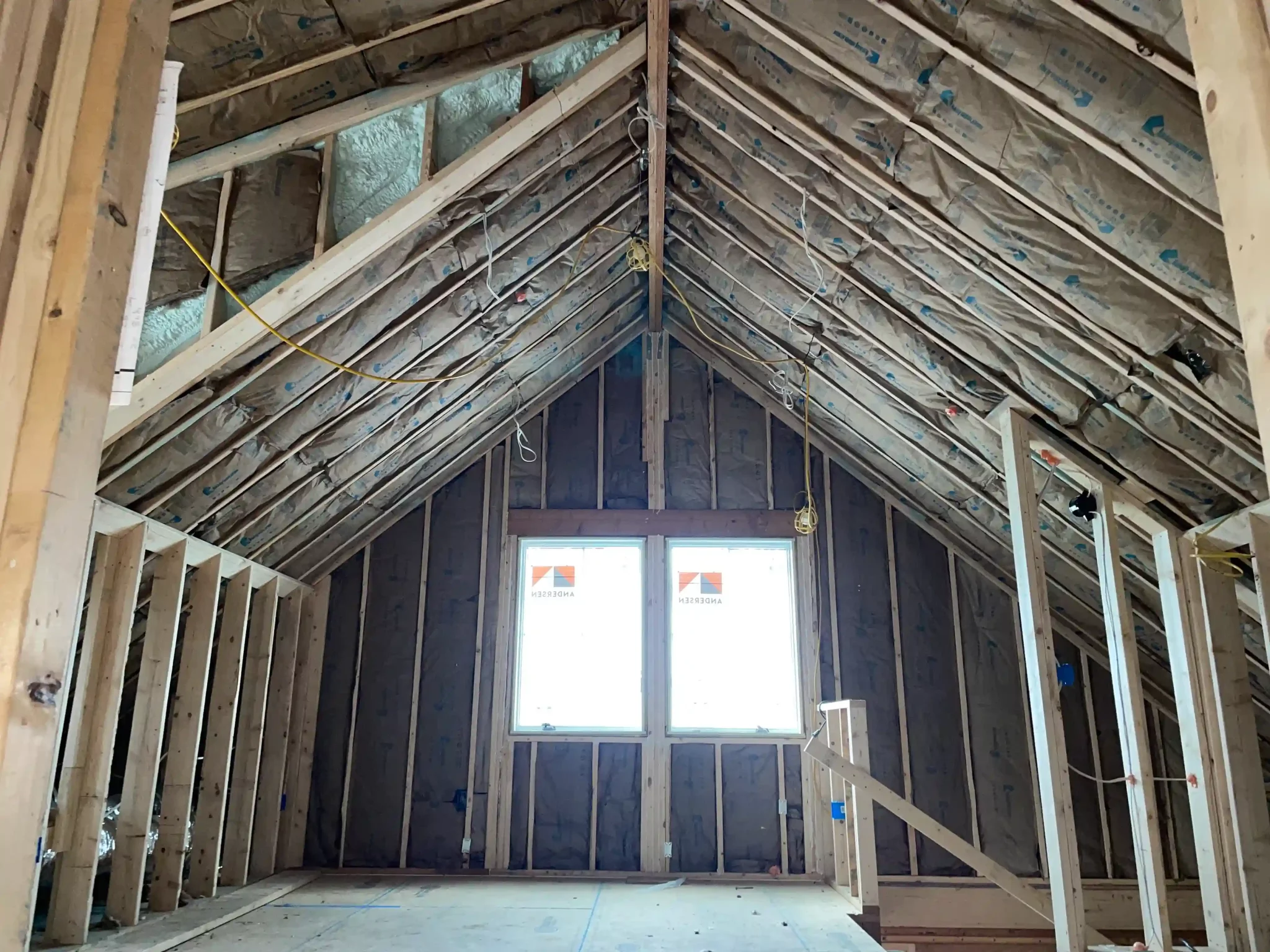
| Fiberglass batts | R-2.9 to R-3.8 | No | No | Standard wall cavities (when properly installed) |
| Blown-in cellulose | R-3.1 to R-3.8 | No | No | Attic floors, existing wall cavities (dense-pack) |
| Rigid foam board | R-3.8 to R-6.5 | No (joints must be sealed) | Varies by type | Basement exteriors, continuous insulation layers |
The key difference is that spray foam expands to fill gaps, cracks, and voids that traditional insulation cannot reach. Fiberglass batts leave spaces around framing, electrical boxes, and plumbing penetrations, which is where a significant portion of air leakage occurs. A study from Lawrence Berkeley National Laboratory found that air leakage in U.S. homes consumes roughly one-third of all HVAC energy, making the air-sealing benefit of spray foam a major contributor to overall efficiency.
The choice between closed-cell and open-cell spray foam depends on where the insulation is being installed and what problems need to be solved. In Easton’s Climate Zone 4A, both types have appropriate applications.
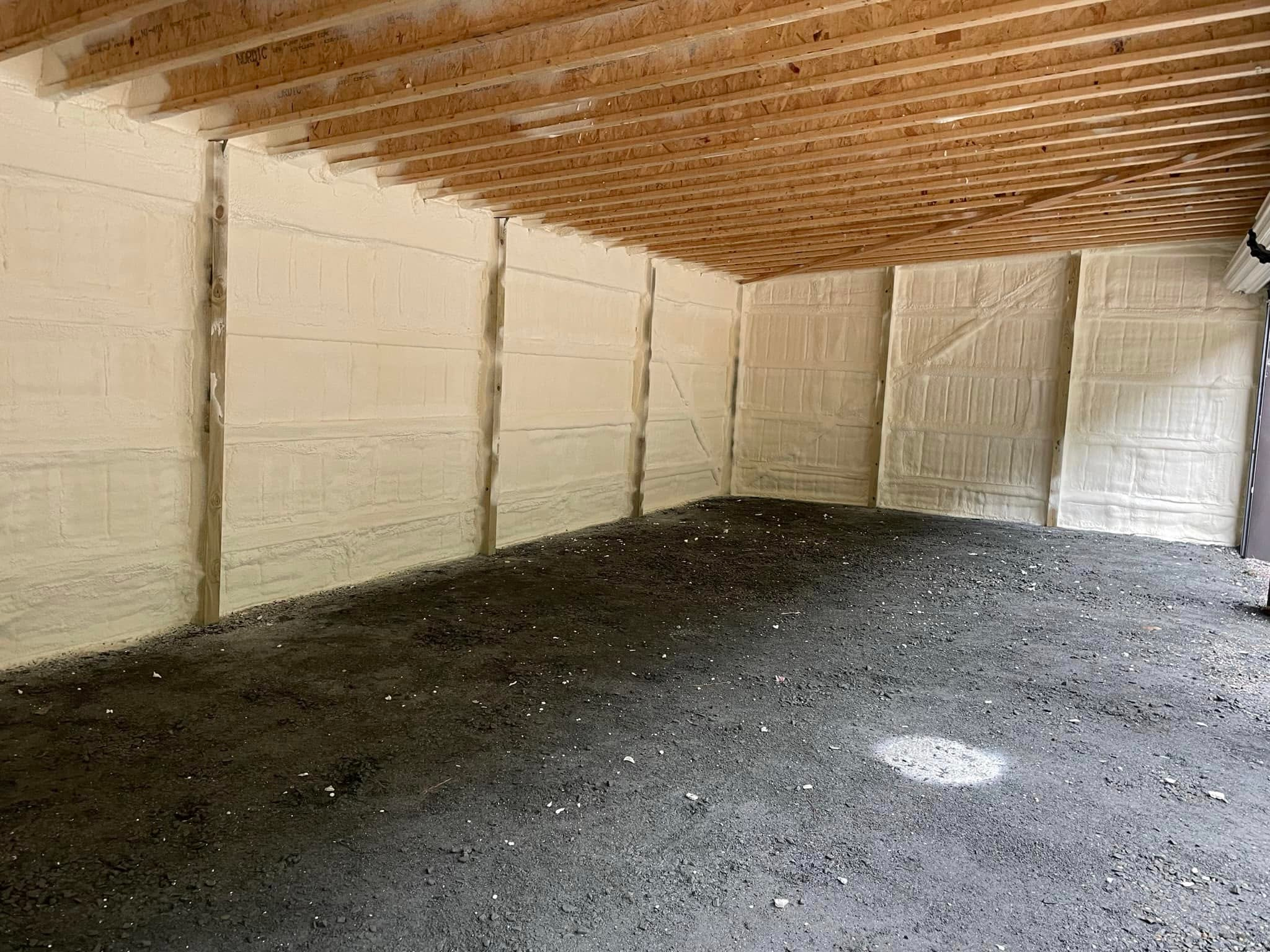
Closed-cell spray foam is the denser, higher-R option. At R-6.0 to R-7.0 per inch, it provides more thermal resistance in less space. It also acts as a vapor retarder, which matters in Easton’s humid summers when moisture drive can push water vapor through wall assemblies. Closed-cell foam adds structural rigidity to framed assemblies, a benefit documented by SPFA research showing improved racking resistance in wall assemblies. It is the preferred choice for:
Open-cell spray foam expands significantly more than closed-cell, filling wall cavities and hard-to-reach voids more completely. At R-3.7 per inch, it requires greater thickness to match closed-cell’s thermal performance, but it costs less per board foot and provides excellent sound dampening. It is well-suited for:
We have seen firsthand how spray foam insulation transforms comfort and efficiency in homes throughout the Easton area. Here are representative examples based on projects our team has completed:
| Scenario | Home Type | Problem | Solution | Outcome |
|---|---|---|---|---|
| Drafty ranch home near downtown Easton | 1970s single-story, 1,600 sq ft | Cold floors, high heating bills, noticeable drafts from crawl space | Closed-cell foam on rim joists and crawl space walls | Eliminated drafts, 18% reduction in winter heating costs |
| Two-story colonial in Talbot County | 1990s construction, 2,400 sq ft | Second-floor bedrooms hot in summer, ice dams forming in winter | Open-cell foam in attic rafters (hot roof assembly) | Resolved ice dams, even temperatures across both floors |
| Waterfront cottage near Tred Avon River | 1960s cape cod, 1,200 sq ft | Musty smell, moisture damage to floor joists, high humidity indoors | Closed-cell foam encapsulation of entire crawl space | Moisture eliminated, indoor humidity stabilized, no more musty odor |
| Renovated farmhouse outside Easton | 1940s farmhouse, 2,000 sq ft | No wall insulation, extreme temperature swings between rooms | Open-cell foam injected into existing wall cavities | Dramatically improved comfort, HVAC system runs less frequently |
| New construction infill home in Easton | Modern build, 1,800 sq ft | Builder wanted to exceed code and maximize efficiency | Closed-cell foam on basement walls and rim joists, open-cell in walls | Blower door test well below code requirements, homeowner reported immediate comfort |
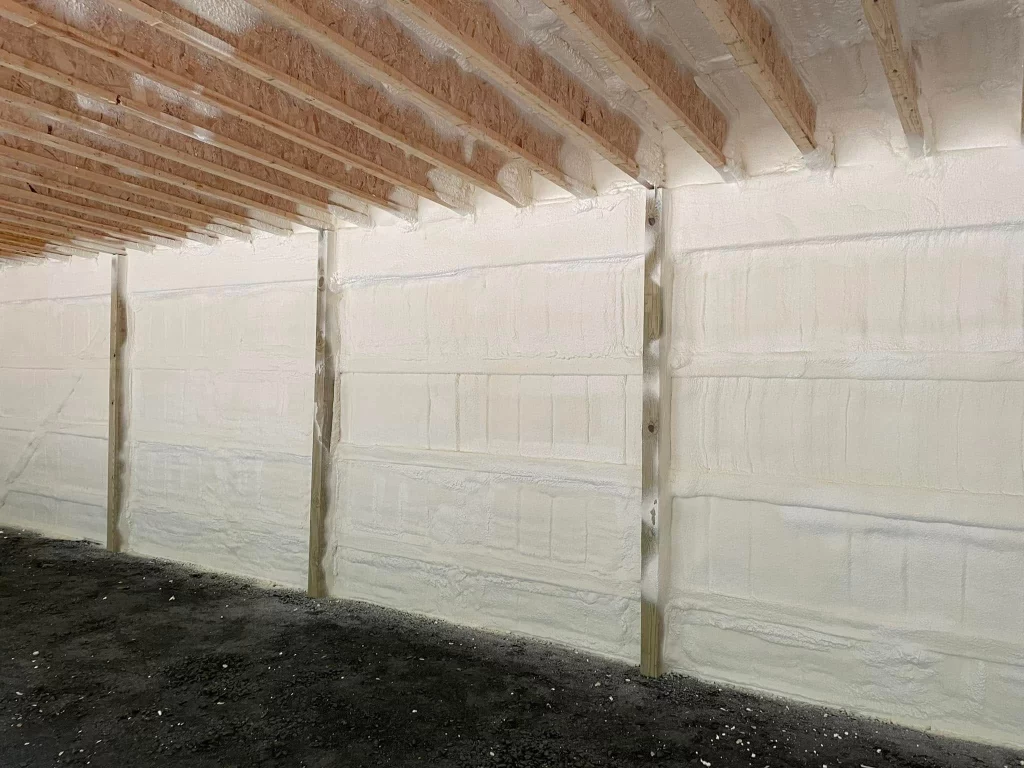
Several variables determine how well spray foam insulation performs once installed. Understanding these factors helps homeowners set realistic expectations and ensures the investment delivers lasting results.
Installation quality is the single most important variable. Spray foam must be applied at the correct temperature, thickness, and expansion rate. Substrate temperature matters significantly in Easton, where winter installations may require heated enclosures. Poor mixing, incorrect gun technique, or spraying in conditions that are too cold or too humid can result in foam that does not adhere properly or does not achieve its rated R-value. This is a key factor in spray foam insulation performance in Easton, MD.
Foam thickness directly determines the total R-value delivered. For closed-cell foam, even 1.5 to 2 inches provides a meaningful improvement in rim joists and crawl spaces. Open-cell applications typically need 5.5 to 6.5 inches to reach R-20 or better in wall assemblies.
Climate zone classification drives code requirements. Maryland’s adoption of the 2021 IECC means Easton homes must meet specific insulation levels for new construction and major renovations. Attics require R-49, above-grade walls need R-20 or equivalent cavity-plus-continuous insulation, and basement and crawl space walls require R-10 to R-15, depending on the assembly.
Building age and construction type affect both the scope of work and the approach. Older homes with balloon framing, knob-and-tube wiring, or existing moisture damage require additional assessment before foam installation. Our team evaluates each home individually to identify potential complications before any material is sprayed.
Ventilation strategy must be addressed when a home is tightened with spray foam. The SPFA recommends that mechanical ventilation be considered essential in homes with reduced air leakage, to prevent trapping of odors and pollutants and to ensure consistent air flow within conditioned spaces.
Not every spray foam installation delivers the results homeowners expect. We have encountered issues caused by improper practices that undermine performance and durability.
If you suspect your home is losing efficiency, here is a practical approach to evaluating and addressing the problem.
Spray foam insulation is a higher upfront investment compared to fiberglass or cellulose, but the long-term financial picture tells a different story. The combination of reduced energy consumption, lower HVAC wear, improved comfort, and protection against moisture damage compounds over time.
In Climate Zone 4, ENERGY STAR data shows that proper air sealing and insulation can deliver approximately 12% savings on total household energy bills and 17% on heating and cooling costs specifically. For an Easton homeowner spending $3,500 annually on heating and cooling, that translates to roughly $600 per year in savings. Over 20 years, the cumulative savings typically exceed the initial insulation investment, especially when factoring in reduced HVAC maintenance costs and avoided moisture-related repairs.
Beyond the financial return, spray foam insulation improves daily living conditions that are harder to quantify but equally important: consistent temperatures from room to room, reduced dust and allergen infiltration, quieter interiors, and protection against humidity-driven issues like mold and wood rot.
Peninsula Insulation, LLC has been helping Easton, MD, homeowners improve comfort and reduce energy waste with professional spray foam insulation. Our team evaluates every home individually, recommends the right foam type for each application, and verifies results with post-installation testing. Whether you are dealing with drafty rooms, high energy bills, or moisture concerns, we provide solutions tailored to Easton’s Climate Zone 4A conditions.
Call us at (410) 770-2624 or email wil@mdsprayfoam.net to get started. We serve homeowners throughout Talbot County and the surrounding Mid-Shore area.
Spray foam insulation is a permanent installation when applied correctly. It does not settle, sag, or degrade over time like fiberglass batts, and it maintains its R-value and air-sealing properties for the life of the building.
When installed by trained professionals using proper safety protocols, spray foam is safe for occupancy after the recommended curing and ventilation period. Our team follows all manufacturer guidelines and industry best practices to ensure safe installation.
Yes, spray foam can be retrofitted into existing homes. Common retrofit applications include rim joists, crawl spaces, attics, and wall cavities accessible through the removal of siding or exterior sheathing.
Closed-cell spray foam acts as a vapor retarder and prevents moisture-laden air from infiltrating the building envelope. Open-cell foam allows vapor to pass through but still seals air leaks. Both types help manage humidity when the right product is matched to the application.
Spray foam has a higher initial material and installation cost per square foot than fiberglass. However, when accounting for the combined air-sealing and insulation benefit, plus long-term energy savings, spray foam often delivers a stronger return on investment over the life of the home.