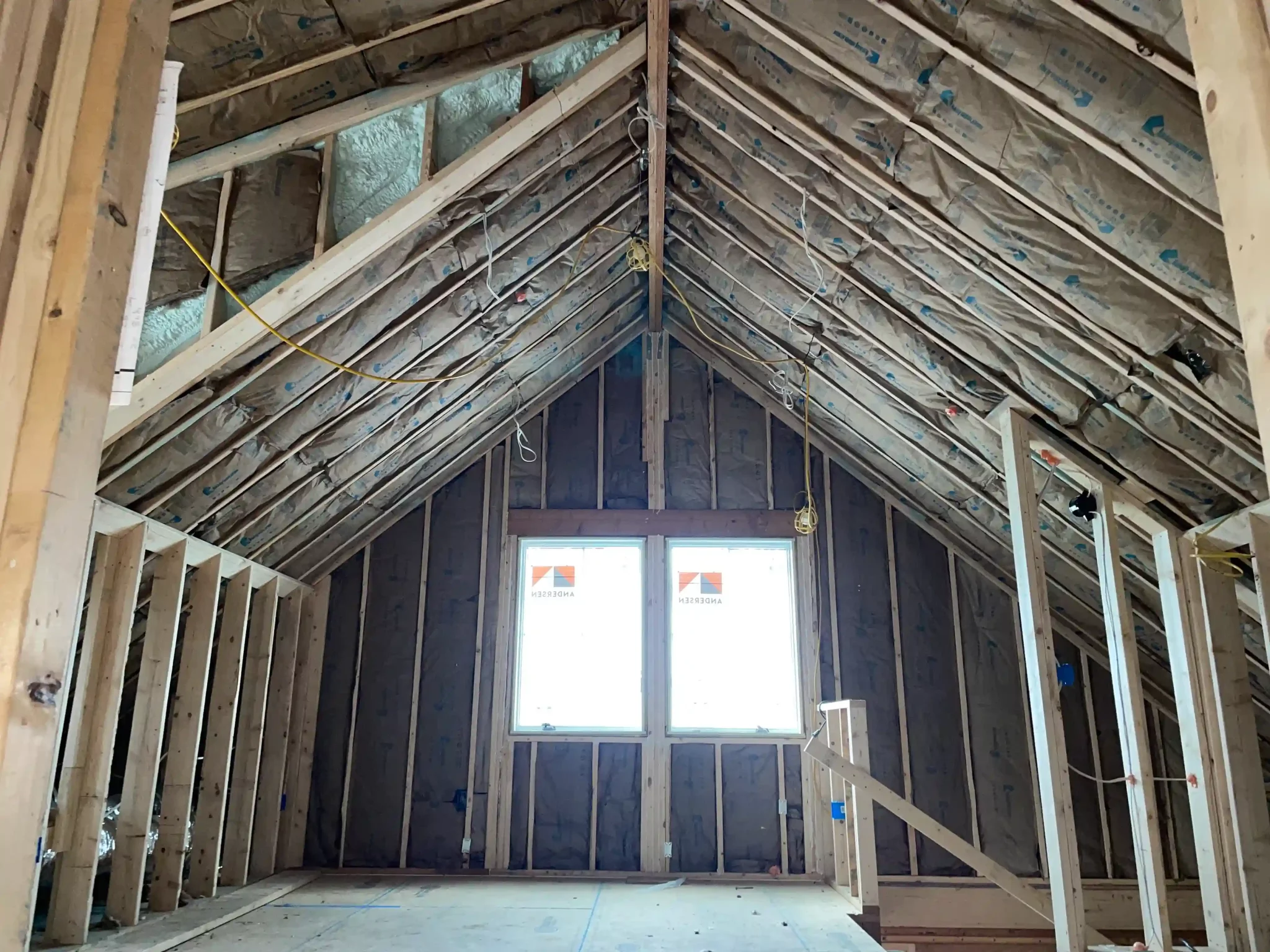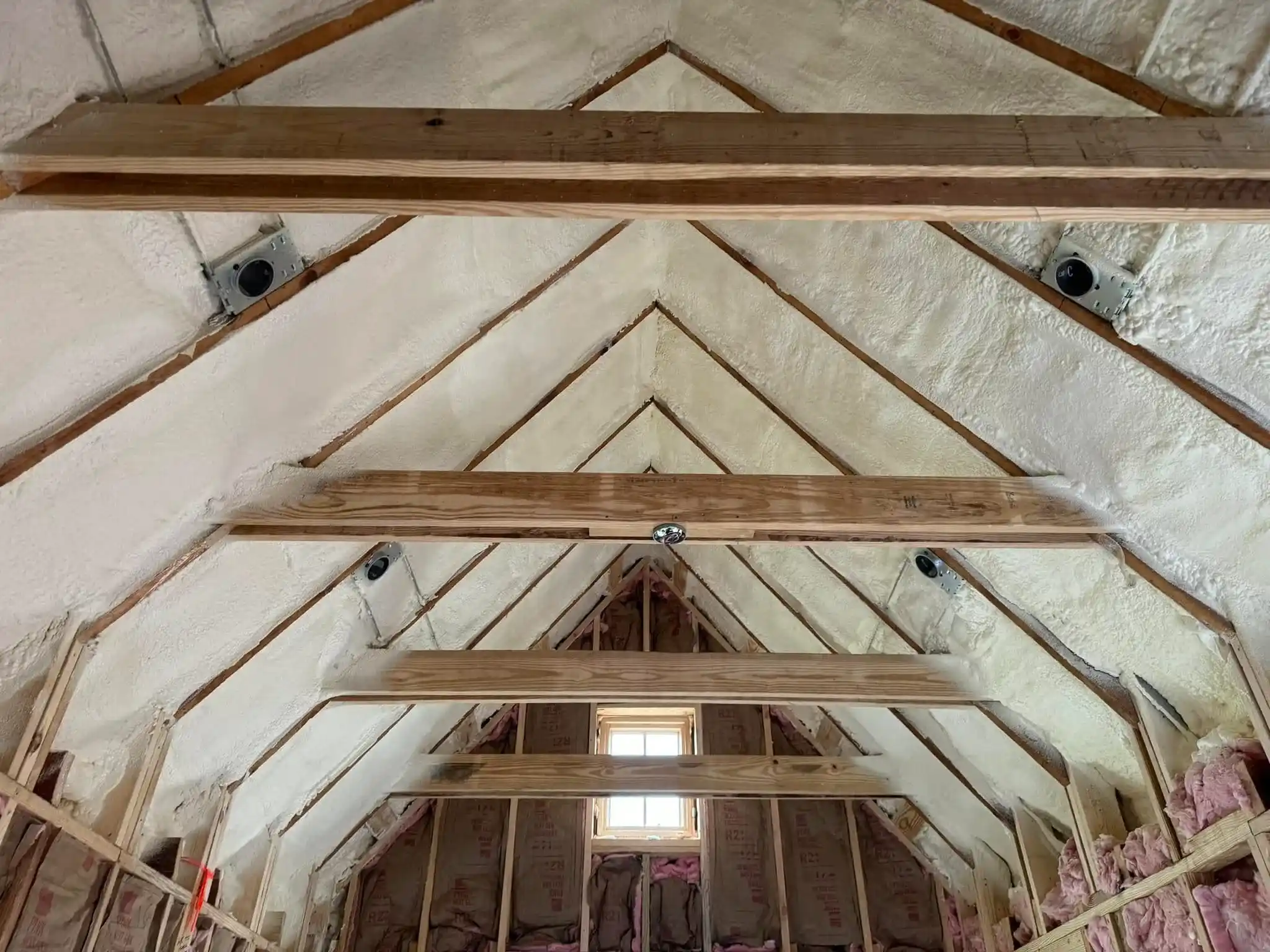
What Happens When Traditional Insulation in New Carrollton, MD Leaves Air Gaps?
When traditional insulation in New Carrollton, MD develops air gaps, it stops doing the one job it was installed to…


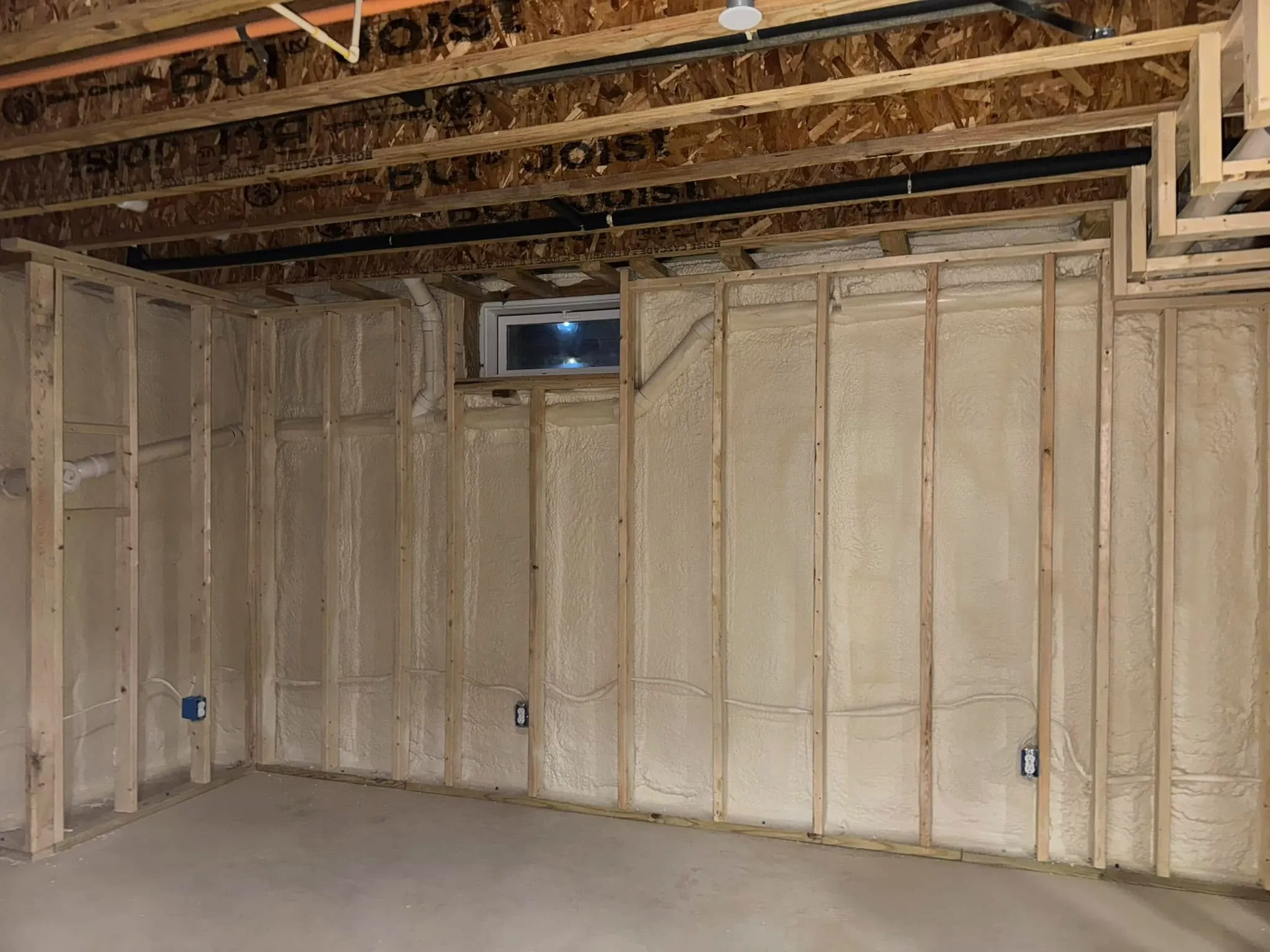
Closed-cell spray foam is significantly more durable than open-cell spray foam. The difference comes down to cell structure, moisture resistance, and structural performance. Closed-cell foam features densely packed cells filled with a gas that provide superior rigidity, water resistance, and long-term thermal performance. Open-cell foam uses air-filled cells that create a softer, spongy material with lower insulating power per inch and no inherent moisture barrier. According to the U.S. Department of Energy, closed-cell foam “provides stronger resistance against moisture and air leakage,” while open-cell foam “should not be used below ground level where it could absorb water.” For property owners focused on longevity, closed-cell spray foam outperforms open-cell in nearly every durability metric, including flood resistance, structural reinforcement, and resistance to water infiltration. Both types offer excellent air-sealing capabilities and can last the lifetime of the building when properly installed, but closed-cell delivers measurably greater resilience under extreme conditions as explained in closed-cell spray foam longevity performance.
The fundamental difference between these two spray foam types lies in their cellular structure. According to the U.S. Department of Energy Insulation Materials page, closed-cell polyurethane foam contains high-density cells that are closed and filled with a gas, while open-cell foam cells are not as dense and are filled with air, giving the insulation a spongy texture.
This structural distinction drives every performance difference between the two:
| Property | Closed-Cell Foam | Open-Cell Foam |
|---|---|---|
| Cell Structure | Dense, sealed cells filled with gas | Porous, interconnected cells filled with air |
| Density | 1.5 to 2.4 lb/ft³ | 0.4 to 0.7 lb/ft³ |
| R-Value per Inch | 5.7 to 7.0 | 3.6 to 4.5 |
| Water Absorption | 0.21% to 0.38% | Not rated (absorbs moisture) |
| Vapor Retarder | Yes (Class II) | No (vapor permeable) |
| Structural Reinforcement | Yes | Limited |
| Air Barrier | Yes | Yes |
Closed-cell foam’s sealed cell structure means it resists water penetration, holds its R-value over decades, and adds measurable strength to wall assemblies. Open-cell foam, while an excellent air barrier and sound absorber, allows moisture vapor to pass through and cannot provide the same level of physical protection.
This is where the durability gap between the two foam types becomes most apparent. According to FEMA Technical Bulletin 2 (2025), closed-cell sprayed polyurethane foam is rated as an acceptable flood damage-resistant material for both floor and wall applications. Open-cell plastic foams are listed as unacceptable in the same table.
The FEMA bulletin defines flood damage-resistant materials as those “capable of withstanding direct and prolonged contact with floodwater without sustaining significant damage.” Closed-cell foam meets this standard because its dense, sealed cells repel water rather than absorbing it. Open-cell foam’s porous structure acts like a sponge, retaining water that leads to material degradation and potential mold growth.
Even outside flood zones, moisture resistance matters. According to the ENERGY STAR Guide to Home Insulation, “wet insulation doesn’t work well,” and moisture inside wall cavities can cause mold, mildew, and structural damage. Closed-cell foam serves as its own moisture barrier, preventing water vapor from penetrating wall assemblies. Open-cell foam is vapor-permeable, which means it allows moisture to pass through and requires a separate vapor retarder in many climate zones.
Closed-cell spray foam bonds aggressively to building surfaces, creating a rigid, reinforced layer inside wall cavities and roof decks. The Spray Polyurethane Foam Alliance notes that “closed-cell spray foam strengthens wall assemblies by adhering directly to the surfaces within the cavity, creating a rigid, bonded layer.” Walls containing closed-cell spray foam “maintain their shape and integrity under stress more effectively than conventional wall assemblies.”
In hurricane-prone regions, this structural reinforcement provides real, measurable protection. When applied to the underside of a roof deck, closed-cell foam effectively glues the entire roof structure together, resisting wind uplift forces that can tear roofs apart during severe storms. Open-cell foam provides some adhesive benefit but lacks the rigidity needed for significant structural reinforcement, which is why it is often recommended in a closed-cell spray foam prone areas guide for high-wind coastal environments.
The Spray Polyurethane Foam Alliance also notes that spray foam roofing systems “can provide a service life of more than 30 years,” thanks to their seamless, monolithic application that bonds tightly to the roof surface.
Both foam types provide stable thermal performance over time, but through different mechanisms. According to the U.S. Department of Energy, closed-cell polyurethane foam experiences a phenomenon called “thermal drift” in the first two years after manufacture, where some low-conductivity gas escapes and is replaced by air, slightly reducing the R-value. After this initial period, the R-value remains stable for the life of the product.
Open-cell foam uses air as its blowing agent, so its R-value does not change over time. However, open-cell starts at a significantly lower R-value per inch (3.6 vs. 5.7+), meaning it requires nearly twice the thickness to achieve the same thermal resistance. For projects where cavity depth is limited, closed-cell delivers more insulation in less space.
| Performance Factor | Closed-Cell | Open-Cell |
|---|---|---|
| Initial R-Value | 5.7 to 7.0 per inch | 3.6 to 4.5 per inch |
| R-Value Stability | Slight drift in the first 2 years, then stable | Stable from installation |
| Moisture Impact on R-Value | Minimal (resists water absorption) | Significant when exposed to moisture |
| Service Life | 75 years (life of building) | 75 years (life of building) |
| Scenario | Property Type | Recommended Option | Why |
|---|---|---|---|
| Coastal home in a flood zone | Beachfront residence | Closed-cell | FEMA-rated flood-resistant; resists storm-driven water |
| Interior partition walls | Office building | Open-cell | Sound absorption; no moisture exposure; cost-effective |
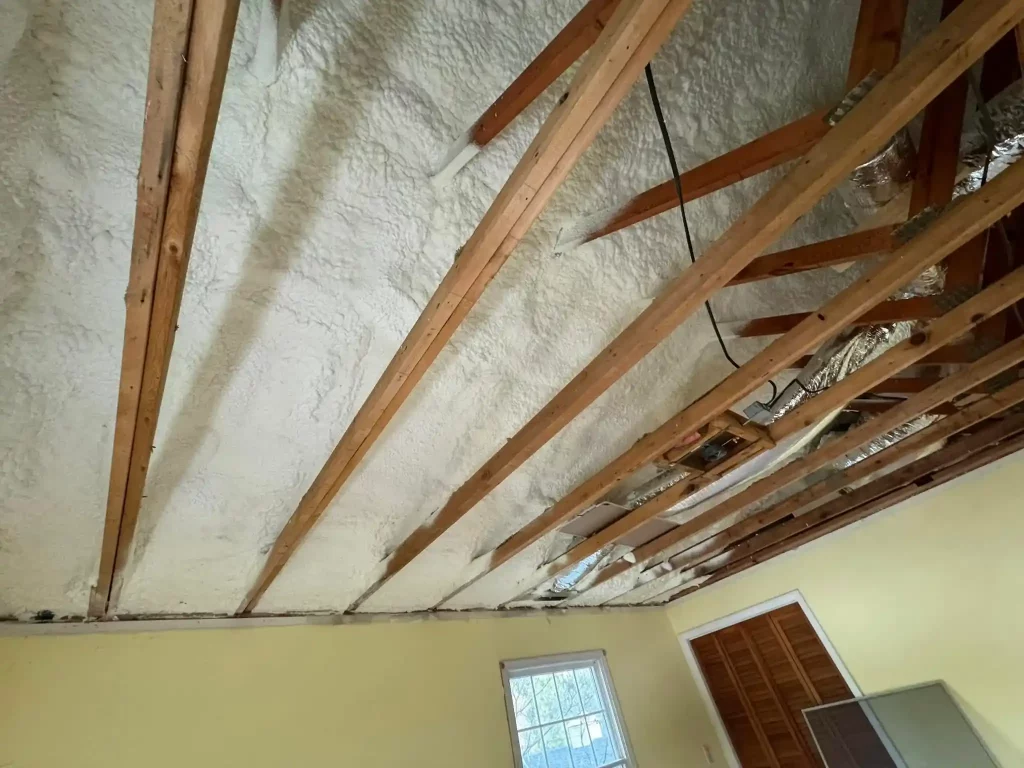
| Basement or crawlspace | Residential home | Closed-cell | Water resistance is required below grade |
| Unvented attic in a humid climate | Suburban home | Closed-cell | Acts as an air barrier, vapor retarder, and moisture barrier |
| New construction wall cavities | Custom home | Closed-cell (limited depth) or open-cell (full fill) | Depends on the budget and cavity depth |
Several variables determine which spray foam type will deliver the best long-term results for a specific project:
Closed-cell spray foam is the right choice when:
Open-cell spray foam is the right choice when:
Choosing between closed-cell and open-cell spray foam is a decision that affects your building’s energy performance, moisture management, and structural resilience for decades. Our team at Peninsula Insulation, LLC has the experience and technical knowledge to evaluate your specific project and recommend the right foam system for lasting results. We specialize in spray foam insulation tailored to the unique demands of properties in our region, and we stand behind every installation with proven expertise.
Request a Quote | Schedule an On-Site Assessment
Reach us at (410) 770-2624 or email wil@mdsprayfoam.net to discuss your project. The right insulation choice today protects your property for decades to come.
Both types have a reference service life of 75 years when properly installed. However, closed-cell foam resists moisture, flooding, and physical degradation better, meaning it maintains its performance more reliably in challenging conditions over that lifespan.
No. The U.S. Department of Energy specifically states that open-cell foam “should not be used below ground level where it could absorb water.” Closed-cell foam is the correct choice for below-grade applications.
Yes. Closed-cell foam bonds directly to framing and sheathing inside wall cavities, creating a rigid layer that increases racking strength and helps walls maintain shape under wind and impact loads.
Closed-cell spray foam is strongly recommended for hurricane zones. FEMA rates it as flood damage resistant, and its adhesive bond to roof decks helps resist wind uplift during severe storms.
Yes. Many projects use closed-cell foam in areas requiring moisture resistance and structural reinforcement (roofs, basements, exterior walls) and open-cell foam for interior partitions and sound control.