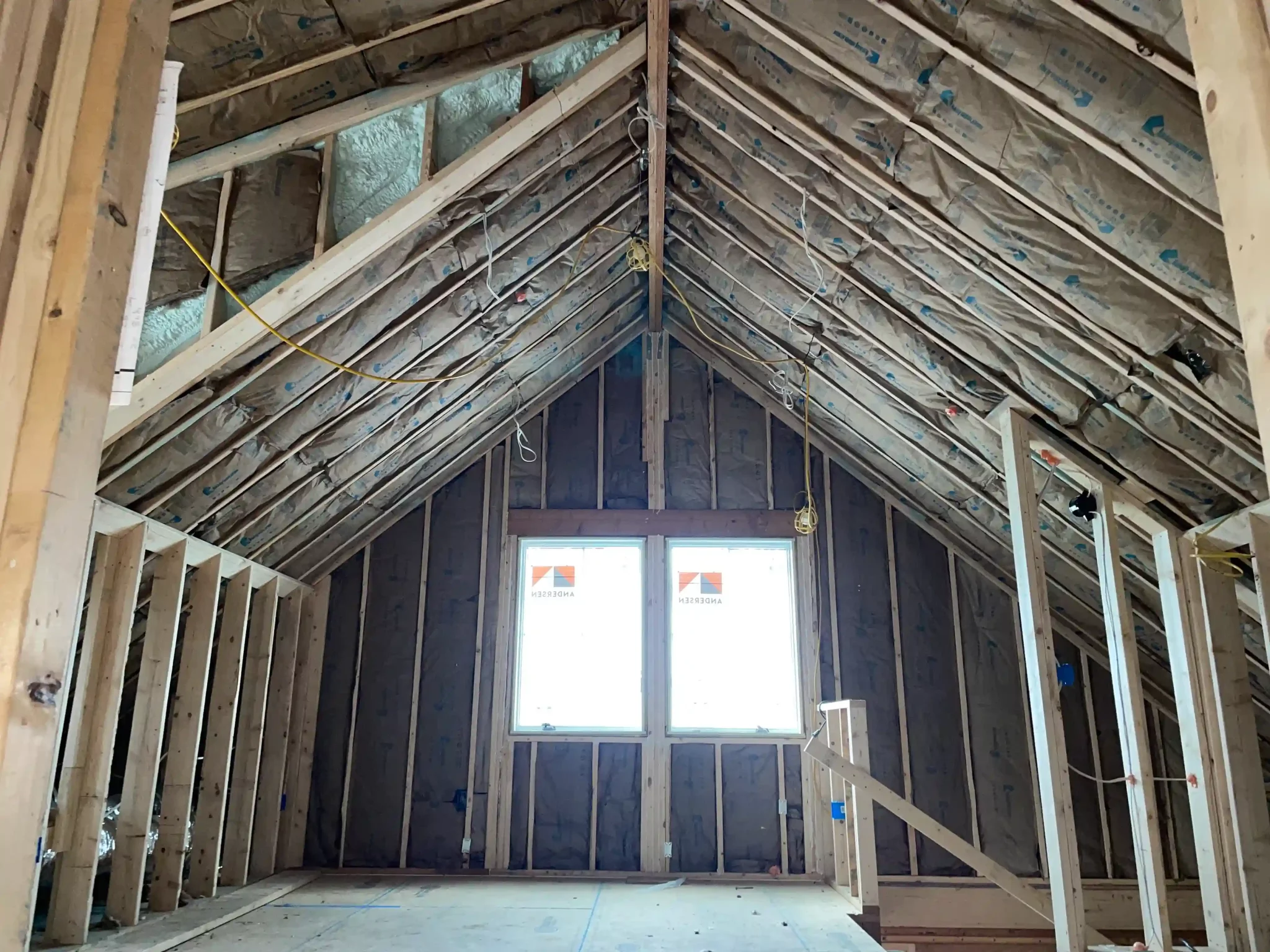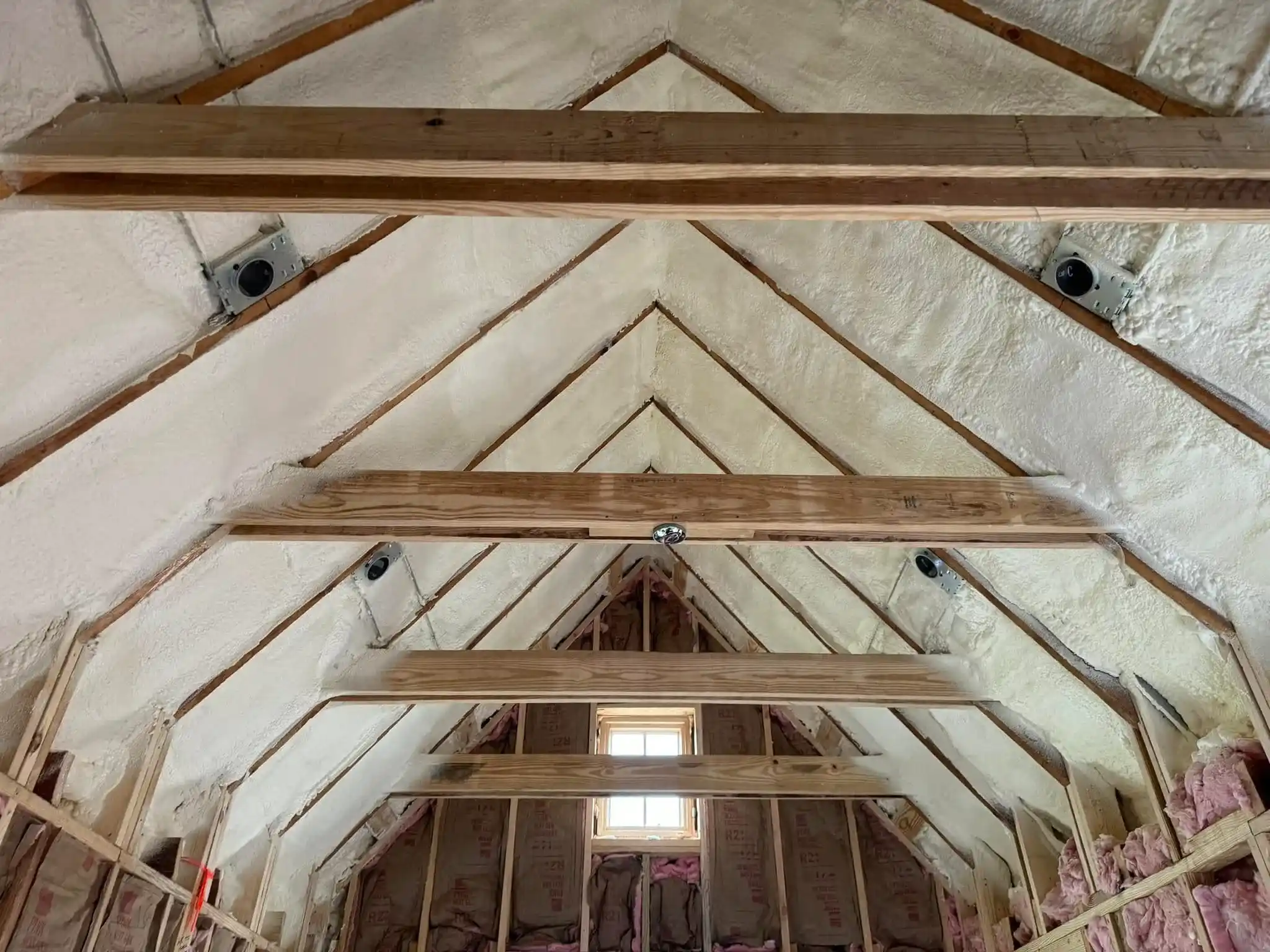
What Happens When Traditional Insulation in New Carrollton, MD Leaves Air Gaps?
When traditional insulation in New Carrollton, MD develops air gaps, it stops doing the one job it was installed to…


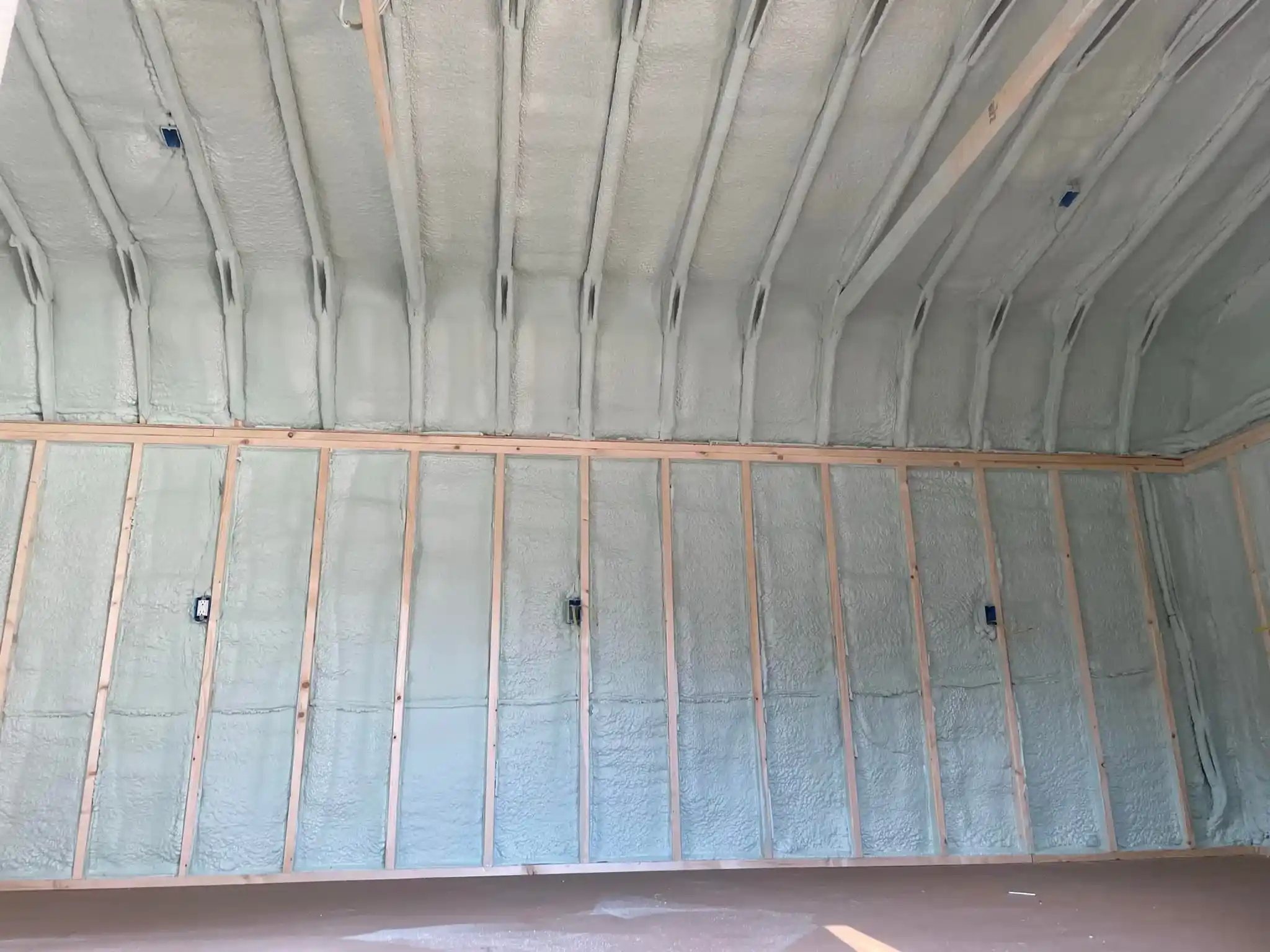
Choosing the right insulation for a building in a flood-prone area is a decision that affects structural durability, repair costs after a flood event, energy efficiency, and long-term code compliance. Closed-cell spray foam insulation stands out as the only spray-applied insulation that meets FEMA’s highest flood-resistance rating (Class 5), making it uniquely suited for homes and commercial buildings in Special Flood Hazard Areas. The right choice depends on factors like your flood zone designation, foundation type, whether you are building new or retrofitting, and local building code requirements. This guide walks through the decision criteria, compares closed-cell foam against other insulation types, and provides a clear framework for choosing the best approach for your property through closed-cell spray foam longevity insights.
Your property’s flood zone, as shown on FEMA’s Flood Insurance Rate Maps (FIRMs), determines the rules that govern what materials you can use below the Base Flood Elevation (BFE). Buildings in Special Flood Hazard Areas (Zones A, AE, AO, AH, V, and VE) face the strictest material requirements. According to FEMA’s Technical Bulletin 2, any building component located below the BFE must use flood-damage-resistant materials rated Class 4 or Class 5.
This is not a suggestion. It is a regulatory requirement under the National Flood Insurance Program (NFIP), enforced through local floodplain management ordinances. Using non-compliant materials below the BFE can result in code violations, insurance complications, and significantly higher repair costs after even a minor flood event.
The distinction between closed-cell and open-cell spray foam is not subtle when water exposure is part of the equation.
| Property | Closed Cell Spray Foam | Open Cell Spray Foam |
|---|---|---|
| FEMA Flood Classification | Class 5 (Acceptable) | Unacceptable |
| Water Absorption | Minimal; cells are sealed | Absorbs water like a sponge |
| Vapor Permeance | Less than 1.0 perm at 1.5″ (Class II vapor retarder) | Highly permeable |
| R-Value Per Inch | ~6.0 to 7.0 | ~3.5 to 3.7 |
| Structural Enhancement | Adds rigidity to walls and roofs | No structural contribution |
| Post-Flood Cleanup | Clean exposed surfaces; material retains integrity | Full removal and replacement required |
| Recommended for Flood Zones | Yes | No |
FEMA explicitly lists “closed-cell foam insulation” as an acceptable wall and ceiling material for flood-resistant construction, alongside materials like concrete block, brick, and metal. Open-cell foam, cellulose, and fiberglass all fall into the unacceptable category, as confirmed by FEMA’s flood-resistant materials guidance.
Not every part of a building benefits equally from closed-cell spray foam. Here are the applications where it delivers the most value in flood-prone construction.
According to the Building America Solution Center, vented crawl spaces in flood zones should use closed-cell high-density spray polyurethane foam (ccSPF) to insulate the floor system above the crawl space. The spray foam provides a continuous thermal, vapor, and air barrier when connected to the exterior wall control layers. A fiber cement protection board screwed underneath the floor joists keeps pests out and can be removed for cleaning if floodwaters reach the framing.
Closed-cell spray foam can be applied directly to the interior of concrete foundation walls and under basement floor slabs. Building Science Corporation’s Residential Spray Foam Guide confirms that only high-density closed-cell spray foam should be used under basement floor slabs, and only over a granular capillary break. Open-cell foam should never be used in this application.
The perimeter connection between the foundation and the floor system is one of the most vulnerable areas for air and moisture infiltration. Closed-cell spray foam air-seals and insulates rim joists and sill plates in a single step, creating a continuous barrier that also resists flood damage, which is why a spray foam durability comparison is often used for selection.
For walls below the Base Flood Elevation, closed-cell spray foam provides both the insulation value and the flood resistance required by NFIP regulations. It can be used as cavity insulation in wood-frame walls or applied as a continuous layer on foundation walls.
Use this decision table to determine the right approach based on your specific situation.
| Scenario | Recommended Approach | Key Considerations |
|---|---|---|
| New construction in Zone A/AE | Closed cell SPF in walls, crawl space floor, and rim joists below BFE | Coordinate flood vent placement; use a vented crawl space design |
| Retrofit in a flood-prone area | Remove all non-flood-resistant materials below BFE first; then apply closed-cell SPF | Must remove old fiberglass or cellulose before installing foam |
| Coastal Zone V/VE | Elevate structure on pilings; use closed-cell SPF in floor system above BFE | Crawl spaces and basements are not permitted for new construction |
| Basement in a flood zone | Closed cell SPF on interior walls; under slab over granular capillary break | Non-vented conditioned crawl spaces are not recommended in flood areas |
| Above BFE in any zone | Closed cell or open cell SPF based on climate zone needs | Flood resistance less critical above BFE; prioritize thermal performance |
Even with the right material, installation errors can negate the benefits of closed-cell spray foam in flood-prone areas.
Installing flood-resistant materials over non-resistant substrates. The Reduce Flood Risk resource emphasizes that flood-resistant materials may be ineffective when installed over materials that are not flood-resistant. All existing fiberglass, cellulose, or damaged drywall below the BFE must be removed before closed-cell foam is applied.
Using conditioned crawl spaces in flood zones. Building science guidance is clear: non-vented, conditioned crawl spaces should not be used in flood-prone areas. Vented crawl spaces with flood vents and closed-cell foam in the floor assembly are the recommended approach. This ensures floodwaters can enter and exit the crawl space without creating hydrostatic pressure differences that can damage the foundation.
Ignoring flood vent requirements. For vented crawl spaces, the total area of all openings must equal at least 1 square inch per square foot of crawl space area. Standard air vents with screens that clog with debris during floods do not count. Use dedicated flood vents that open passively during a flood event.
Neglecting fastener and connector compatibility. Even if the insulation itself is flood-resistant, using non-corrosive fasteners, connectors, and adhesives is essential. Stainless or galvanized steel hardware should be used throughout the assembly below BFE.
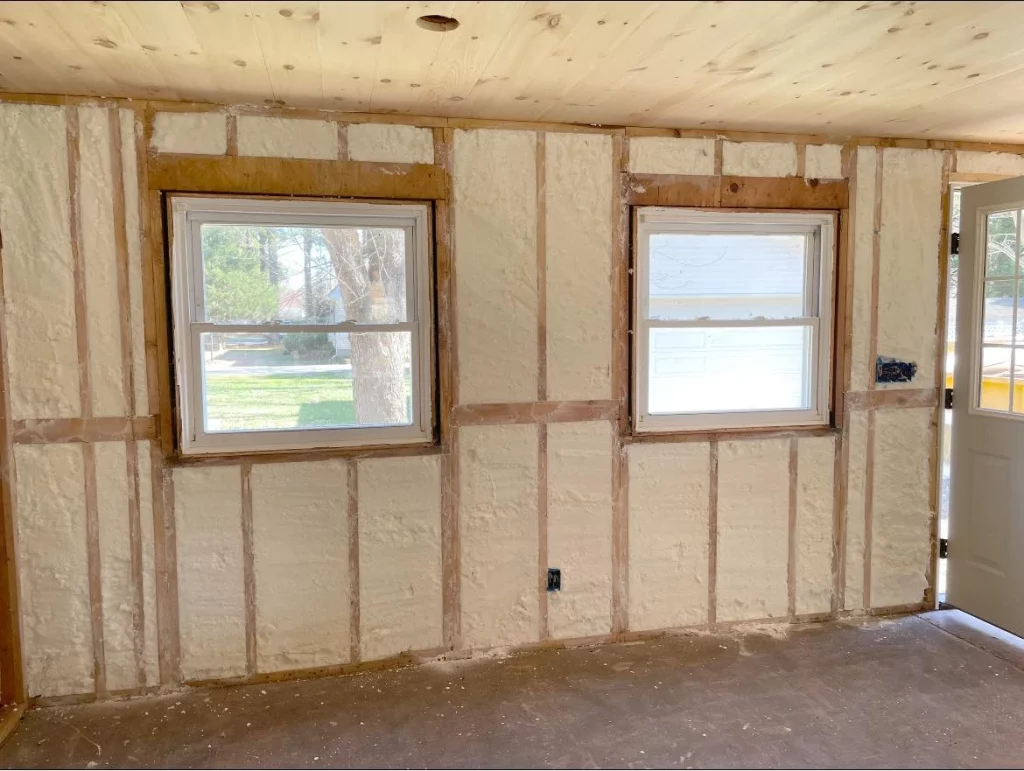
Coastal residential properties should prioritize elevating the structure and using closed-cell spray foam in the floor assembly above BFE. In Zone V and Coastal Zone A, crawl spaces are not permitted for new construction, so the floor insulation approach is the primary application.
Inland flood-prone homes with existing crawl spaces benefit most from retrofitting with closed-cell spray foam in the floor system, combined with proper flood vents and removal of all non-resistant materials below the BFE.
Commercial buildings in flood zones can use closed-cell spray foam on interior foundation walls and below-grade assemblies to meet NFIP floodproofing requirements for non-residential structures, as outlined in FEMA’s Technical Bulletin 3 on non-residential floodproofing.
Peninsula Insulation, LLC specializes in closed-cell spray foam installations designed to meet FEMA flood-resistance requirements and local building codes in flood-prone areas. Our team evaluates your property’s flood zone designation, foundation type, and specific vulnerabilities before recommending an insulation strategy. Contact us at (410) 770-2624 or email wil@mdsprayfoam.net to schedule your consultation.
Request a Quote | Schedule a Flood Zone Assessment
Do not wait for the next flood to find out your insulation was the wrong choice. Let our team help you protect your property with materials engineered to perform when it matters most.
Closed-cell foam has a sealed cell structure that repels water rather than absorbing it. FEMA classifies it as a Class 5 material, meaning it can withstand at least 72 hours of direct floodwater contact without significant damage, requiring only surface cleaning after a flood event.
No. FEMA classifies open-cell spray foam as unacceptable for flood-prone areas because its open-cell structure absorbs water and cannot survive the wetting and drying cycles associated with floods. It must be fully replaced after flood exposure.
No. If your building has a crawl space or enclosed area below the BFE, flood vents are still required by NFIP regulations to equalize hydrostatic pressure during a flood. Closed-cell foam protects the insulation and building materials, but does not replace structural flood venting requirements.
There is no minimum thickness specifically for flood resistance; even a thin layer provides the Class 5 rating. However, for vapor control and thermal performance, building codes typically require at least 1.5 inches to achieve a Class II vapor retarder rating in colder climate zones.
Both applications work well, but new construction allows for better integration with flood vents, elevated floor systems, and other flood-resistant design features. Retrofits are effective as long as all existing non-flood-resistant materials below the BFE are removed first.