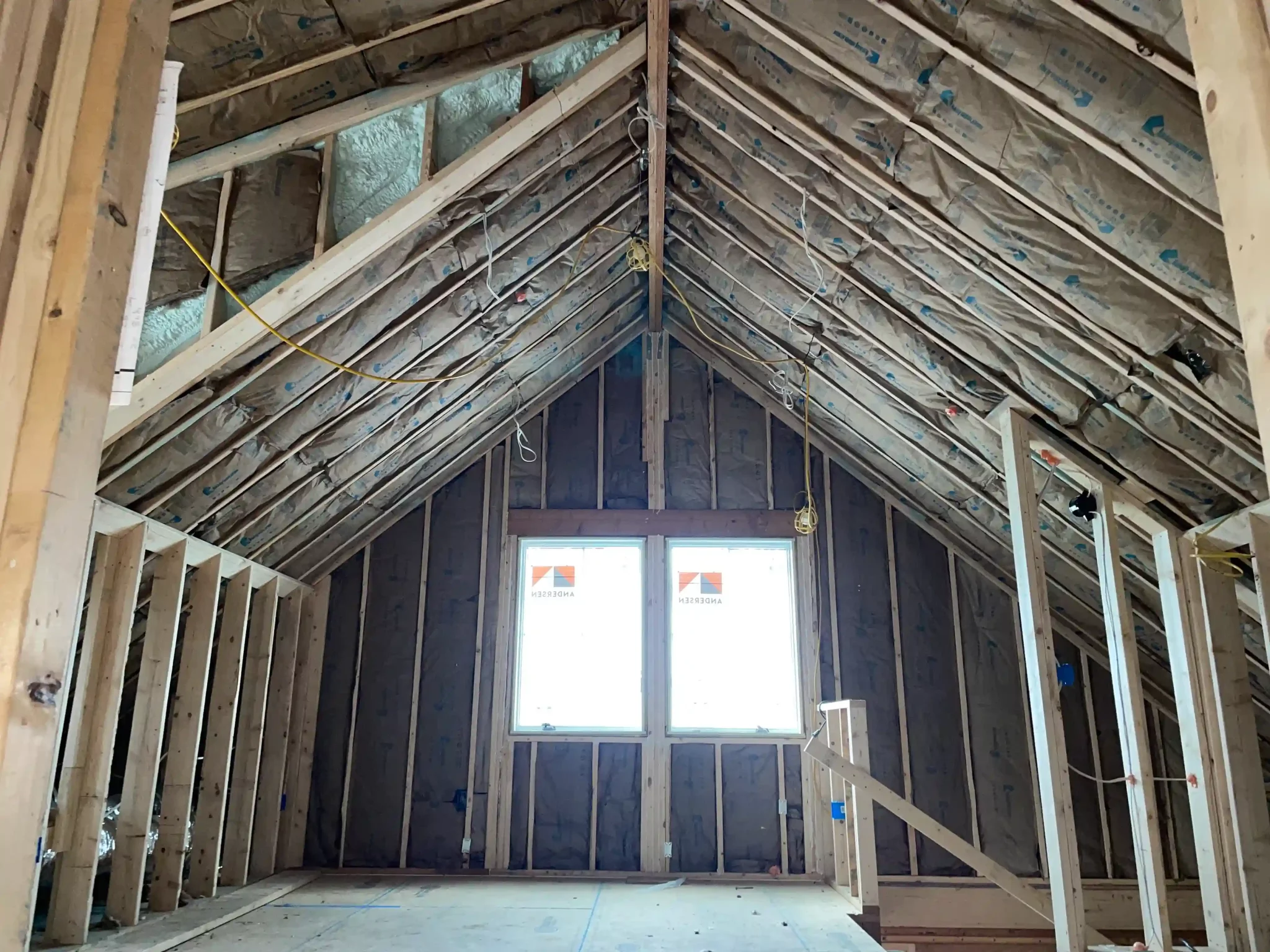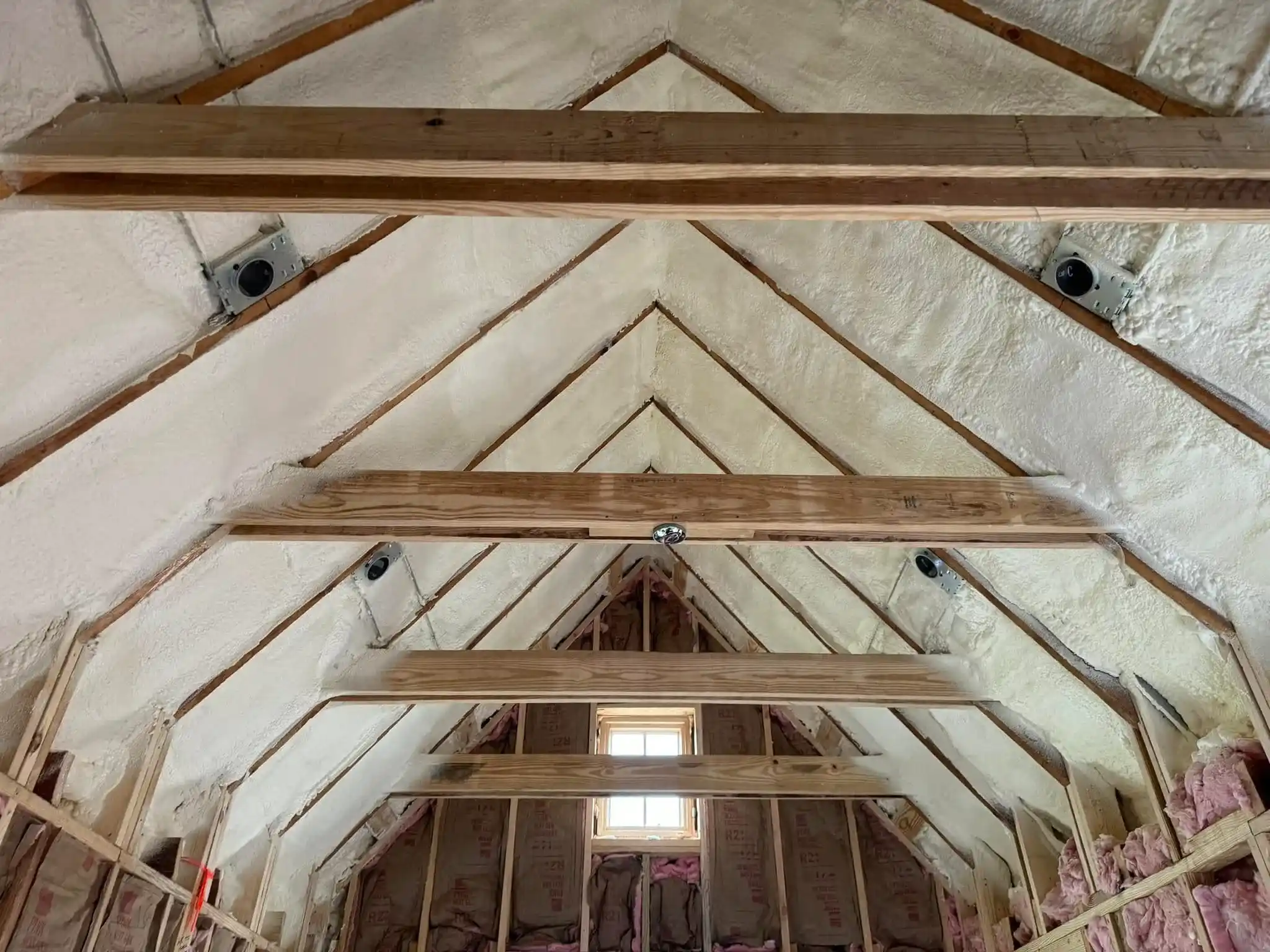
What Happens When Traditional Insulation in New Carrollton, MD Leaves Air Gaps?
When traditional insulation in New Carrollton, MD develops air gaps, it stops doing the one job it was installed to…


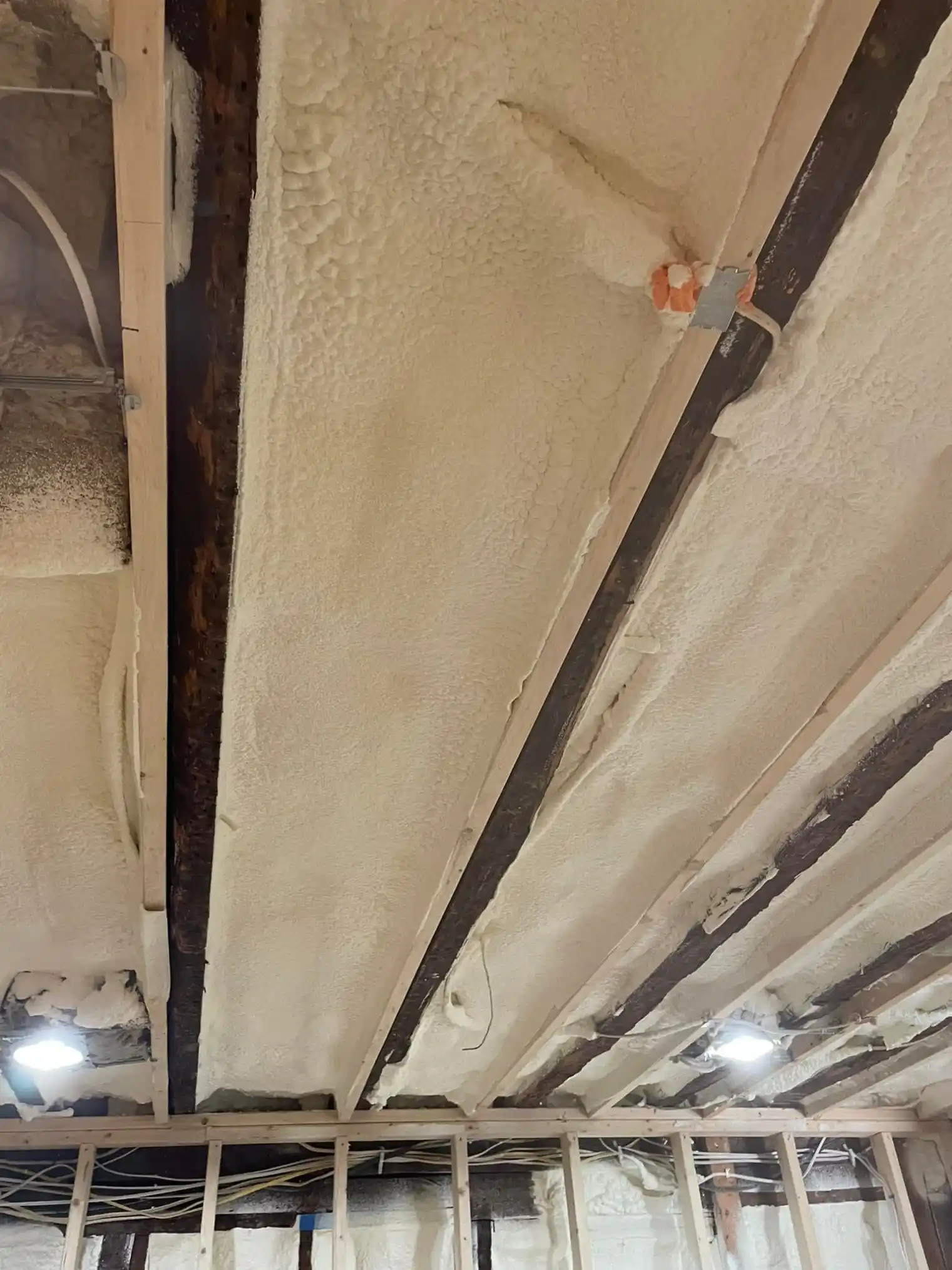
Spray foam insulation is one of the most effective ways to seal and insulate homes in Pasadena, MD, where hot, humid summers and cold winters create real challenges for building envelopes. When installed correctly, spray polyurethane foam (SPF) delivers superior R-values, air sealing, and moisture control in a single application. But when something goes wrong during installation, the results can range from reduced energy efficiency to serious structural damage. The five most common spray foam insulation failures we see in Pasadena homes are off-ratio chemical mixing, poor adhesion and delamination, shrinkage and cracking, moisture trapping and condensation problems, and incomplete coverage with voids. Each failure has distinct root causes and specific repair methods, and catching them early makes all the difference, as explained in the ultimate spray foam insulation guide.
Spray foam insulation is created by mixing two chemical components: the A-side (isocyanate) and the B-side (polyol resin with catalysts, blowing agents, and fire retardants). These components must be mixed at a precise 1:1 ratio by volume, within a 2% tolerance, to produce foam with correct physical properties. When this ratio is off, the resulting foam fails to perform as intended.
According to the Journal of Light Construction, A-rich foams tend to be hard, friable, and brittle, while B-rich foams tend to be soft, gummy, and produce strong odors that linger well beyond the normal curing period. Off-ratio foam can occur when liquid components have been improperly stored outside the manufacturer’s recommended temperature range (typically 60 degrees F to 80 degrees F), when components are contaminated or expired, or when transfer pumps fail.
Localized off-ratio foam must be cut out at a 45-degree angle back to where the foam exhibits good adhesion and physical properties. The substrate should be cleaned and, if necessary, re-primed before respraying the area. When the entire installation is off-ratio, a full removal and replacement is the only reliable fix, especially when planning a spray foam upgrade in Easton, MD.
Adhesion failure occurs when spray foam separates from the substrate it was applied to, whether that substrate is wood framing, concrete, metal, or sheathing. The Construction Specifier explains that ccSPF can undergo post-installation dimensional changes that generate tensile and shear stresses on bonding surfaces. When the bond is weak, these stresses cause the foam to pull away.
Common causes include dirty or contaminated substrates, surfaces coated with rust inhibitors or form release agents, excessive moisture in framing lumber, and spraying when substrate temperatures fall below 55 degrees F. In Pasadena, where summer humidity regularly pushes framing moisture content above safe levels, this failure mode is especially relevant.
For localized delamination, remove the affected foam, clean and dry the substrate thoroughly, verify moisture content is below 18% for wood framing using a moisture meter, and respray the area. For substrates known to have poor adhesion characteristics (smooth metals, certain air barrier membranes), OSHA guidelines and industry best practices recommend adding mechanical attachment, such as metal lath furred off the substrate,e to provide a physical bond surface that restrains the foam against shrinkage forces.
All closed-cell spray foam shrinks slightly as it cools and cures, approximately 10% according to manufacturer testing cited by the Construction Specifier. This shrinkage becomes a failure when it produces cracks that breach the air barrier, allowing conditioned air to move through the building envelope. Cracks and separations are particularly problematic where the foam serves as the primary air barrier, because even minor gaps allow rapid air movement that dramatically reduces energy efficiency, which is a key consideration when working with a spray foam insulation contractor in Pasadena, MD.
The primary causes of excessive shrinkage and cracking include installing closed-cell foam in lifts thicker than 1.5 inches (which traps excessive exothermic heat), spraying when ambient temperature is within 5 degrees F of the dew point, failing to allow adequate cooling time between lifts, and inadequate substrate bond that cannot resist shrinkage forces.
| Factor | Proper Range | Risk When Exceeded |
|---|---|---|
| Lift thickness (closed-cell) | Under 1.5 inches | Excessive heat, cracking, and shrinkage |
| Time between lifts | 10 to 15 minutes | Trapped exothermic heat |
| Ambient vs. dew point spread | Greater than 5 degrees F | Poor cell structure, weak foam |
| Substrate temperature | Above 55 degrees F | Shellac-like surface layer, poor adhesion |
| Wood moisture content | Below 18% | Poor bond, foam separates as wood dries |
Small shrinkage cracks can be repaired by cutting back the affected foam at a 45-degree angle to where it exhibits good properties, cleaning the substrate, and respraying. For large areas of shrinkage, the foam must be removed and replaced using proper lift thickness and cooling intervals. On smooth substrates, installing furred metal or fiberglass lath before respraying provides mechanical restraint that distributes shrinkage strain evenly and prevents recurrence.
Pasadena sits in Climate Zone 4A, a mixed-humid climate where both heating and cooling seasons create condensation risks. When spray foam is applied over wet substrates or installed without a proper vapor retarder strategy for the climate zone, moisture can become trapped within wall or ceiling assemblies. According to the U.S. Department of Energy, closed-cell foam acts as a Class II vapor retarder at 2 inches or more thickness, while open-cell foam qualifies as a Class III vapor retarder. Using the wrong type of foam or omitting a required vapor retarder in Pasadena’s climate can lead to hidden condensation that rots framing and grows mold.
The DOE also notes that 40% of a home’s energy is lost through air infiltration. When spray foam fails to seal properly, moisture-laden air travels through breaches in the air barrier to colder regions where condensation occurs, causing progressive moisture accumulation and material deterioration.
The moisture source must be identified and corrected before any repair. This may involve fixing leaks, improving drainage, or adjusting the HVAC system. Once the moisture source is addressed, wet or mold-damaged materials must be removed. The foam should be evaluated to determine whether the correct type was used for the application. In Pasadena’s climate zone, closed-cell foam is generally preferred for below-grade and exterior wall applications because it serves as both an air and vapor barrier, while open-cell foam may require an additional vapor retarder on the warm-in-winter side of the assembly. After corrections, the area can be resprayed with the appropriate foam type and thickness.
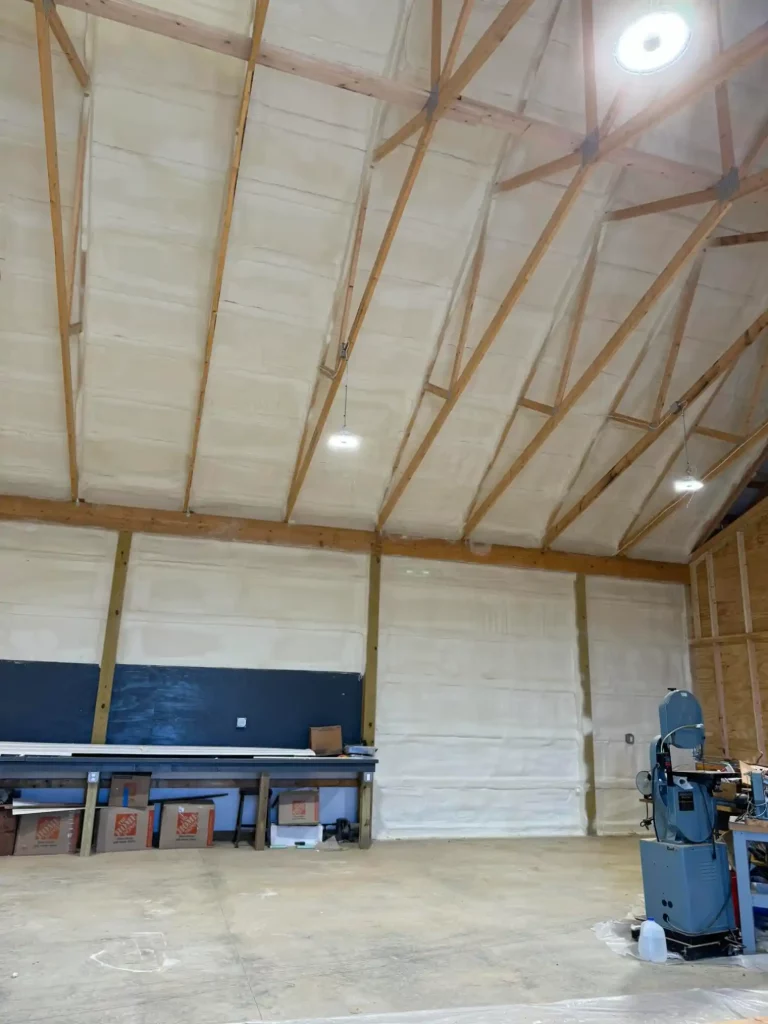
Gaps, thin spots, and voids in spray foam insulation reduce both thermal resistance and air barrier continuity. According to Wikipedia’s entry on spray foam, SPF expands 30 to 60 times its liquid volume and fills cracks, crevices, and voids to form an air-sealing insulation. But when applicators rush the job, use incorrect spray technique, or fail to picture-frame cavities before filling, the result is incomplete coverage that undermines the entire insulation system.
Common causes include spraying too fast, using an incorrectly sized mixing chamber or nozzle, failing to spray behind studs and in hard-to-reach areas, and not overlapping passes by at least 60%.
Small voids and thin areas can be filled by cleaning the existing foam surface and applying additional material to meet the specified thickness. For widespread coverage failures, a full inspection with depth measurements at a minimum of 15 locations will determine whether spot repairs are sufficient or whether a complete respray is necessary. Our team always documents foam depths systematically to verify that every area meets specifications before the work is covered up.
| Failure Type | Typical Extent | Can it be spot-repaired? | Repair Approach |
|---|---|---|---|
| Off-ratio mixing | Localized to widespread | Depends on the extent | Cut out bad foam, clean, and respray |
| Poor adhesion/delamination | Localized | Yes, usually | Remove failed foam, prep substrate, respray |
| Shrinkage and cracking | Localized | Yes, usually | Cut back at 45 degrees, respray with proper lifts |
| Moisture trapping | Area-based | Sometimes | Fix the moisture source first, then remove and replace |
| Incomplete coverage/voids | Localized | Yes | Fill thin spots, verify thickness with depth measurements |
New construction projects should require pre-installation meetings covering substrate preparation, moisture testing, and environmental monitoring. Our crew checks ambient temperature, dew point, substrate temperature, and framing moisture content before every spray application in the Pasadena area.
Retrofit and renovation projects carry a higher risk because existing conditions are harder to control. We recommend a thorough moisture assessment of existing framing and sheathing before any spray foam is applied. The humid coastal climate near the Chesapeake Bay means framing lumber often has elevated moisture content that must be addressed before installation.
Homeowners evaluating existing spray foam should look for the warning signs described above: hollow sounds when tapping, persistent odors, cold spots on walls, and musty smells. When in doubt, a professional inspection with test cuts and adhesion testing can determine whether the foam is performing as intended.
When spray foam insulation fails, the consequences go beyond higher energy bills. Trapped moisture can rot framing, mold can compromise indoor air quality, and air barrier breaches can undermine your entire building envelope. Our team at Peninsula Insulation, LLC has the training, equipment, and field experience to diagnose spray foam failures accurately and repair them correctly the first time. We understand the specific challenges that Pasadena’s humid climate zone creates for spray foam performance, and we build our quality control process around preventing every one of these five common failures.
Request a Quote | Schedule an Inspection
Call us at (410) 770-2624 or email wil@mdsprayfoam.net to get your spray foam insulation evaluated by professionals who know what to look for and how to fix it right.
A: Look for hollow sounds when tapping the foam, visible gaps or cracks between the foam and framing, persistent chemical odors beyond one week, and cold spots on interior walls. A professional inspection with test cuts is the most reliable way to confirm.
A: In most cases, yes. According to industry data, typically only 5% to 15% of the total installation needs to be removed for localized failures. The defective foam is cut back at a 45-degree angle to where good adhesion and properties exist, then the area is resprayed.
A: Pasadena sits in Climate Zone 4A (mixed-humid), where both heating and cooling seasons create condensation risks. High ambient humidity means framing lumber often exceeds safe moisture levels, and applying foam over wet substrates causes poor adhesion and trapped moisture.
A: Most spray foam cures within hours, and normal installation fumes dissipate within a few days with proper ventilation. Odors lasting longer than one week may indicate off-ratio foam and should be investigated by a professional.
A: Closed-cell foam has an R-value of approximately 5.1 to 6.8 per inch and acts as a vapor retarder, making it suitable for moisture-prone areas. Open-cell foam has an R-value of around 3.8 per inch and requires additional vapor retarders in climate zones like Pasadena’s. The repair should match the original specification or correct an original specification error.