What Materials Are Commonly Used for Crawl Space Encapsulation in 2026, and Why Do They Matter?
Most crawl space encapsulation material choices in 2026 fall into five groups: a polyethylene vapor barrier over the soil and…

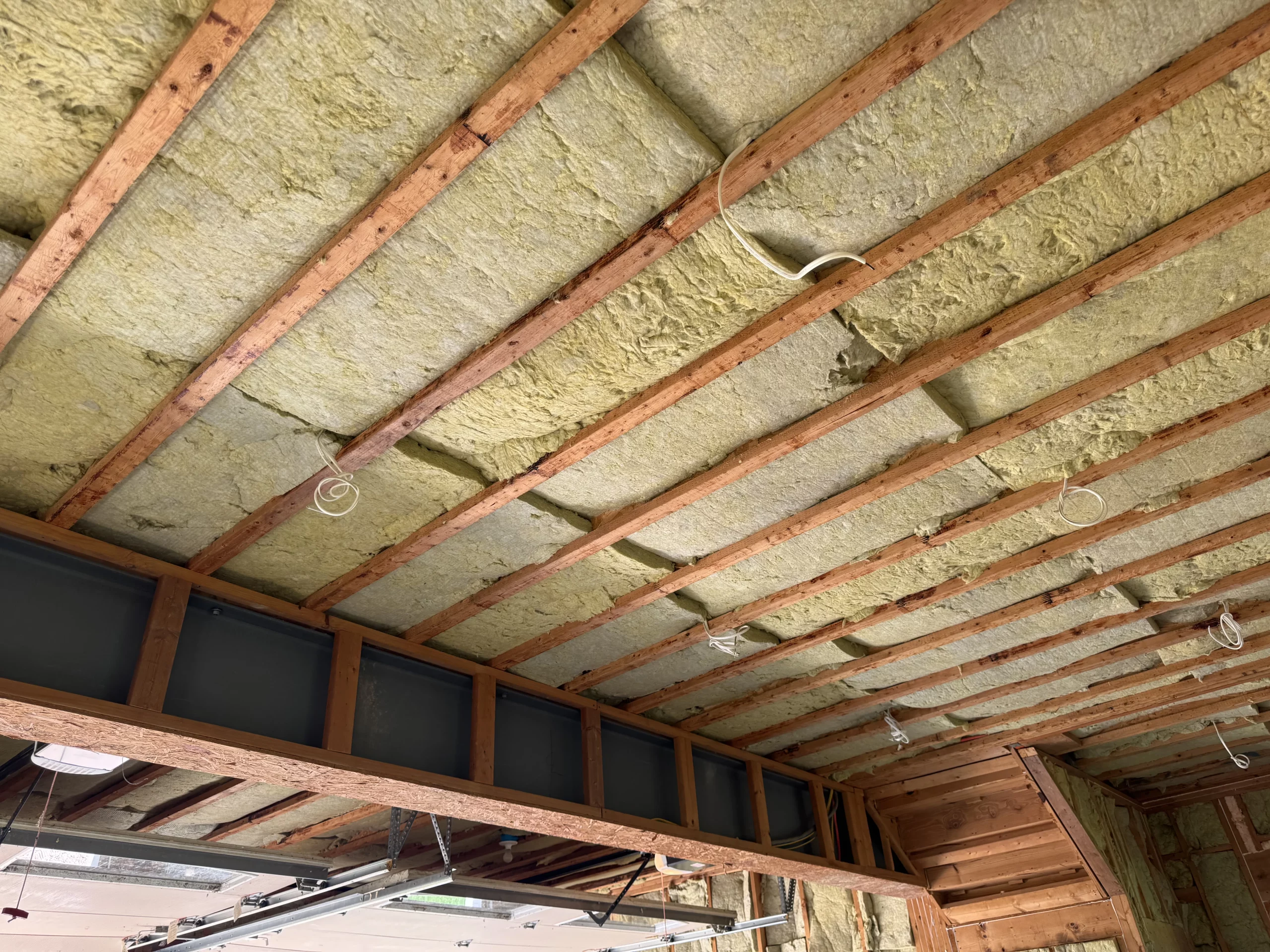
Yes, mineral wool insulation is one of the most fire-resistant insulation materials available for residential use, and it is well-suited for Federalsburg, MD homes. Made primarily from basalt rock and blast furnace slag, mineral wool is naturally noncombustible and does not require any added chemical fire retardants. It withstands temperatures between 700 and 850 degrees Celsius (roughly 1,300 to 1,560 degrees Fahrenheit) before any structural degradation occurs, according to thermal resistance data compiled on Mineral Wool – Wikipedia. For homeowners in Federalsburg and the surrounding Caroline County area, this means mineral wool acts as a passive fire barrier inside wall cavities, attics, and around mechanical systems, slowing flame spread and smoke propagation without degrading over time. The right insulation choice depends on factors like your home’s age, framing type, and whether you are building new or retrofitting, but this complete guide to mineral wool explains why it stands out when fire safety is a priority.
Mineral wool is produced by spinning molten basalt or slag at approximately 1,600 degrees Celsius into fine fibers. The resulting material is dense, inorganic, and inherently resistant to combustion. Unlike cellulose insulation, which is made from treated newspaper and remains combustible, homeowners exploring mineral wool insulation advantages often choose it because it does not burn, melt at typical house fire temperatures, or emit toxic smoke when exposed to flames.
According to the U.S. Department of Energy’s Insulation Materials guide, mineral wool “doesn’t require additional chemicals to make it fire resistant,” which means its fire safety properties are permanent and do not degrade over the life of the product. This is a meaningful distinction from cellulose insulation, which relies on borate and sulfate chemical treatments that can lose effectiveness under certain moisture or aging conditions.
The Insulation Institute, the nonprofit trade association for the insulation industry, confirms that both fiberglass and mineral wool are noncombustible materials that “remain so for the life of the product.” Filling voids and concealed spaces with mineral wool helps block fire and smoke from spreading between rooms and floors. The National Fire Protection Association (NFPA) 13 Standard even recognizes the use of mineral wool as part of passive fire protection systems in buildings, allowing sprinkler omission in certain concealed spaces when insulation requirements are met.
Mineral wool products used in residential construction are tested under ASTM E84 (surface burning characteristics) and ASTM E136 (behavior of materials in a vertical tube furnace). These tests measure flame spread index and smoke developed index. Mineral wool consistently earns a Class A / Class 1 rating with a flame spread index of 0 and smoke developed index of 0 when unfaced, which are the best possible results under these standards.
Understanding how mineral wool compares to other common insulation materials helps Federalsburg homeowners make informed decisions. The table below highlights key fire-related differences.
| Insulation Type | Noncombustible | Max Temp Tolerance | Requires Fire Retardant Chemicals | Flame Spread Index | Smoke Development |
|---|---|---|---|---|---|
| Mineral Wool | Yes | 700 to 850 degrees C | No | 0 | 0 |
| Fiberglass | Yes | 230 to 260 degrees C | No | 0 to 25 | 0 to 50 |
| Cellulose | No | Combustible | Yes (borate/sulfate) | 10 to 25 | Varies |
| Spray Foam | No | Combusts at ~370 degrees C | N/A | 75 to 200 | Varies |
| Rigid Foam Board | No | Varies by type | N/A | 25 to 75 | Varies |
Data sourced from Wikipedia mineral wool heat resistance table and the Insulation Institute safety resource.
Mineral wool’s primary advantage is its ability to maintain structural integrity at extreme temperatures. Where fiberglass begins to soften and lose its insulating properties around 230 to 260 degrees Celsius, mineral wool holds its form and continues to act as a thermal barrier at temperatures three to four times higher. In a real fire scenario, this means mineral wool slows the transfer of heat through walls and ceilings for significantly longer than fiberglass, making professional insulation installation essential for achieving the best performance.
Maryland follows the Maryland Building Performance Standards (MBPS), which adopt the International Building Code (IBC), International Residential Code (IRC), and International Energy Conservation Code (IECC) with state-specific modifications. According to the Maryland Building Codes Administration, every jurisdiction in the state must use the same edition of these codes, though local jurisdictions may make certain modifications.
For insulation fire safety, the key points for Federalsburg homeowners include:
The University of Maryland Extension recommends that Maryland homeowners insulate exterior walls to at least R-13 to R-21 and attics to R-49 to R-60 for effective energy performance in the state’s cold winters and hot, humid summers.
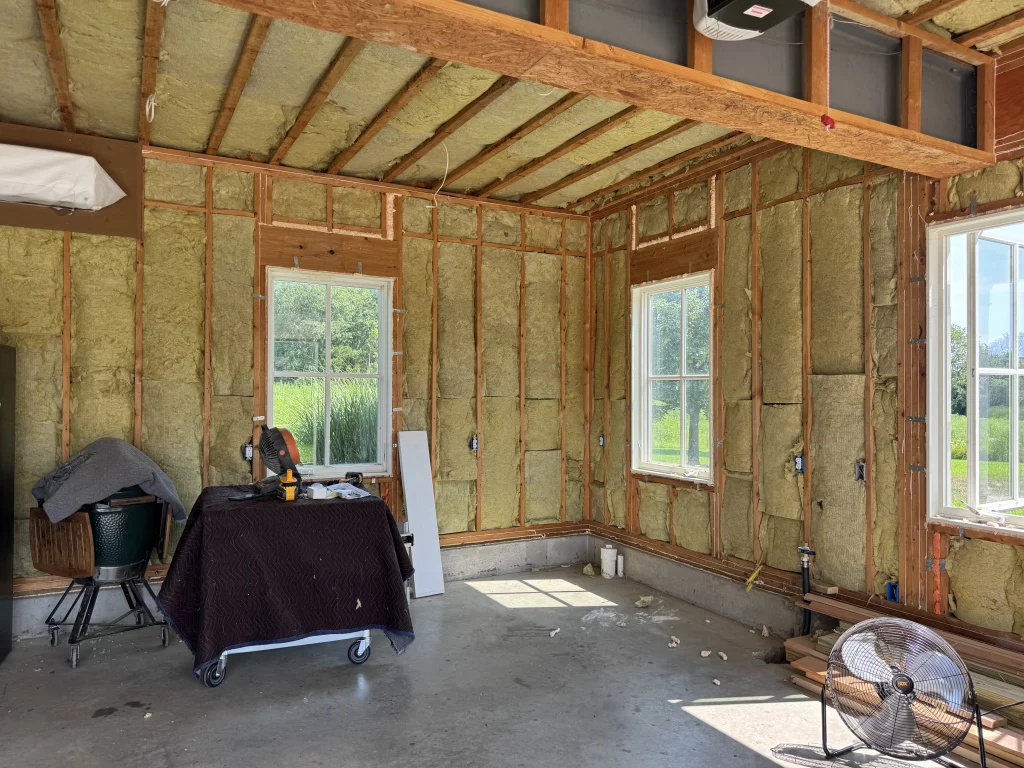
Wall cavities between wood or steel studs are a primary pathway for fire spread in homes. Mineral wool batts, friction-fit between studs, fill these cavities completely and resist combustion even when surrounding framing is exposed to fire. For 2×4 framing, mineral wool batts rated at R-15 provide a snug fit with no gaps, which is critical for both thermal performance and fire containment. In 2×6 walls, R-23 mineral wool batts deliver higher thermal resistance while maintaining the same noncombustible properties.
Attic insulation is essential for energy efficiency, and mineral wool performs double duty here. The University of Maryland Extension notes that without proper attic insulation, heat escapes upward during winter and radiates downward during summer, forcing HVAC systems to work harder. Mineral wool batts or loose-fill products in the attic not only meet the recommended R-49 to R-60 target but also add a layer of fire protection between living spaces and the roof structure.
Mineral wool is widely used as firestopping material around pipes, ductwork, and electrical penetrations. In wall assemblies that require a fire-resistance rating, such as walls between a garage and living space, mineral wool insulation contributes to the overall assembly’s fire rating. Properly installed mineral wool in these locations blocks flame and hot gas from passing through openings and voids.
Basement ceilings and crawl space floors are transition points where fire can spread from lower levels into the main living area. Mineral wool batts installed between floor joists above a basement or in crawl space subfloor assemblies create a noncombustible barrier. Unlike rigid foam board, which must be covered with half-inch gypsum board for fire safety, unfaced mineral wool does not require additional thermal barriers.
| Home Scenario | Recommended Mineral Wool Application | Key Considerations |
|---|---|---|
| New Construction | Full wall cavities, attic floor, basement ceiling | Best fit for fire safety and energy code compliance from the start |
| Existing Home Retrofit | Attic upgrade, basement ceiling, garage separation wall | Least disruptive approach with high fire safety impact |
| Older Home (pre-1980) | Attic insulation, basement rim joist | Check for knob-and-tube wiring before insulating walls |
| Garage/Living Space Wall | Full cavity mineral wool with fire-rated drywall | Meets fire separation requirements for attached structures |
While fire resistance is often the deciding factor for homeowners considering mineral wool, the material offers several other practical advantages.
Sound control: The dense fiber structure of mineral wool absorbs sound effectively, reducing noise transmission between rooms and from outside. This is especially useful in Federalsburg homes near Route 313 or in neighborhoods with close lot lines.
Moisture resistance: Mineral wool is inorganic and does not absorb or retain moisture the way fiberglass can. It also does not support mold growth, which matters in Maryland’s humid climate. The Insulation Institute confirms that mineral wool “doesn’t feed mold growth” because it is entirely inorganic.
Sustainability: With an average of 75% post-industrial recycled content, mineral wool has a smaller manufacturing footprint than many alternative insulation materials. The recycled content comes primarily from blast furnace slag, a waste product from steel manufacturing.
Dimensional stability: Mineral wool retains its shape and R-value over decades without settling, sagging, or decomposing. This long-term stability means the fire protection and thermal performance you install today remains effective for the life of the home.
Choosing the right installer matters as much as choosing the right material. Here are indicators that you are working with a qualified team:
Peninsula Insulation, LLC has been helping homeowners across Maryland improve their homes’ safety, comfort, and energy efficiency with professional insulation installation. Our team understands Maryland’s building codes, fire prevention requirements, and the specific climate demands that Federalsburg homes face. Whether you are building new, retrofitting an older home, or upgrading specific areas like your attic or garage wall, we evaluate your property and recommend the right mineral wool solution for maximum fire protection and thermal performance.
Request a Quote | Schedule a Fire Safety Assessment
Reach us at (410) 770-2624 or email wil@mdsprayfoam.net to get started. We are ready to help you make your home safer and more comfortable.
Mineral wool is classified as noncombustible and will not burn, ignite, or support flame spread. It can withstand temperatures up to 1,560 degrees F without melting, making it one of the most fire-resistant residential insulation materials available.
Yes. Mineral wool carries a Class A fire rating per ASTM E84 testing, meets NFPA 220 and ASTM E136 standards, and is recognized in the International Building Code as a noncombustible material suitable for fire-resistive construction.
Yes, mineral wool can be installed in existing walls using blow-in or dense-pack methods, or in open cavities during renovations. A professional assessment is recommended to check for wiring and structural conditions before installation.
Mineral wool batts are available with or without facings. In Maryland’s mixed-humid climate, vapor barriers should be used carefully and typically only in the first layer of insulation, not added over existing insulation.
While both are noncombustible, mineral wool withstands temperatures roughly three to four times higher than fiberglass before degrading. Mineral wool also maintains its structural integrity and insulating properties at extreme temperatures where fiberglass would soften and fail.