What Should Homeowners in Rhodesdale, MD Know Before Installing Mineral Wool Insulation?
Wil Perkins
September 14th, 2026
Mineral wool insulation is a fibrous material spun from molten rock and slag, and for homeowners in Rhodesdale, it offers a combination few other materials match: non-combustible fire performance, dependable thermal and acoustic results, and stable behavior in our mixed-humid climate. The right choice depends on where the material is going (attic, walls, or crawl space), the R-value targets for Maryland’s Zone 4A climate, and whether air sealing happens before insulation goes in. Compared with fiberglass batts, blown cellulose, and spray foam, mineral wool insulation solutions serve homeowners who put fire safety, sound control, and dimensional stability at the top of the list. Our team at Peninsula Insulation, LLC put this guide together so you can compare options, understand Maryland code targets, and judge installer quality before committing.
TL;DR
Rhodesdale sits in IECC climate zone 4A (mixed-humid), where ENERGY STAR recommends adding up to R-60 in an uninsulated attic, or R-49 if you already have 3 to 4 inches of insulation.
Other Zone 4A targets: R-19 for floors over unconditioned space, R-10 continuous sheathing or R-13 batts on basement and crawlspace walls, and R-5 to R-10 of exterior wall sheathing when re-siding.
Mineral wool is non-combustible and does not feed flame spread, which makes it useful for fire blocking and for homes near wildfire or brush exposure.
It is water-repellent, resists UV light, does not attract insects, and barely expands or contracts with temperature swings.
Air sealing should come first: the Department of Energy notes that walls and rim joists make up more than 40% of a home’s envelope area.
Maryland homeowners may qualify for EmPOWER Maryland utility incentives, state weatherization and loan programs, and a federal energy-efficient home improvement credit for qualifying insulation upgrades.
Fit quality drives performance; batts should be cut to fill cavities without gaps, voids, or forced compression.
Why Climate Zone 4A Shapes the Decision for Rhodesdale Homes
Rhodesdale sits on the Eastern Shore in Dorchester County, in what the 2021 IECC classifies as a mixed-humid, “heating and cooling” climate. Summers are humid, winters are cool but real, and coastal storm systems push moisture at your envelope from every direction. That means insulation alone is not the whole job; the envelope needs both thermal resistance and managed air and moisture movement. A complete guide to mineral wool insulation can help homeowners understand how these factors work together.
Here is what ENERGY STAR considers cost-effective for existing wood-framed homes in Zone 4A:
Application
Recommended Level
Notes for Rhodesdale Homeowners
Uninsulated attic
Add R-60
The single biggest comfort upgrade for most older homes
Attic with 3 to 4 inches existing
Add R-49
Top-up is common and fast
Floors over unconditioned space
R-19
Relevant for pier-built and crawlspace homes common on the Shore
Basement or crawlspace walls
R-10 continuous or R-13 batt
Humidity control matters as much as R-value here
Above-grade walls
R-5 to R-10 exterior sheathing
Best done during a re-siding when walls are open
The Department of Energy points out that attics are usually the easiest target in existing homes, while wall upgrades are simplest when siding is already coming off. See Our Location to find our service area and learn where we help homeowners with insulation upgrades. Plan around your home’s renovation calendar, not just your comfort complaints.
What Mineral Wool Actually Delivers
Mineral wool (also called stone or rock wool) is produced by melting rock and slag at roughly 1,600°C and spinning the liquid into fibers only 2 to 6 micrometers thick, according to Wikipedia’s mineral wool overview. That manufacturing process explains most of its performance profile:
Fire resistance. Stone wool withstands roughly 700 to 850°C (1,292 to 1,562°F) and is widely used in passive fire protection and firestop assemblies. It will not ignite or contribute fuel to a fire.
Moisture behavior. The material is water-repellent and, if it does get wet, wicks water away and dries without losing its shape, a property building scientists value in humid climates.
Dimensional stability. Mineral wool shows minimal expansion and contraction, so seams stay tight, and air and insect intrusion stay low.
Pest and UV resistance. Insects do not eat it or burrow through it, and it tolerates UV exposure behind open-joint cladding.
Acoustics. The dense fiber structure absorbs sound, which is why it appears in interior partition walls, media rooms, and bedrooms.
On safety, the same Wikipedia article notes that insulation-grade stone and slag wools produced since the 2000s are classified by IARC as Group 3, “not classifiable as to carcinogenicity in humans.” Fibers can cause temporary skin itching during handling, so professional crews work with gloves, long sleeves, and dust control.
Material
Thermal Performance
Fire Behavior
Moisture Handling
Sound Control
Best Fit
Mineral wool
Strong
Non-combustible
Repels and sheds water
Excellent
Fire-sensitive areas, walls, humid climates
Fiberglass batts
Moderate
Will melt at high heat
Can hold moisture
Moderate
Budget attic top-ups, dry cavities
Blown cellulose
Good
Treated, combustible
Absorbs and holds water
Good
Enclosed wall cavities, attics
Spray foam
Highest per inch
Combustible without covering
Acts as its own barrier
Moderate
Air sealing irregular spaces
Where Mineral Wool Works Hardest in an Eastern Shore Home
Not every Rhodesdale house needs mineral wool everywhere. These are the placements where it earns its keep:
Attics and rooflines. Batts lay predictably between joists and rafters and stay put, which matters when attic tops need to reach R-49 to R-60.
Exterior continuous insulation. When you re-side, mineral wool boards break the thermal bridging that runs through every stud, an approach the Insulation Institute highlights for its fire, water, and UV performance outside the sheathing.
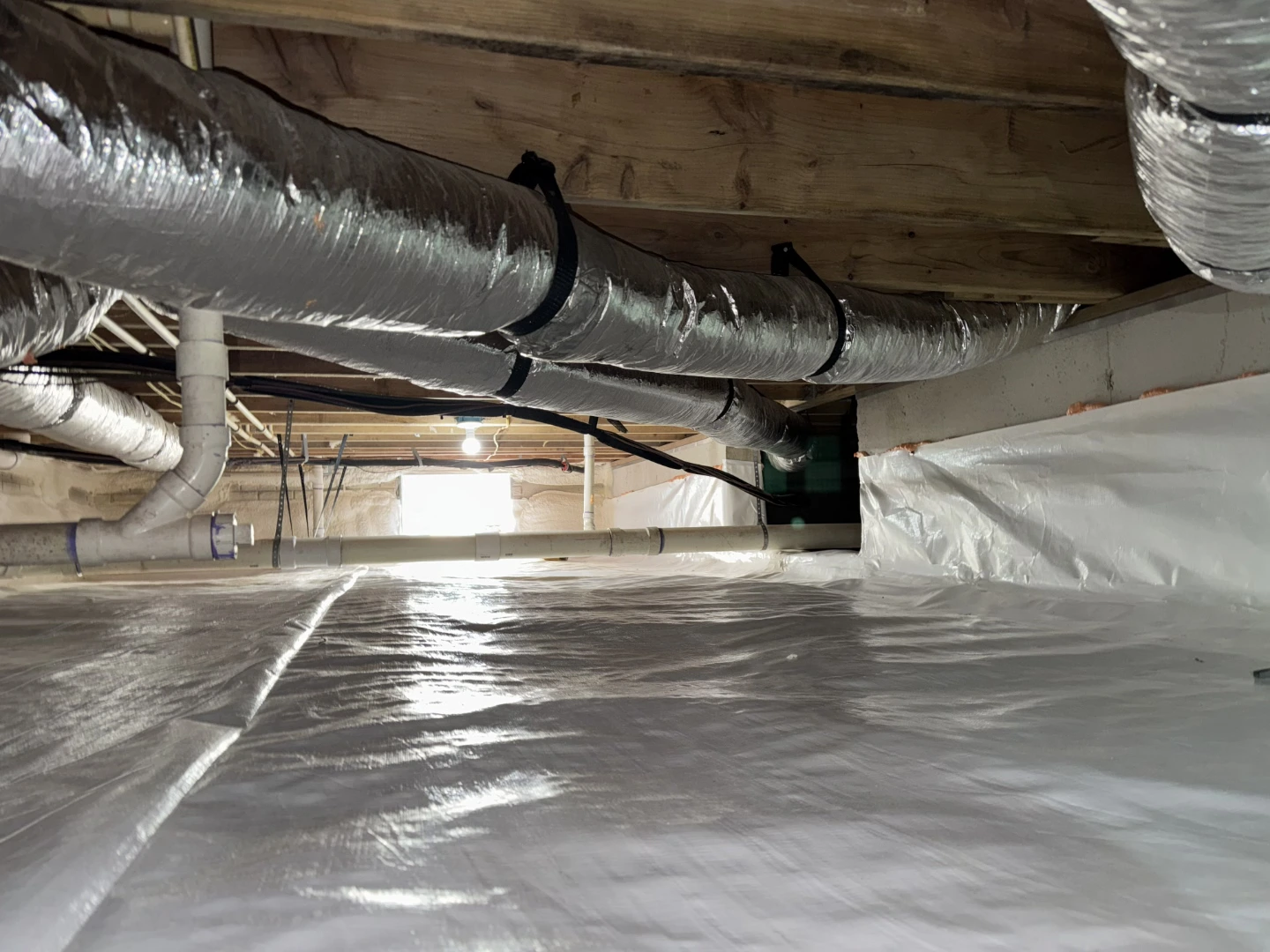
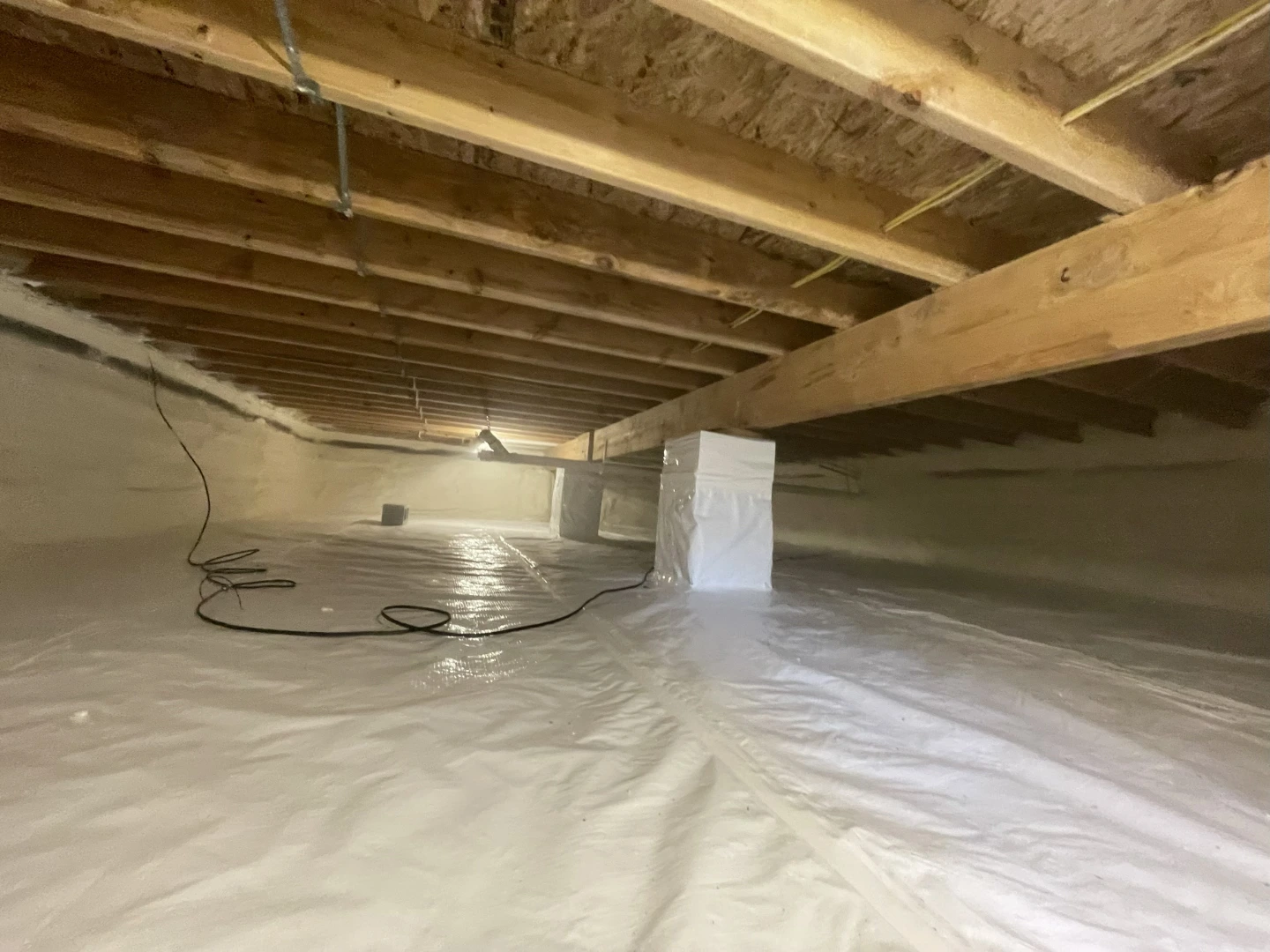
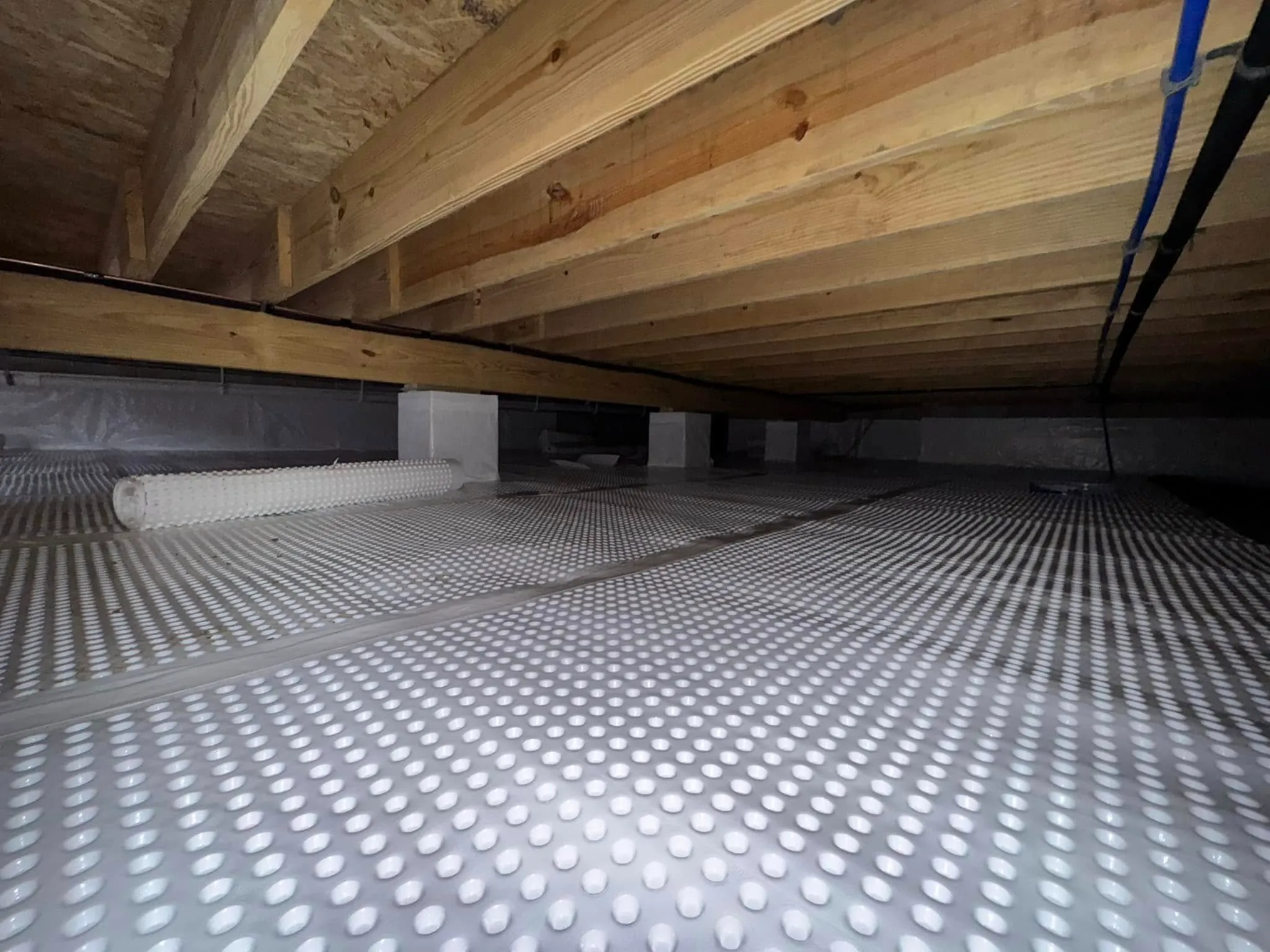
Crawlspaces and basements. Water-repellent batts suit the damp ground conditions common across Dorchester County.
Interior sound walls. Bedrooms, home offices, and shared walls benefit from its density.
Fire separations. Garage ceilings, furnace closets, and walls around fireplaces gain a passive fire layer.
Your Situation
Recommended Approach
Why It Fits
Older farmhouse with thin attic insulation
Attic top-up to R-49/R-60 plus attic-floor air sealing
Fastest path to year-round comfort
Planning to re-side within a year or two
Exterior mineral wool continuous insulation
Best moment to cut thermal bridging
Damp crawlspace under a raised floor
R-19 floor batts or R-13 crawlspace wall batts after moisture fixes
Handles Shore humidity without slumping
Noise complaints between rooms
Mineral wool in interior partitions
Density outperforms lighter batts acoustically
Attached garage or wood stove wall
Mineral wool fire blocking
Non-combustible layer behind required drywall
Installation Priorities Homeowners Most Often Miss
Air sealing comes before insulation. The DOE treats air sealing as a code-level requirement for good reason; insulation slows heat flow but does not stop moving air. Seal top plates, penetrations, and rim joists first.
Ducts in unconditioned space need attention too. The 2021 IECC calls for at least R-8 on supply and return ducts 3 inches and larger, and R-6 on smaller runs.
Fit beats thickness. Batts should be cut slightly oversize and friction-fit without bunching or forcing; gaps and compression are where performance quietly disappears.
Vapor strategy belongs in the plan. In a mixed-humid zone, the safe default is materials that dry easily in both directions, which is one more reason mineral wool’s drying behavior matters here.
Ask for diagnostics. A blower-door test before and after tells you whether the job actually tightened the house.
Credits and Incentives Maryland Homeowners Can Stack
Before you pay for the whole project out of pocket, check the money on the table. The Maryland Energy Administration maintains a statewide list of programs, and several apply directly to insulation work in the Rhodesdale area:
EmPOWER Maryland utility incentives. Delmarva Power & Light customers can access efficiency incentives through this statewide program.
State weatherization and loan options. Income-eligible households may qualify for the DHCD Weatherization Assistance Program, and the BeSMART and Clean Energy Advantage loan programs finance envelope upgrades for qualifying homeowners.
Federal tax credit. The DOE notes that insulation and air sealing meeting 2021 IECC guidance may qualify for the energy-efficient home improvement credit when installed in an existing home.
Programs change by fiscal year, so verify current eligibility with your utility and our team before scheduling work.
Signs You’ve Found the Right Approach
The proposal starts with an assessment or blower-door test, not a product pitch.
R-value targets are written down and matched to Zone 4A code levels, not guessed.
Air sealing is a listed line item with its own scope.
The installer explains moisture behavior and drying paths for your specific wall and crawlspace assemblies.
Cut-and-fit quality is described in the workmanship standards, and crews use proper PPE.
References come from projects in similar Eastern Shore homes, and communication stays clear from estimate to final walkthrough.
Upgrade Your Rhodesdale Home With Confidence
Mineral wool insulation rewards homeowners who plan: hit the right R-values, air seal first, and put the material where its fire, moisture, and acoustic strengths matter most. Peninsula Insulation, LLC serves homeowners across Rhodesdale and the greater Eastern Shore with honest assessments, code-aware recommendations, and installation crews who treat fit quality as the job, not an afterthought. Call us at (410) 770-2624 or email wil@mdsprayfoam.net to talk through your home’s specific needs.
Frequently Asked Questions
Is mineral wool worth it in Rhodesdale’s relatively mild climate?
Yes, because Zone 4A homes face both humid summers and real heating demand. Mineral wool’s non-combustibility, sound control, and drying behavior add value beyond R-value alone.
What happens if mineral wool gets wet in a damp crawlspace?
It repels water and, if soaked, dries out and returns to its original performance. Fix the moisture source first so the material is not asked to fight standing water indefinitely.
Do I need a vapor barrier with mineral wool in a mixed-humid climate?
Usually no dedicated polyethylene is required in this zone; the priority is air sealing and assemblies that can dry. We evaluate your specific walls, floors, and crawlspace before recommending one.
How long does a typical mineral wool installation take?
An attic top-up or crawlspace job is usually finished in a day. Whole-home wall or re-siding projects depend on scope and scheduling with other trades.
Will insulation upgrades qualify for Maryland incentives or tax credits?
Often yes, through EmPOWER Maryland utility programs, state loan options, and the federal energy-efficient home improvement credit for qualifying work. Eligibility varies by household and program year, so confirm details before committing.
Sources
ENERGY STAR – Recommended Home Insulation R-Values – Cost-effective R-value targets by climate zone and location in the home, based on the 2021 IECC, including Zone 4A attic, floor, wall, and crawlspace levels.
Wikipedia – Mineral Wool – Manufacturing process, heat resistance ranges, fire protection applications, fiber properties, and IARC safety classification of insulation-grade mineral wools.
Maryland Energy Administration – Financial Resources – State directory of EmPOWER Maryland utility incentives, DHCD weatherization and loan programs, and federal financing options for Maryland building upgrades.
I’m Wil Perkins, founder of Peninsula Insulation, with nearly five years of industry experience. As a longtime Easton, Maryland resident, I focus on quality spray foam services and lasting insulation results.