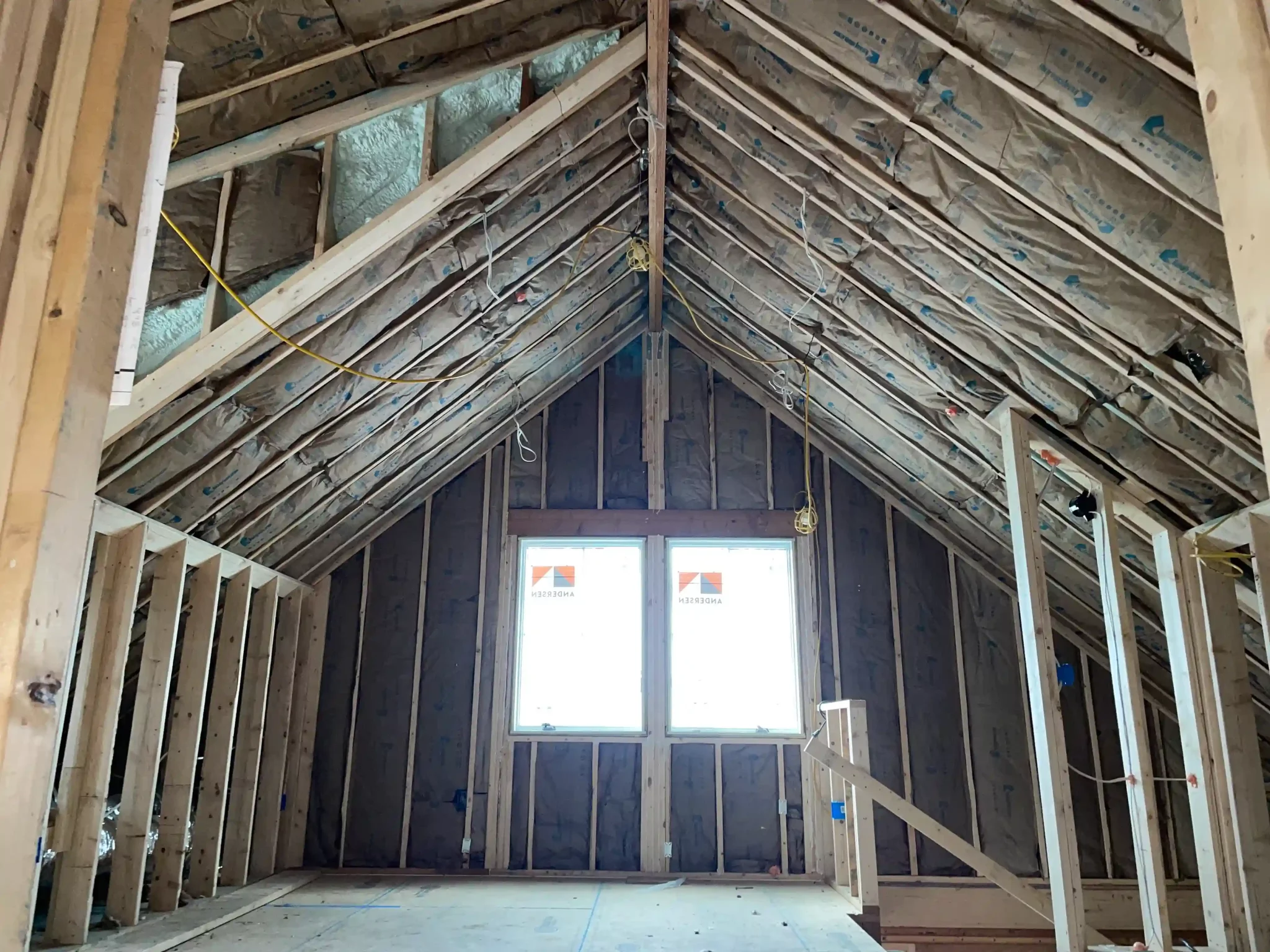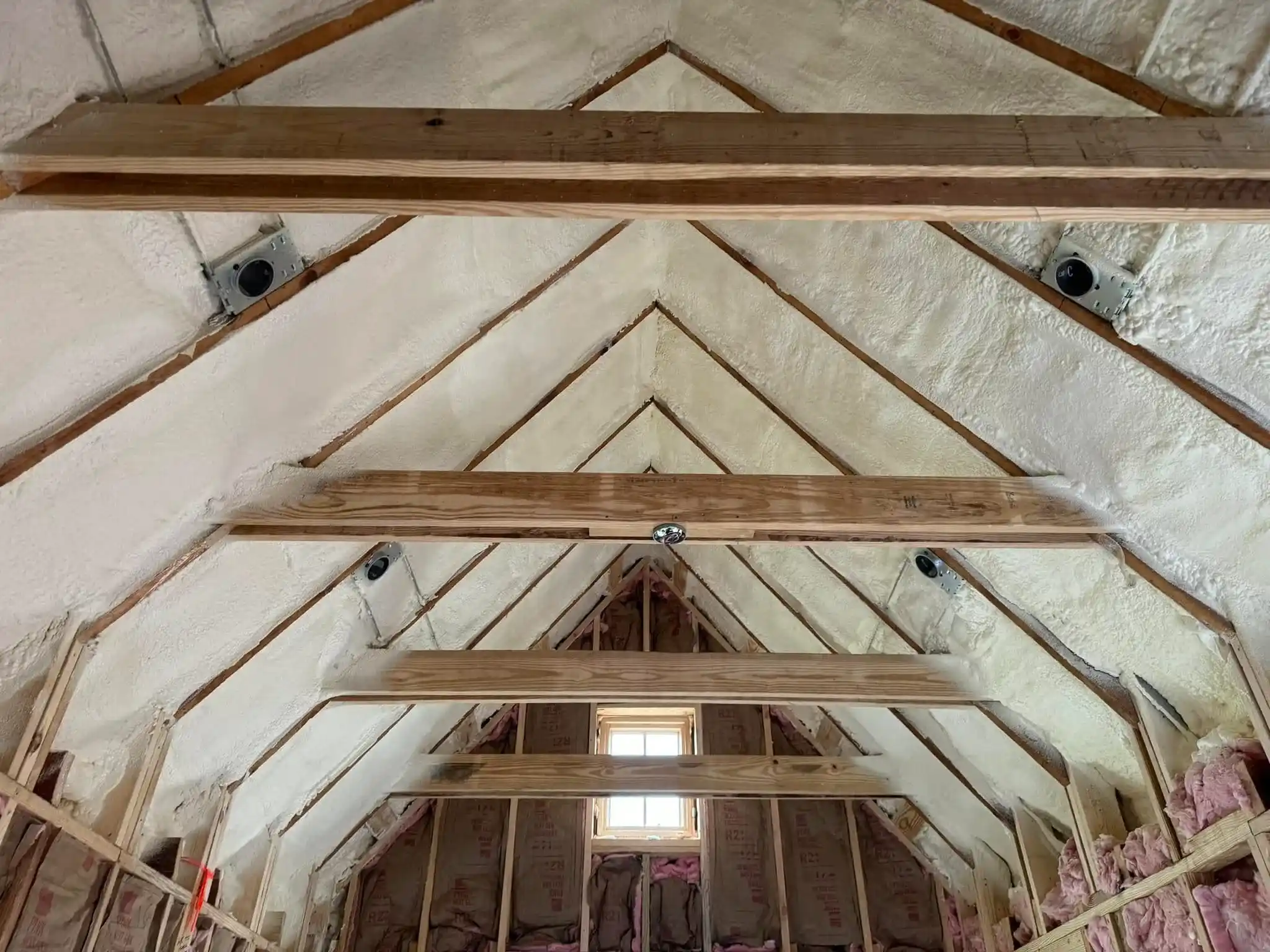
What Happens When Traditional Insulation in New Carrollton, MD Leaves Air Gaps?
When traditional insulation in New Carrollton, MD develops air gaps, it stops doing the one job it was installed to…


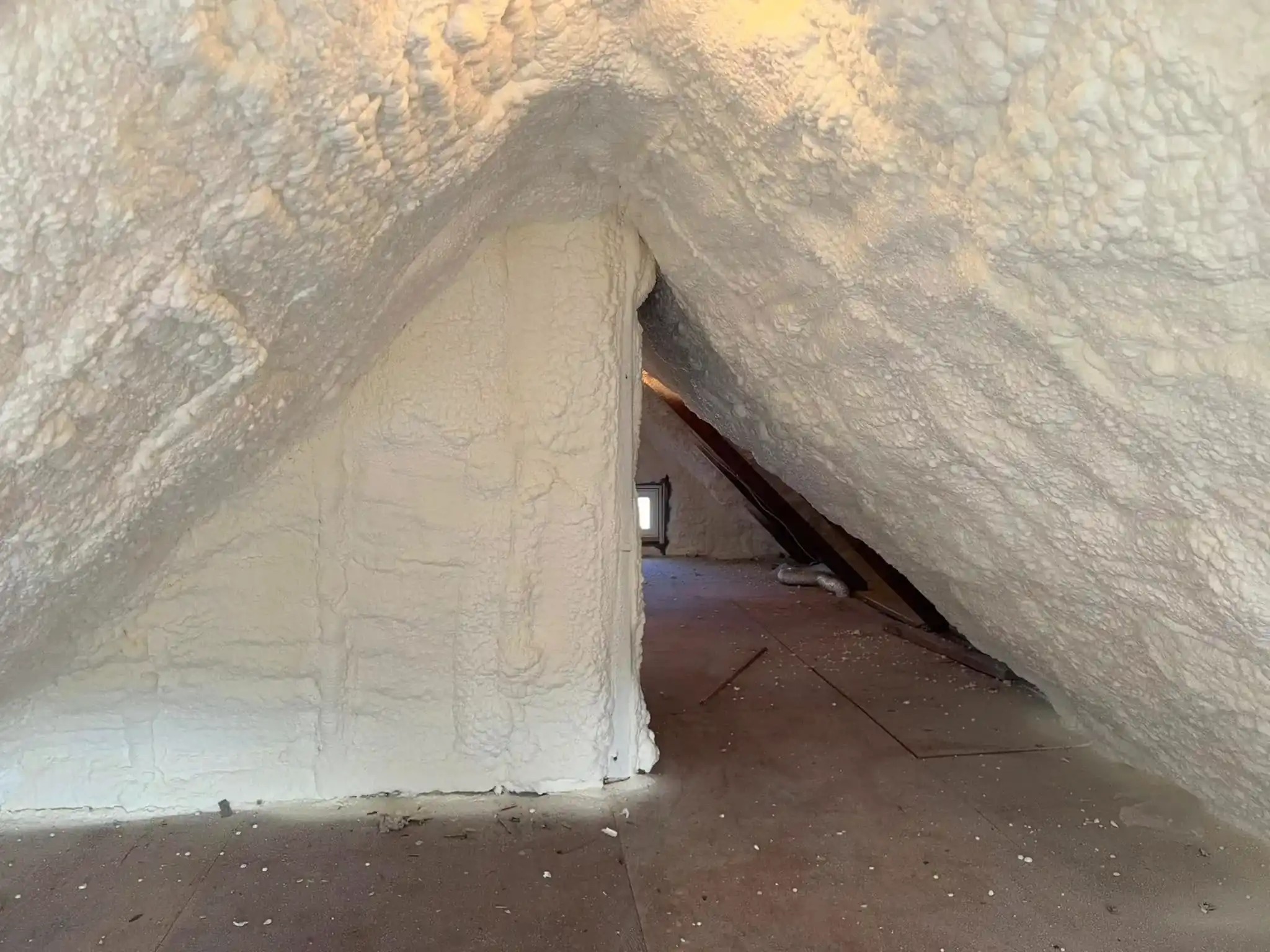
Open-cell spray foam insulation delivers strong air sealing, sound dampening, and thermal performance at approximately R-3.6 per inch, making it a practical option for Cape St. Claire homes located in Maryland’s hot-humid climate zone. The right choice between open-cell and closed-cell spray foam depends on where the insulation will be installed, the existing structure of your home, and how your property manages moisture. Open-cell foam is vapor-permeable, meaning it allows moisture to pass through rather than trapping it, which offers specific advantages in certain wall and ceiling assemblies. However, it also absorbs and holds liquid water, so it is not appropriate for every application, particularly below-grade spaces and areas prone to bulk water exposure. Understanding these characteristics, the Maryland energy code requirements for Anne Arundel County, and the safety protocols involved in spray foam installation will help you make an informed decision and avoid costly mistakes. A comprehensive open-cell spray foam guide can help homeowners and builders evaluate where this insulation performs best.
Cape St. Claire sits in Anne Arundel County, which the Maryland Energy Administration classifies under Climate Zone 4. This zone is characterized as mixed-humid, meaning the area experiences both heating and cooling demands alongside elevated summer humidity levels. The combination of warm, moist air from the Chesapeake Bay and cold winter interiors creates conditions where moisture management is just as important as thermal resistance.
In this climate, the moisture drive through the building envelope shifts direction seasonally. During summer, warm, humid air pushes from the exterior inward. During winter, interior moisture pushes outward. Insulation choices must account for this bidirectional moisture flow, allowing the wall and roof assemblies to dry in both directions when needed.
The Maryland Energy Administration’s compliance guide outlines prescriptive requirements that apply to Anne Arundel County: ceilings must meet R-49, wood-frame walls must achieve R-20 (or R-13 cavity plus R-5 continuous insulation), and building air leakage must test at or below 3 ACH50. Open-cell spray foam installed to full cavity depth in a standard 2×6 wall can deliver approximately R-20, which meets the wall requirement on its own while simultaneously providing the air sealing needed to pass the blower door test.
Many property owners in Cape St. Claire assume all spray foams are the same, but open-cell and closed-cell foams behave very differently. According to the U.S. Department of Energy’s Building America program, these two products are “not interchangeable in all applications” despite their similar chemical origins.
| Property | Open-Cell Foam | Closed-Cell Foam |
|---|---|---|
| Density | ~0.5 lb/cubic ft | ~2.0 lb/cubic ft |
| R-Value per inch | R-3.6 | R-6.0 to R-6.1 |
| Vapor permeance | 5 to 10 perms (vapor-permeable) | Less than 1 perm (vapor retarder) |
| Water absorption | Absorbs and holds liquid water | Hydrophobic, does not absorb water |
| Expansion ratio | ~150x liquid volume | ~35 to 50x liquid volume |
| Application per pass | Up to 10 inches (single pass) | 2 to 3 inches (multiple passes) |
| Air sealing | Excellent, air-impermeable | Excellent, air-impermeable |
| Sound transmission class | STC 70 (2×4 wall assembly) | STC 23 |
The lower density of open-cell foam gives it superior sound-dampening properties. The interconnected cell structure absorbs acoustic energy rather than reflecting it, which makes open-cell foam a strong choice for interior walls, ceilings between living spaces, and areas where noise control matters.
Based on the DOE Building America guide, open-cell foam has specific applications where it performs well and others where it should not be used:
Recommended applications for Cape St. Claire homes:
Applications where open-cell foam should be avoided:
In Cape St. Claire’s mixed-humid climate, moisture control is the single biggest variable that determines whether your insulation performs as expected or causes long-term building envelope problems. The Building America guide identifies several critical moisture factors that property owners must address. Understanding open-cell foam moisture control can help homeowners avoid common building envelope issues and maximize long-term performance.
The EPA has documented serious health concerns associated with spray polyurethane foam, primarily related to isocyanates, the reactive chemicals used in the formulation. Exposure to isocyanates during and after installation can cause asthma, lung damage, skin and eye irritation, and sensitization. Once sensitized, even low concentrations can trigger severe reactions.
The EPA’s safety guidance states that all building occupants and unprotected workers must vacate the premises during spray foam installation. Re-entry should be restricted until the product has finished curing and the space has been adequately ventilated and cleaned. Some manufacturers recommend 24 hours after application for professional two-component systems, though curing times vary by product and environmental conditions.
Property owners should also be aware of potentially misleading marketing claims that downplay the presence of hazardous chemicals in spray foam products. The EPA notes that such claims can prevent occupants and installers from understanding the need for adequate protective equipment and ventilation.
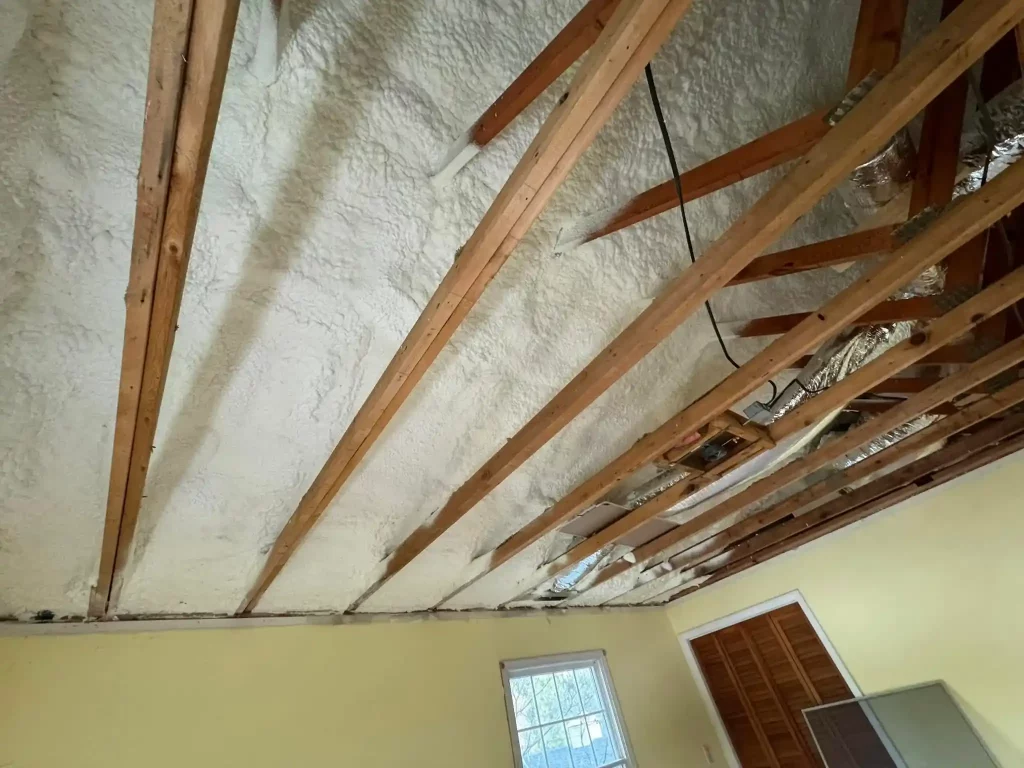
Any insulation project involving exterior walls, ceilings, or roof assemblies in Cape St. Claire will need to comply with Maryland’s adopted energy code. The Maryland Energy Administration’s homeowner guide requires that construction documents display the prescriptive components necessary for compliance, and an energy efficiency certificate must be posted upon completion.
Key inspection touchpoints include rough frame inspection before insulation installation, insulation inspection before drywall coverage, and a blower door test to verify the building meets the 3 ACH50 air leakage requirement. Spray foam’s air-sealing properties make it easier to pass this test, but the insulation must still meet minimum R-value requirements for each building component. Working with a spray foam contractor in Cape St. Claire, MD, helps ensure these requirements are met, and inspections go smoothly.
Additionally, the International Residential Code requires that spray foam in habitable spaces be covered by a 15-minute thermal barrier, typically half-inch gypsum board, to meet fire safety requirements. Attics and crawl spaces entered only for utility service may use an ignition barrier instead, but the specifics depend on individual product Evaluation Service Reports from the manufacturer.
Choosing the right installer matters as much as choosing the right product. Look for these indicators:
| Property Scenario | Recommended Foam Type | Key Reasoning |
|---|---|---|
| Single-family home, standard 2×6 frame walls | Open-cell (full cavity) | Meets R-20 code requirement, excellent air seal, sound-dampening |
| Cathedral ceiling with adequate rafter depth | Open-cell (to full depth) | Vapor-permeable allows drying to the interior; no vapor retarder needed |
| Finished basement | Closed-cell only | Below-grade moisture exposure makes open-cell unsuitable |
| Home with brick veneer exterior | Closed-cell behind brick | Prevents solar-driven moisture from saturating the cavity |
| In addition to cantilevered floor framing | Open-cell acceptable | No exterior drainage plane concerns, straightforward cavity fill |
| Band joist upgrade only | Closed-cell preferred | A hot-humid climate makes a vapor-impermeable option more forgiving |
| Unvented attic conversion | Open-cell or closed-cell | Both acceptable; choice depends on budget and rafter depth available |
Peninsula Insulation, LLC has the experience and local knowledge to evaluate your home’s specific needs and recommend the right insulation solution for Cape St. Claire’s mixed-humid climate. Our team assesses each project individually, accounting for moisture management, building code compliance, and the long-term durability of every assembly we insulate. Contact us at (410) 770-2624 or email wil@mdsprayfoam.net to discuss your project.
Request a Quote | Schedule an Assessment
We are here to make sure your insulation investment delivers lasting comfort and energy savings for years to come.
No. Open-cell foam absorbs and holds liquid water, making it unsuitable for below-grade applications where moisture exposure is unavoidable. Closed-cell spray foam is the appropriate choice for basement walls and foundations.
Most professional two-component spray foam systems require approximately 24 hours of curing time before unprotected occupants can safely re-enter, though exact timelines vary by product. Your installer should provide specific guidance before the job begins.
Yes, when installed to full depth in a standard 2×6 wall cavity, open-cell foam delivers approximately R-20, which meets the IECC Climate Zone 4 prescriptive requirement. The foam also provides air sealing that helps satisfy the 3 ACH50 blower door test.
Yes. Open-cell foam’s interconnected cell structure provides an STC rating of approximately 70 in a 2×4 wall assembly, significantly reducing sound transmission between rooms. This makes it a practical choice for home offices, bedrooms, and media rooms.
In hot-humid climates, interior vapor retarders should generally be avoided with open-cell foam to prevent trapping moisture within the wall cavity. The foam’s vapor-permeable nature allows the assembly to dry, which is the intended behavior in this climate zone.