What Are the Common Signs Your Crawl Space Needs Encapsulation in Federalsburg, MD?
Wil Perkins
July 28th, 2026
Living in Federalsburg, Maryland, means your home sits in a region defined by humid summers, elevated water tables, and frequent precipitation across the Eastern Shore. Those conditions make crawl spaces especially vulnerable to moisture intrusion, and that moisture works its way into every part of your house. If your crawl space has a bare earth floor, open vents, and no vapor barrier, it is essentially pulling damp air and ground moisture directly into your living areas through a process called the stack effect, where warm air rising through your home creates negative pressure that draws air up from below. Crawl space encapsulation seals and conditions that space, cutting off the path for moisture, mold, and pests. Learning more through a crawl space encapsulation guide can help you recognize the warning signs and determine the right time to protect your home.
TLDR: Key Takeaways
Persistent musty odors in your home often originate from a damp crawl space where mold is actively growing
Visible mold, wood rot, or standing water under your home means moisture control has already failed and encapsulation should happen immediately
Indoor humidity above 60% creates conditions for mold growth, according to the EPA EPA Mold Course Chapter 2
Pest activity, dust mites, and worsening allergies can all trace back to an unconditioned crawl space
Energy research shows conditioned crawl spaces reduce heating and cooling energy use by 15% to 18% while cutting humidity over 20% DOE Building America Top Innovation
Federalsburg’s climate on Maryland’s Eastern Shore delivers high summer humidity and year-round precipitation that makes unsealed crawl spaces a recurring liability
Why Federalsburg Homes Are Especially Vulnerable
Federalsburg sits in Caroline County, surrounded by low-lying terrain and waterways that keep groundwater tables high. The Mid-Atlantic region receives consistent precipitation throughout the year, and summer humidity regularly pushes outdoor dew points above interior crawl space surface temperatures. When vented crawl spaces draw in that warm, saturated air, the moisture condenses on cooler framing, insulation, and ductwork. The EPA confirms that crawl spaces with bare earth floors are particularly problematic because soil wicks moisture through capillary action and evaporates into the enclosed space. In our area, this cycle repeats throughout the humid months and creates an ongoing source of moisture that a simple vented design cannot resolve. These conditions often contribute to a damp crawl space in Easton, MD, reducing comfort and increasing the risk of moisture-related issues throughout the home.
The 7 Warning Signs That Point to Encapsulation
1. Musty or Damp Odors Inside Your Home
If you notice a persistent earthy or mildew smell that gets worse in basements, lower levels, or near floor registers, that odor is likely air traveling from your crawl space into your living areas. The stack effect pulls up to half the air you breathe indoors from the crawl space below. Mold and microbial growth produce volatile organic compounds that carry that unmistakable smell. If the odor is present in your home, mold is already established somewhere beneath the floor.
2. Visible Mold or Mildew in the Crawl Space
Mold can appear as patches in black, white, green, or brown on wood joists, subflooring, insulation, and foundation walls. The EPA warns that indoor relative humidity above 60% supports mold growth. Crawl spaces with open vents in humid climates routinely exceed this threshold. If you can see mold during a visual inspection, the problem is already advanced, and a full encapsulation with mold remediation is the appropriate next step.
3. Standing Water or Wet Soil
Pooled water, damp soil, or water stains on foundation walls indicate that groundwater is entering the crawl space. This can result from poor exterior drainage, high seasonal water tables, or plumbing leaks. The EPA notes that in areas where the water table is high, groundwater may directly enter a crawl space. Standing water accelerates wood rot, undermines foundation integrity, and creates breeding grounds for pests and mold. Encapsulation with proper perimeter drainage addresses the source rather than just the symptoms, and working with a spray foam insulation contractor in Federalsburg, MD helps ensure the crawl space is properly sealed against future moisture intrusion.
4. Buckled, Warped, or Squeaky Floors
Moisture passing through the crawl space causes wood subflooring and floor joists to swell, warp, and eventually rot. Building Science Corporation documents buckled wood floors and moldy vinyl flooring as direct consequences of vented crawl spaces with inadequate moisture control. If your hardwood is cupping, your vinyl is discoloring, or your floors feel soft or spongy, moisture from below is the likely cause.
5. Condensation on HVAC Ducts or Plumbing
Droplets of water on ductwork, pipes, or insulation in the crawl space mean the air inside is humid enough for condensation to form on cooler surfaces. Wet insulation loses its effectiveness and can harbor mold. Condensation is one of the first visible indicators that relative humidity has crossed the danger zone. Left unchecked, it leads to rusted ducts, degraded insulation, and increased energy consumption as your HVAC system works harder to condition air passing through a wet, unconditioned space.
6. Increased Allergy Symptoms or Respiratory Issues
Mold spores, dust mite waste, and pest debris from an unconditioned crawl space get drawn into your home through floor gaps, register openings, and wall cavities. If family members experience worsening allergies, asthma flare-ups, coughing, or congestion that improves when they leave the house, the crawl space may be contributing to poor indoor air quality. The EPA identifies crawl spaces as common sites of hidden mold growth that can affect the entire building.
7. Pest Activity or Rodent Entry
Bugs, termites, rodents, and other pests are drawn to damp, dark, undisturbed environments. Open crawl space vents provide easy access, and moisture creates favorable conditions for infestation. Termites and carpenter ants in particular thrive where wood is damp and decay is present. Encapsulation seals vents, installs a continuous ground barrier, and removes the moisture that attracts and sustains pests.
What Encapsulation Actually Does
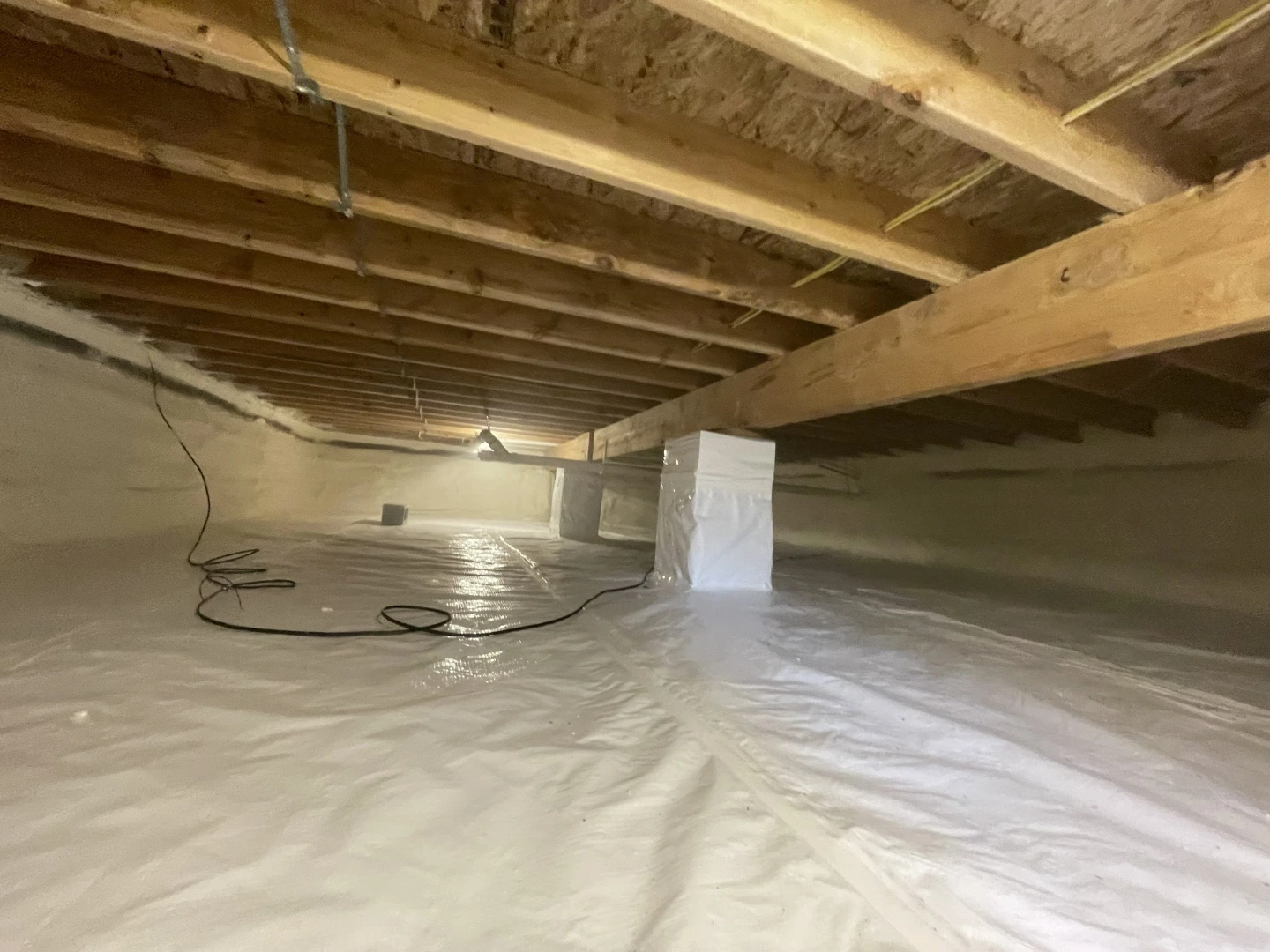
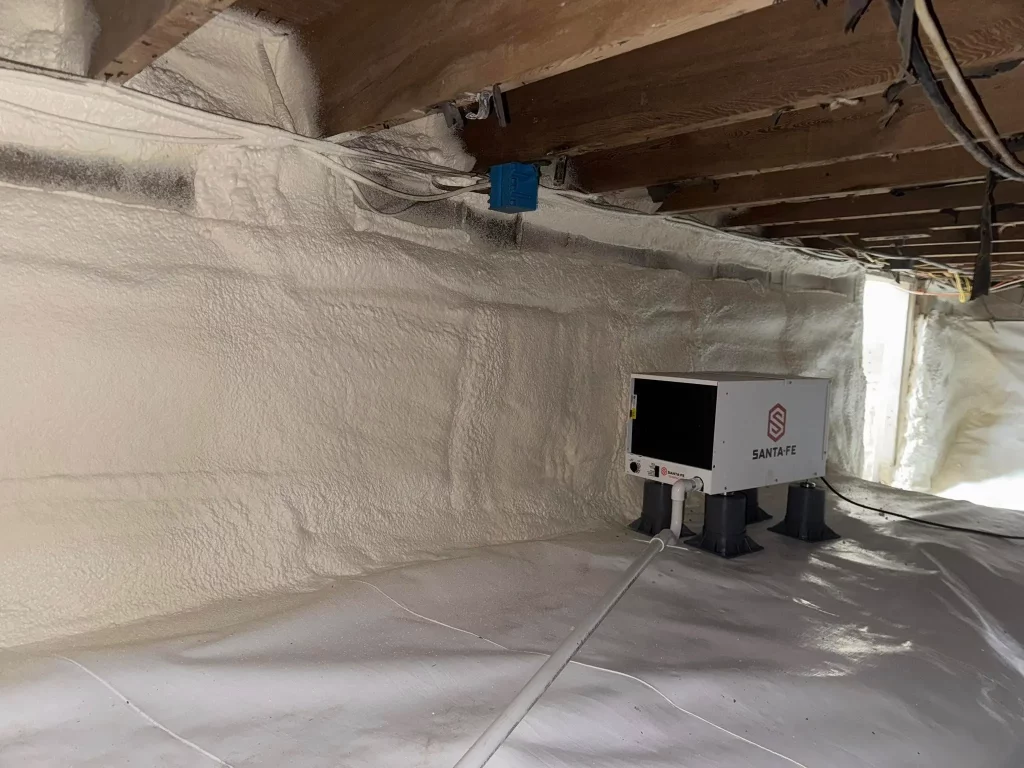
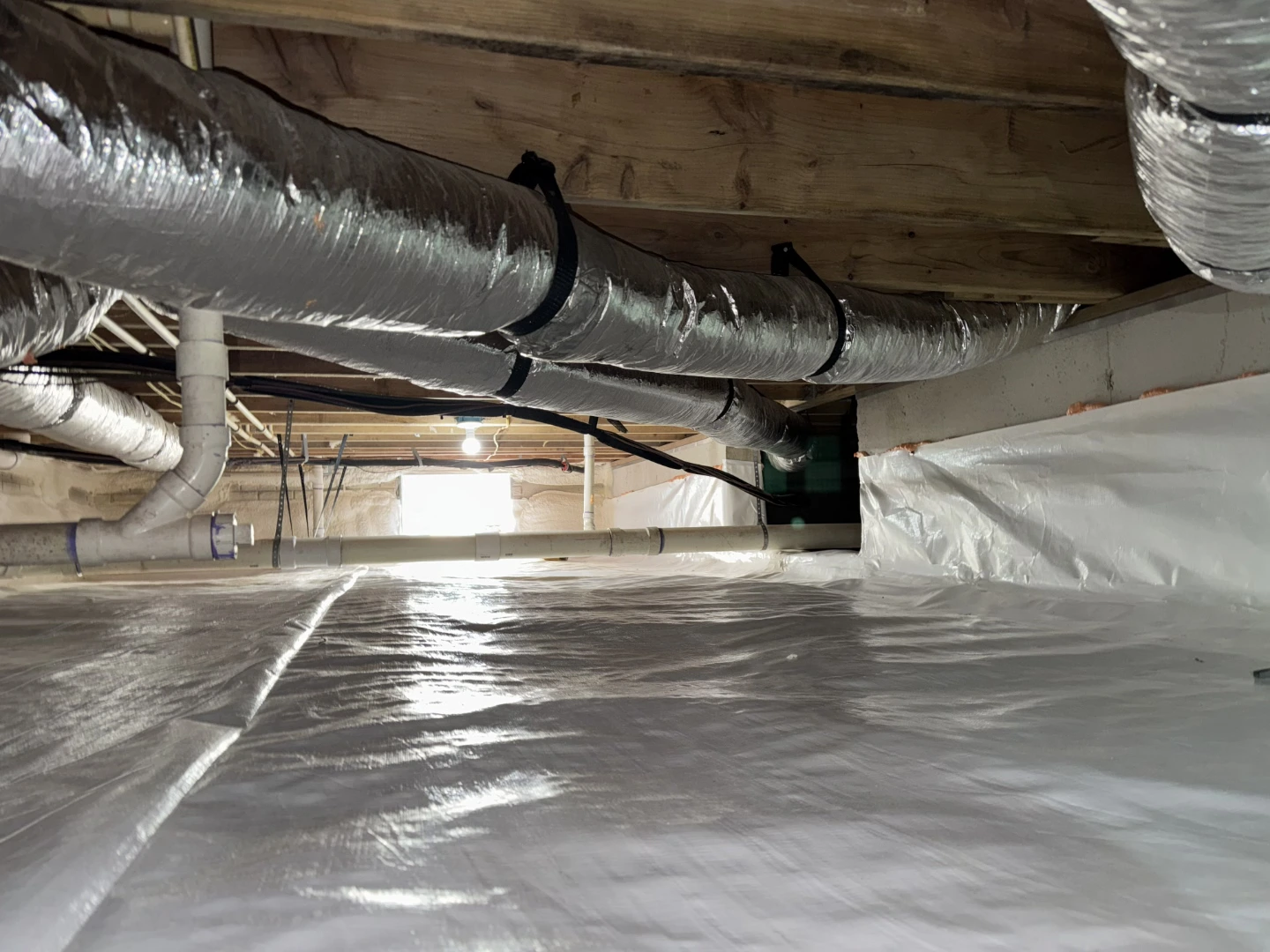
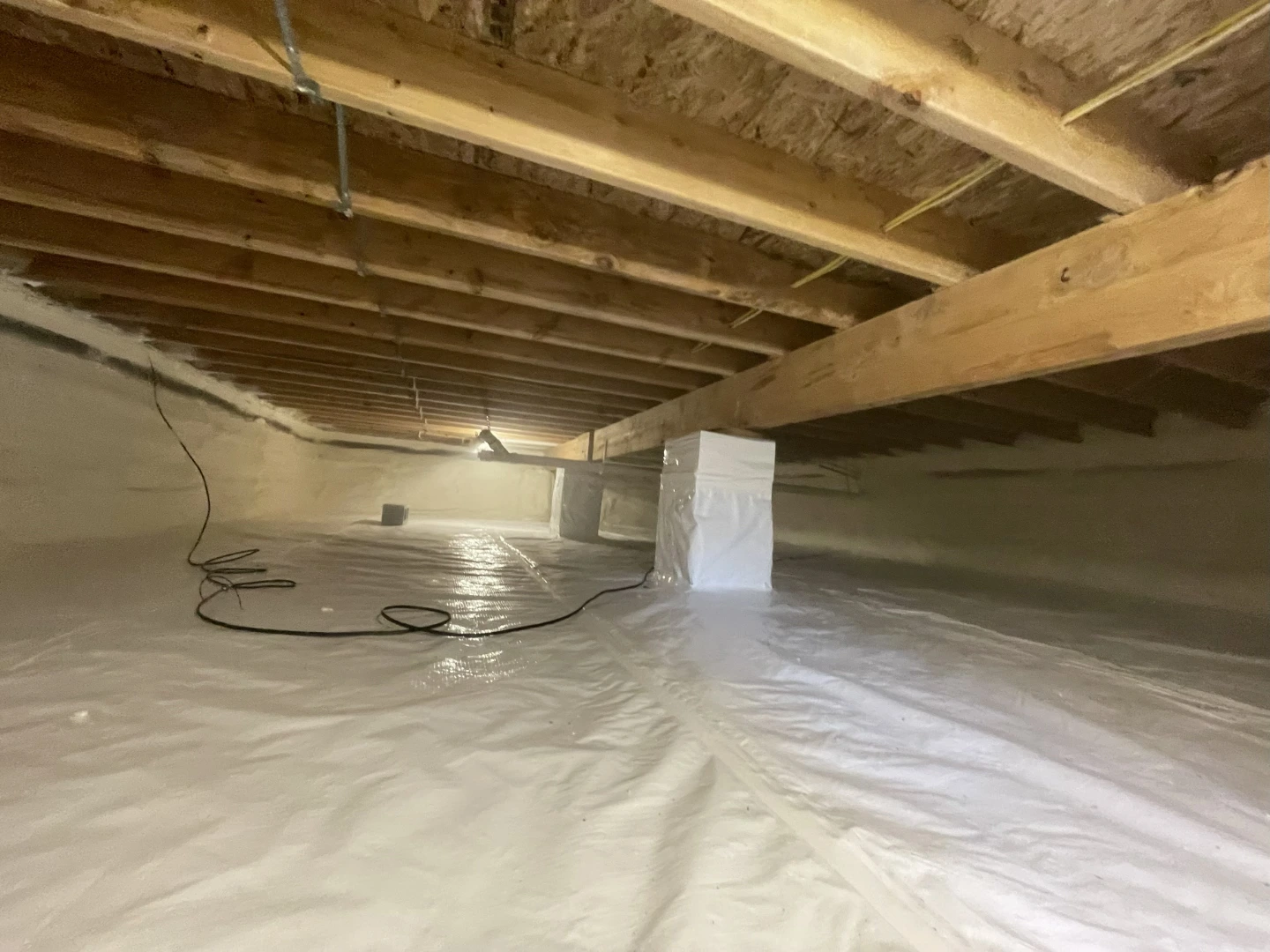
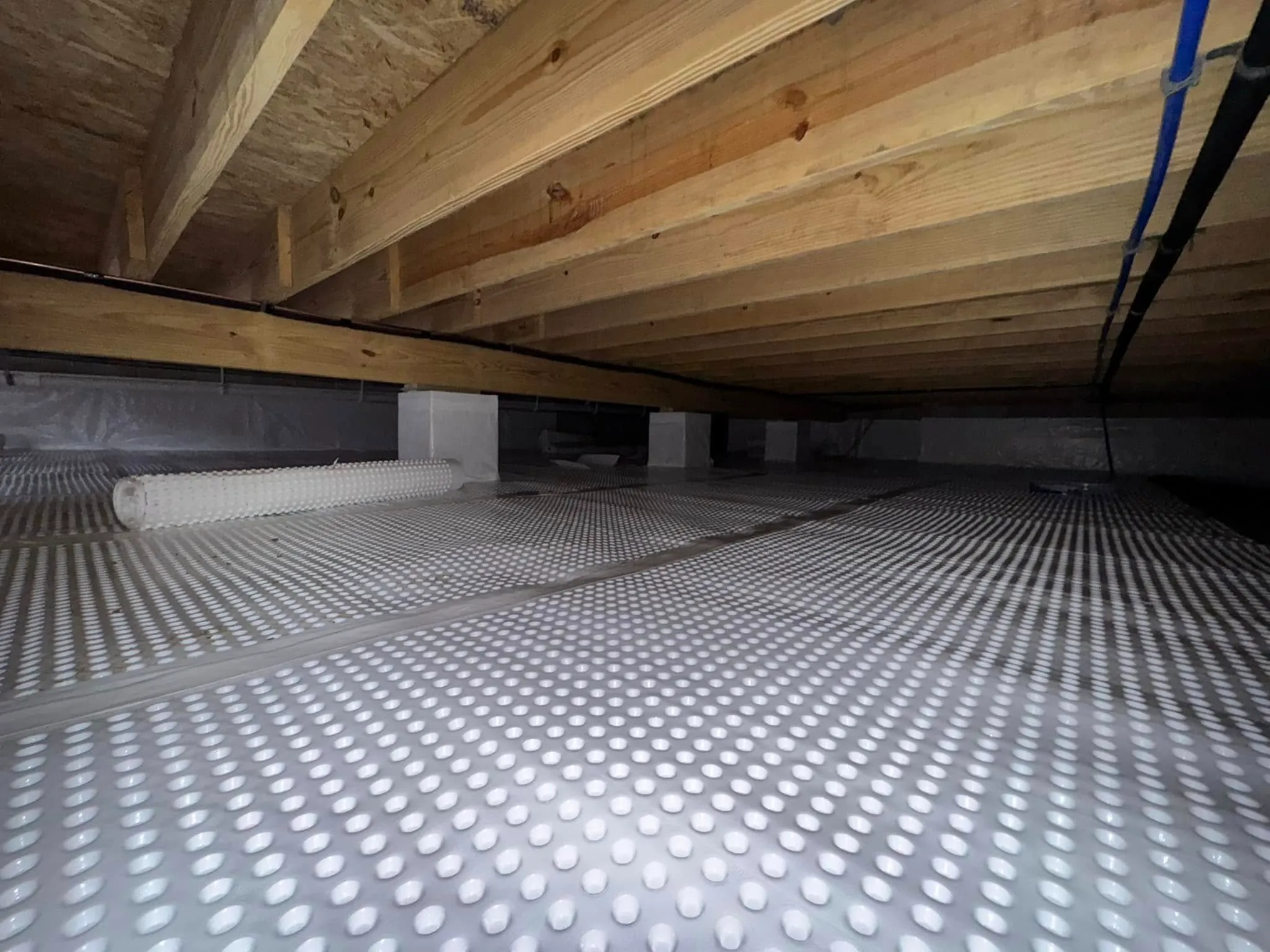
Encapsulation is not simply laying plastic on the ground. A proper system seals the crawl space completely from outside air and ground moisture, then conditions it as part of the home. Building Science Corporation recommends treating crawl spaces as “mini-basements” that are fully connected to the conditioned space of the house Building Science Corporation – BA-0401. This includes a continuous vapor-retardant ground cover sealed at all seams and fastened to the foundation walls, rigid insulation on the perimeter walls, sealed vents, and a method for moisture control, either through supply air from the HVAC system, a dedicated dehumidifier, or exhaust ventilation.
The U.S. Department of Energy’s Building America program confirmed through field studies that conditioned crawl spaces outperform vented crawl spaces in safety, health, comfort, durability, and energy efficiency, with heating and cooling energy savings of 15% to 18% and humidity reductions exceeding 20%.
Signs You Have Found the Right Encapsulation Contractor
Choosing who handles your crawl space encapsulation matters as much as deciding to do it. Here is what separates a qualified team from an incomplete installation:
Thorough assessment before quoting: A reputable contractor inspects the entire crawl space, measures humidity, checks for standing water and drainage issues, and identifies mold or structural damage before recommending any work
Complete system approach: The proposal covers vapor barrier, vent sealing, wall insulation, air sealing, and a conditioning method, not just a partial fix
Transparent scope of work: Every material, step, and component is clearly documented so you know exactly what is included
Post-installation verification: Humidity readings are taken after the system is running to confirm moisture is under control
Warranty and follow-up: A solid warranty covers both materials and workmanship, with a clear process for addressing any future concerns
How Encapsulation Compares to Alternatives
Approach
What It Does
Moisture Control Level
Best For
Long-Term Value
Vented crawl space
Open vents, no barrier
Minimal
Dry climates with low water tables
Low initial cost, high risk of moisture damage
Moisture barrier only
Plastic on ground floor
Moderate
Minor dampness issues
Better than nothing, but does not address air sealing or conditioning
Full encapsulation
Sealed, insulated, conditioned
Comprehensive
Humid climates like Federalsburg
Highest protection, energy savings, structural preservation
Get a Professional Crawl Space Assessment
Peninsula Insulation, LLC provides expert crawl space encapsulation services to homeowners throughout Federalsburg and the surrounding Maryland communities. Our team evaluates moisture levels, structural conditions, and ventilation to determine exactly what your crawl space needs, and we build every encapsulation system to perform as a complete, conditioned space. Contact us at (410) 770-2624 or email wil@mdsprayfoam.net to schedule your inspection and get a quote today.
How long does crawl space encapsulation take to install?
Most standard crawl space encapsulation projects in Federalsburg are completed within one to two days, depending on the size of the space and the extent of any pre-existing moisture damage.
Will encapsulation help lower my energy bills?
Yes. U.S. Department of Energy research shows conditioned crawl spaces reduce heating and cooling energy use by 15% to 18% compared to vented crawl spaces.
Do I still need a dehumidifier after encapsulation?
Most encapsulation systems include some form of moisture control, whether that is a dedicated dehumidifier or conditioned air from your HVAC system. Our team recommends the right approach based on your specific conditions.
Can encapsulation be done in an older home with existing moisture damage?
Yes. We assess any existing mold, wood rot, or drainage issues before installation and address them as part of the encapsulation process to ensure the system performs correctly from day one.
Is encapsulation different from just adding a vapor barrier?
Yes. A vapor barrier is a single component. Encapsulation is a complete system that includes a sealed ground cover, wall insulation, vent sealing, air sealing, and moisture conditioning, treating the crawl space as part of your home.
I’m Wil Perkins, founder of Peninsula Insulation, with nearly five years of industry experience. As a longtime Easton, Maryland resident, I focus on quality spray foam services and lasting insulation results.