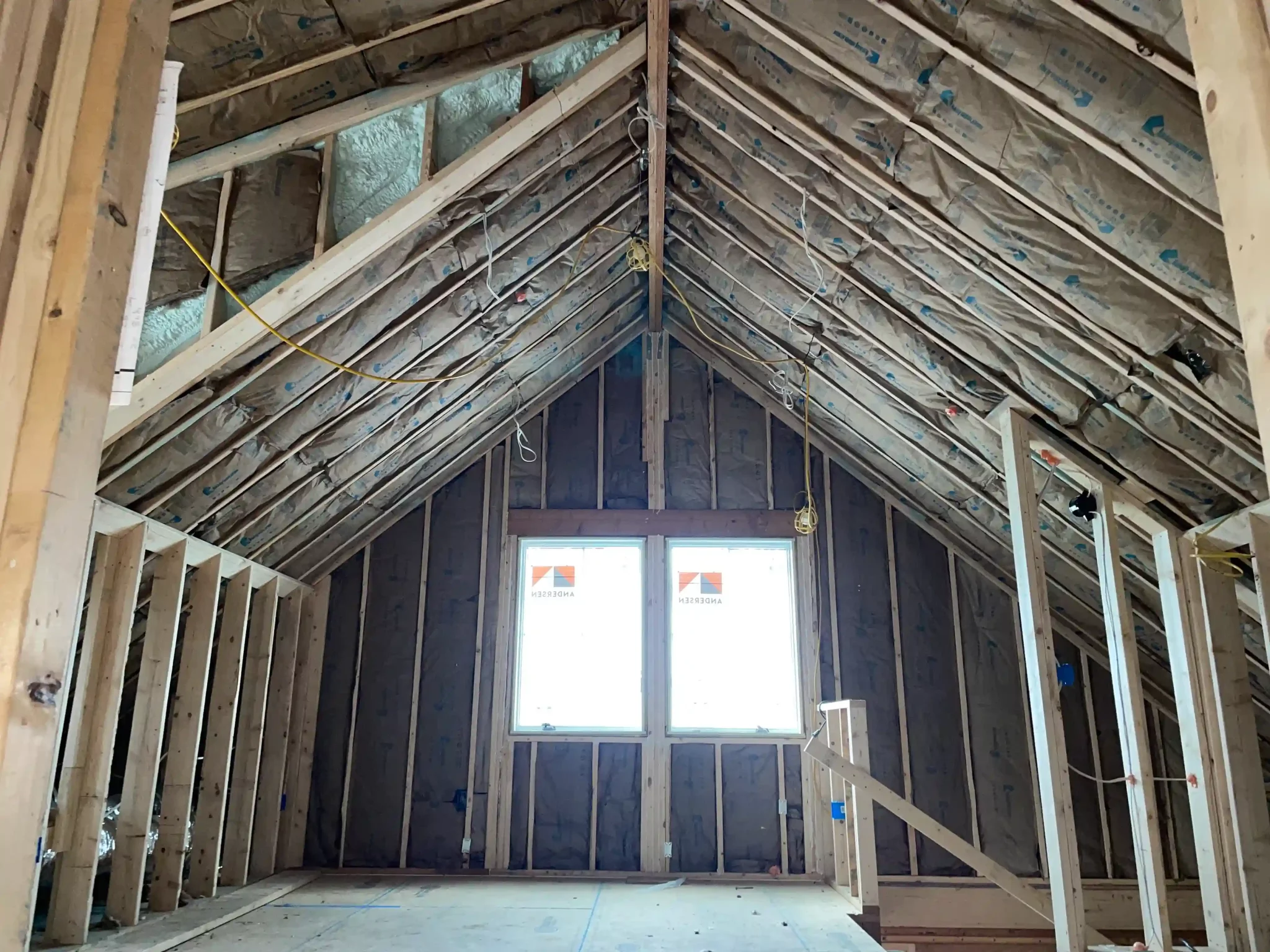
What Happens When Traditional Insulation in New Carrollton, MD Leaves Air Gaps?
When traditional insulation in New Carrollton, MD develops air gaps, it stops doing the one job it was installed to…


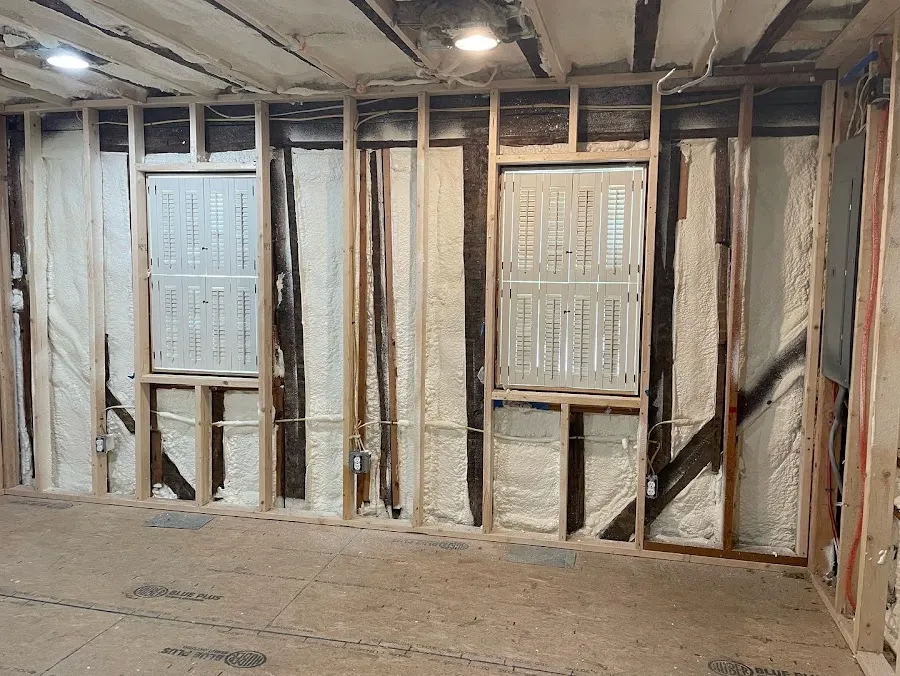
Spray foam insulation addresses several hidden energy problems that silently drain heating and cooling dollars from Hebron, MD homes every month. The biggest culprit is air leakage, which the U.S. Department of Energy reports accounts for 25 to 40 percent of the energy used for heating and cooling in a typical residence. According to the Oak Ridge National Laboratory, heating and cooling account for 50 to 70 percent of the energy used in the average American home, and inadequate insulation combined with air leakage are the leading causes of that waste. Spray foam insulation fixes these problems by expanding into every gap, crack, and penetration to create an airtight seal that traditional insulation like fiberglass batts simply cannot achieve on its own. A complete spray foam insulation guide can help homeowners understand how different foam types improve efficiency and comfort.
Most homeowners in Hebron think about insulation in terms of thickness or R-value, but the less visible problem is the air moving through the building envelope. Air enters and exits through joints between building materials, gaps around windows and doors, and penetrations for plumbing, wiring, and ductwork. These are the same pathways listed by ENERGY STAR as the primary leakage points in residential buildings, and they are present in nearly every home regardless of age.
The stack effect drives much of this air movement. During winter, warm indoor air rises and pushes out through upper-level gaps in the attic and ceiling, while cold outdoor air is pulled in through lower-level openings in the crawlspace, basement, and rim joist. This constant exchange forces your heating system to condition new air over and over again, a cycle that wastes energy and money every hour the system runs.
What makes this problem particularly difficult for homeowners to detect is that air leakage paths are hidden behind drywall, under insulation, and inside wall cavities. A homeowner might feel a draft near a window and assume the window is the problem, but research cited by building science professionals shows that windows and doors account for only about 20 percent of total air leakage, while the remaining 80 percent comes from concealed pathways throughout the structure. Many homeowners choose a spray foam upgrade in Easton, MD, to address these hidden leaks and improve overall comfort and efficiency.
Traditional insulation materials like fiberglass batts and blown-in cellulose slow conductive heat transfer, but they do not stop air movement through the building envelope. The Oak Ridge National Laboratory’s Insulation Fact Sheet explicitly states that insulation “reduces air movement only within the space it occupies” and “will not reduce air movement through other cracks between building parts.” This means fiberglass in a wall cavity does nothing to stop air leaking between the foundation and sill plate or between framing and a window frame.
Spray foam insulation works differently. As it is applied, the liquid mixture expands to fill the cavity and bonds directly to the surrounding surfaces, including wood framing, concrete, and metal. This bond creates a continuous air barrier that blocks the hidden leakage pathways traditional insulation leaves open.
| Insulation Type | R-Value per Inch | Air Barrier | Vapor Barrier | Best Application |
|---|---|---|---|---|
| Closed-Cell Spray Foam | R-6.0 to R-7.0 | Yes | Yes | Crawlspace walls, rim joist, and basements |
| Open-Cell Spray Foam | R-3.5 to R-3.8 | Yes | No | Wall cavities, attics (vented assemblies) |
| Fiberglass Batts | R-2.9 to R-3.8 | No | No | Standard wall cavities (with air sealing) |
| Blown-In Cellulose | R-3.1 to R-3.8 | Partial | No | Attic floors, existing wall cavities |
| Rigid Foam Board | R-3.8 to R-6.5 | Yes (when taped) | Varies | Continuous exterior insulation |
The distinction between closed-cell and open-cell spray foam matters significantly in Hebron’s Climate Zone 4A environment. Closed-cell foam’s higher density and built-in vapor resistance make it the preferred choice for below-grade applications, crawlspace encapsulation, and any area where moisture control is essential. Open-cell foam provides strong air sealing at a lower material cost and is well-suited for above-grade wall cavities and vented attic floors where vapor permeability is desirable.
One of the most common hidden energy problems in Hebron homes is the vented crawlspace. Many older homes were built with foundation vents intended to reduce moisture, but building science has since shown that vented crawlspaces actually introduce more humidity during summer months when warm, moist outdoor air enters the cool crawlspace and condenses on surfaces.
When a crawlspace is vented, the floor insulation above it is the only barrier between the conditioned living space and the outdoor environment. According to the DOE Insulation Fact Sheet, if the crawlspace is not vented, the insulation should be placed on the crawlspace walls instead of under the floor above, and the air within the crawlspace becomes part of the conditioned space. Spray foam applied directly to the crawlspace walls and rim joist seals the perimeter, eliminates air exchange with the exterior, and brings the crawlspace within the thermal envelope of the home.
This approach eliminates several problems at once. It stops the stack effect from pulling cold air through the crawlspace into the living space during winter. It prevents condensation from forming on ductwork and plumbing runs in the crawlspace. It also keeps floor temperatures more consistent, which directly improves occupant comfort. Homeowners often work with a Hebron spray foam expert to achieve these benefits and create a more comfortable indoor environment.
The attic is another major source of hidden energy waste. Air leaks between the conditioned living space and the attic are among the most significant pathways for energy loss, driven by the stack effect. Leaky ductwork running through an unconditioned attic compounds the problem. The Oak Ridge National Laboratory notes that up to 25 percent of heating and cooling energy can be wasted by leaky ductwork in a traditional vented attic.
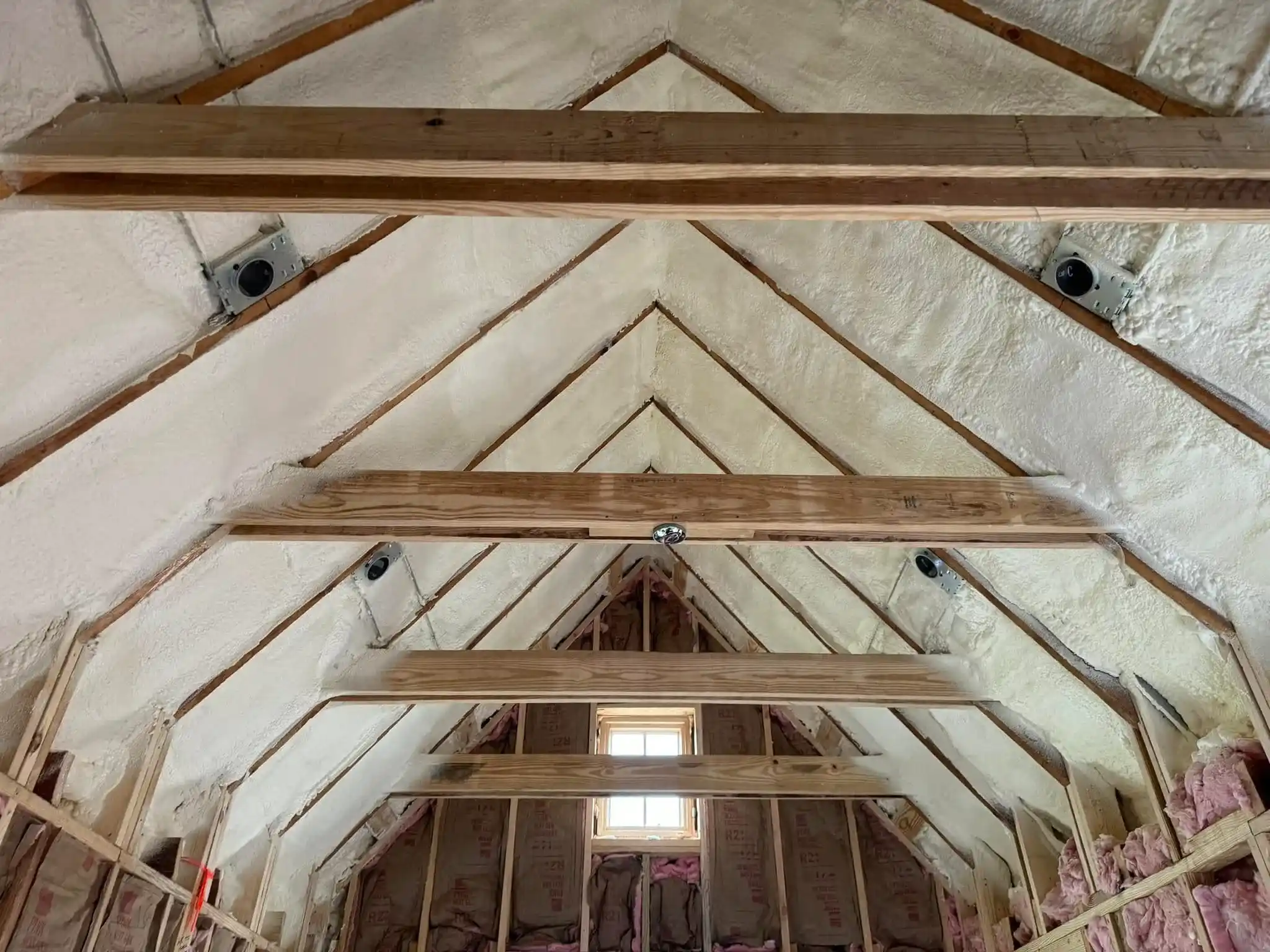
Spray foam applied to the attic floor (in a vented attic) or to the roofline (in an unvented, cathedralized attic) seals these leakage paths. When foam is applied at the roofline, the attic space becomes conditioned, which means any ductwork located there no longer operates in an extreme temperature environment. This alone can reduce HVAC energy waste substantially.
Hebron is located in Wicomico County, Maryland, which falls within IECC Climate Zone 4A (mixed-humid). This classification has direct implications for insulation requirements. Under the prescriptive pathway of the IECC, homes in Zone 4 require a minimum ceiling R-value of R-49, wood-frame wall insulation of R-20 cavity or R-13 cavity plus R-5 continuous insulation, and a floor R-value of R-19.
Maryland adopted the 2021 IECC in May 2023, with local jurisdictions required to enforce it by May 2024. The updated code continues to require a maximum air leakage rate of 3 ACH50 for residential buildings in Climate Zones 4 and 5. Spray foam insulation makes meeting this air leakage target far more achievable than relying on separate air sealing materials and traditional insulation.
| Building Element | Zone 4 Minimum Requirement | Spray Foam Advantage |
|---|---|---|
| Ceiling / Attic | R-49 | Foam seals top plates and penetrations |
| Wood-Frame Walls | R-20 cavity or R-13 + R-5 continuous | Foam fills gaps around framing and obstructions |
| Crawlspace Walls | R-10 continuous or R-13 cavity | Foam bonds to walls and seals the rim joist completely |
| Floor Over Unconditioned Space | R-19 | Foam maintains contact with the subfloor |
| Building Air Leakage | 3 ACH50 maximum | Foam creates a continuous air barrier |
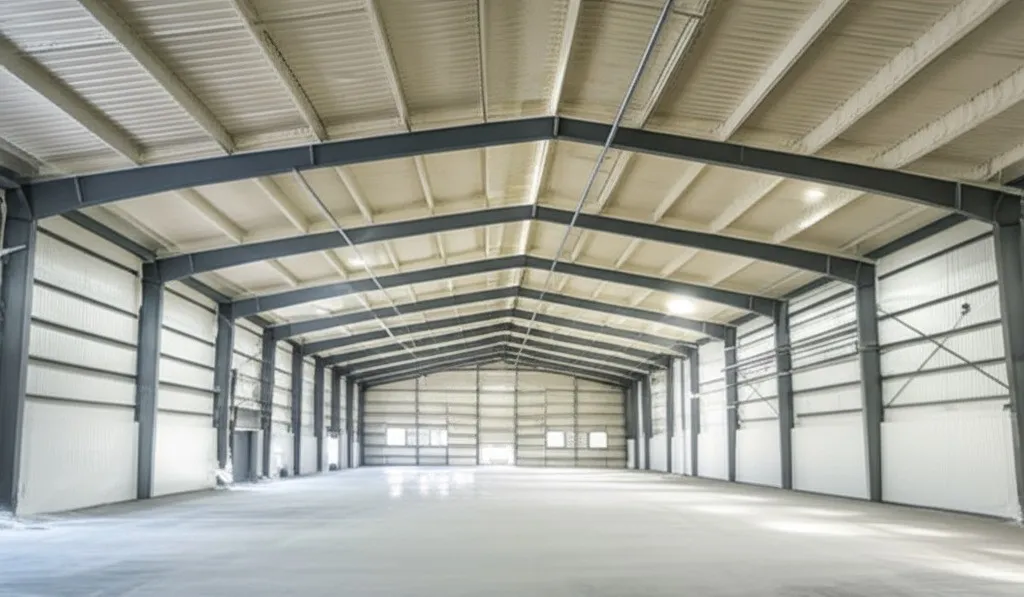
Several variables influence how effectively spray foam insulation addresses hidden energy problems in your home:
| Scenario | Home Type | Hidden Problem | Spray Foam Solution | Outcome |
|---|---|---|---|---|
| Drafty rooms, high heating bills | 1980s ranch, vented crawlspace | Rim joist and crawlspace air leakage | Closed-cell foam on rim joist and crawlspace walls | Eliminated cold floors, reduced heating runtime |
| Moisture in the attic, uneven temperatures | 1990s two-story, vented attic | Air leaks through top plates and recessed lights | Open-cell foam on the attic floor at the leakage points | Sealed attic boundary, stable upstairs temperatures |
| Frozen pipes in the crawlspace | 1970s Cape Cod, uninsulated crawlspace | No insulation, open vents, cold air infiltration | Closed-cell foam encapsulation on walls and rim joists | Pipes protected, crawlspace brought into conditioned space |
| The HVAC system is running constantly | 2000s colonial, leaky ductwork in the attic | Duct losses in unconditioned attic space | Closed-cell foam on the roofline for a cathedralized attic | Ducts now in conditioned space, reduced HVAC load |
| Ice dams forming on roof edge | 1960s split-level, inadequate attic insulation | Heat loss through the ceiling from melting snow on the roof | Spray foam air sealing and insulation at attic floor | Stopped heat loss to roof surface, eliminated ice dams |
Peninsula Insulation, LLC has the experience and expertise to identify and resolve the hidden energy problems in your Hebron, MD home. Our team evaluates every crawlspace, attic, and wall assembly for air leakage, moisture issues, and insulation deficiencies, then recommends the right spray foam solution based on your home’s specific needs and Maryland’s current energy code requirements. We use only high-quality materials and follow tested installation practices to deliver lasting results.
Contact us today for a thorough insulation assessment or request a quote to get started. Call us at (410) 770-2624 or email wil@mdsprayfoam.net to discuss your project.
Request a Quote | Schedule Your Insulation Assessment
In most cases, small holes can be drilled through the exterior siding or interior drywall to inject spray foam into existing wall cavities. This approach works best for open-cell foam and requires a professional installer with the right equipment.
When spray foam significantly reduces air leakage, controlled mechanical ventilation becomes more important for maintaining healthy indoor air quality. We evaluate each home’s ventilation needs and advise on any necessary changes before installation.
When properly installed on clean, dry substrates, spray foam insulation is a permanent building material that does not settle, degrade, or lose its R-value over time. It does not absorb moisture like fiberglass or cellulose.
It depends on the application. Closed-cell foam is the better choice for below-grade areas, crawlspaces, and anywhere moisture control is a priority. Open-cell foam is well-suited for above-grade wall cavities and vented attic assemblies where vapor permeability is beneficial.
Yes. Ice dams form when warm air leaks from the living space into the attic and warms the roof deck, melting snow that refreezes at the eaves. Spray foam seals the air leakage pathways between the conditioned space and the attic, keeping the roof deck cold and preventing the conditions that cause ice dams.