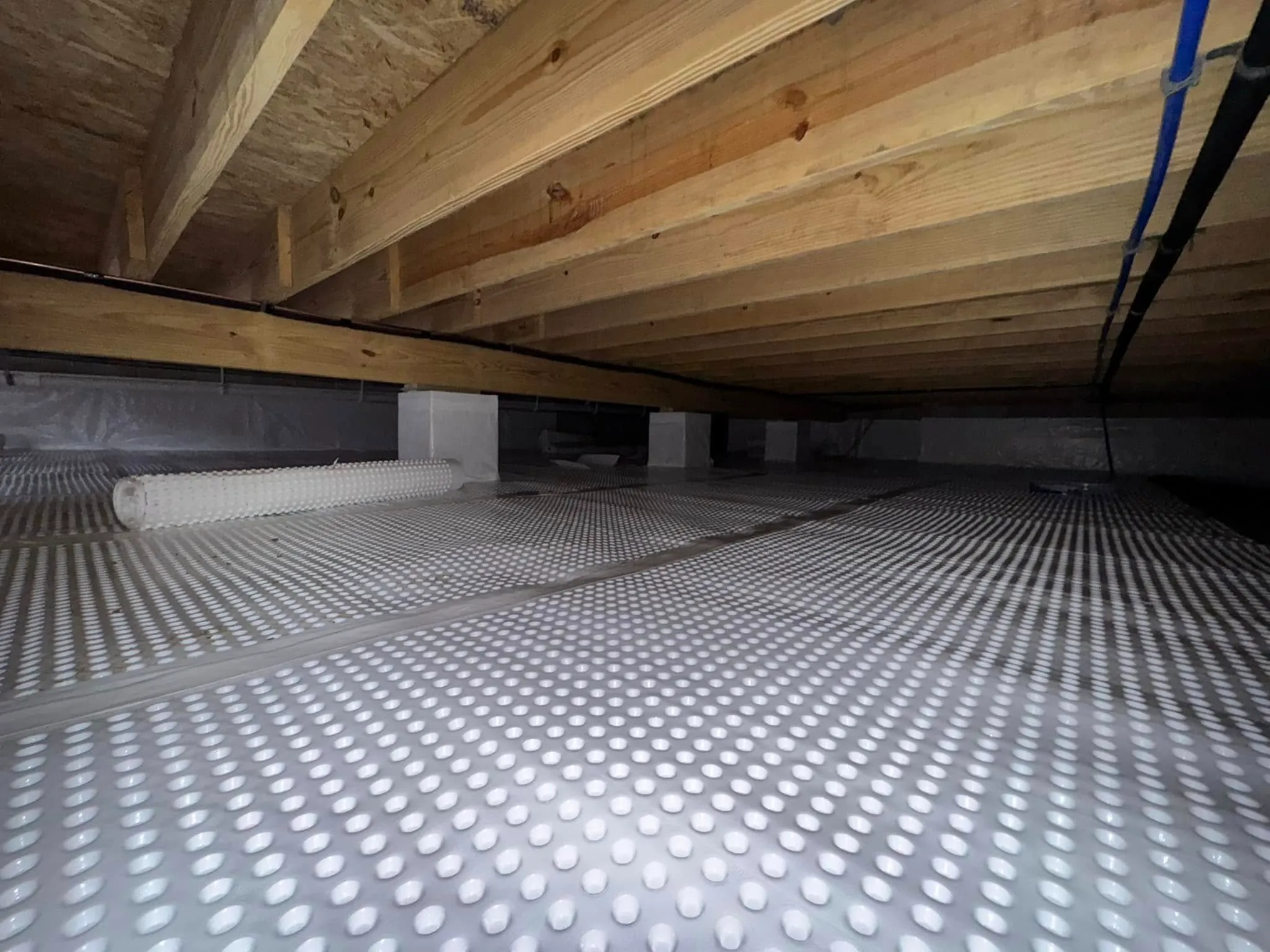
What Materials Are Commonly Used for Crawl Space Encapsulation in 2026, and Why Do They Matter?
Most crawl space encapsulation material choices in 2026 fall into five groups: a polyethylene vapor barrier over the soil and…


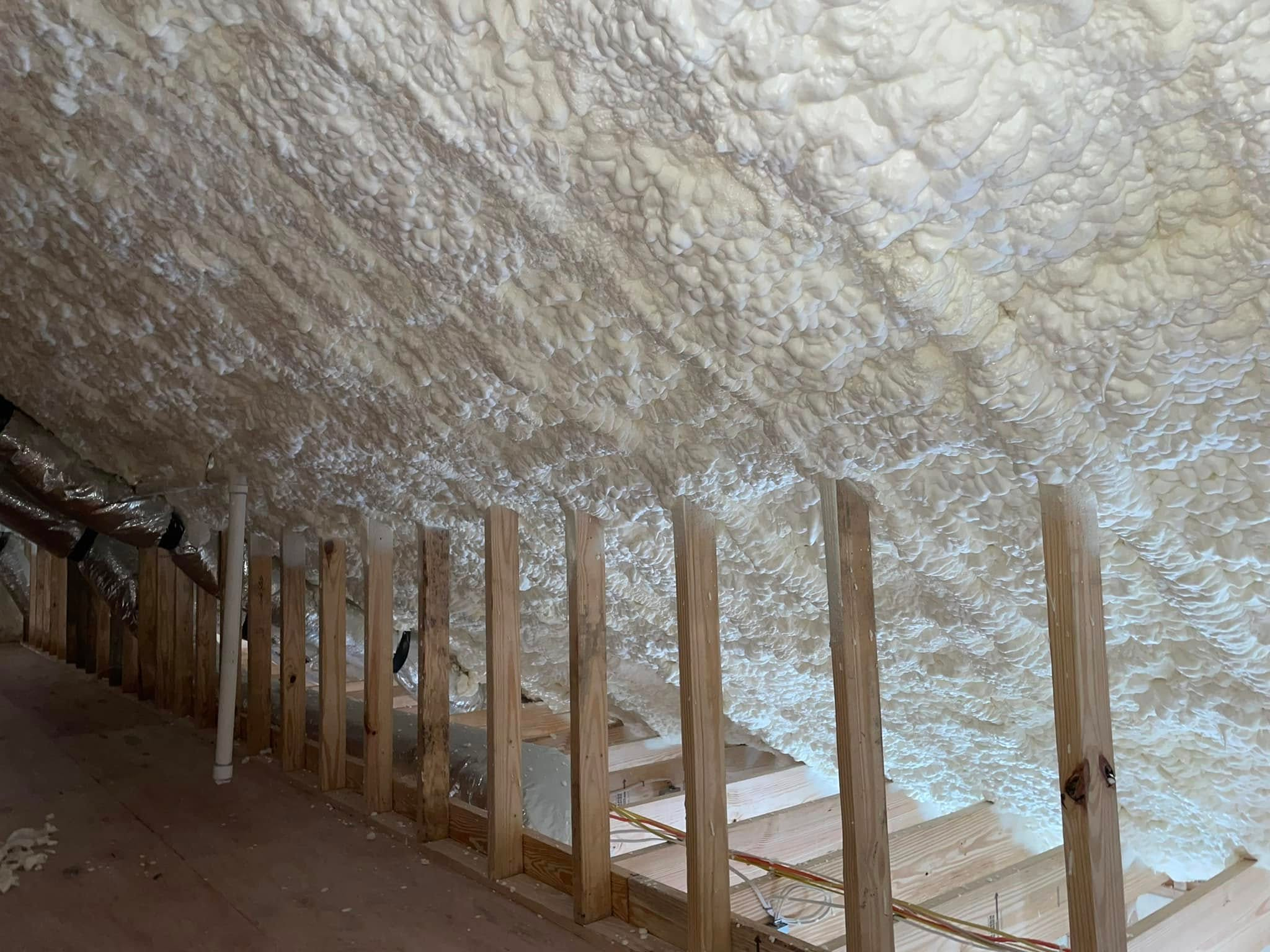
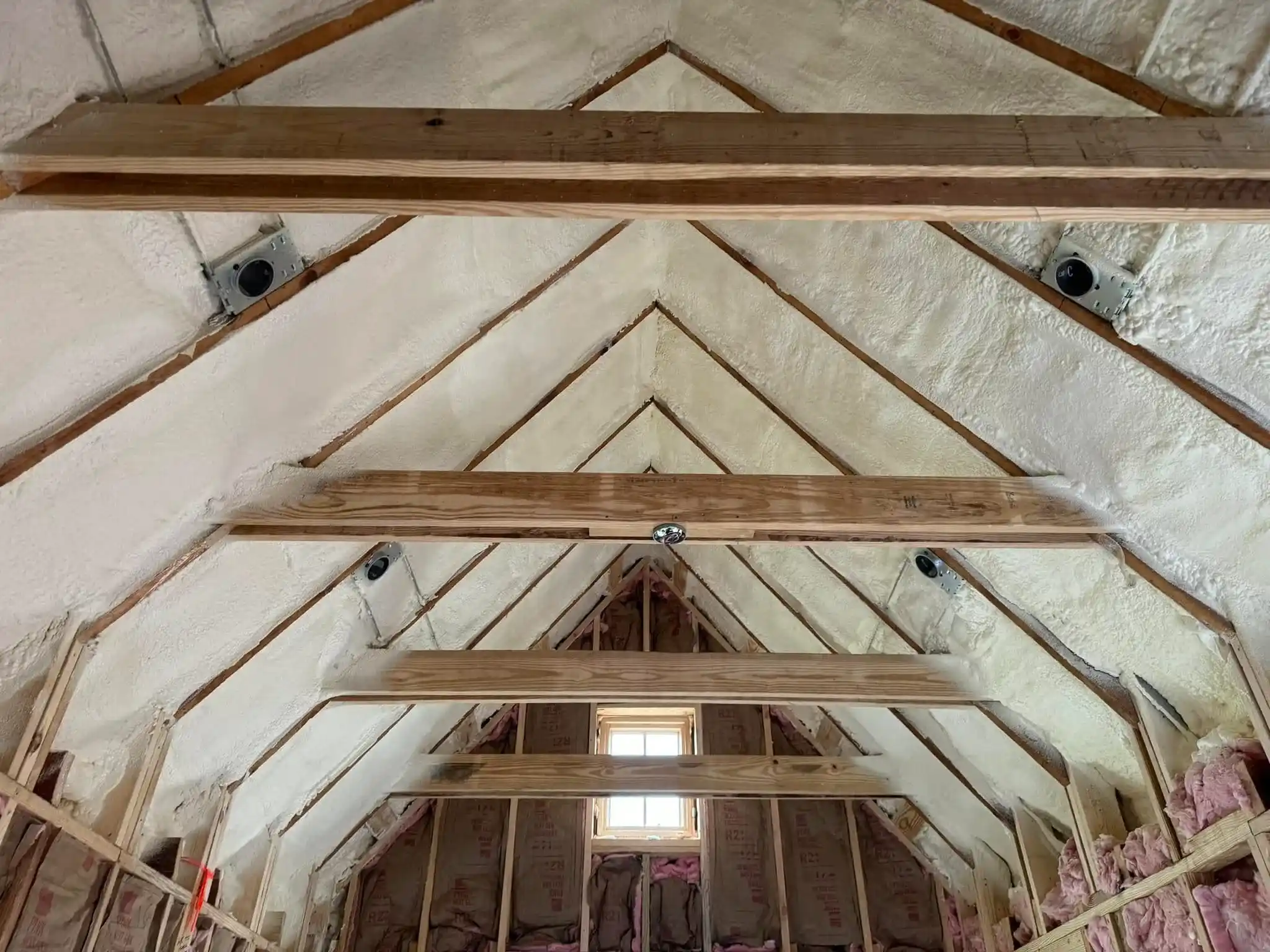
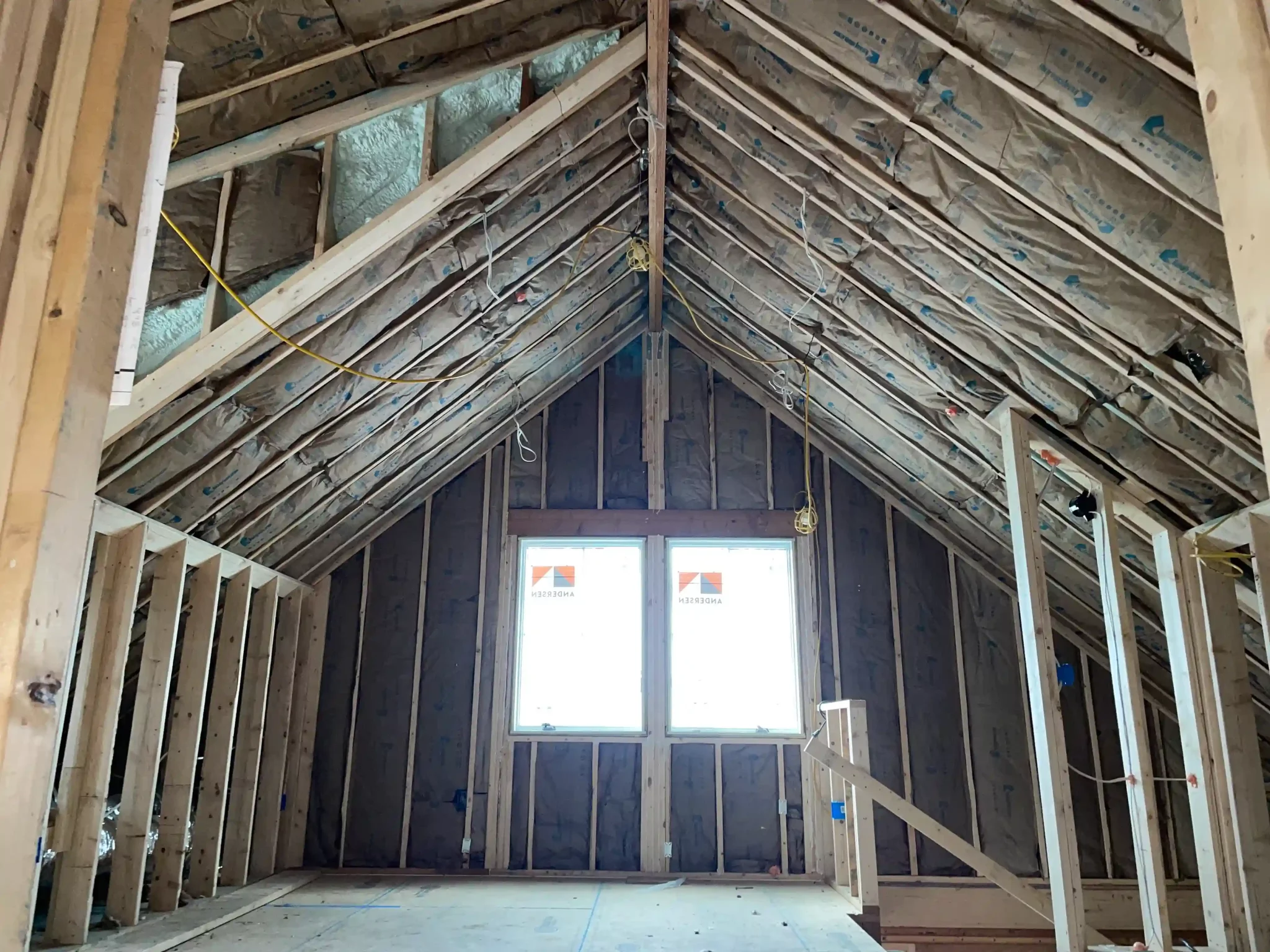
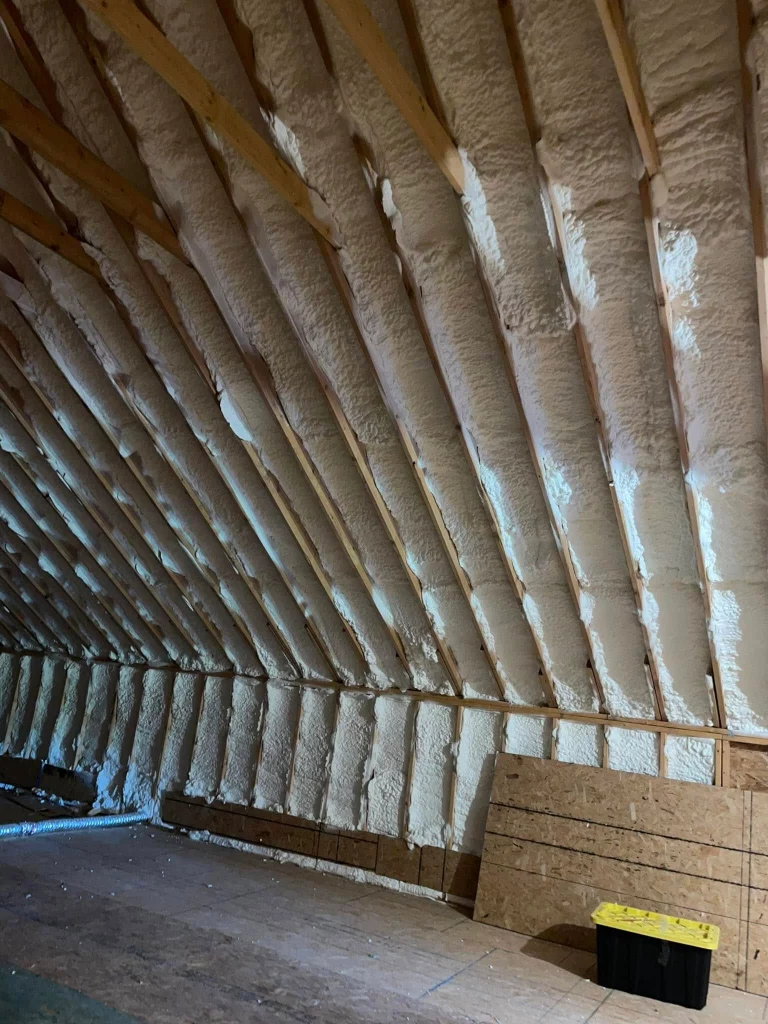
Spray foam insulation protects homes from heat loss in Bowie, MD, by expanding up to 100 times its original volume when applied, filling every crack, gap, and cavity in the building envelope to create a continuous air barrier and thermal seal. Unlike fiberglass batts or blown cellulose, which can leave voids around framing, wiring, and plumbing penetrations, spray foam adheres directly to surfaces and expands into hard-to-reach spaces. Explore advanced spray foam insulation benefits for modern homes. This expansion process is what makes it particularly effective at preventing the air leakage responsible for a significant portion of residential energy waste. In Bowie, which sits in IECC Climate Zone 4A (mixed-humid), homeowners face both cold winters and humid summers, making the dual air sealing and insulation properties of spray foam especially valuable.
Spray polyurethane foam (SPF) is created by mixing two liquid chemicals, an isocyanate (A-side) and a polyol resin blend (B-side), at the tip of a spray gun. When these components meet, a chemical reaction generates heat and causes the mixture to expand rapidly. Within seconds, the foam grows to fill the surrounding cavity, then cures into a solid polymer matrix, which is why the spray foam application method directly impacts results.
The expansion ratio depends on the foam type:
This expansion is what allows spray foam to seal penetrations around electrical boxes, plumbing runs, window and door framing, rim joists, and roof decking connections. These are the same areas where traditional insulation materials settle, compress, or leave gaps that allow conditioned air to escape.
Bowie experiences average winter temperatures in the low 30s (Fahrenheit), with January routinely bringing overnight lows near 20 degrees. Summers are hot and humid, with July averages in the mid-70s to upper 80s. This mixed-humid climate means homes need protection against both heat loss in winter and heat gain in summer, making spray foam insulation in Bowie, MD a highly effective solution for year-round performance.
The Maryland Energy Administration classifies the Bowie area under prescriptive energy code requirements that include specific R-values for different building components. Homes built before modern energy codes often have inadequate insulation, air-leaky construction, and minimal attention to the continuous air barriers that spray foam provides.
Air leakage accounts for a substantial share of energy loss in older homes. According to ENERGY STAR’s energy modeling, homeowners in Climate Zone 4 can expect approximately 12% savings on total utility bills and 17% savings on heating and cooling costs when they combine air sealing with insulation upgrades. These savings are higher in northern zones and lower in the south, placing Bowie in a range where the return on investment is strong.
Choosing between open-cell and closed-cell spray foam depends on the application, the climate zone, and the specific performance goals of the project. The Building Science Corporation’s Residential Spray Foam Guide recommends considering both options for most wall and roof assemblies in Climate Zone 4, with closed-cell foam preferred where moisture control and structural rigidity are priorities.
| Property | Open-Cell Spray Foam | Closed-Cell Spray Foam |
|---|---|---|
| R-Value per Inch | R-3.5 to R-3.7 | R-5.7 to R-7.0 |
| Expansion Ratio | 100x to 150x | 30x to 40x |
| Density (lb/ft³) | 0.4 to 0.6 | 1.5 to 2.5 |
| Air Barrier | Yes (at minimum depth) | Yes (at minimum depth) |
| Vapor Retarder | No (vapor permeable) | Yes (Class II at 1.5″+) |
| Moisture Barrier | No | Yes |
| Sound Attenuation | Excellent | Moderate |
| Structural Reinforcement | Minimal | High |
| Best Application | Walls, sound-dampening, and budget | Roofs, foundations, flood-prone |
In Bowie’s Climate Zone 4A, both foam types perform well in wall cavities. For roofs and unvented attic assemblies, closed-cell is generally the safer choice because it provides condensation control without requiring a separate interior vapor retarder. For vented crawlspaces and basements, the Building Science Corporation recommends closed-cell spray foam across all climate zones due to its moisture resistance and durability.
The way spray foam prevents heat loss differs from how traditional insulation works. Conventional materials like fiberglass and cellulose slow conductive heat transfer but do little to stop convective heat loss caused by air movement through the building envelope. When wind hits a home in Bowie on a January night, air pressure drives cold air through any available crack around rim joists, window rough openings, and wall-top plates. Fiberglass batts cannot block this air movement because they are air-permeable.
Spray foam addresses heat loss through three mechanisms simultaneously:
This triple-action approach is why homes insulated with spray foam often maintain more even indoor temperatures, experience fewer drafts, and show measurable reductions in energy consumption compared to homes with traditional insulation alone.
Several variables determine how well spray foam performs in a specific home. Understanding these factors helps homeowners and builders make informed decisions about product selection and installation depth.
Climate Zone Classification: Bowie sits in Climate Zone 4A. The Insulation Institute’s Maryland code summary notes that Maryland amended the 2021 IECC to revert to 2018 IECC insulation levels for walls and ceilings, while maintaining a uniform R-49 requirement for attics. Spray foam must be installed at a sufficient thickness to meet or exceed these prescriptive values.
Foam Thickness and Coverage: Applying spray foam below the manufacturer’s recommended minimum depth means the foam will not achieve its rated R-value or function as an air barrier. For example, closed-cell foam must typically reach at least 1 to 1.5 inches before it qualifies as air-impermeable insulation under the IECC.
Installation Quality: Spray foam application requires trained technicians using properly calibrated equipment. Inconsistent spray patterns, gaps between passes, and inadequate mixing can all reduce performance. The curing process is also temperature-sensitive; applying foam in very cold conditions (below 40°F) without proper substrate warming or cold-weather formulations can compromise adhesion and expansion.
Building Age and Construction Type: Older Bowie homes with balloon framing, uninsulated rim joists, and knob-and-tube wiring present different challenges than newer construction. Spray foam can be retrofitted into many existing assemblies, but a thorough assessment is necessary to identify wiring concerns, moisture issues, and ventilation requirements before installation.
Vapor Diffusion Requirements: In Climate Zone 4A, moisture management is critical. Closed-cell spray foam at 1.5 inches or greater acts as a Class II vapor retarder, which controls interior moisture from diffusing into wall and roof assemblies during winter. Open-cell foam does not provide this function and may require a separate vapor retarder depending on the assembly design.
The following examples illustrate how spray foam addresses common heat loss problems in homes typical of the Bowie area.
| Scenario | Home Type | Problem | Solution | Outcome |
|---|---|---|---|---|
| Drafty Second Floor | 1985 colonial, 2,400 sq ft | Cold rooms upstairs, high heating bills, attic insulation settled to R-19 | Closed-cell foam sprayed to the underside of the roof deck (3 inches), creating an unvented conditioned attic | Even temperatures throughout, HVAC load reduced, R-21+ at roof plane |
| Uninsulated Crawlspace | 1970 rancher, 1,500 sq ft | Cold floors, musty smell, pipes at risk of freezing | Closed-cell foam on crawlspace walls and rim joist (2 inches) | Warm floors, moisture-controlled, plumbing protected |
| Leaky Rim Joist | 1990 split-level, 2,000 sq ft | Noticeable drafts at floor edges, high air infiltration | Closed-cell foam applied to rim joist bays (2 inches) | Air leakage is reduced, and perimeter rooms are more comfortable |
| New Construction | 3,500 sq ft custom build | Meeting the Maryland energy code, maximizing efficiency | Open-cell foam in walls (5.5 inches, R-20), closed-cell at rim joist and band joist | Exceeds code requirements, tight building envelope |
| Finished Basement Retrofit | 2005 colonial, 2,800 sq ft | Basement stays cold despite finished space, moisture on the walls | Closed-cell foam on concrete foundation walls (2 inches) with frame wall and fiberglass | Warm basement, condensation eliminated, additional living space usable year-round |
For homeowners in Bowie evaluating spray foam insulation, these steps provide a practical path forward.
1. Start with a home energy assessment. A blower door test conducted by a qualified energy auditor will quantify air leakage rates and identify the specific areas where heat is escaping. This data helps prioritize which areas of the home will benefit most from spray foam.
2. Prioritize the attic and rim joists. These two areas typically represent the largest sources of air leakage and heat loss in Maryland homes. Sealing the attic plane, whether through an unvented conditioned attic approach or by air-sealing the ceiling plane before adding insulation, delivers the greatest energy savings per dollar invested.
3. Match foam type to the application. Use closed-cell spray foam for basements, crawlspaces, rim joists, and any assembly where moisture control is a priority. Open-cell foam is a cost-effective option for above-grade wall cavities and interior sound-dampening applications where a separate vapor retarder can be incorporated.
4. Verify installation depth meets code requirements. Maryland’s prescriptive path requires R-49 for attics and R-13 to R-21 for walls. Confirm that the installed foam thickness delivers the required total R-value for each assembly.
5. Address ventilation before sealing. Tightening the building envelope with spray foam reduces natural air change. Homes sealed with spray foam need mechanical ventilation to maintain indoor air quality and manage humidity. Plan for this before the insulation project begins.
6. Work with experienced installers. Spray foam application requires manufacturer-certified training, proper equipment calibration, and attention to substrate preparation, temperature, and humidity conditions during installation. Ask for proof of certification and references from projects similar to yours.
Spray foam insulation has a higher upfront cost per square foot than fiberglass or cellulose, but the long-term financial picture often favors foam in climates like Bowie’s. The combination of higher R-value per inch, air barrier performance, and moisture control means spray foam addresses multiple building performance issues in a single installation.
Homes insulated with spray foam also tend to hold their value better in real estate markets where energy efficiency is a selling point. The reduced load on HVAC equipment can extend system life, and the structural reinforcement provided by closed-cell foam adds rigidity to wall and roof assemblies. When evaluating return on investment, homeowners should consider energy savings, reduced maintenance costs, improved comfort, and potential resale value together rather than focusing solely on the payback period from energy bills alone.
Peninsula Insulation, LLC has extensive experience helping homeowners across the Bowie area stop heat loss and improve comfort with professionally installed spray foam insulation. Our team evaluates each home’s specific needs, recommends the right foam type and application depth, and installs every project to meet or exceed Maryland energy code requirements.
Call us at (410) 770-2624 or email wil@mdsprayfoam.net to discuss your project. We are ready to show you how spray foam can protect your home from heat loss for years to come.
Q: How long does spray foam insulation last in a home?
When properly installed, spray foam insulation can last the lifetime of the building without degrading, settling, or losing its insulating properties.
Q: Can spray foam be installed in an existing home with finished walls?
Spray foam is most effectively installed during construction or renovation when wall cavities and framing are exposed, though rim joists, attics, and crawlspaces can often be insulated without disturbing finished interiors.
Q: Does spray foam insulation require a separate vapor barrier?
Closed-cell spray foam at 1.5 inches or greater acts as a Class II vapor retarder and does not need a separate vapor barrier. Open-cell foam does not control vapor diffusion and may require one to do so, depending on the assembly.
Q: Is spray foam insulation safe for homes with allergies or respiratory concerns?
Once fully cured, spray foam is inert and does not off-gas or produce particles that affect indoor air quality. Proper ventilation during and immediately after installation is required.
Q: How does spray foam compare to fiberglass for Maryland homes?
Spray foam provides a higher R-value per inch, creates a continuous air seal, and resists moisture absorption, while fiberglass is air-permeable, can settle over time, and does not address air leakage without separate sealing measures.