What Materials Are Commonly Used for Crawl Space Encapsulation in 2026, and Why Do They Matter?
Most crawl space encapsulation material choices in 2026 fall into five groups: a polyethylene vapor barrier over the soil and…


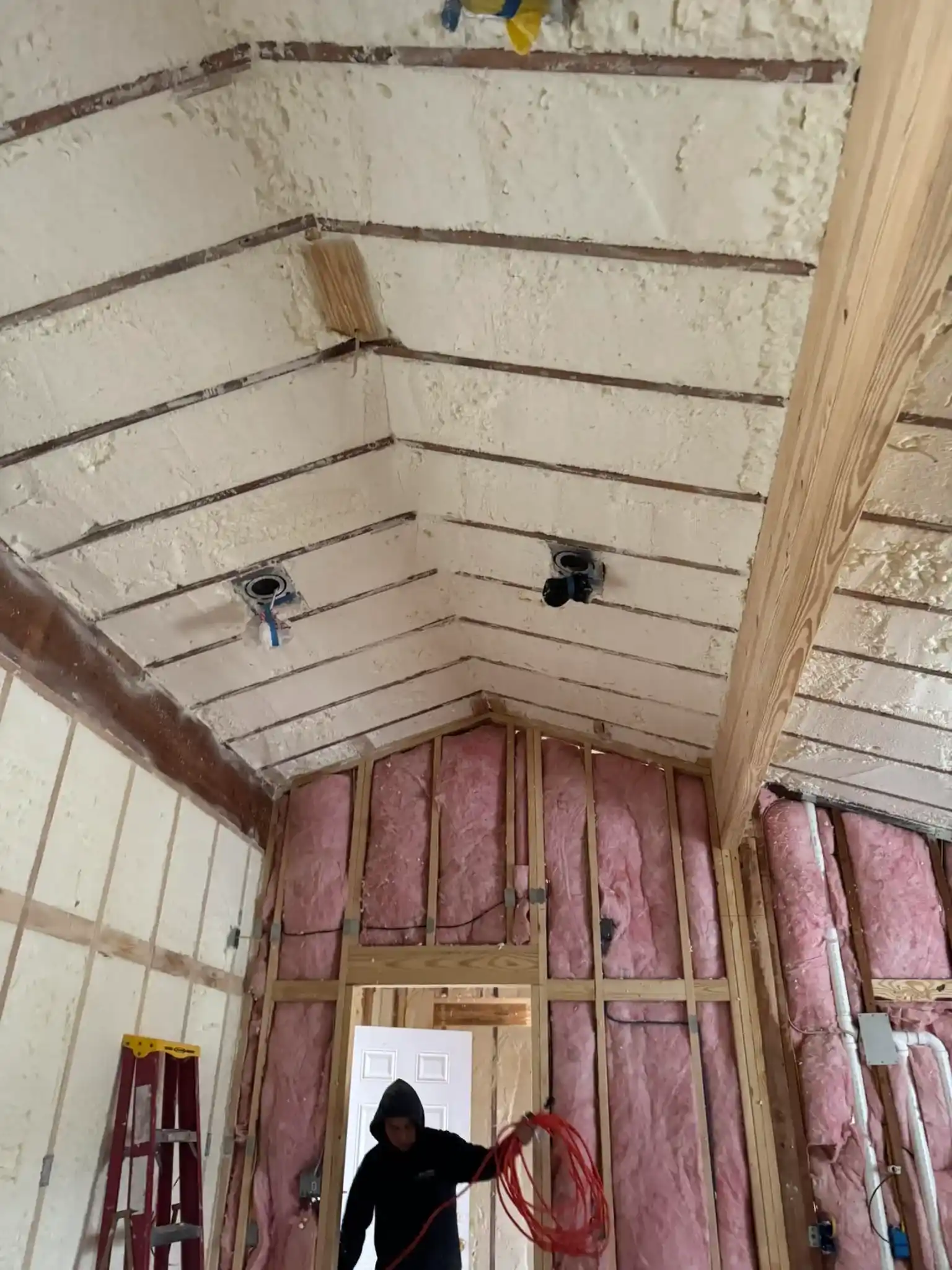
Spray foam insulation in Denton, MD helps seal difficult building areas because it is applied as a liquid that expands 30 to 60 times its volume, filling irregular gaps, cracks, and cavities that traditional insulation materials like fiberglass batts can’t reach. In Denton’s mixed-humid climate, where hot summers and moderately cold winters constantly pressure a building’s envelope, the ability to insulate and air-seal in a single application makes spray foam particularly effective at rim joists, crawl spaces, vaulted ceilings, and around complex framing penetrations. The right approach depends on the specific building area being treated, whether open-cell or closed-cell foam is selected, and the condition of existing construction. Homeowners can review this spray foam insulation guide to better understand the available options and applications.
Spray polyurethane foam (SPF) is created by mixing two chemical components, isocyanate and polyol resin, at the tip of a spray gun Spray foam – Wikipedia. The reaction causes the mixture to expand rapidly and harden into a rigid or semi-rigid cellular structure that conforms to the exact shape of whatever surface it contacts. This expansion behavior is what sets spray foam apart from every other insulation material. Fiberglass batts and rigid foam boards must be cut and fitted to each cavity, and any gap between the material and the framing becomes a pathway for air movement. Spray foam eliminates that problem by design.
The foam blocks all three forms of heat transfer: conduction, radiation, and convection. Most importantly for difficult building areas, it stops convective heat transfer by creating a custom airtight envelope within the building structure. Air cannot move through or around the foam the way it circulates through fibrous insulation. For homes considering local insulation options, insulation reviews in Denton, MD can provide useful insight when evaluating air sealing and thermal performance solutions for irregular building areas.
There are two primary types used in residential and commercial buildings:
| Foam Type | Density | R-Value Per Inch | Air Barrier Thickness | Vapor Barrier | Best Application |
|---|---|---|---|---|---|
| Closed-cell | ~2.0 lb/cu ft | 5.1 to 6.0 | 1.5 inches | Yes (at 50mm+) | Rim joists, crawl spaces, basements, flood-prone areas |
| Open-cell | ~0.5 lb/cu ft | ~3.8 | 5.5 inches | No | Wall cavities, attics, sound-dampening applications |
Denton sits within Maryland’s Climate Division 2 (Central Eastern Shore), which is part of the Atlantic Coastal Plain. According to the Maryland State Climatologist Office, this region experiences hot, humid summers with average temperatures reaching the upper 70s, and moderately cold winters where the higher atmospheric humidity along the Atlantic coast makes the winter cold feel more penetrating than in drier inland climates. Average annual precipitation ranges between 40 and 46 inches, distributed fairly evenly throughout the year.
This combination of high summer humidity, meaningful winter cold, and consistent moisture exposure means that any gap in a building’s envelope allows humid air infiltration in summer and cold, dry air intrusion in winter. The DOE’s Building Science Education resource on tight air-sealed homes notes that poorly air-sealed homes are less comfortable and cost more to maintain because they provide pathways for drafts, cold spots, moisture, and insects. Comprehensive air sealing around the entire building envelope minimizes airflow that can undermine even a well-insulated structure.
The rim joist area, where the floor framing meets the foundation wall, is consistently identified as one of the most problematic air leakage details in residential construction. Building Science Corporation describes the rim joist as “a particularly troublesome detail” because multiple framing components, including the sill plate, rim joist, and subfloor, must all be connected as air barrier elements. Traditional approaches require cutting rigid foam to fit, then carefully caulking every edge, a process that is highly workmanship-sensitive. If any gap is missed, air leakage continues.
Spray foam solves this problem through what BSC calls the “critical seal.” Foam is applied to connect the foundation wall, rim joist, and floor sheathing into a continuous air barrier in a single step. BSC’s field measurements show this detail provides outstanding building airtightness.
The DOE’s guidance on insulating and sealing rim joists confirms that spray foam can air-seal and insulate rim joists in one step, noting that floors can account for one-fourth to one-third of a building enclosure’s surface area, making this a high-impact target.
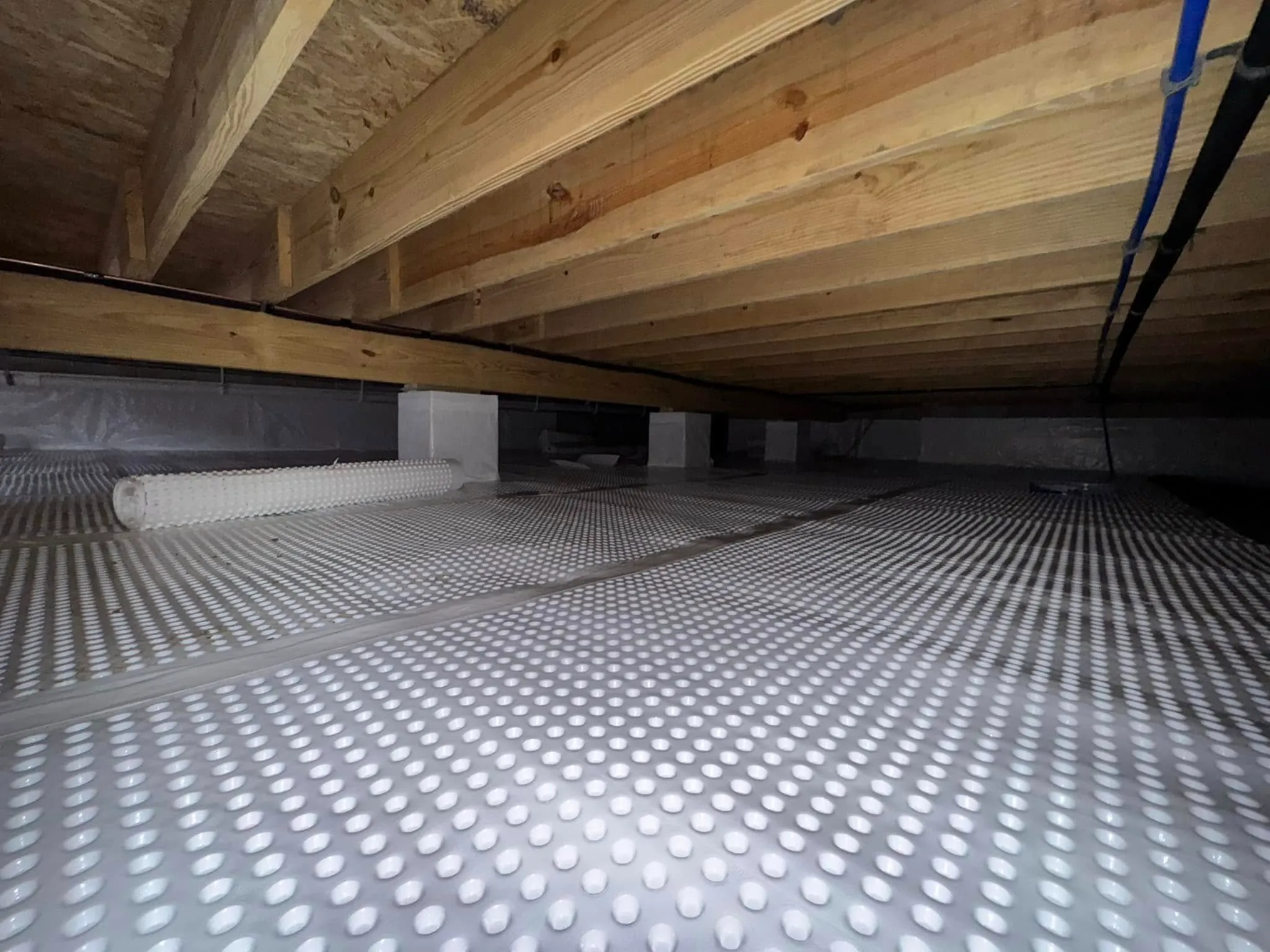
Crawl spaces present a unique challenge because they combine irregular framing, soil moisture, plumbing and electrical penetrations, and limited access. Fiberglass batts installed between floor joists often sag, fall out, or absorb moisture, losing effectiveness quickly. Spray foam applied to the crawlspace walls and rim joist creates a conditioned space that keeps ground moisture out and prevents the stack effect from drawing humid crawl space air into the living area above. Homeowners considering this approach can explore residential spray foam solutions to understand how spray foam can improve insulation and air sealing in challenging areas.
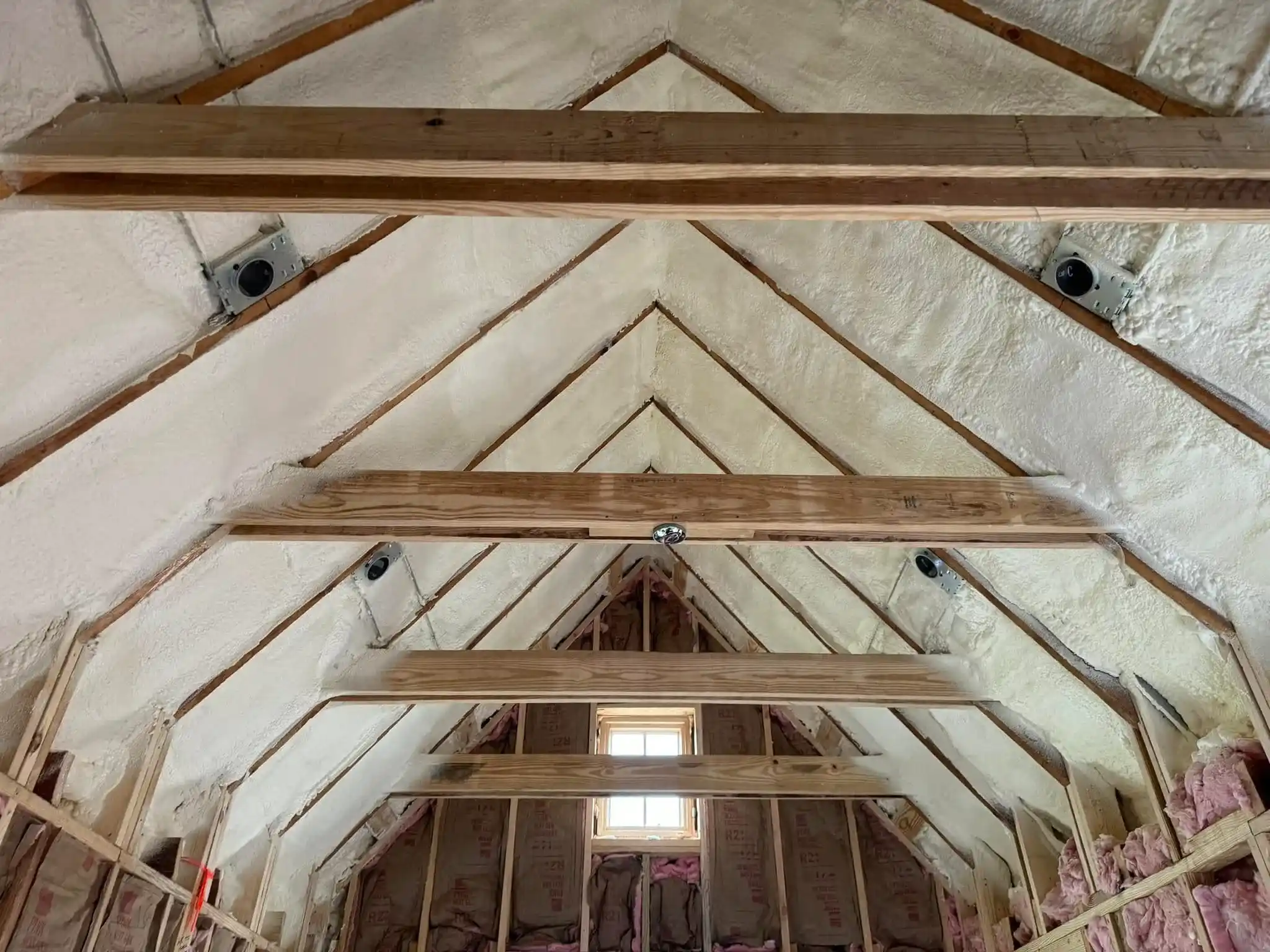
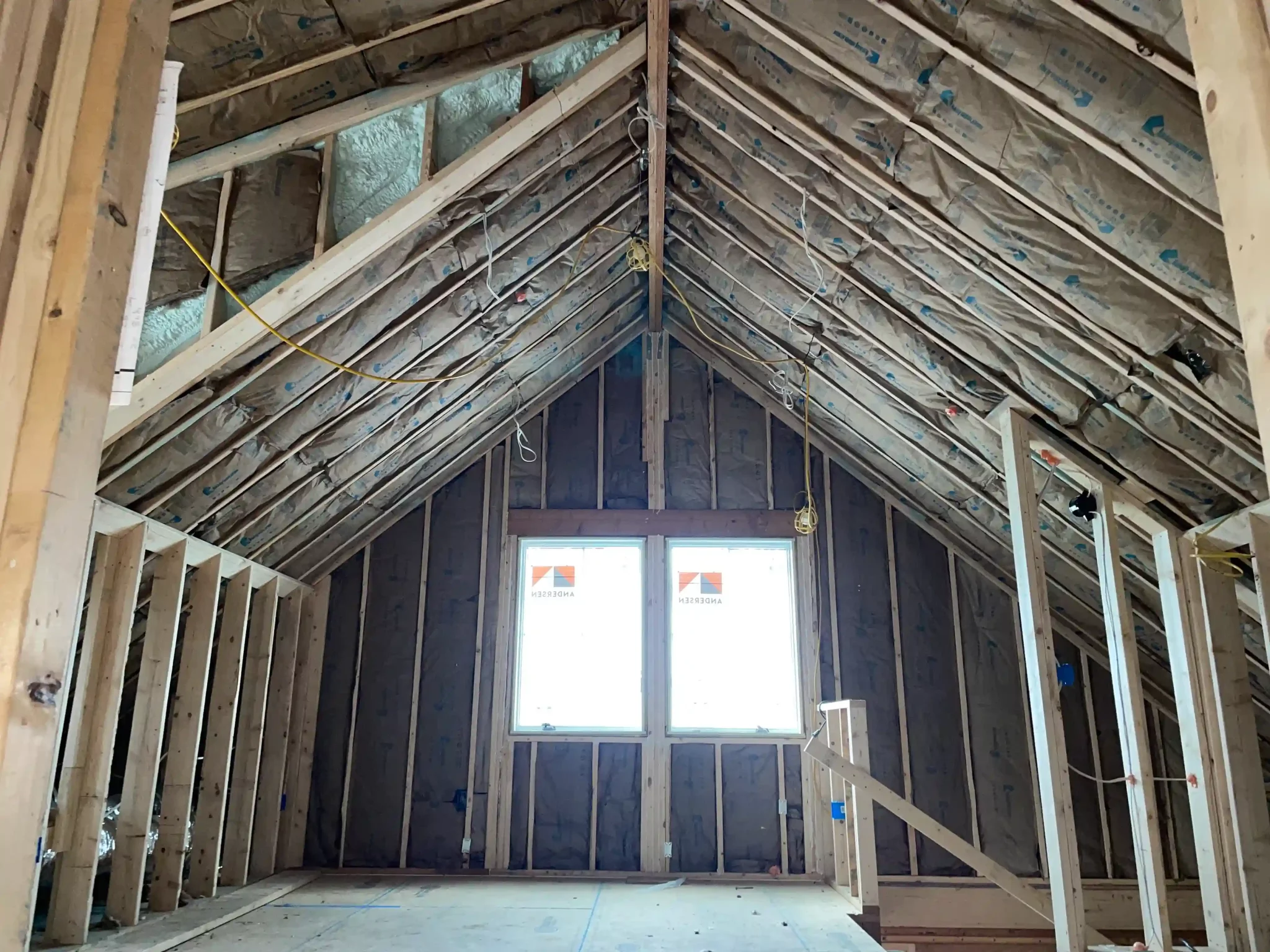
Vaulted ceilings with narrow rafter bays are difficult to insulate with batts because there is often insufficient depth for the required R-value, and ventilation channels reduce the space available for insulation even further. Spray foam applied directly to the roof deck eliminates the need for ventilation, seals around every rafter penetration, and achieves higher R-values in less thickness than other materials.
Plumbing stacks, electrical runs, duct penetrations, and framing intersections all create pathways for air leakage that are nearly impossible to seal with rigid materials. The liquid application of spray foam reaches into and around these obstructions, adhering to both the framing and the penetrations themselves.
| Factor | Spray Foam | Fiberglass Batts | Rigid Foam Board |
|---|---|---|---|
| Fills irregular cavities | Yes, expands to fit | No, requires cutting | No, must be cut precisely |
| Air sealing in one step | Yes | No, separate sealing required | No, edges need caulk |
| Moisture resistance | High (closed-cell) | Low, absorbs moisture | Moderate |
| Adhesion to substrates | Bonds directly | Friction fit only | Requires mechanical fasteners |
| R-value per inch | 3.8 to 6.0 | 3.0 to 4.0 | 3.8 to 6.5 |
| Installation in tight spaces | Spray reaches inaccessible areas | Requires full access | Requires full access |
| Condensation control | Built-in (closed-cell) | None | Varies by product |
| Building Scenario | Recommended Approach | Key Considerations |
|---|---|---|
| Existing home, unfinished basement | Closed-cell spray foam at rim joists | Addresses the largest single air leakage point; can be left exposed per IRC |
| New construction, vaulted ceilings | Closed-cell spray foam on roof deck | Eliminates need for ventilation chutes; maximizes R-value in limited depth |
| Crawl space encapsulation | Closed-cell on walls and band joist | Creates conditioned crawl space; resists ground moisture |
| Older home with drafty walls | Open-cell foam injected through small holes | Fills wall cavities without removing drywall; provides air sealing and sound reduction |
| Addition over unconditioned space | Closed-cell on floor underside | Insulates and air seals in one pass; prevents floor drafts |
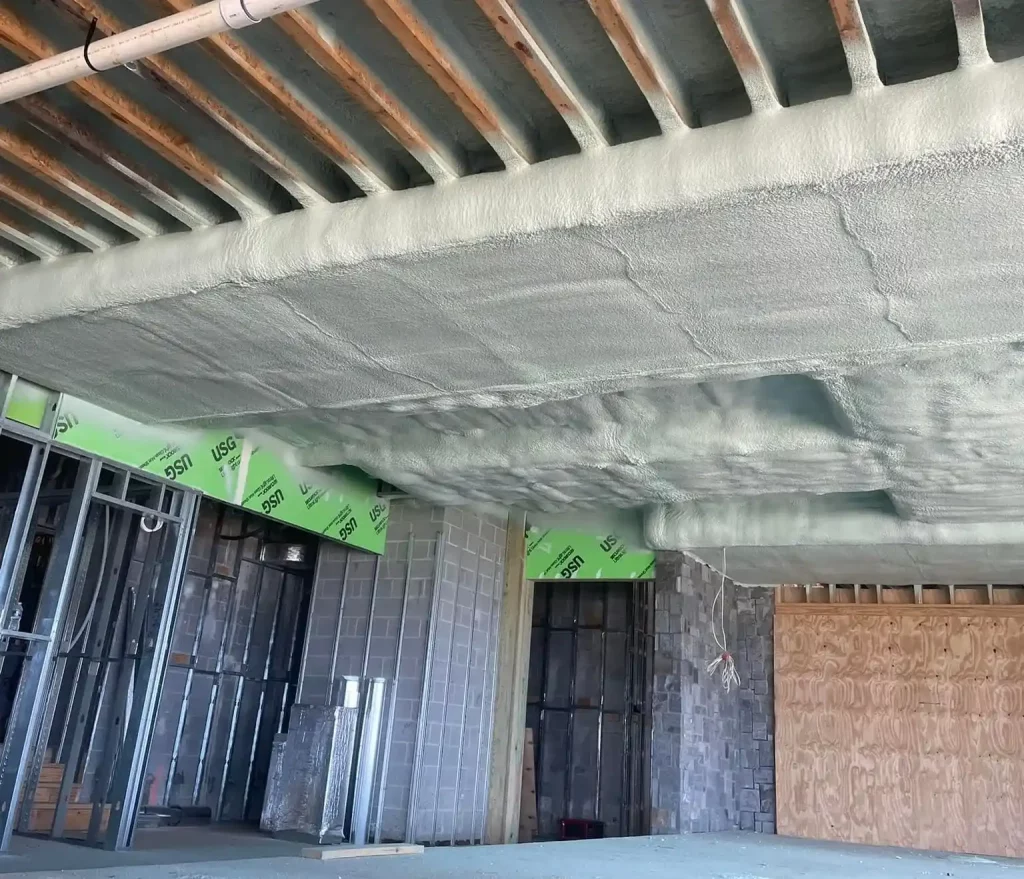
Peninsula Insulation, LLC provides professional spray foam insulation services for homes and buildings throughout the Denton, MD area. Our experienced team evaluates each building’s specific needs, identifies the difficult-to-seal areas that are driving energy loss and comfort problems, and applies the right foam type for lasting results. Whether you need rim joist sealing, crawl space encapsulation, or full-building insulation, we handle every project with attention to detail and code-compliant installation.
Request a Quote | Schedule an Assessment
Call us at (410) 770-2624 or email wil@mdsprayfoam.net to get started. The right insulation in the right places makes a measurable difference in comfort and energy costs, starting on day one.
Rim joists, crawl spaces, vaulted ceilings, and around plumbing and electrical penetrations benefit the most because these are the areas where traditional insulation cannot achieve a complete seal.
Closed-cell spray foam acts as both an air barrier and vapor barrier, preventing humid summer air from infiltrating wall and floor assemblies where it would otherwise condense and cause mold growth.
Yes. Open-cell foam can be injected through small holes drilled into wall cavities, expanding to fill the space and seal gaps without removing existing drywall or plaster.
The International Residential Code permits spray foam to remain exposed at rim joists without a thermal barrier, as long as the thickness does not exceed 3.25 inches, which simplifies basement and crawlspace installations.
Occupants typically need to vacate during application and for a period afterward while the foam cures and off-gasses, but the exact timeline depends on the foam type, thickness, and ventilation conditions.