What Happens When Traditional Insulation in New Carrollton, MD Leaves Air Gaps?
When traditional insulation in New Carrollton, MD develops air gaps, it stops doing the one job it was installed to…


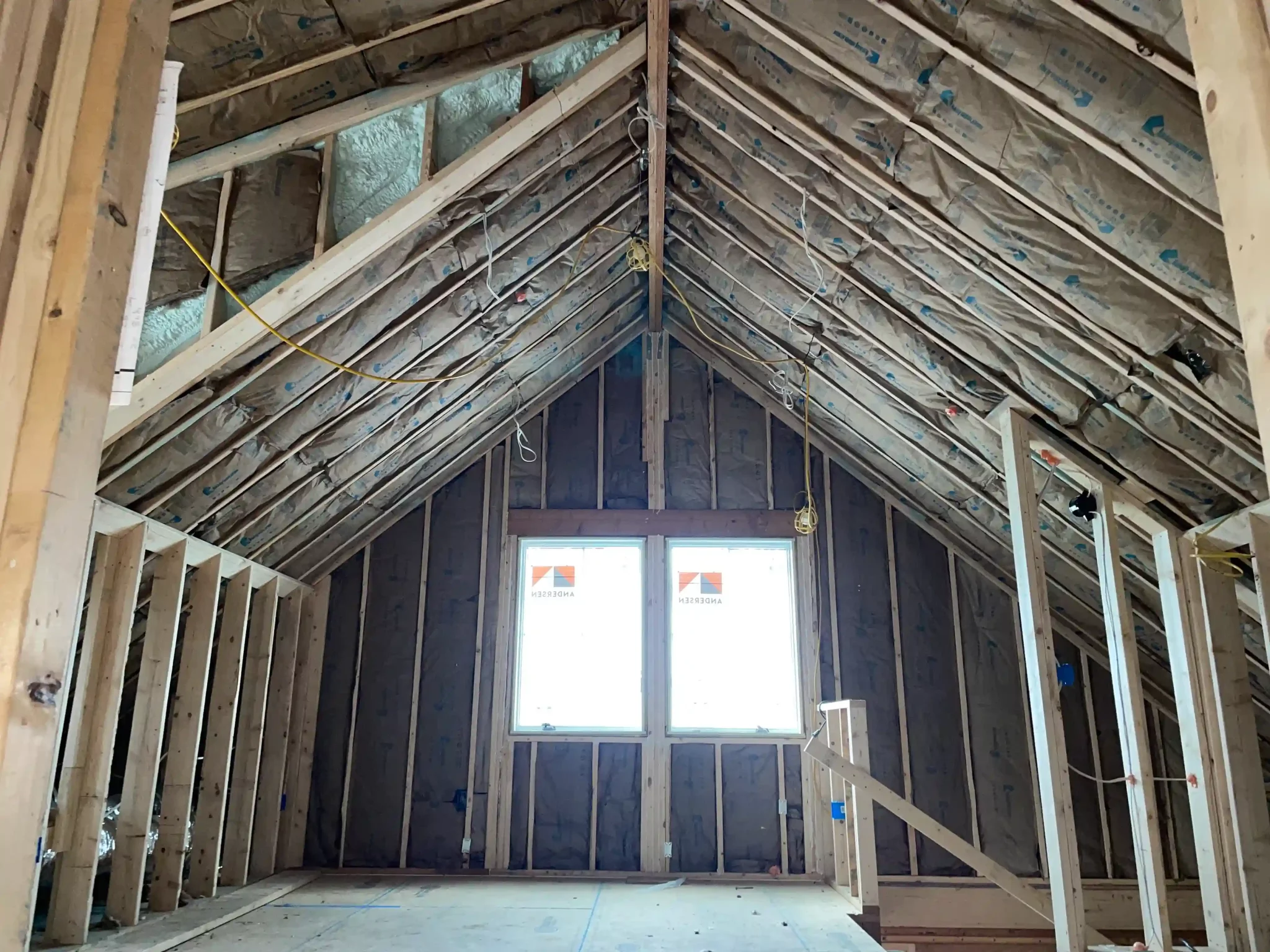
When traditional insulation in New Carrollton, MD develops air gaps, it stops doing the one job it was installed to do: slowing heat movement. Fiberglass batts, loose-fill, and other conventional materials work by trapping still air in millions of tiny pockets. Leave a gap around a wire, an electrical box, or a joist bay, and moving air simply bypasses the material, carrying heated or cooled air, moisture, and outdoor pollutants straight through your walls and ceilings. The results show up as drafts, rooms that never match the thermostat, condensation on cold surfaces, and longer HVAC runtimes in Prince George’s County’s mixed-humid climate. The right fix depends on where the gaps are and how severe they are: targeted air sealing with batt correction handles isolated leaks, dense-packing fills closed cavities, and professional insulation installation can provide a more comprehensive approach where broader insulation improvements are needed. Below, we break down exactly what air gaps set in motion and how to close them for good.
Fiberglass and mineral wool batts insulate by slowing heat transfer through air pockets trapped between fibers. Their rated R-value assumes that air stays still inside the material. As detailed in Wikipedia’s overview of building insulation materials, gaps between batts, or bypasses, become sites of air infiltration or condensation, and both reduce insulation effectiveness. Cutting batts to fit around electrical boxes and other obstructions gives air a free path through the wall cavity, and compressing a batt squeezes out the very air pockets doing the work.
There is also a labeling problem most homeowners never hear about: stated R-values are based on laboratory conditions. Once air moves through or around the material, real-world performance drops well below the number printed on the package. This is why choosing the right insulation type matters for a New Carrollton home that can carry code-level insulation on paper yet still feel drafty in January and stuffy in August.
Air gaps never stay passive because your house behaves like a chimney. During the heating season, warm indoor air rises and escapes through unintentional holes in ceilings, such as recessed lights, bath fans, and open top plates. That rising air lowers the pressure in the lower levels, drawing cold outdoor air in through gaps near the foundation, rim joists, and leaky walls. This pressure-driven loop is the stack effect, and the greater the temperature difference, the stronger the pull, as explained in Wikipedia’s entry on the stack effect.
In summer, the pattern reverses, though it is typically weaker. Hot, humid Maryland air infiltrates low and works its way upward, which matters here because that incoming air is loaded with moisture. Either direction, every open gap feeds the loop.
Air gaps do more than waste energy; they move water vapor into places it does not belong. In our humid climate, warm moist air that slips through wall and ceiling gaps hits cold sheathing or framing and condenses. The EPA’s guidance in A Brief Guide to Mold, Moisture and Your Home is direct: the key to mold control is moisture control, and mold may begin growing indoors when spores land on wet surfaces. The agency also lists hidden mold behind drywall and above ceiling tiles, driven in part by insufficient insulation, as a common discovery.
Condensation on windowpanes and pipes is an early warning sign. Insulation solutions in New Carrollton can help address cold surfaces and moisture-related insulation concerns before they lead to more disruptive problems. The EPA recommends keeping indoor humidity below 60 percent, ideally between 30 and 50 percent, and covering cold surfaces with insulation. Once moisture settles inside an assembly, surrounding materials degrade, and cleanup becomes far more disruptive than sealing the cavity would have been.
Every one of these symptoms traces back to air movement, not to a lack of insulation. Piling more batts over an open bypass usually changes nothing.
| Location | Why Gaps Form There | What Happens |
|---|---|---|
| Attic floor | Wiring, plumbing, and duct penetrations; recessed lights; bath fans | Warm air escapes at the top, feeding the stack effect |
| Wall cavities | Batts cut or compressed around boxes and piping | Air washes through the cavity, carrying heat and moisture |
| Rim joist and box sill | Framing joints where the foundation meets the floor system | Cold, damp air enters at the base of the house |
| Kneewalls and bay windows | Large, shallow cavities that are hard to fill neatly | Convective loops circulate inside the space |
| Duct and plumbing chases | Open vertical pathways between floors | Pressure imbalances push air between levels |
| Approach | How It Handles Air | Best For | Watch Out For |
|---|---|---|---|
| Seal-and-repair | Stops specific leaks with caulk, foam patches, and batt correction | A handful of known gaps | Missed bypasses; compressed batts keep underperforming |
| Dense-pack blown-in | Fills cavities and slows airflow through closed spaces | Attic tops and enclosed walls | Loose-fill can settle over time if not dense-packed |
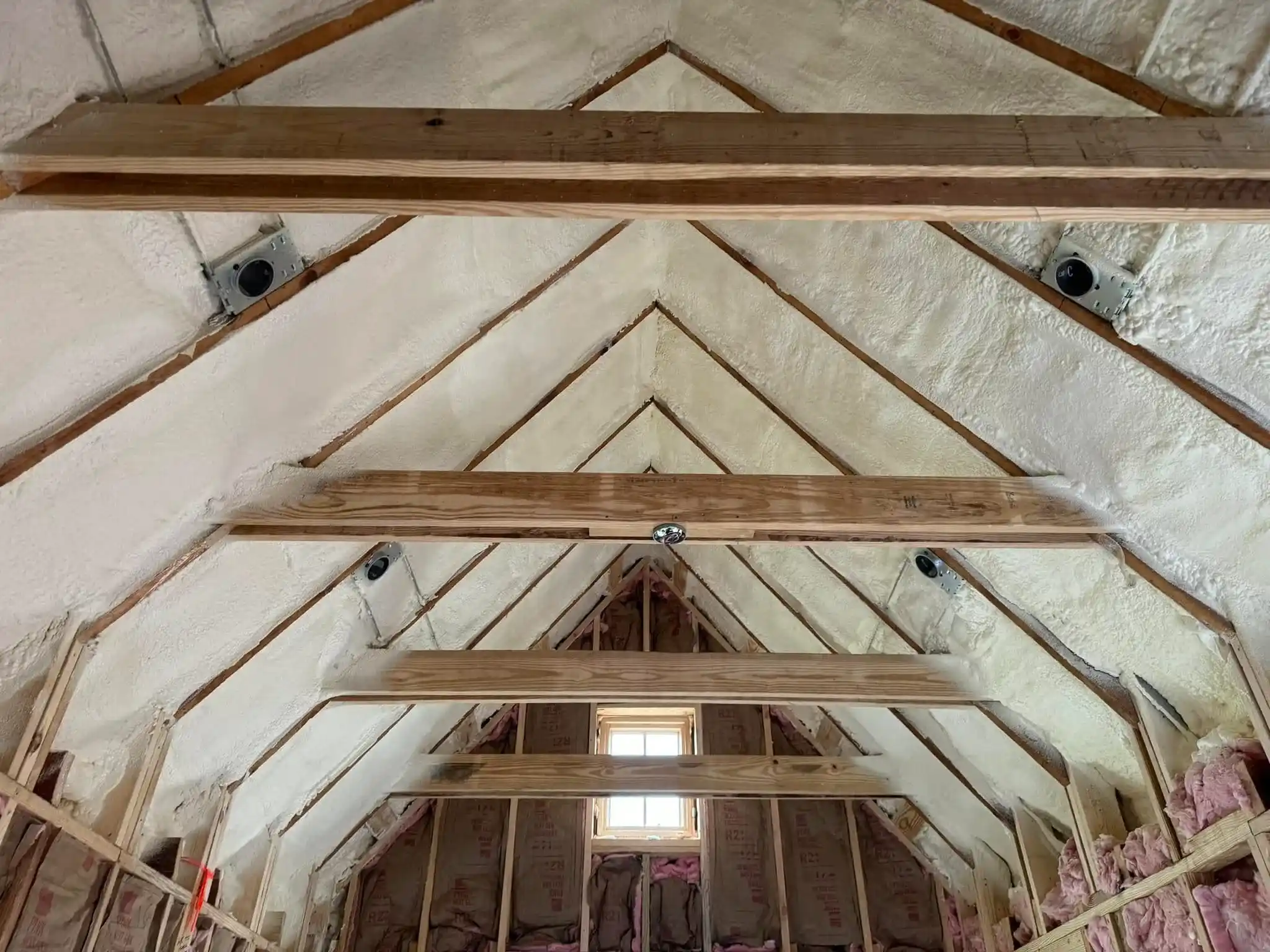
| Spray foam | Expands to seal off leaks, gaps, and penetrations while it insulates | Rim joists, crawl spaces, additions, whole-envelope upgrades | Requires professional application and correct curing conditions |
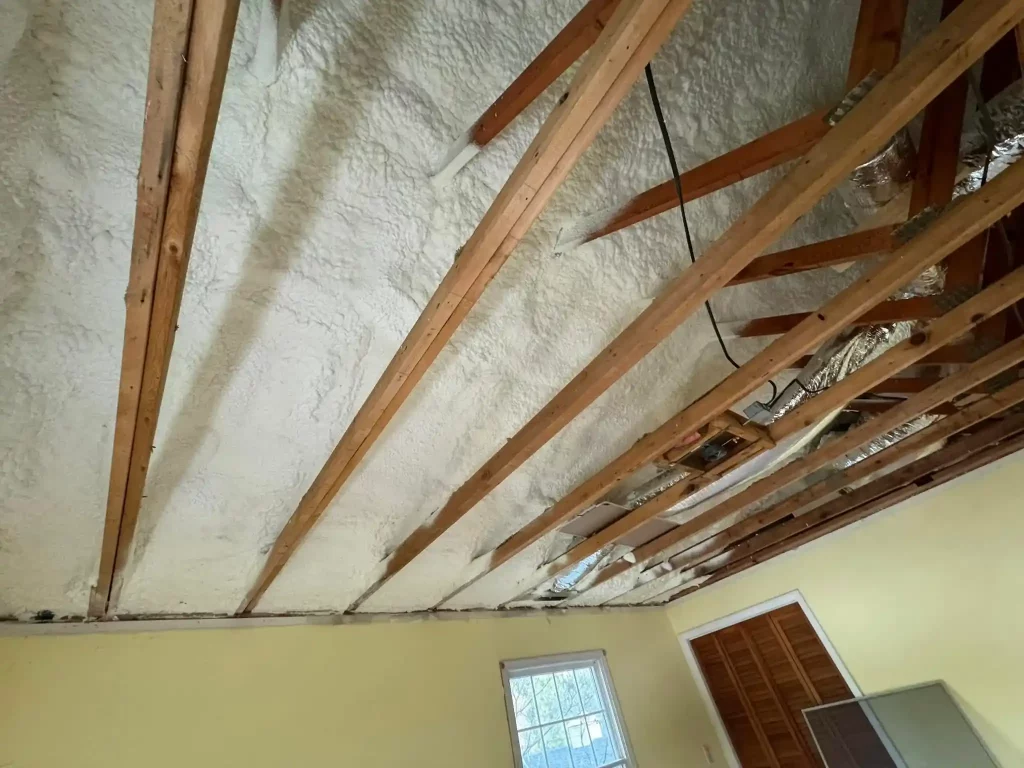
That third row carries the core advantage: spray foam blocks airflow by expanding and sealing off leaks as it cures, rather than relying on still air to stay still. Dense-packed cellulose can block many bypasses, but batts alone provide no sealing action of their own.
Older homes with original batts: Start with a gap assessment rather than adding material. Seal attic bypasses and the rim joist first, then decide whether damaged batt sections need replacing.
One chronically uncomfortable room: Treat that room’s assembly directly. Foaming or dense-packing the cavities around a cold bonus room or hot bedroom usually beats spreading effort thin across the whole house.
Additions and renovation projects: This is the moment to air-seal before drywall goes up. Spray foam or a hybrid approach closes penetrations permanently while they are still accessible.
Rental and multifamily owners: Envelope-first work pays off across multiple units at once, and consistent comfort from unit to unit reduces tenant complaints.
Air gaps quietly undermine traditional insulation in New Carrollton, MD homes in every season, but they are fixable when you address the air movement itself. At Peninsula Insulation, LLC, we diagnose where air is moving through your walls, attic, and rim joists, then close those bypasses with the material suited to each cavity. Email us at wil@mdsprayfoam.net or call (410) 770-2624 to talk through your home’s symptoms with our team.
Reach out today, and let’s make sure the insulation you own is actually the insulation you are getting.
No. Piling new batts or loose-fill over an open bypass adds rated R-value while air keeps moving through the opening. Seal the gap first, then add insulation where coverage is genuinely short.
Attic penetrations around lights, fans, and wiring, plus the rim joist and boxes cut into wall batts. These are the openings the stack effect exploits first.
Both. Winter’s stack effect pushes warm air out high and pulls cold air in low. Summer reverses the flow and drives humid air into cooler assemblies, raising condensation and mold risk.
Look for drafts near outlets and trim, rooms that never match the thermostat, window condensation, and musty smells. A professional assessment can trace the exact pathways inside your assemblies.
Spray foam expands as it cures, sealing off leaks, gaps, and penetrations instead of assuming the air inside stays still. Batts slow heat flow through still air but provide no sealing action of their own.