What Should Homeowners in Rhodesdale, MD Know Before Installing Mineral Wool Insulation?
Mineral wool insulation is a fibrous material spun from molten rock and slag, and for homeowners in Rhodesdale, it offers…


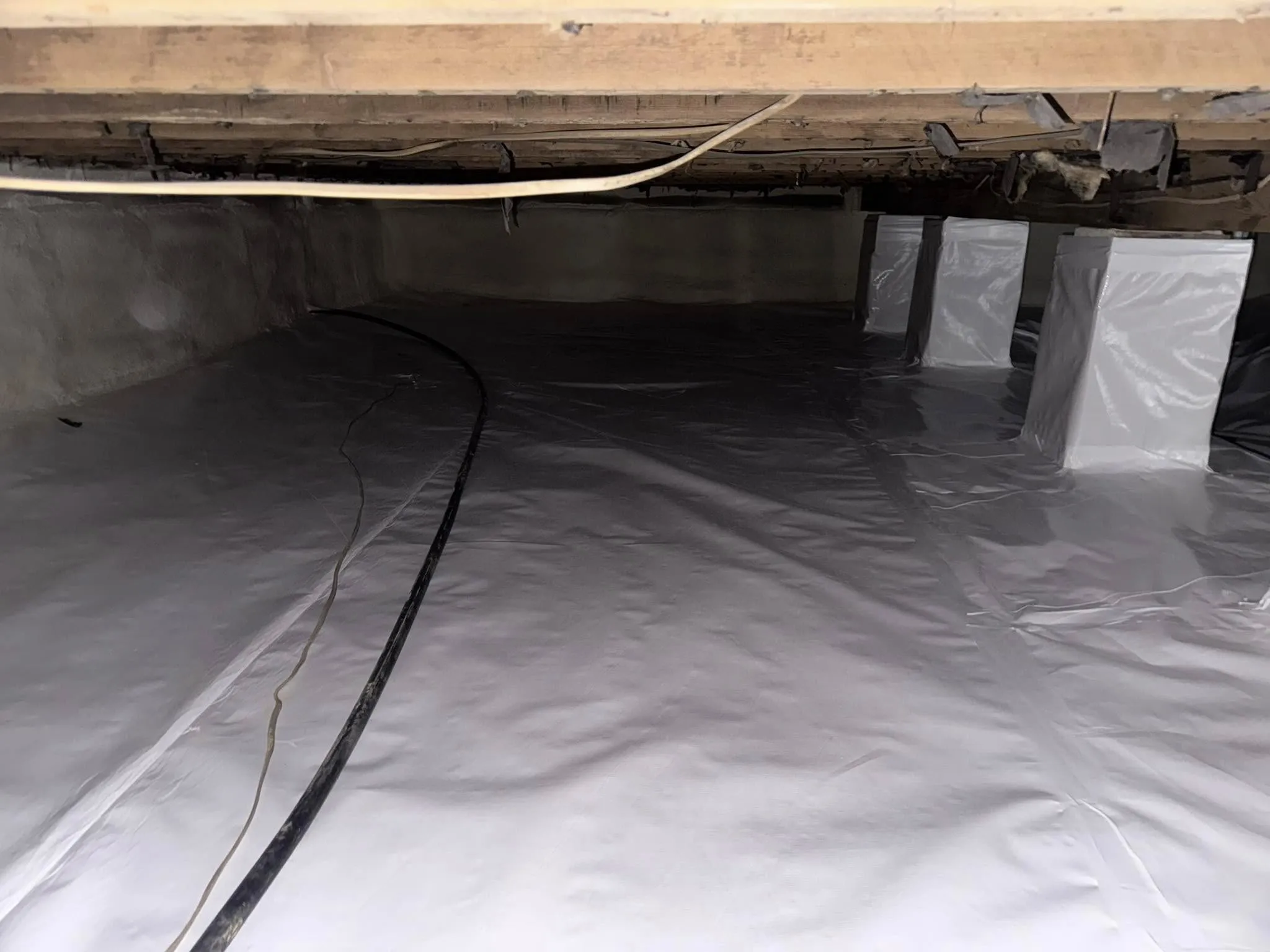
Crawl space encapsulation works by sealing the ground, walls, and vents with a heavy-duty vapor barrier and insulating the perimeter walls, creating a dry, conditioned space that blocks moisture from reaching the wood framing and flooring above. In a humid region like Salisbury, MD, where average annual precipitation reaches nearly 46 inches and summer humidity regularly climbs above 70%, an unsealed crawl space is a constant threat to floor joists, subflooring, girders, and support columns. By eliminating the moisture source, encapsulation directly prevents wood rot, mold growth, and the slow structural degradation that leads to sagging floors and costly repairs. The right approach depends on the condition of your crawl space, the type of flooring in your home, and whether your existing insulation and drainage systems are adequate. Encapsulation serves two primary functions: moisture control and structural preservation, and both must be addressed together for lasting results. Following best practices for moisture-proof crawl spaces helps ensure those goals are achieved over the long term.
Salisbury sits in Maryland’s Lower Eastern Shore, a region classified as a mixed-humid climate. The area experiences significant rainfall year-round, with monthly averages ranging from roughly 3.35 inches in February to 4.43 inches in August. Summer months bring the greatest moisture challenge: average highs reach 87 degrees in July, while humidity regularly sits between 70% and 76%. This combination of warm temperatures and high ambient humidity creates a continuous moisture load that pushes through crawl space vents, condenses on cooler surfaces, and absorbs into exposed wood framing. Understanding how crawl space encapsulation works helps homeowners see why controlling moisture at the source is critical in this climate.
The problem with vented crawl spaces in this climate zone has been well documented. The conventional approach of open vents was designed under the assumption that outside air flowing through the space would dry it out. In Salisbury’s climate, the opposite often happens. Warm outdoor air carries far more moisture than cooler crawlspace air. When that humid air enters through vents and contacts the cooler floor framing above, condensation forms on joists, subflooring, and girders. Over weeks and months, wood moisture content rises, and the stage is set for rot and structural weakening. Homeowners facing these conditions often turn to crawl space encapsulation services in Salisbury, MD, to create a controlled environment that protects the structure from moisture damage.
The damage pathway is straightforward but often invisible to homeowners until it becomes serious. Floor joists and subflooring sit directly above the crawl space. When the crawl space environment is humid, these structural members absorb moisture continuously. According to EPA moisture control guidance, controlling moisture at the foundation level is one of the primary design and maintenance strategies for preserving building durability.
The damage follows a predictable progression:
The damage is cumulative and slow. By the time a homeowner feels a soft spot in the kitchen floor, years of moisture exposure have already weakened the framing below.
A landmark study from Oak Ridge National Laboratory compared two identical homes in a mixed-humid climate, one with a traditional vented crawl space and one with a sealed, insulated, and semi-conditioned crawl space. The findings were striking. During the summer months, the vented crawl space experienced relative humidity at or near 100%, while the sealed crawl space maintained levels below the 70% mold-growth threshold. Mold growth index calculations predicted severe mold overgrowth in the vented crawl space, but zero mold growth potential in the sealed one.
The U.S. Department of Energy’s Building America program confirmed these results across multiple climate zones. Their research demonstrated that unvented, conditioned crawl spaces reduced humidity by over 20% compared to vented crawl spaces while cutting heating and cooling energy use by 15% to 18%. These findings were influential enough to change the International Residential Code in 2009 and 2012, formally allowing sealed, conditioned crawl spaces as a standard construction practice.
Building science coverage from Fine Homebuilding reinforces the point: in humid climates, vented crawl spaces that rely on fiberglass batt insulation in the floor above are particularly vulnerable because fiberglass is air and vapor-permeable. It does almost nothing to stop humid crawl space air from reaching the cool framing above. The magazine recommends that in humid regions like the Eastern Shore, a sealed and conditioned approach is the more reliable path to long-term structural protection.
A proper encapsulation installation addresses moisture from multiple sources. No single product solves the problem alone. Our approach includes:
The type of flooring installed above the crawl space affects how quickly moisture damage becomes apparent.
| Flooring Type | Moisture Vulnerability | Common Symptoms | Encapsulation Benefit |
|---|---|---|---|
| Hardwood | High: absorbs moisture from below, cups, and warps | Cupping, gaps between boards, are buckling | Stabilizes subfloor moisture, prevents warping |
| Engineered wood | Moderate-High: more stable but still affected by subfloor conditions | Gapping, surface cracking, delamination | Maintains consistent subfloor conditions |
| Laminate | Moderate: resistant on surface but susceptible at subfloor level | Peaking at seams, warping, soft underfoot | Eliminates the moisture source beneath the underlayment |
| Tile | Low-Moderate: itself water-resistant but grout and substrate can weaken | Cracked grout, hollow-sounding tiles, loose sections | Protects the wood substrate beneath the tile bed |
| Carpet | Moderate: traps humidity and promotes mold in padding | Musty odor, dampness, and staining on the backing | Stops moisture from reaching pad and subfloor |
Even flooring types that are themselves water-resistant, like tile or luxury vinyl, still sit on a wood subfloor and wood joists. If the framing below rots, the finished floor above will fail regardless of how water-resistant the surface material is.
Encapsulation delivers the greatest return for homeowners in specific situations:
Older homes with vented crawl spaces: Salisbury has a large stock of older housing, much of it built with vented crawl spaces and fiberglass batt insulation in the floor above. These homes are the most vulnerable because the fiberglass does nothing to block moisture migration. Encapsulation replaces a failing strategy with a proven one.
Homes with hardwood or engineered wood flooring: These materials respond visibly to changes in subfloor moisture. Encapsulation provides the stable base these floors need to maintain their appearance and structural integrity.
Homes with HVAC equipment or ductwork in the crawl space: When ducts run through a humid, vented crawl space, condensation forms on the outside of the ducts, and efficiency drops. Encapsulation protects the HVAC system as well as the structure.
Homes that have already experienced moisture issues: If you have noticed musty odors, visible mold, sagging floors, or pest activity in the crawl space, the moisture problem is already active. Encapsulation halts further damage when combined with any needed structural repairs.
Choosing a qualified installer matters as much as choosing the right materials. Look for these indicators:
Peninsula Insulation, LLC has been helping homeowners across the Lower Eastern Shore protect their crawl spaces, flooring, and structural health through professional encapsulation services. Our team evaluates every crawl space individually, identifies the specific moisture sources affecting your home, and designs a system that keeps humidity below 60% year-round. Whether your home has hardwood floors showing early signs of cupping, a damp crawlspace with musty odors, or you want to prevent problems before they start, we provide the inspection, installation, and follow-through your home needs.
Request a Quote | Schedule a Crawl Space Assessment
Reach us at wil@mdsprayfoam.net or call (410) 770-2624 to speak with our team about protecting your home from the ground up.
Most residential encapsulation projects in Salisbury take one to three days, depending on the size and condition of the crawl space.
In most cases, yes. Up to 50% of the air on the first floor of a home originates from the crawl space, so sealing and dehumidifying that space typically eliminates the musty odor at its source.
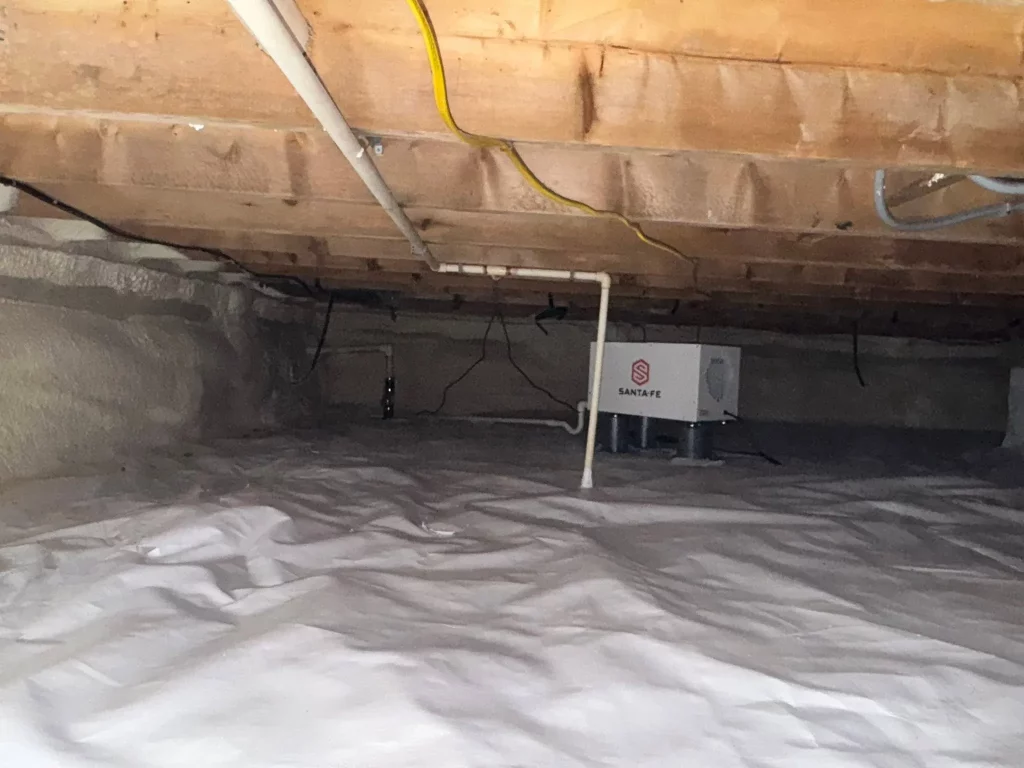
In Salisbury’s humid climate, some form of conditioning is necessary after sealing. A dehumidifier or HVAC supply air keeps humidity below the mold-growth threshold year-round.
Standing water must be addressed first through improved drainage or a sump system. Encapsulation seals the space, but it does not function as a waterproofing solution on its own.
Sealing the crawl space eliminates the damp environment and soil exposure that attracts pests, making the space significantly less hospitable to termites, rodents, and insects.