What Materials Are Commonly Used for Crawl Space Encapsulation in 2026, and Why Do They Matter?
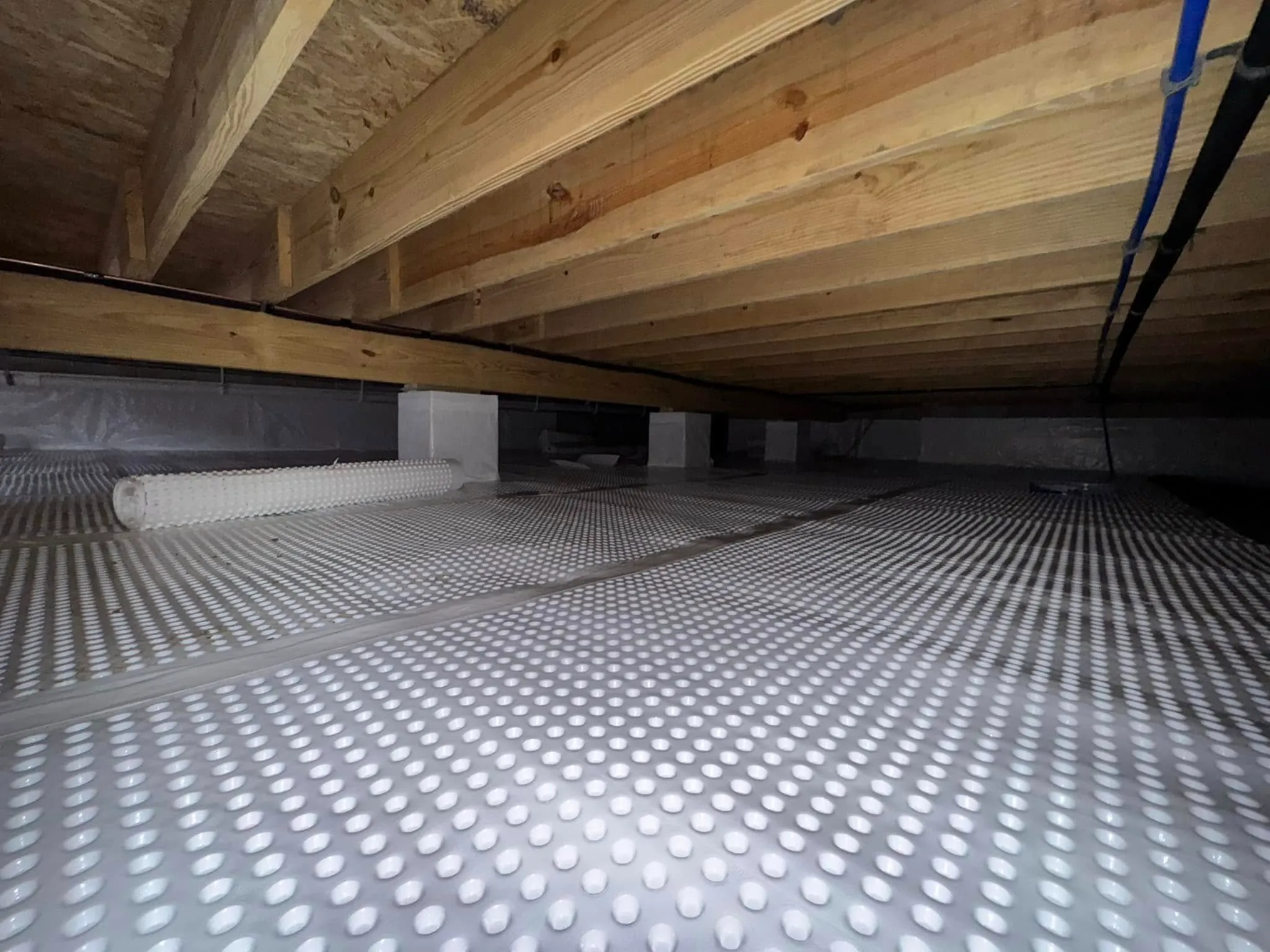
Most crawl space encapsulation material choices in 2026 fall into five groups: a polyethylene vapor barrier over the soil and…

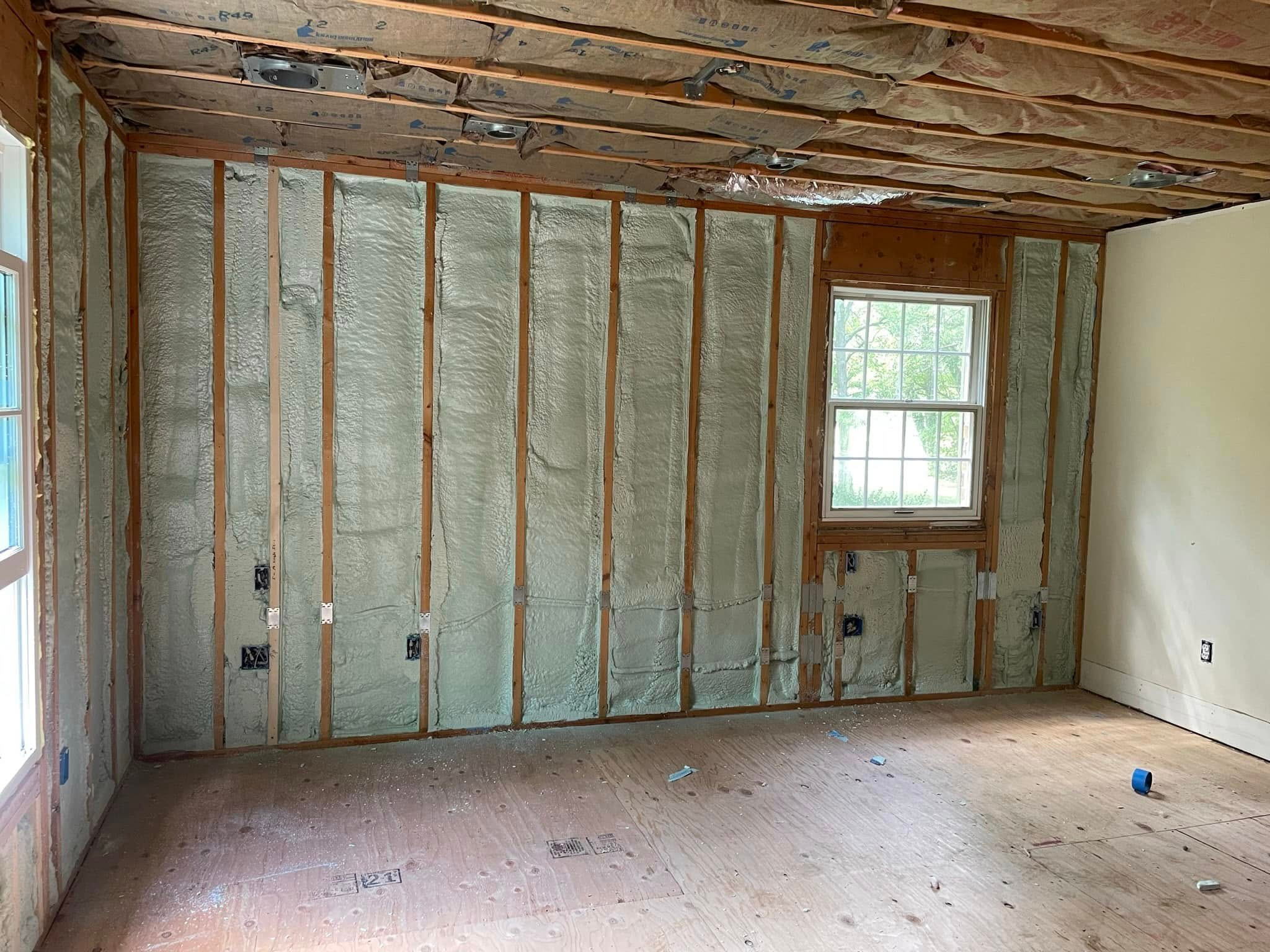
The ideal window for installing pole barn insulation in Salisbury, MD, runs from early spring through late fall, with late March to May and September to November offering the most favorable conditions for both material performance and installation quality. Salisbury sits in IECC Climate Zone 4A (mixed-humid), where summer highs push past 87°F, winter lows dip to around 27°F, and annual precipitation averages roughly 47 inches U.S. Climate Data. That combination of heat, humidity, cold snaps, and rain makes timing and insulation material selection directly tied to how long your pole barn lasts and how much it costs to condition. The right approach depends on your barn’s use, your budget, and whether you need a year-round conditioned space or just seasonal protection.
Salisbury experiences the full range of mid-Atlantic weather: cold, damp winters, hot, sticky summers, and wet shoulder seasons. Temperatures swing from an average low of 28°F in January to an average high of 87°F in July, and the area sees precipitation on roughly 116 days per year. For pole barns, which typically have metal roofing and siding, this climate creates two persistent threats: condensation buildup and thermal bridging through exposed framing. Learn more about pole barn insulation solutions for long-term performance.
Metal buildings without insulation act as giant condensation surfaces. When warm, humid indoor air meets cold metal in winter, moisture forms on the interior and drips onto everything below. In summer, the opposite happens when hot exterior air meets cooler interior metal. Over time, this moisture cycle corrodes fasteners, rots wood posts, and destroys stored equipment and feed. Installing insulation at the right time of year, under the right conditions, prevents these problems from taking hold.
The University of Maryland Extension specifically notes that Maryland’s humid climate makes vapor barrier placement and ventilation critical factors in any insulation project University of Maryland Extension. Rushing an installation during a season with poor drying conditions can trap moisture against framing members and set up long-term problems that are expensive to fix.
| Season | Temperature Range | Humidity Level | Installation Risk | Overall Rating |
|---|---|---|---|---|
| Early Spring (Mar-Apr) | 35-66°F | Moderate | Low | Excellent |
| Late Spring (May) | 44-74°F | Rising | Low | Excellent |
| Summer (Jun-Aug) | 63-87°F | Very High | High | Fair to Poor |
| Early Fall (Sep-Oct) | 48-80°F | Moderate | Low | Excellent |
| Late Fall (Nov) | 31-59°F | Moderate | Moderate | Good |
| Winter (Dec-Feb) | 28-50°F | Moderate | High (adhesion) | Poor |
CEarly spring is our most recommended installation window for pole barn insulation in the Salisbury area. Ground conditions are drying out, temperatures are moderate enough for consistent material curing, and humidity levels have not yet peaked. For spray foam applications specifically, ambient temperatures above 50°F and below 85°F produce the best expansion and adhesion characteristics. Spring also gives the insulation a full curing period before summer heat and humidity arrive, meaning the building envelope will be fully sealed before the most demanding weather conditions set in. This timing aligns with best practices for pole barn insulation installation and seasonal performance planning.
If you are building a new pole barn, spring installation allows the insulation to go in after framing is complete but before interior finishes, giving our team full access to all cavities, joints, and penetrations.
Summer is the busiest season for construction, but it presents real challenges for pole barn insulation. Average July humidity in Salisbury hovers around 63–67%, and dew points regularly exceed 65°F. Spray foam applied in these conditions can trap moisture in the wall cavity, especially if the substrate is damp. Fiberglass and mineral wool absorb ambient moisture during installation, which reduces their effective R-value and increases the risk of mold growth behind the walls. This is a common issue when installing pole barn insulation in Salisbury, MD, during high-humidity conditions.
If summer installation is unavoidable, our crew takes specific steps to protect the project: we run dehumidifiers during and after installation, use moisture meters to verify substrate dryness before spraying, and schedule work for the cooler morning hours.
September and October in Salisbury offer a second installation window that closely mirrors spring conditions. Temperatures moderate, humidity drops, and rain events become less frequent. Fall is especially practical for retrofit insulation projects on existing pole barns because interior work is more comfortable and the building owner has time to verify performance before winter heating costs arrive.
The one limitation is scheduling. Many contractors, including us, see heavy fall demand, so early booking matters.
Winter installation in Salisbury is difficult and generally not worth the risk. Temperatures regularly fall below the effective curing range for spray foam (typically 40-50°F minimum for two-component systems). Even when heated enclosures are used, the thermal shock from cold metal framing can cause adhesion failures. Adhesives and tapes used with rigid foam boards also perform poorly in cold conditions. If your pole barn must be insulated during winter, plan for supplemental heating, extended curing times, and additional quality checks.
Not all insulation performs the same in a mixed-humid environment. Pole barns have unique characteristics, open framing, exposed metal, and large open spans, which eliminate some common residential options and elevate others.
| Insulation Type | R-Value Per Inch | Moisture Resistance | Air Sealing | Best For |
|---|---|---|---|---|
| Closed-Cell Spray Foam | 6.0-7.5 | Excellent | Excellent | Walls and ceilings, conditioned pole barns |
| Open-Cell Spray Foam | 3.5-3.7 | Moderate | Excellent | Wall cavities, budget-conscious projects |
| Fiberglass Batts | 2.2-3.2 | Low | Poor | Unconditioned storage barns (with vapor barrier) |
| Rigid Foam Board | 4.0-5.5 | Good | Poor | Continuous insulation layer under metal |
| Reflective/Laminated Barrier | Varies | N/A | None | Condensation control only (not true insulation) |
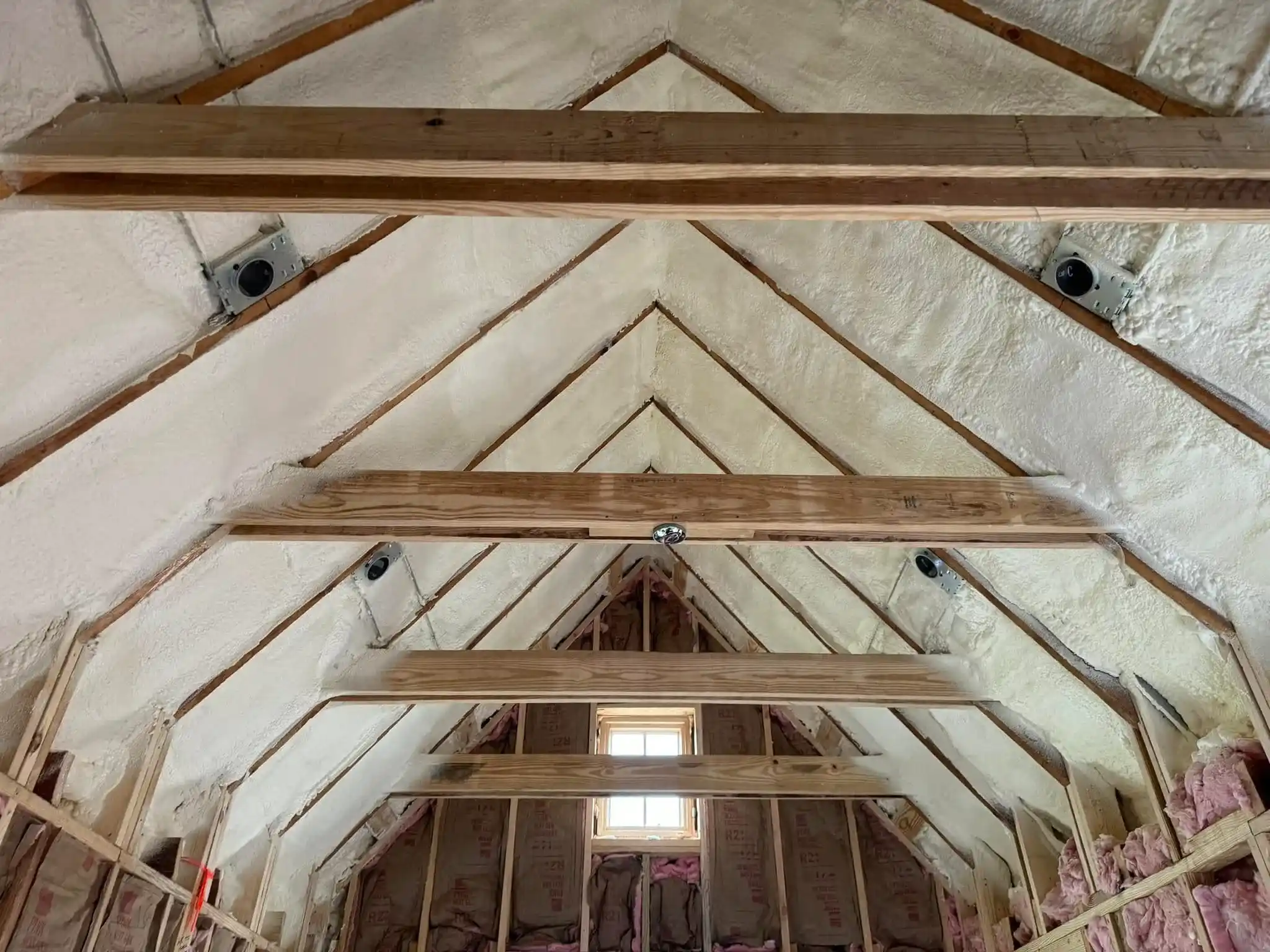
For pole barns on the Eastern Shore that will be heated, cooled, or used as workshops, closed-cell spray foam delivers the strongest overall results. It provides roughly R-6 to R-7.5 per inch, acts as both an air barrier and vapor retarder, and adds structural rigidity to the building. In a humid climate like Salisbury’s, the vapor retarder function is what separates spray foam from every other option. Moisture cannot pass through cured closed-cell foam, which means condensation cannot form on the interior surface of your metal roofing or siding.
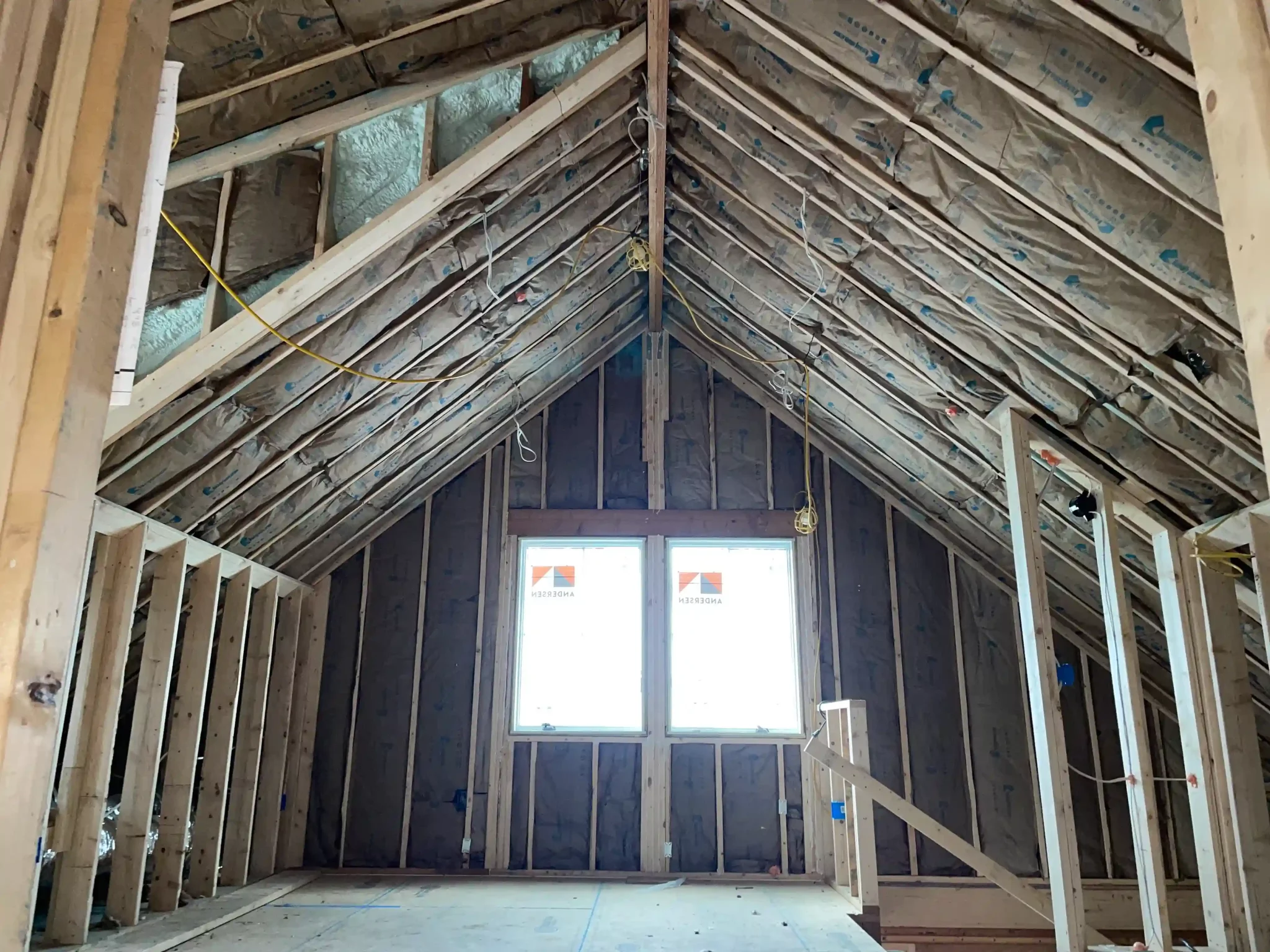
Fiberglass batts are the most affordable option and work well in unconditioned pole barns where the goal is basic temperature moderation rather than climate control. The University of Maryland Extension notes that fiberglass batts with kraft-facing provide a built-in vapor barrier, but that barrier must face the correct direction and be properly sealed at all joints. In Salisbury’s mixed-humid climate, the vapor barrier should face the interior (warm side in winter). Any gaps, tears, or compression in the batts create paths for air and moisture movement that undermine the entire system.
Rigid foam boards, such as EPS, XPS, or polyiso, offer R-4 to R-7.5 per inch and can be used as continuous insulation between metal panels and framing. They handle moisture better than fiberglass but require careful sealing at joints and penetrations. For many pole barn projects, rigid foam works best as a supplemental layer, paired with spray foam in the framing cavities.
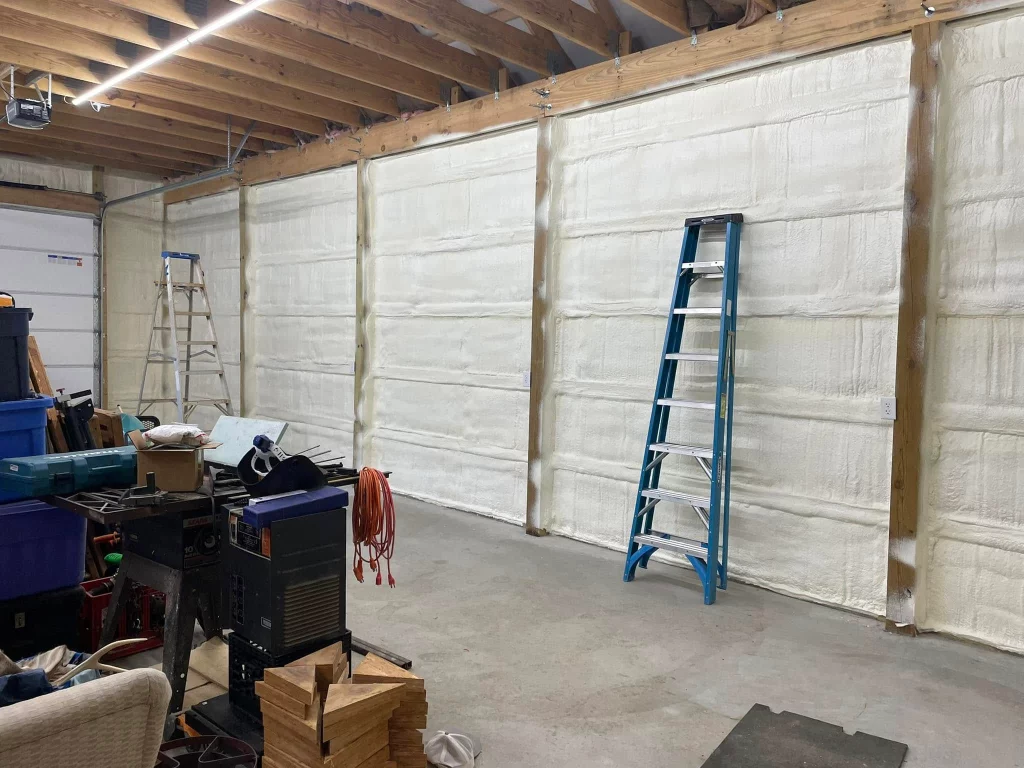
The U.S. Department of Energy provides clear R-value guidance for Climate Zone 4A, which applies directly to Wicomico County:
These recommendations apply to conditioned buildings. If your pole barn is used for equipment storage, livestock shelter, or seasonal workshops, you have the flexibility to adjust based on your actual conditioning needs. However, even unconditioned barns benefit from a minimum of R-13 in the walls and a radiant barrier or reflective insulation on the roof to control condensation.
| Barn Use | Recommended Insulation | Priority | Estimated Savings |
|---|---|---|---|
| Year-Round Workshop | Closed-cell spray foam, full walls and ceiling | High | 15-20% on heating/cooling |
| Climate-Controlled Storage | Closed-cell spray foam or open-cell + rigid board | High | 10-15% on utility costs |
| Livestock Shelter | Spray foam walls, insulated ceiling | Medium | Reduced feed costs, animal health |
| Seasonal Use / Storage | Fiberglass batts with a vapor barrier | Low | Basic condensation control |
| Agricultural Equipment | Reflective barrier + fiberglass | Low | Moisture protection |
Finding the right contractor matters as much as choosing the right material and timing. When evaluating insulation providers for your Salisbury pole barn, look for these indicators:
Peninsula Insulation, LLC has been serving the Eastern Shore and understands the specific demands that Salisbury’s mixed-humid climate places on pole barn structures. Whether you need closed-cell spray foam for a conditioned workshop, fiberglass with vapor barriers for equipment storage, or a full assessment of your existing building envelope, our team will recommend the right approach for your building use, budget, and timeline. Call us at (410) 770-2624, email wil@mdsprayfoam.net, or reach out today to get started.
A: Winter installation is possible with supplemental heating and cold-weather formulations, but curing times increase and adhesion risks rise. We recommend scheduling for early spring or fall whenever possible to ensure the best results.
A: Closed-cell spray foam typically cures within 24 to 48 hours in moderate conditions. During high-humidity summer months, curing may take longer, and dehumidifiers are often needed to prevent moisture from affecting the final foam density and R-value.
A: Even unconditioned barns benefit from at least a vapor barrier or reflective insulation to prevent condensation on metal roofing and siding. Without any moisture control, you risk rust, rot, and damage to stored contents over time.
A: For a heated and cooled workshop in Climate Zone 4A, the Department of Energy recommends R-49 or higher for ceilings and R-20 plus R-5 continuous insulation for walls. Closed-cell spray foam at 3 to 4 inches in walls and 6 to 7 inches in ceilings will meet or exceed these targets.
A: For pole barns that will be conditioned, spray foam typically delivers a strong return on investment through energy savings of 15% or more on heating and cooling, according to ENERGY STAR. It also provides air sealing and moisture control that fiberglass alone cannot match, which reduces the risk of expensive structural damage over time.