What Materials Are Commonly Used for Crawl Space Encapsulation in 2026, and Why Do They Matter?
Most crawl space encapsulation material choices in 2026 fall into five groups: a polyethylene vapor barrier over the soil and…


Pole barn insulation and traditional garage insulation are not interchangeable solutions, and choosing the wrong approach for your large structure can mean thousands in wasted energy costs and premature material failure. Pole barns are post-frame buildings with exposed steel framing, metal siding, and large open spans, which means they demand insulation strategies that address thermal bridging, condensation, and air infiltration at every structural connection point. Traditional stick-built or attached garages have standard wood framing with defined wall cavities, making them far more straightforward to insulate with conventional materials like fiberglass batts and blown-in cellulose. For large structures being used as workshops, vehicle storage, or commercial spaces, pole barn insulation solutions for metal buildings consistently deliver better long-term performance, while garage insulation methods work well for smaller attached structures on a tighter budget. The right choice depends on your building type, climate zone, intended use, and how much you are willing to invest upfront for long-term energy savings, which is fully explained in this complete pole barn insulation guide for all building types.
The fundamental difference between these two building types comes down to construction method, and that directly determines which insulation approach will actually work.
Pole barns, also called post-frame buildings, use large poles or posts set into the ground as the primary structural support. The walls and roof are typically steel panels attached to horizontal girts and purlins. There are no standard stud cavities to fill. The metal exterior conducts heat rapidly, creating thermal bridges at every connection point where steel touches steel. This design makes air sealing difficult and condensation almost inevitable without a dedicated vapor barrier system, which is why pole barn insulation systems for condensation control are essential for long-term performance.
Traditional garages, whether attached or detached, are wood-framed structures with 16 or 24-inch on-center studs. Wall cavities are clearly defined, and standard insulation materials fit directly into those bays. The wood framing conducts far less heat than steel, which means thermal bridging is less severe. Drywall, house wrap, and standard vapor barriers are already part of the building envelope.
According to the U.S. Department of Energy Building Energy Codes Program, the IECC provides separate energy code provisions for residential and commercial buildings. Pole barns used as workshops, agricultural storage, or commercial space generally fall under commercial code requirements (ASHRAE 90.1 or IECC Commercial provisions), while attached residential garages follow the IECC Residential chapter. This distinction matters because commercial codes often require higher R-values and continuous insulation, which changes both material selection and installed cost.
Not every insulation material performs well in both building types. The table below breaks down how common options stack up across the two structures.
| Insulation Type | R-Value Per Inch | Best For Pole Barns | Best For Garages | Cost Per Sq Ft |
|---|---|---|---|---|
| Fiberglass Batts/Rolls | R-3.1 to R-3.4 | Moderate (requires framing) | Excellent (fits standard cavities) | $0.50 to $1.50 |
| Closed-Cell Spray Foam | R-6 to R-7 | Excellent (seals gaps, adds strength) | Good (higher cost for standard walls) | $1.50 to $4.50 |
| Open-Cell Spray Foam | R-3.5 to R-3.7 | Good (budget air sealing) | Good (sound-dampening) | $1.00 to $2.00 |
| Rigid Foam Board (Polyiso) | R-5.6 to R-6.5 | Excellent (continuous insulation) | Good (sheathing layer) | $1.00 to $3.00 |
| Insulated Metal Panels | R-12 to R-25+ (varies) | Excellent (all-in-one solution) | Not applicable | $5.00 to $10.00 |
| Blown-In Cellulose | R-3.2 to R-3.8 | Poor (no cavities to fill) | Excellent (attics and walls) | $0.80 to $1.50 |
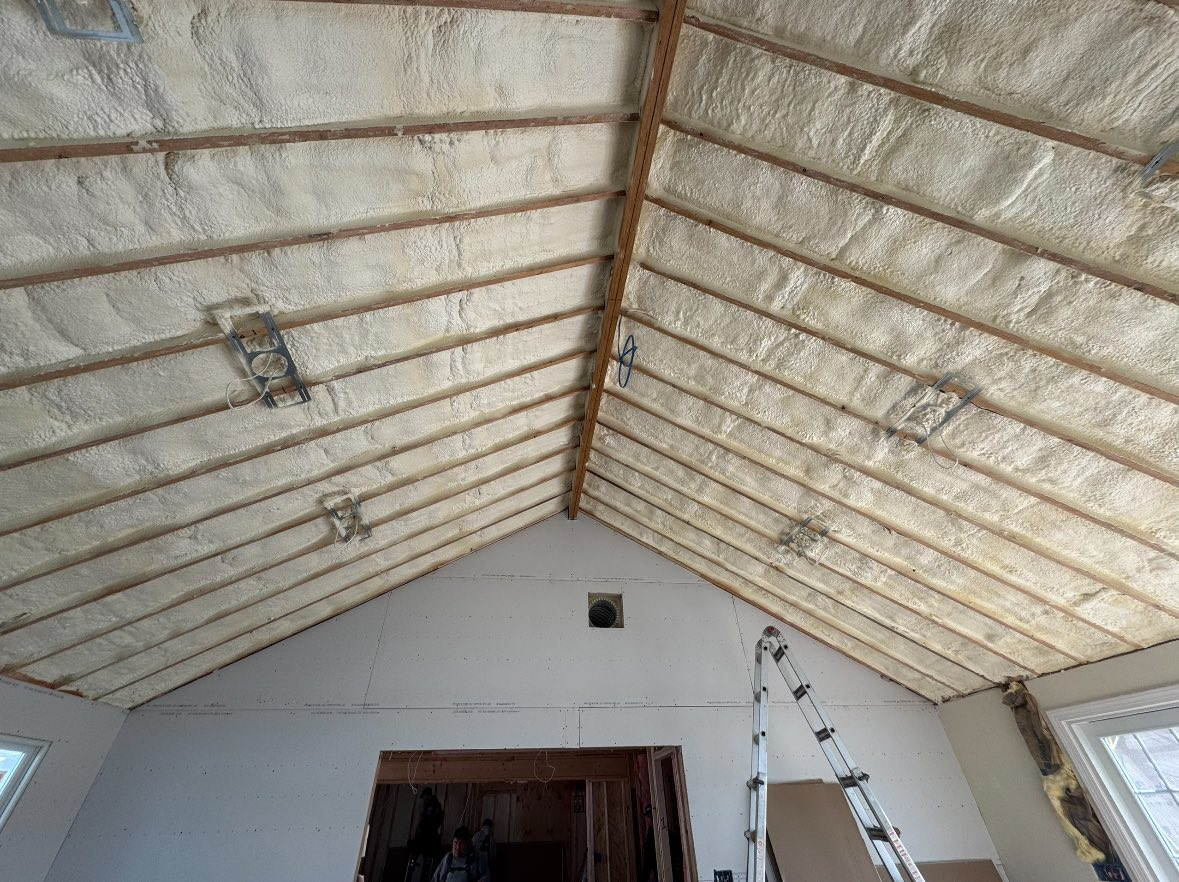
Spray foam is the clear winner for pole barns because it expands to fill irregular gaps between metal panels and framing, creating an air-tight seal that fiberglass simply cannot achieve. According to BuildingsGuide’s metal building insulation guide, spray foam fills air gaps to reduce air leaks and creates a tight building envelope for improved energy efficiency, while fiberglass suffers from heat conduction at every purlin and girt that reduces overall R-value.
For standard garages, fiberglass batts and blown-in cellulose remain practical and cost-effective because the stud cavities are predictable and the wood framing does not create the same level of thermal bridging as steel.
When you scale up to large structures, the cost difference between the two approaches becomes significant. Here is a realistic cost comparison for common building sizes.
| Structure Size | Pole Barn Insulation (Spray Foam) | Pole Barn Insulation (Fiberglass + Vapor Barrier) | Garage Insulation (Fiberglass + Blown-In) |
|---|---|---|---|
| 30 x 40 (1,200 sq ft) | $3,600 to $5,400 | $1,200 to $2,400 | $900 to $1,800 |
| 40 x 60 (2,400 sq ft) | $7,200 to $10,800 | $2,400 to $4,800 | $1,800 to $3,600 |
| 50 x 80 (4,000 sq ft) | $12,000 to $18,000 | $4,000 to $8,000 | $3,200 to $6,000 |
| 60 x 100 (6,000 sq ft) | $18,000 to $27,000 | $6,000 to $12,000 | $4,800 to $9,000 |
These figures include both walls and ceiling coverage. According to HomeGuide’s pole barn pricing data, pole barn spray foam insulation costs $1.00 to $4.50 per square foot of surface area, depending on foam type, thickness, and whether interior framing is required.
The key cost driver for pole barns is that insulation must often be applied directly to metal or over open framing, which eliminates the cost savings that come with standard stud cavity insulation in garages. Interior framing alone can add $18 to $24 per square foot if you want to create stud bays for conventional insulation in a pole barn.
The climate you are building in has a direct impact on which insulation approach is viable. The ENERGY STAR recommended insulation R-values provide guidance based on the 2021 IECC for wood-framed buildings.
| Climate Zone | Attic Insulation | Wall Insulation | Floor Insulation | Best Pole Barn Approach |
|---|---|---|---|---|
| Zones 1-2 (Hot) | R-30 to R-49 | R-13 | R-13 | Spray foam or polyiso board |
| Zone 3 (Warm) | R-49 | R-19 | R-19 | Closed-cell spray foam |
| Zones 4A-4B (Mixed) | R-60 | R-19 to R-20 | R-19 | Closed-cell spray foam + rigid board |
| Zones 5-6 (Cold) | R-60 | R-19 to R-25 | R-30 | Full spray foam envelope |
| Zones 7-8 (Very Cold) | R-60 | R-25+ | R-38 | Closed-cell spray foam only |
In colder climates (Zones 5 through 8), garage insulation with standard fiberglass may not meet code without additional continuous insulation, and pole barns almost always require spray foam or rigid board systems to achieve the necessary R-values without excessive material thickness.
Condensation is the single biggest reason pole barn insulation requires a different approach than garage insulation. Metal siding and roofing conduct heat so effectively that in winter, warm interior air meets cold metal surfaces and moisture condenses rapidly. This causes rust on structural components, mold growth on interior surfaces, and deterioration of any insulation that absorbs moisture.
According to Rmax’s pole barn insulation guide, effective insulation is critical to maintaining energy efficiency, comfort, and durability in pole barns. Moisture can quickly compromise the integrity of a pole barn and lead to rust, mold, and structural damage. Polyiso rigid foam board resists moisture and, when paired with a vapor barrier, provides solid defense against condensation buildup.
Traditional garage insulation rarely faces this problem because wood framing and drywall create natural vapor resistance. Fiberglass in a garage wall cavity works fine because the exterior sheathing and siding slow temperature transfer enough to keep condensation manageable.
For pole barns, the insulation strategy must include:
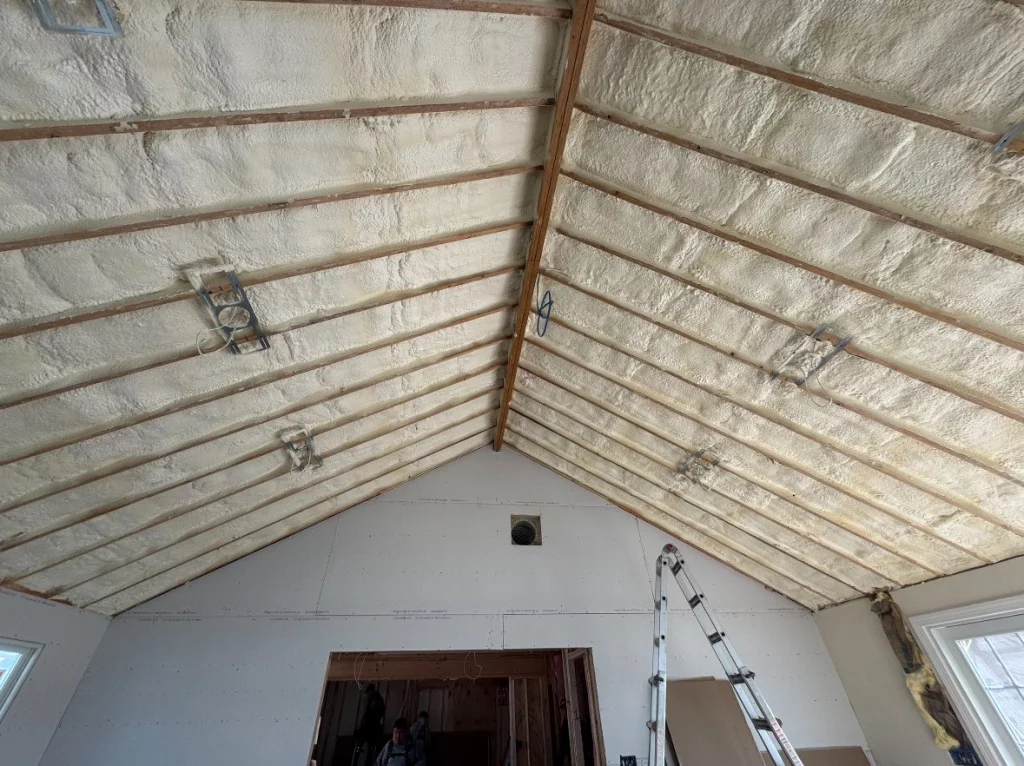
These examples illustrate how building type, use case, and climate determine the best insulation approach.
| Scenario | Property Type | Building Size | Recommended Option | Estimated Cost |
|---|---|---|---|---|
| Farm equipment storage, Midwest climate | Pole barn | 40 x 60 | Fiberglass blanket with vapor retarder | $2,400 to $4,800 |
| Year-round heated workshop, Northeast | Pole barn | 30 x 50 | Closed-cell spray foam (walls + ceiling) | $4,500 to $7,500 |
| Attached residential garage, Southeast | Stick-built garage | 24 x 24 | Fiberglass batts (R-13 walls, R-30 blown attic) | $800 to $1,200 |
| Commercial vehicle fleet storage, Pacific Northwest | Pole barn | 60 x 80 | Insulated metal panels + spray foam seal | $24,000 to $40,000 |
| Detached hobby garage, moderate climate | Stick-built garage | 30 x 40 | Blown-in cellulose walls + R-38 attic | $1,500 to $2,500 |
The farm storage scenario shows where a budget-conscious fiberglass approach makes sense because the building is not climate-controlled year-round. The year-round workshop in the Northeast demands spray foam because heating costs would be unsustainable without a proper air seal. The attached garage in the Southeast works perfectly with standard residential insulation methods.
Several variables determine which insulation approach will deliver the best return on investment for your specific project.
Ideal candidates for pole barn-specific insulation:
Not ideal for:
Choosing between pole barn insulation and garage insulation is not just about material cost. It is about matching the right system to your building type, climate zone, and how you plan to use the space for years to come. Peninsula Insulation, LLC has the experience to evaluate your structure, identify potential condensation risks, and recommend the insulation approach that maximizes energy efficiency while staying within your budget. Whether you are insulating a large post-frame workshop, a metal storage facility, or a detached garage, our team will make sure the job is done right the first time.
Call us at (410) 770-2624 or email wil@mdsprayfoam.net to get started. We serve property owners and contractors throughout the region, and we are ready to help you make the smartest insulation investment for your building.
A: Yes, but you need interior framing to create wall cavities and a quality vapor retarder with a perm rating below 0.1. Fiberglass alone will not prevent condensation on metal surfaces, which is the primary moisture risk in post-frame buildings.
A: Pole barns generally need a higher effective R-value because metal framing creates thermal bridging that wood framing does not. You also need continuous air sealing and vapor barrier protection that standard garage insulation methods may not provide.
A: For climate-controlled spaces, spray foam typically pays for itself within 5 to 8 years through reduced heating and cooling costs. It also eliminates the need for separate vapor barriers and interior framing, which can offset some of the material premium.
A: In climate zones 5 through 8, you should target a minimum of R-25 for walls and R-38 to R-49 for ceilings. Closed-cell spray foam achieves these values with less material thickness than fiberglass or rigid board.
A: Yes, retrofits are common, using spray foam applied directly to the interior of metal panels or rigid foam board installed over framing. The existing metal panels stay in place, and the insulation goes on the interior side with a proper vapor barrier.