What Materials Are Commonly Used for Crawl Space Encapsulation in 2026, and Why Do They Matter?
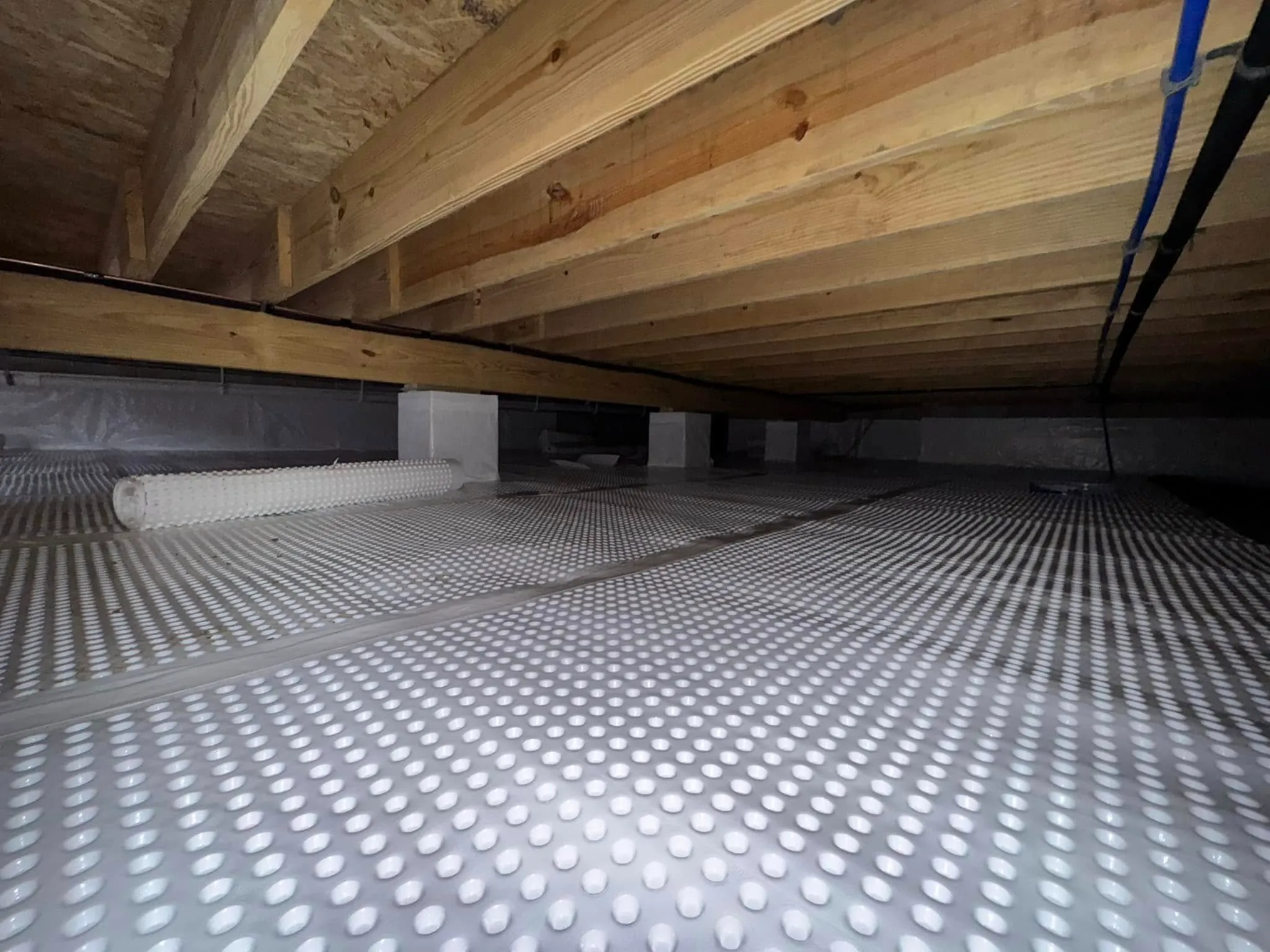
Most crawl space encapsulation material choices in 2026 fall into five groups: a polyethylene vapor barrier over the soil and…


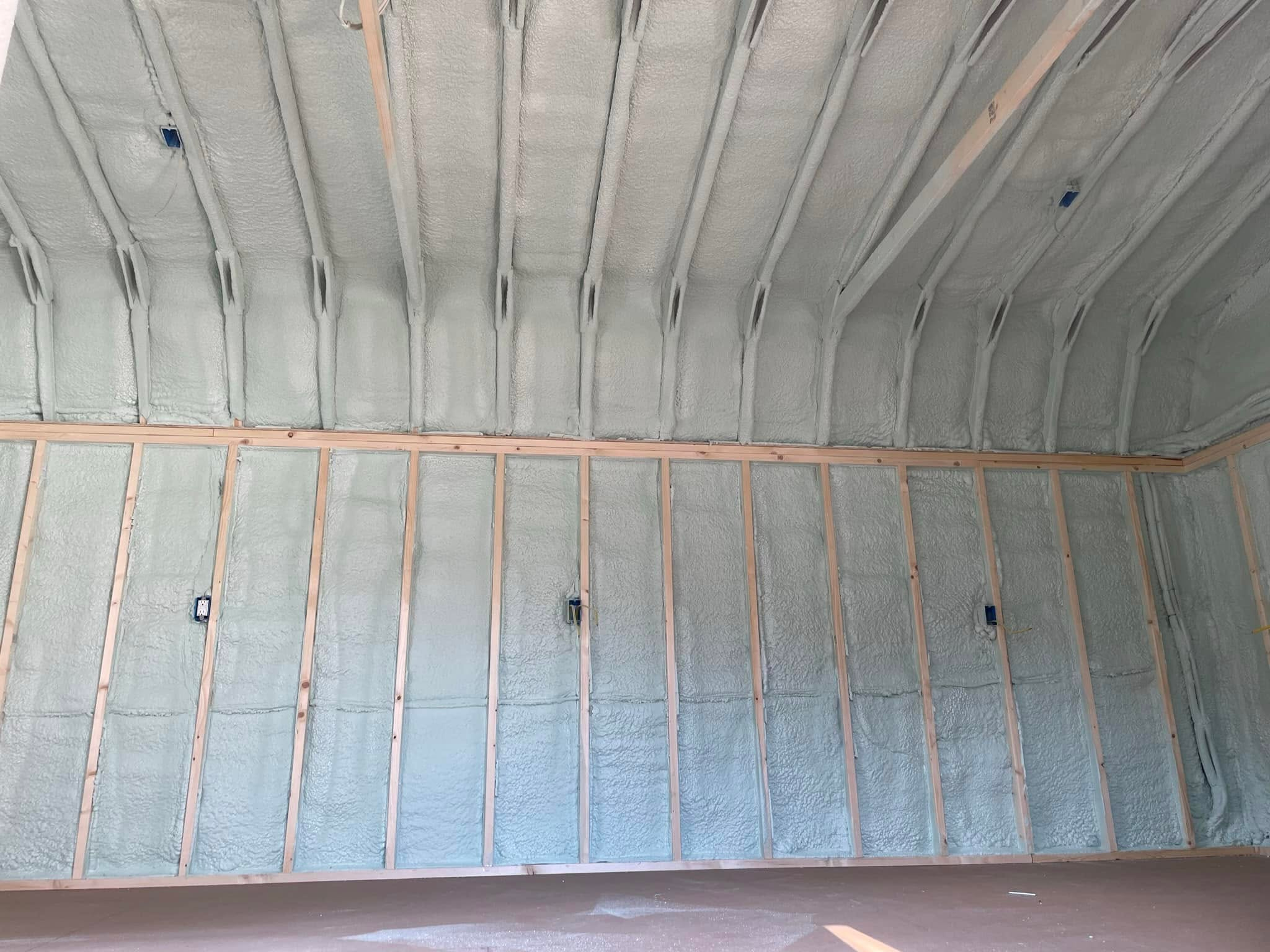
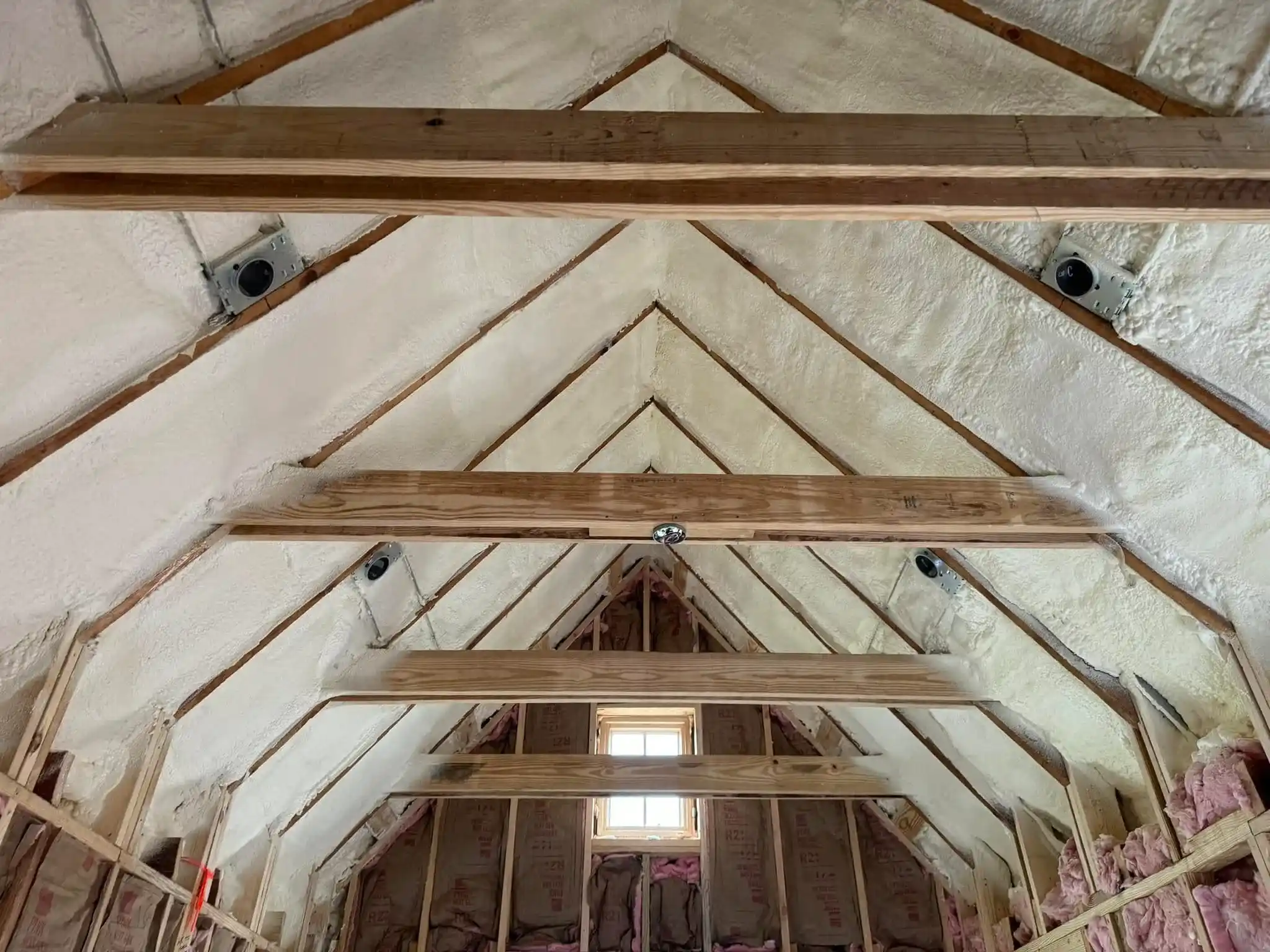
If your pole barn in Easton, MD feels drafty in winter, sweats in summer, and drives up your energy bills, the insulation is likely the root cause. Easton sits in IECC Climate Zone 4, which demands wall insulation rated at R-20 plus R-5 continuous insulation, and attic insulation reaching at least R-60 for code compliance. Most older pole barns were built with thin fiberglass rolls or no insulation at all, meaning they fall far short of these requirements. Upgrading your pole barn insulation with modern spray foam directly addresses heat loss, air infiltration, and condensation, making the structure usable year-round while cutting energy waste significantly.
Easton, Maryland, experiences cold winters with temperatures regularly dropping below freezing, humid summers, and seasonal swings that stress any building envelope. Climate Zone 4 is classified as a mixed-humid zone, meaning buildings must manage both heat retention in winter and heat rejection in summer while controlling moisture year-round. This makes choosing the right spray foam insulation in Easton, MD critical for long-term energy efficiency and moisture control.
According to the Department of Energy’s insulation guide, the R-value required for an uninsulated wood-frame wall in Climate Zone 4 is R-20 plus R-5 continuous insulation. For ceilings with no existing insulation, the recommendation jumps to R-60. These numbers are not optional upgrades. They represent the minimum thermal resistance needed to maintain comfortable indoor temperatures without excessive energy consumption.
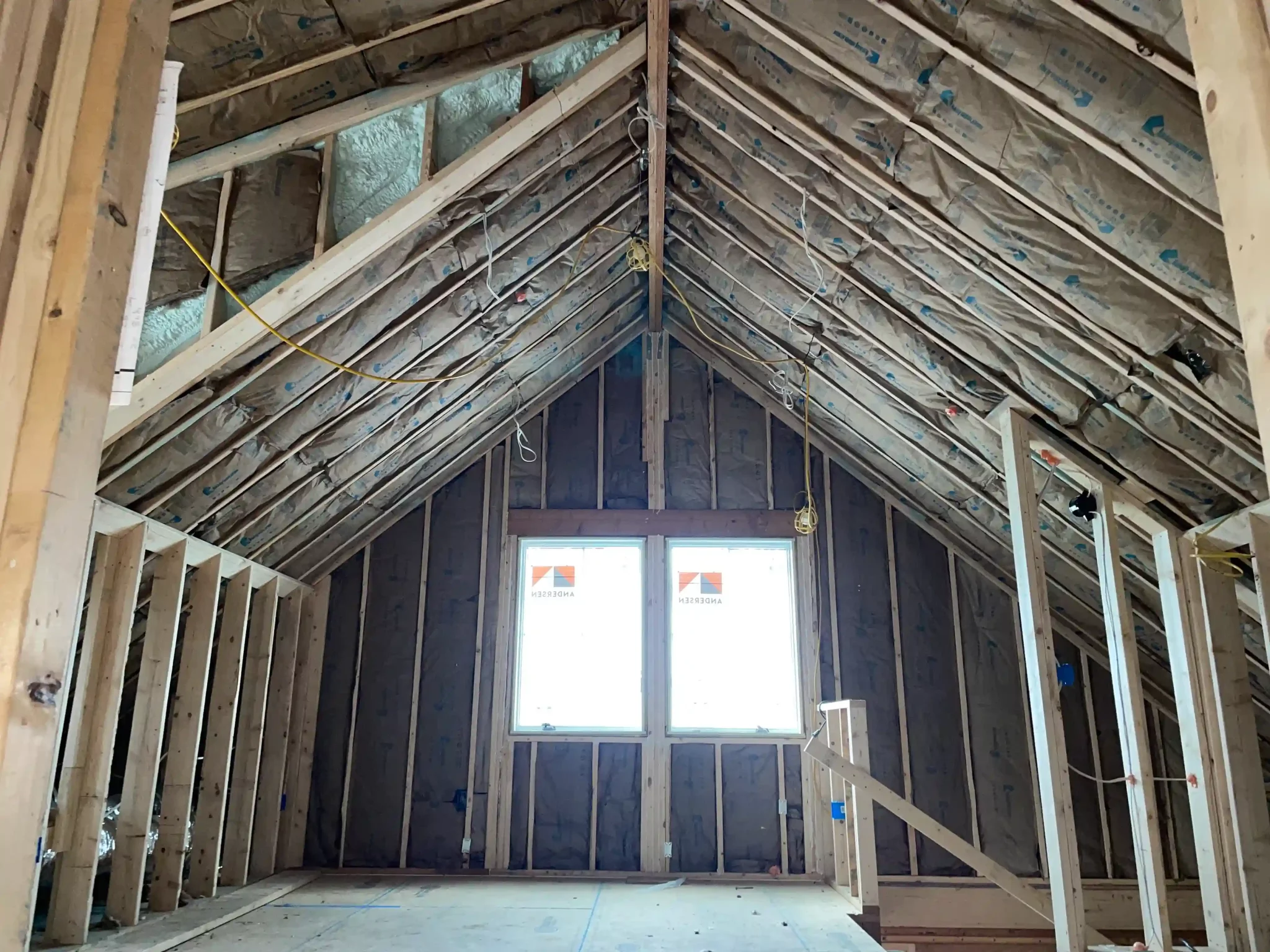
Most pole barns in the Easton area were constructed for basic storage or agricultural use and never received insulation designed for human occupancy. The typical setup might include a thin layer of fiberglass between framing members, or nothing at all. When you try to heat or cool that space, the results are predictable: the conditioned air escapes almost as fast as you produce it.
The DOE also reports that heating and cooling account for roughly 43% of a typical building’s energy costs, and between $200 and $400 per year is wasted on drafts, air leaks around openings, and outdated systems. In a poorly insulated pole barn, those losses are magnified because the structure has more air leakage points than a standard framed building.
Choosing the right insulation material for a pole barn is not the same as selecting insulation for a conventional home. Pole barns have metal roofing and siding, open framing bays, and large open spans that all affect how insulation performs. Here is a breakdown of the most common options:
| Insulation Type | R-Value per Inch | Air Barrier | Moisture Barrier | Best For |
|---|---|---|---|---|
| Closed-Cell Spray Foam | ~R-7 | Yes | Yes (Class II) | Walls, roofs, and band joists in cold climates |
| Open-Cell Spray Foam | ~R-3.7 | Yes | No | Interior walls, sound control |
| Fiberglass Batts | ~R-3.1 to R-3.8 | No | No | Budget projects, non-conditioned spaces |
| Polyiso Foam Board | ~R-5.6 to R-6.5 | Varies | Varies | Continuous insulation on walls and roofs |
| Mineral Wool Batts | ~R-3.3 to R-4.2 | No | No | Fire-rated applications |
As the comparison shows, closed-cell spray foam delivers the highest R-value per inch while simultaneously acting as both an air barrier and a moisture barrier. This dual function is especially important for pole barns, where metal panels create a natural vapor barrier on the exterior. When warm indoor air escapes through gaps in the framing and contacts cold metal, condensation forms rapidly, leading to rust, mold growth, and wood rot.
According to Building Science Corporation, most cold-weather condensation within walls is caused by air leakage rather than vapor diffusion through materials. This finding supports the case for spray foam, which expands to fill gaps and cracks that fiberglass batts simply cannot reach.
Condensation is one of the most destructive and overlooked problems in pole barns. During winter, the temperature difference between the warm interior and the cold metal exterior creates a dew point inside the wall and ceiling cavities. When moist indoor air reaches that dew point, water droplets form on the metal panels and framing members. This is why proper pole barn insulation solutions are critical to prevent moisture damage and long-term structural issues.
Over time, this moisture causes several serious problems:
The Building Science Corporation’s moisture control guidance emphasizes that rim joists and similar transition areas should be insulated with rigid or air-impermeable insulation to control condensation. In pole barns, every wall cavity, band joist, and roof bay represents a potential condensation point if not properly sealed and insulated.
Spray foam insulation addresses condensation in two ways. First, it seals the gaps and cracks where warm air would otherwise escape and reach cold surfaces. Second, closed-cell spray foam has a perm rating low enough to function as a vapor retarder, slowing the movement of moisture through the assembly. Together, these properties make it the most effective insulation choice for pole barns in mixed-humid climates like Easton.
Here are several realistic scenarios we encounter working with pole barn owners in the Easton area:
| Scenario | Building Type | Problem | Solution | Outcome |
|---|---|---|---|---|
| Workshop retrofit | 40×60 pole barn, built 2005 | Unusable in winter, a single propane heater cannot keep up | 2 inches of closed-cell spray foam on walls and the roof deck | Maintained 60 degrees with half the propane usage |
| Horse barn conversion | 36×48 agricultural barn | Condensation dripping on stalls, rust on roof panels | 1.5 inches closed-cell foam walls, spray foam band joist | Condensation eliminated, improved air quality for livestock |
| Equipment storage | 30×40 pole garage | Frozen tools, temperature swings of 40+ degrees per day | Spray foam in ceiling, fiberglass retrofit in walls | Stable 45 degrees with minimal heat, no frozen equipment |
| Home office buildout | 24×24 pole barn section | Drafty, high electric bills from space heaters | Full spray foam envelope including floor rim joist | Comfortable year-round workspace, 35% reduction in heating costs |
| Agricultural storage | 50×80 commercial barn | Grain spoilage from moisture, mold on walls | 2 inches closed-cell foam on roof, sealed band joists | Moisture levels dropped, grain storage conditions improved |
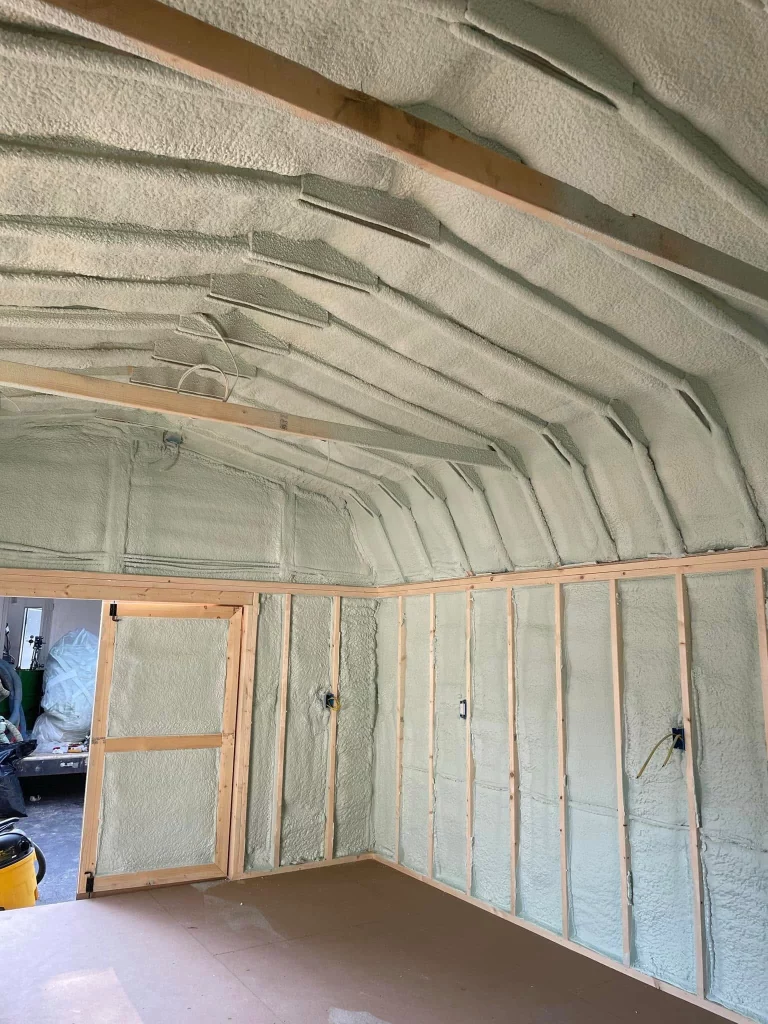
If you are considering an insulation upgrade for your pole barn, there is a clear process that delivers the best results. Skipping steps or choosing the wrong material will cost you more in the long run.
1. Assess the current condition of your building envelope. Walk through the building and look for visible gaps around doors, windows, and where the roof meets the walls. Check for signs of condensation: water stains, rust spots, mold growth, or musty odors. Identify what insulation currently exists and note its condition. Wet, compressed, or falling fiberglass has lost most of its effectiveness.
2. Determine your building’s purpose and comfort requirements. A barn used for seasonal tool storage does not need the same insulation level as a workshop you use daily in winter. However, even storage buildings benefit from moisture control to protect contents and prevent structural damage. Define your temperature and humidity goals before selecting materials.
3. Seal air leaks before adding insulation. Air sealing is the single most cost-effective upgrade you can make. Use spray foam or caulking to seal around window frames, door frames, electrical penetrations, and where different building materials meet. In a pole barn, the band joist area where the walls meet the foundation is often the largest source of uncontrolled air leakage.
4. Select the right insulation for each building section. Closed-cell spray foam is the strongest choice for walls, roof decks, and band joists in Climate Zone 4. It provides the R-value, air sealing, and moisture control needed in a single application. For floors or areas where spray foam is impractical, rigid foam board, such as polyiso, can provide continuous insulation when installed correctly.
5. Plan for ventilation. Even a tightly insulated pole barn needs controlled ventilation to manage indoor humidity. Ridge vents, gable vents, or mechanical ventilation systems should be included in your insulation plan. Sealing the building without providing ventilation can trap moisture from daily activities and create new problems.
6. Hire an experienced insulation contractor. Spray foam installation requires specialized equipment, training, and knowledge of building science. A professional installer will ensure proper foam thickness, complete coverage, and correct substrate preparation. Poor installation can lead to voids, off-ratio foam, and failed adhesion that undermines the entire investment.
Several variables determine how well your insulation actually performs once installed. Understanding these factors helps you make informed decisions and set realistic expectations.
Foam thickness and density: Closed-cell spray foam achieves its rated R-value at a specific thickness, typically 1 to 2 inches. Thinner applications provide less thermal resistance and may not meet vapor retarder requirements. The density of the foam also matters because higher-density formulations offer better structural support and lower vapor permeability.
Installation quality: Even the best insulation material underperforms if installed poorly. Gaps, voids, compressed areas, and incomplete coverage all create thermal bridges that allow heat to escape. Thermal bridging occurs when heat flows more easily through framing members than through the insulated cavities between them, a common problem in pole barns where posts and trusses are large and widely spaced.
Climate zone classification: Easton’s Climate Zone 4 designation means your building must handle both heating and cooling loads while managing humidity from both directions. Insulation that works well in a dry, cold climate may fail in a mixed-humid climate because moisture moves in both directions seasonally.
Building age and construction type: Older pole barns often have settling, gaps that have opened over time, and materials that have degraded. Newer buildings may have tighter construction but still lack the insulation needed for conditioned use. The condition of the metal panels, the type of framing, and the presence or absence of a vapor barrier all affect performance.
Moisture management: In mixed-humid climates, controlling moisture is just as important as controlling temperature. Insulation materials must be paired with proper vapor retarders, drainage planes, and ventilation strategies. Closed-cell spray foam provides an advantage here because it combines insulation with air sealing and vapor retardation in a single product.
Peninsula Insulation, LLC has been helping Easton homeowners and property owners solve pole barn comfort and energy efficiency problems for years. Our team evaluates your building’s specific needs, recommends the right insulation system, and installs it to the standards that Climate Zone 4 demands. We work with closed-cell spray foam, open-cell spray foam, and other insulation systems to match the right solution to each project.
Call us at (410) 770-2624 or email wil@mdsprayfoam.net to discuss your pole barn insulation project.
Stop losing heat and start getting real use from your pole barn. Our team is ready to help you build a more comfortable, efficient, and durable space.
Fiberglass batts are affordable and available at any building supply store, but they do not seal air leaks or stop condensation in pole barns. For a building you plan to heat or cool, fiberglass alone will leave significant gaps around framing and penetrations, allowing warm air to reach cold metal surfaces and form condensation. Spray foam installed by a professional delivers insulation, air sealing, and moisture control in one step.
Costs vary based on the size of the building, the thickness of foam applied, and whether walls, ceilings, or both are insulated. Spray foam has a higher upfront cost than fiberglass, but the energy savings, condensation prevention, and building longevity it provides make it a stronger long-term investment. Contact us for a specific quote based on your building.
When installed correctly, spray foam adheres well to clean metal surfaces and actually protects them from condensation-related corrosion. The key is proper surface preparation and using the right foam formulation. Our team evaluates the condition of your metal panels before installation to ensure compatibility and long-term adhesion.
Closed-cell spray foam with a thickness of 1.5 inches or more acts as a Class II vapor retarder, which is sufficient for most Climate Zone 4 applications. In most pole barn projects, the closed-cell foam itself replaces the need for a separate vapor barrier. However, every building is different, and our assessment will determine if additional moisture protection is warranted.
Installation timelines depend on the size of the building and the scope of work. A typical 40×60 pole barn with both walls and roof deck being insulated can usually be completed in one to three days, including surface preparation, foam application, and curing time. We schedule around your availability and minimize disruption to your daily operations.