What Happens When Traditional Insulation in New Carrollton, MD Leaves Air Gaps?
When traditional insulation in New Carrollton, MD develops air gaps, it stops doing the one job it was installed to…


Crawl space encapsulation provides stronger, longer-lasting foundation protection than basic crawl space sealing, but the right choice depends on your property’s moisture conditions, climate, and budget. Crawl space sealing closes vents, cracks, and openings to block outside air and moisture from entering the space, typically using a basic 6-mil polyethylene vapor barrier on the ground. Crawl space encapsulation goes further by wrapping the entire crawl space, floor, walls, piers, and all, in a heavy-duty reinforced liner (12 to 20 mil), sealing every seam, and often adding a dehumidifier or conditioned air supply to actively control humidity, which is why homeowners often start with a detailed crawl space encapsulation guide before choosing a system. In the short term, sealing costs less and can solve moderate moisture problems. Over the long term, encapsulation delivers measurably better results, including mold prevention, structural protection, and energy savings of 15% to 18% for heating and cooling according to DOE Building America research. For property owners serious about foundation preservation, encapsulation is the more complete and reliable solution.
Crawl space sealing is the process of closing off a crawl space from outside air and ground moisture by sealing foundation vents, gaps, and openings, and installing a basic vapor barrier on the dirt floor. The DOE Crawlspace Insulation Fact Sheet recommends a 6-mil polyethylene sheet across the crawl space floor with seams overlapped 12 inches and taped, sealed 6 inches up the walls.
Sealing addresses the most common source of crawl space moisture: ground evaporation. When soil moisture cannot escape into the crawl space air, humidity stays lower and the risk of wood rot, mold, and pest activity drops. However, sealing alone does not control moisture that enters through foundation walls, block pores, or minor cracks in the structure.
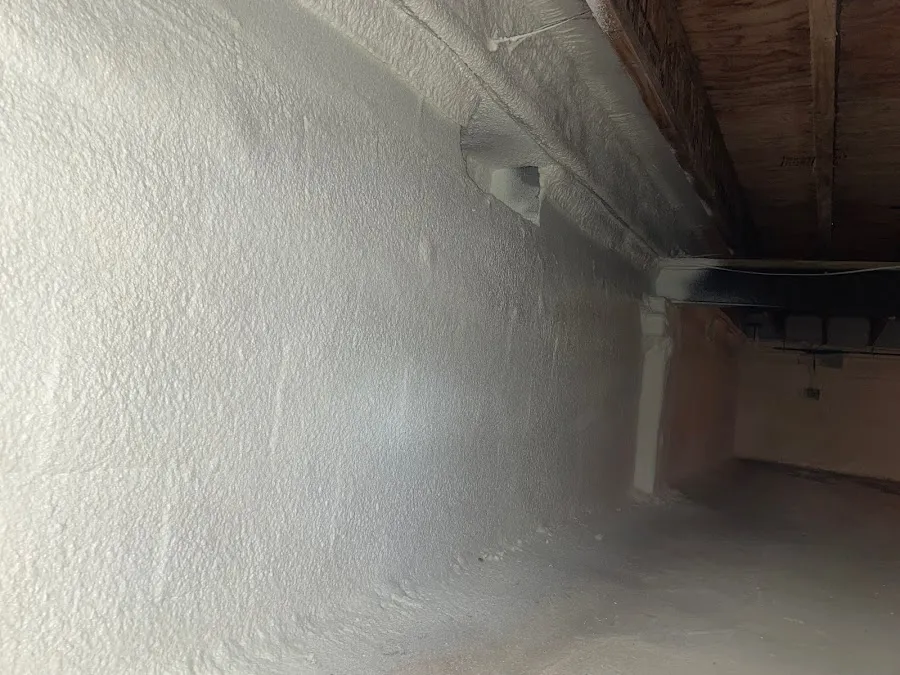
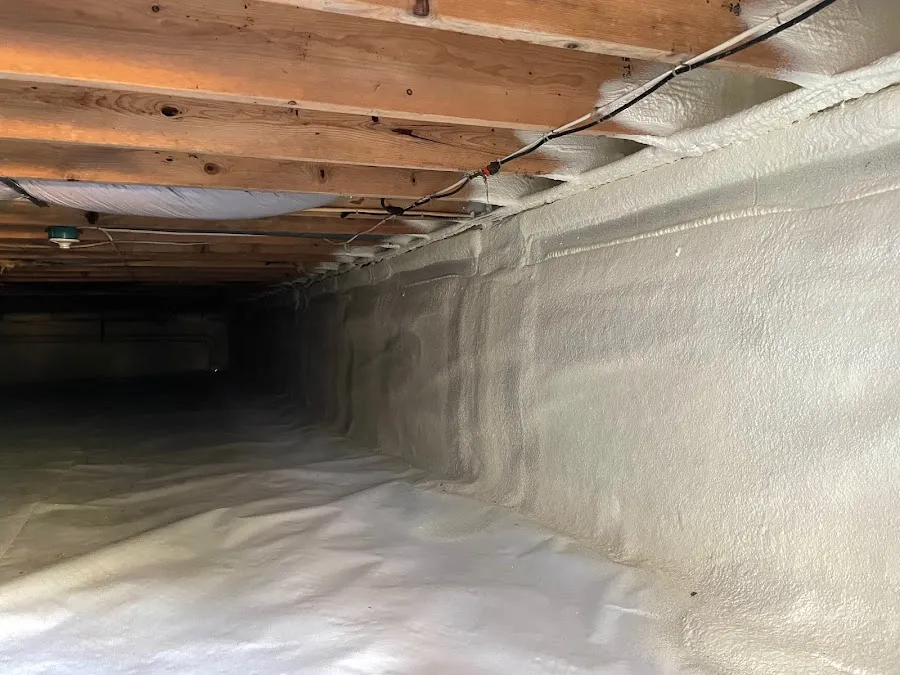
Crawl space encapsulation is a comprehensive moisture management system that creates a complete environmental barrier within the crawl space. It involves installing a heavy-duty, reinforced vapor barrier (typically 12 to 20 mil thick) across the floor, extending it up the walls, wrapping piers and columns, and sealing every seam with specialized tape. Vents are permanently closed, and the space is often conditioned with a dehumidifier or HVAC supply air, which is exactly how crawl space encapsulation works to control moisture and improve structural durability.
Encapsulation treats the crawl space as a semi-conditioned part of the building envelope. This approach prevents both ground moisture and airborne humidity from compromising the space. When installed correctly, encapsulation maintains relative humidity levels below 60%, the threshold below which mold cannot grow on wood surfaces.
| Factor | Crawl Space Sealing | Crawl Space Encapsulation |
|---|---|---|
| Vapor Barrier Coverage | Ground floor only (6-10 mil) | Floor, walls, piers (12-20 mil) |
| Vents | Sealed closed | Sealed closed |
| Moisture Control | Passive (ground vapor only) | Active and passive (ground + air) |
| Dehumidifier | Usually not included | Often included |
| Relative Humidity Control | Moderate, seasonal | Consistent year-round below 60% |
| Mold Prevention | Partial | Comprehensive |
| Energy Savings | Minimal | 15-18% heating and cooling savings |
| Installation Time | 1 day | 1-3 days |
| Foundation Protection Level | Basic | High |
| Liner Durability | 6-10 mil (more puncture-prone) | 12-20 mil reinforced (resists tears) |
Moisture is the single biggest threat to crawl space foundations. When relative humidity in a crawl space stays above 70% for a week or more, mold spores colonize wood surfaces. Over time, sustained moisture causes:
The U.S. Department of Energy confirms that air movement is responsible for more than 98% of water vapor transport in building cavities. This means that even a crawl space with a ground vapor barrier can still accumulate dangerous moisture levels if humid outside air enters through unsealed vents, gaps, or cracks.
| Scenario | Property Type | Recommended Option | Reason |
|---|---|---|---|
| Dry crawl space, minor seasonal dampness | 15-year-old ranch home | Sealing | Ground vapor barrier and vent closure are sufficient for low moisture |
| Persistent humidity, visible mold on joists | 30-year-old farmhouse | Encapsulation | Active moisture control needed for ongoing mold prevention |
| Standing water after heavy rain | Sloped lot with poor drainage | Encapsulation + drainage | Bulk water must be addressed first, then full encapsulation |
| New construction in humid climate | Custom build, mixed-humid zone | Encapsulation | Long-term protection built in from day one |
| Investment property, tight maintenance budget | Rental duplex | Sealing | Lower upfront cost, moderate protection acceptable |
Several variables determine which approach will perform best for a given property:
Crawl space sealing is a good fit when:
Crawl space sealing is NOT a good fit when:
Crawl space encapsulation is a good fit when:
Crawl space encapsulation is NOT a good fit when:
At Peninsula Insulation, LLC, our team regularly sees the long-term difference between these two approaches. While crawl space sealing provides a solid baseline, it leaves foundation walls exposed and does nothing to manage airborne humidity. Encapsulation creates a controlled environment that actively defends against every moisture source: ground evaporation, wall seepage, and humid air infiltration.
For homeowners and property managers on the Delmarva Peninsula, where summers are humid and the water table runs high, encapsulation is the approach that delivers real, lasting protection. Our crew has completed hundreds of crawl space projects, and the data consistently shows that full encapsulation reduces humidity, prevents mold, and protects structural integrity far more effectively than sealing alone.
When foundation protection matters, crawl space encapsulation delivers results that basic sealing cannot match. Peninsula Insulation, LLC specializes in comprehensive crawl space encapsulation for residential and commercial properties throughout the region. Our experienced team evaluates your crawl space conditions, identifies moisture sources, and installs a complete encapsulation system built to last. Contact us at (410) 770-2624 or email wil@mdsprayfoam.net to get started.
Request a Quote | Schedule a Crawl Space Assessment
Yes. DOE Building America research documented 15% to 18% energy savings for heating and cooling in homes with unvented, conditioned crawl spaces compared to vented alternatives.
Basic sealing with a 6-mil vapor barrier and vent covers is possible as a DIY project, but proper encapsulation requires specialized materials, seam sealing techniques, and often mechanical systems that are best handled by professionals.
A professionally installed encapsulation system with a 20 mil reinforced liner typically lasts 15 to 25 years. Dehumidifiers and condition monitoring equipment may need periodic maintenance or replacement within that timeframe.
Encapsulation prevents future mold growth by controlling humidity, but existing mold must be remediated separately before the encapsulation system is installed. Treating the space without removing active mold defeats the purpose.
A sealed crawl space benefits from a dehumidifier in most humid climates. The ORNL study found that sealed crawl spaces maintained safe humidity levels even with a dehumidifier turned off for extended periods, but periodic operation during wet seasons is recommended for best results.